
A spray adhesive for carpet installation is an aerosol or spray applied bonding product formulated to secure compatible carpet materials, underlay, tiles, seams, or selected flooring components...
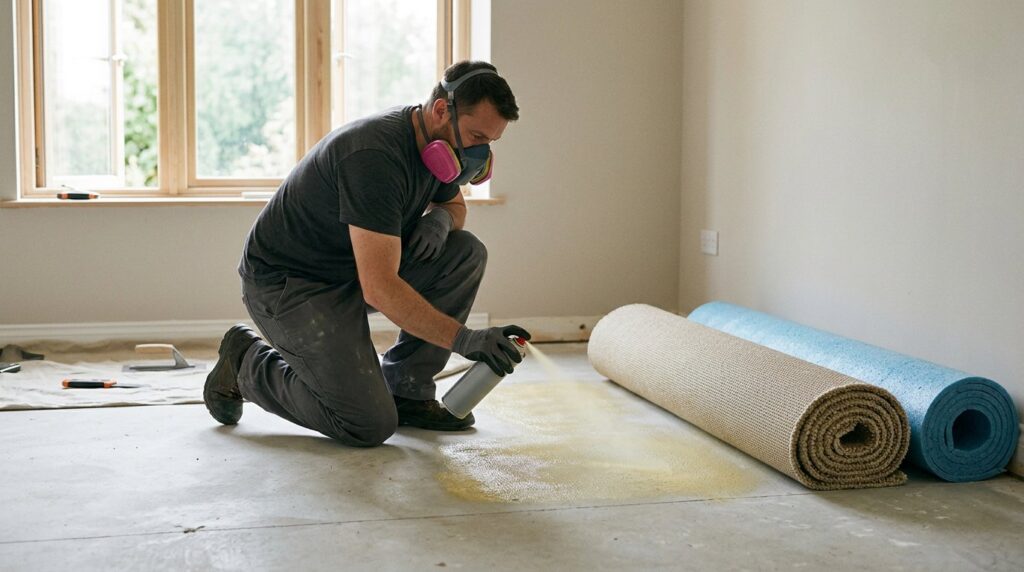
A spray adhesive for carpet installation is an aerosol or spray applied bonding product formulated to secure compatible carpet materials, underlay, tiles, seams, or selected flooring components to suitable surfaces. Its correct use depends on the carpet construction, backing, subfloor, installation method, adhesive chemistry, and manufacturer’s instructions. Spray adhesive can make some flooring jobs faster and cleaner than traditional spread adhesives, but it is not appropriate for every carpet or full floor installation, and inadequate ventilation or use near ignition sources can create serious safety hazards.
Selecting an adhesive should therefore start with the flooring manufacturer’s requirements rather than with convenience alone. A product designed for temporary positioning may perform very differently from one intended for permanent floor covering installation.
This guide explains adhesive types, compatibility, surface preparation, application, safety, common mistakes, and how to determine whether spray adhesive is appropriate for a particular carpet project.
What Is Spray Adhesive for Carpet Installation?
Spray carpet adhesive is a bonding agent delivered as a controlled aerosol or spray rather than being spread across a surface using a traditional notched trowel.
Depending on its formulation and approved uses, it can bond certain textile floor coverings, carpet underlay, carpet tiles, stair materials, or other flooring components.
The term covers multiple products rather than one standardized adhesive.
Common formulations can differ in:
• Bond strength
• Open time
• Tack development
• Drying time
• Solvent or water based chemistry
• Coverage
• Temperature requirements
• Substrate compatibility
• Flooring compatibility
• Indoor air considerations
• Flammability
The technical data sheet and product label should determine how a specific adhesive is used.
When Is Spray Adhesive Used for Carpet Installation?
Spray adhesives can be useful where controlled application and rapid tack are desirable.
Exact applications depend on the product.
Potential uses include:
• Securing compatible underlay
• Carpet tile installation
• Small carpet repairs
• Stair installations where specifically approved
• Edge or perimeter applications
• Temporary positioning
• Certain commercial flooring applications
• Bonding compatible textile materials
A spray product should never be assumed suitable for full spread carpet installation merely because the can says carpet adhesive.
Spray Adhesive for Carpet Underlay
Some installers use compatible spray adhesives to prevent underlay from moving while carpet is fitted.
The underlay and substrate manufacturers should permit the adhesive.
Certain underlays can be damaged by incompatible solvents or bonding agents.
Spray Adhesive for Carpet Tiles
Some carpet tile systems use pressure sensitive adhesive, tackifier, or other manufacturer specified installation methods.
Aerosol products may be approved for selected systems.
Follow the Carpet Tile Manufacturer’s Installation Specification
Using an unapproved adhesive can lead to curling, movement, difficult removal, subfloor damage, or warranty problems.
Compatibility should be verified before installation.
7 Smart Tips for Choosing Spray Adhesive for Carpet Installation
The best adhesive is the one correctly specified for the flooring system and site conditions.
1. Confirm Carpet Backing Compatibility
Carpet backing materials vary.
Products can incorporate polypropylene, jute, latex compounds, synthetic materials, felt, foam, and other constructions.
An adhesive that works well with one backing could weaken or discolor another.
Always check both the flooring and adhesive specifications.
2. Identify the Subfloor
The substrate is equally important.
Spray adhesives may behave differently on:
• Concrete
• Plywood
• OSB
• Existing resilient flooring
• Metal
• Painted surfaces
• Screeds
• Other prepared substrates
The surface may require cleaning, priming, moisture testing, or another form of preparation.
3. Decide Whether You Need Permanent or Releasable Bonding
Not every flooring installation needs the same bond.
A permanent adhesive is intended to hold materials securely, while releasable or pressure sensitive products may allow compatible carpet tiles to be removed later.
Do Not Confuse Tack With Final Bond Strength
An adhesive can feel sticky almost immediately without having reached its intended final strength.
Follow specified open, working, and curing times.
4. Check Environmental Conditions
Temperature and humidity can influence adhesive behavior.
The adhesive, floor covering, and substrate may need to be conditioned within a specified temperature range before installation.
Cold cans or cold subfloors can also affect spray performance.
5. Review Coverage
Manufacturers may specify expected coverage based on application rate and surface characteristics.
Porous or rough substrates can behave differently from smooth surfaces.
Do not stretch one container beyond its specified coverage simply to reduce material cost.
6. Consider Ventilation and Flammability
Some aerosol flooring adhesives contain volatile and highly flammable components.
Read the safety data sheet and product label before beginning work.
Eliminate ignition sources and provide the ventilation specified by the manufacturer.
7. Check the Flooring Warranty
A carpet manufacturer may require particular adhesive categories or approved products.
Using an incompatible adhesive can potentially affect warranty coverage.
Record the product used and retain installation documentation.
Types of Carpet Spray Adhesive
Adhesives can be categorized according to chemistry, intended bond, and application.
Solvent Based Spray Adhesive
Some aerosol adhesives rely on volatile solvents.
These products can develop tack rapidly but may release significant vapors and can be highly flammable.
Strict compliance with ventilation and fire safety instructions is essential.
Water Based Spray Adhesive
Water based technologies can reduce some solvent related concerns but are not automatically hazard free or suitable for every surface.
Drying behavior and substrate requirements can differ.
Pressure Sensitive Adhesive
Pressure sensitive adhesives remain tacky and are often associated with modular flooring systems.
Some are designed to permit carpet tile replacement.
Whether a particular spray product is suitable depends on the manufacturer’s approval.
Permanent Bond Adhesive
Permanent products are formulated for applications where later removal is not a normal installation requirement.
They should only be used where both surfaces and the flooring system are compatible.
Spray Adhesive vs Traditional Carpet Adhesive
Traditional flooring adhesives are commonly applied using a trowel or other specified tool.
They can be preferred for large full spread installations because they provide controlled adhesive depth across a broad area.
Advantages of Spray Adhesive
Potential advantages include:
• Fast application
• Minimal mixing
• Controlled placement
• Reduced need for trowels
• Convenient use on smaller areas
• Quick tack with some formulations
These benefits depend on the specific installation.
Advantages of Trowel Applied Adhesive
Traditional adhesive can provide a consistent full spread bond across large areas when installed correctly.
Manufacturers can specify exact trowel notch dimensions to control adhesive quantity.
Which Is Better?
Neither is universally better.
The floor covering manufacturer’s installation instructions should determine the adhesive system.
Spray Adhesive vs Carpet Tape
Double sided carpet tape is another option for certain temporary, small scale, or specialized installations.
Tape provides localized bonding rather than a sprayed adhesive layer.
When Carpet Tape May Be Suitable
Depending on the product, tape can be used for rugs, temporary coverings, selected edges, or other compatible installations.
It can leave residue or damage certain floors, so substrate compatibility still matters.
When Adhesive May Be Better
A properly specified adhesive can distribute bonding forces across a wider area.
This may reduce localized movement in installations designed for adhesive bonding.
Surface Preparation Before Applying Carpet Adhesive
Adhesive performance depends heavily on the condition of the surface.
A premium product applied to dust, grease, moisture, or unstable material can still fail.
Clean the Subfloor
Remove substances that could interfere with bonding, including:
• Dust
• Loose debris
• Oils
• Grease
• Incompatible coatings
• Adhesive residue where required
• Surface contaminants
Use preparation methods approved for the substrate and flooring system.
Repair the Surface
Loose material, major cracks, holes, and uneven areas may require repair.
Floor flatness requirements depend on the flooring manufacturer.
Check Moisture Conditions
Concrete and other substrates can contain moisture that affects flooring systems.
Where required, use appropriate moisture testing methods and compare results against the limits specified for the floor covering and adhesive.
Do Not Assume a Dry Looking Floor Is Dry
Visual inspection cannot reliably quantify moisture within a concrete slab.
Commercial projects should follow applicable flooring industry and manufacturer testing requirements.
How to Apply Spray Adhesive for Carpet Installation
The exact procedure must come from the product label.
The following principles provide general context rather than replacing manufacturer instructions.
Prepare the Work Area
Remove unnecessary items and protect surfaces that should not receive overspray.
Provide ventilation and control all ignition sources according to safety instructions.
Test Compatibility
Where recommended, test the adhesive on a small inconspicuous area.
This can reveal staining, attack on foam or backing, or unexpected surface reactions.
Apply an Even Coat
Hold and move the container according to the manufacturer’s specified technique.
Heavy buildup can cause longer drying, bleed through, or uneven bonding, while insufficient coverage can lead to weak adhesion.
Observe the Open Time
Some adhesives need solvent or water to flash off before the carpet is positioned.
Installing the material too soon or too late can compromise performance.
Apply Pressure as Required
After positioning the carpet or underlay, manufacturers may require rolling or firm pressure.
Correct pressure helps establish contact between the adhesive and flooring material.
Spray Adhesive for Carpet on Concrete
Concrete is a common flooring substrate, but proper preparation is essential.
Concrete Must Be Suitable for Bonding
The surface should generally be structurally sound and free from contaminants that interfere with adhesion.
Moisture and alkalinity requirements can also apply depending on the adhesive and flooring system.
Check for Sealers
Some concrete sealers, curing compounds, paints, and coatings can prevent effective bonding.
Do not simply spray over an unknown surface treatment.
A flooring professional can determine whether additional preparation is needed.
Spray Adhesive for Carpet on Wood
Plywood and other wood based subfloors can be compatible with selected adhesives.
However, engineered wood panels, finished timber, and untreated plywood should not automatically be treated as identical surfaces.
Consider Future Removal
Permanent adhesive applied directly to a finished timber floor can create difficult cleanup and potentially damage the finish.
If preserving the underlying surface matters, use only an installation system specifically approved for that purpose.
Spray Adhesive for Carpeted Stairs
Stair installations have additional safety implications because loose carpet can contribute to trip and fall hazards.
Use a Stair Approved Installation Method
Do not rely on a general craft spray to secure stair carpet.
Use products and installation techniques specifically appropriate for the carpet, stair construction, and chosen fitting method.
Pay Attention to Edges and Nosings
Stair carpet must remain secure at changes in direction and high traffic areas.
Professional installation may be preferable when you are unsure how to secure the material correctly.
Spray Adhesive for Automotive Carpet
Vehicle carpeting is another common application for spray adhesives.
Automotive interiors experience heat, vibration, curved surfaces, and temperature cycling.
Choose Automotive Compatible Adhesive
An adhesive suitable for a cool indoor room may soften or fail inside a vehicle exposed to summer heat.
Use products explicitly compatible with automotive interior materials and expected temperatures.
Ventilate the Vehicle
Solvent vapors can accumulate inside enclosed vehicle interiors.
Follow safety directions concerning ventilation, ignition sources, and reentry.
Spray Adhesive for Marine Carpet
Marine installations expose adhesives to moisture, temperature fluctuations, and other challenging conditions.
A general indoor carpet adhesive is not necessarily suitable.
Check Water and Environmental Resistance
Use an adhesive specifically approved for the relevant marine flooring and substrate.
Marine carpet manufacturers often provide installation recommendations that should be followed.
How Much Spray Adhesive Do You Need?
Required quantity depends on the product’s specified coverage, substrate porosity, spray pattern, and total installation area.
Calculate the Installation Area
Measure the area receiving adhesive and compare it with the manufacturer’s coverage specification.
Allow for legitimate waste or overlap where the application instructions require it.
Avoid Excessive Application
More adhesive does not necessarily create a stronger bond.
Overapplication can create poor curing, staining, excessive odor, or other problems.
Drying and Curing Time
Drying time and full cure time are not necessarily identical.
An installation can feel secure while the adhesive is still developing its final properties.
Factors Affecting Drying
These may include:
• Adhesive chemistry
• Temperature
• Humidity
• Ventilation
• Application thickness
• Substrate absorption
• Carpet backing
Use the technical data sheet for actual time requirements.
When Can the Carpet Be Walked On?
Follow manufacturer guidance.
Heavy traffic, furniture placement, cleaning, or rolling loads may need to be restricted until the adhesive has sufficiently cured.
Safety When Using Spray Adhesive for Carpet Installation
Aerosol adhesives require careful handling because some products contain flammable propellants or solvents and can expose users to vapors.
Read the Safety Data Sheet
Before use, understand:
• Ventilation requirements
• Required personal protective equipment
• Flammability warnings
• Exposure controls
• First aid guidance
• Storage instructions
• Disposal requirements
The product label and safety data sheet take priority over generic internet advice.
Avoid Ignition Sources
Depending on the product, vapors can ignite far from the immediate spray location.
Potential ignition sources can include flames, smoking, sparks, heaters, electrical equipment, and pilot lights.
Follow the manufacturer’s instructions precisely.
Respiratory Protection
A dust mask does not necessarily protect against organic solvent vapors.
If respiratory protection is required by the product or workplace risk assessment, the appropriate respirator type and cartridge must be selected and fitted correctly.
Professional occupational safety guidance may be appropriate for frequent or commercial use.
Common Spray Adhesive Installation Mistakes
Most failures can be traced to product mismatch, inadequate preparation, or incorrect application.
Common mistakes include:
• Using general craft adhesive for flooring
• Ignoring carpet backing compatibility
• Applying adhesive to a dusty surface
• Failing to check moisture
• Using too much adhesive
• Ignoring open time
• Walking on the installation too soon
• Providing inadequate ventilation
• Spraying near ignition sources
• Assuming every aerosol is permanent
• Failing to protect against overspray
Reading the product documentation before opening the can can prevent many of these problems.
How to Remove Carpet Spray Adhesive
Removal methods depend on adhesive chemistry and the underlying surface.
Start With Manufacturer Guidance
Adhesive manufacturers may recommend a particular cleaner or mechanical removal method.
Test any solvent in an inconspicuous location first.
Avoid Random Solvents
Strong solvents can damage timber finishes, plastics, paints, vinyl flooring, and other surfaces.
They can also create fire and inhalation hazards.
When a large area requires removal, professional flooring preparation equipment may be safer and more effective.
How to Choose the Best Spray Adhesive for Carpet Installation
Avoid selecting purely by advertised bond strength.
A stronger adhesive is not helpful if it damages the carpet or cannot bond correctly to the substrate.
Check the Technical Data
Verify:
• Approved floor coverings
• Approved substrates
• Bond type
• Coverage
• Open time
• Working time
• Cure time
• Temperature limits
• Moisture requirements
• Flammability
• Indoor use approval
• Warranty compatibility
Specific technical information is more valuable than marketing terms such as ultra strong or professional grade.
When to Hire a Professional Carpet Installer
Small compatible projects can be manageable for experienced DIY users, but larger installations require accurate cutting, stretching or bonding, seam work, subfloor preparation, and detailed finishing.
Professional Installation Can Be Useful When
Consider hiring an installer for:
• Large rooms
• Patterned carpet
• Complex stairs
• Commercial spaces
• Moisture affected substrates
• Difficult subfloor preparation
• Expensive carpet
• Extensive seams
• Manufacturer warranty requirements
Professional installation can reduce the risk of wasting costly flooring materials.
Frequently Asked Questions
What is spray adhesive for carpet installation?
Spray adhesive for carpet installation is a spray applied bonding product designed to secure compatible carpet, carpet tiles, underlay, or related flooring materials to approved surfaces.
Can I use spray adhesive to install carpet on concrete?
Yes, if the specific adhesive and carpet are approved for properly prepared concrete. Moisture, coatings, contamination, and surface condition must also meet installation requirements.
Is spray adhesive strong enough for carpet?
Some products are designed for permanent carpet applications, while others are intended only for positioning or releasable bonding. Always check the product specification.
Can spray adhesive be used on carpet stairs?
Only use an adhesive and fitting method specifically approved for the carpet and stair application. Loose or poorly secured stair flooring can create a safety hazard.
How long does carpet spray adhesive take to dry?
Drying and curing times vary according to product chemistry, temperature, humidity, ventilation, application rate, and substrate. Follow the manufacturer’s technical data.
Is carpet spray adhesive safe to use indoors?
Some products are intended for indoor use but may require substantial ventilation and strict ignition control. Read the label and safety data sheet before application.
Conclusion
Spray adhesive for carpet installation can provide a fast and convenient bonding method for compatible carpet, underlay, tiles, automotive flooring, and selected specialist applications. Reliable results depend on matching the adhesive to both the carpet backing and substrate, preparing the surface properly, and following specified open and curing times. Because many aerosol adhesives involve solvent vapor and flammability hazards, ventilation and manufacturer safety instructions are essential. For large, expensive, structural, or technically demanding flooring projects, a qualified carpet installer can help ensure the chosen adhesive system performs as intended.