
The right septic tank pumping frequency depends on tank capacity, household size, wastewater volume, the amount of solids entering the system, and the actual accumulation of sludge...
The right septic tank pumping frequency depends on tank capacity, household size, wastewater volume, the amount of solids entering the system, and the actual accumulation of sludge and scum. As a broad planning guideline, the U.S. Environmental Protection Agency advises that household septic tanks are typically pumped every three to five years, while recommending inspection of household septic systems at least every three years by a septic service professional. Some tanks need pumping sooner, while others may go longer when professional inspection shows that solids have not reached levels requiring removal.
A septic tank does not become maintenance free simply because drains appear to work normally. Solids accumulate gradually inside the tank, and excessive buildup can reduce effective settling capacity or allow solids to move toward the drainfield.
The most reliable maintenance strategy combines a general scheduling interval with professional inspection and knowledge of how the particular household uses its wastewater system.
What Is Septic Tank Pumping Frequency?
Septic tank pumping frequency is the interval between professional removal of accumulated sludge, scum, and wastewater from a septic tank.
Pumping restores available tank capacity for separating solids from wastewater. It does not repair a failed drainfield, broken pipe, damaged baffle, or other system defect.
Several variables influence how rapidly pumping becomes necessary:
• Septic tank size
• Number of household occupants
• Wastewater generation
• Garbage disposal use
• Amount of solids entering drains
• Tank condition
• Previous maintenance
• System design
• Local regulatory requirements
This is why two neighboring homes can have different maintenance schedules.
What Is the Typical Septic Tank Pumping Frequency?
For conventional household systems in the United States, three to five years is a commonly cited general pumping range.
The EPA notes that alternative systems involving electrical float switches, pumps, or mechanical components should generally be inspected more frequently, often annually.
These figures are starting points rather than universal deadlines.
Why Some Septic Tanks Need More Frequent Pumping
A tank can fill with solids more rapidly when more people use the system or when substantial solid material enters it.
A smaller tank serving a larger household may therefore require closer monitoring than a larger tank serving one or two people.
Can a Septic Tank Go Longer Than Five Years?
Potentially, depending on system characteristics and measured solids accumulation.
However, choosing an arbitrary extended interval without inspection can create unnecessary risk.
Inspection Is Better Than Guessing
A qualified septic professional can evaluate sludge and scum levels and compare them with appropriate pumping criteria.
This provides more information than calendar age alone.
7 Factors That Affect Septic Tank Pumping Frequency
Understanding these factors can help homeowners establish a realistic maintenance schedule.
1. Septic Tank Size
Tank capacity affects how much wastewater and accumulated solids the system can accommodate.
Larger tanks may generally require pumping less frequently under otherwise similar conditions, but size alone does not determine the schedule.
2. Number of People in the Household
More residents generally create more wastewater and contribute more solids to the septic system.
Household occupancy can therefore influence accumulation rates.
Occupancy Changes Matter
A maintenance schedule established when two people occupied a home may no longer be appropriate after several additional residents move in.
Review the schedule when household circumstances change substantially.
3. Total Wastewater Use
Water entering the system affects hydraulic loading.
Large volumes arriving over short periods can reduce the time available for solids to settle inside the tank.
4. Garbage Disposal Use
Kitchen garbage disposals can increase the quantity of organic solids entering a septic tank.
The EPA notes that garbage disposal use can affect how often pumping is needed.
Composting or disposing of appropriate food waste through other permitted methods can reduce the amount entering the system.
5. Solids Accumulation
Actual sludge and scum depth is one of the most informative maintenance indicators.
A professional can measure accumulation during inspection.
6. System Type
Not every septic system consists solely of one conventional tank and gravity drainfield.
Alternative systems can incorporate pumps, treatment units, filters, controls, or other components that require different maintenance schedules.
7. Local Requirements
States, counties, municipalities, health departments, and permitting authorities can establish inspection or maintenance requirements.
Local rules should take priority over generic internet recommendations.
How a Septic Tank Works
Understanding the tank explains why pumping is necessary.
Wastewater from toilets, sinks, showers, washing machines, and other connected household fixtures flows into the septic tank.
Separation Inside the Tank
Inside the tank, materials separate broadly into layers.
Heavier solids settle to form sludge.
Fats, oils, and other buoyant material can form a scum layer toward the surface.
Liquid effluent occupies the space between these layers and flows onward through the system.
What Happens to Solids?
Microbial activity breaks down part of the organic material, but it does not eliminate all solids.
Residual material accumulates.
Septic Tanks Do Not Clean Themselves Completely
Claims that additives can eliminate the need for pumping should be treated cautiously.
Physical solids continue to accumulate in functioning systems and eventually require management.
How to Know When a Septic Tank Needs Pumping
The safest approach is scheduled inspection rather than waiting for obvious symptoms.
By the time a system produces severe warning signs, a problem may already exist.
Professional Measurement
Septic professionals can measure sludge and scum accumulation using appropriate procedures.
They can also inspect accessible components and identify visible problems.
Maintenance Records
Keep records of:
• Pumping dates
• Inspection dates
• Tank capacity
• Sludge or scum measurements when available
• Repairs
• Filter cleaning
• System alterations
• Contractor information
This history can help predict future maintenance needs.
Warning Signs of Septic System Problems
Certain symptoms require prompt attention.
Slow Drains
Slow drainage throughout multiple fixtures can indicate a wastewater system problem.
However, it can also result from plumbing blockages unrelated to the septic tank.
Sewage Backup
Wastewater backing up into a home is a significant sanitation problem.
Avoid contact and contact qualified professionals promptly.
Unpleasant Odors
Persistent sewage odors around the tank, plumbing, or drainfield may warrant investigation.
Odor alone does not prove the tank simply needs pumping.
Wet Areas Around the Drainfield
Unusual wetness, wastewater surfacing, or persistently saturated areas around a drainfield can indicate a serious problem.
Exceptionally Green Grass Can Require Investigation
Unusually lush vegetation in a localized drainfield area can sometimes accompany excess moisture or nutrients.
It is not a definitive diagnostic test, but it can justify professional evaluation when combined with other symptoms.
Why Regular Septic Tank Pumping Matters
A septic system depends on solids remaining inside the tank rather than moving into the soil treatment area.
Protecting the Drainfield
Excessive solids carryover can contribute to drainfield problems.
Drainfield replacement or rehabilitation can be substantially more complicated than routine tank pumping.
Maintaining Tank Capacity
As sludge and scum accumulate, the effective liquid volume inside the tank decreases.
Regular pumping removes accumulated material.
Creating an Inspection Opportunity
Pumping also gives a service professional an opportunity to observe accessible tank components.
Damage identified early may be easier to address.
What Happens During Septic Tank Pumping?
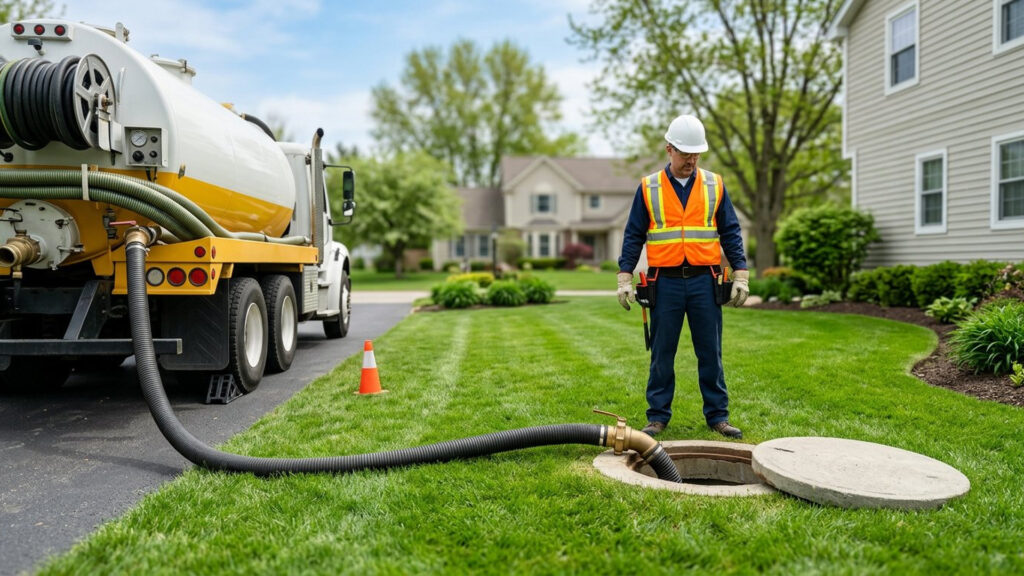
A professional service typically locates and safely accesses the tank, assesses relevant conditions, and removes tank contents using a vacuum truck or equivalent approved equipment.
Locating the Access Point
Modern tanks may have risers providing easier surface access.
Older systems sometimes require excavation to expose access lids.
Accurate property records can make locating the tank easier.
Pumping the Contents
A large vacuum hose transfers septic tank contents to the service vehicle for appropriate transport and disposal.
The technician may also inspect relevant accessible components according to the service scope.
Tank Entry Is Extremely Dangerous
Septic tanks are confined spaces that can contain toxic or oxygen deficient atmospheres.
Homeowners should never enter a septic tank.
Entry, where legally and operationally necessary, requires specialized confined space procedures and trained professionals.
Septic Tank Inspection vs Pumping
Inspection and pumping are related but not identical.
Inspection
An inspection evaluates the system’s observable condition and maintenance needs.
The service may include checking tank levels, measuring solids, reviewing components, and assessing signs of malfunction.
Pumping
Pumping physically removes tank contents.
A tank can be inspected without necessarily requiring pumping on that particular visit.
Why Both Matter
A pumping truck removing waste without checking obvious system conditions can miss useful diagnostic information.
Ask what the service includes before booking.
Septic Tank Pumping Frequency for a Large Family
Larger households generally generate more wastewater and solids.
This can shorten the appropriate interval compared with a lightly occupied home using a similar tank.
Avoid Generic Family Size Charts
Online charts can provide rough estimates, but they cannot measure actual sludge and scum levels.
Use them only for planning between professional inspections.
Septic Tank Pumping Frequency for Vacation Homes
Properties occupied only periodically can generate less wastewater and solids than full time homes.
However, low occupancy does not mean inspections can be ignored indefinitely.
Seasonal Changes
A holiday property used heavily by groups during several months can place substantial short term demand on its septic system.
Consider peak occupancy rather than simply counting occupied days.
Septic Tank Pumping Frequency With a Garbage Disposal
Garbage disposals send additional food particles into wastewater.
Those solids can increase tank loading.
Reduce Unnecessary Food Waste
Avoid treating a garbage disposal as a waste bin.
Keeping substantial food solids, fats, and oils out of the plumbing can support septic system operation.
Water Conservation and Septic Systems
Efficient water use can reduce hydraulic stress on a septic system.
Repair Leaks
A leaking toilet or fixture can send unnecessary water into the tank continuously.
Repairing leaks saves water while reducing wastewater loading.
Spread Out Water Intensive Tasks
Running several washing machine loads while dishwashing and bathing simultaneously can create a large hydraulic load.
Distributing water use can help avoid sudden peaks.
High Efficiency Appliances
Water efficient appliances can reduce wastewater volume when used appropriately.
Check that fixtures and appliances are operating correctly.
What Should Not Go Into a Septic System?
Toilets should generally receive human waste and toilet paper, while household drains should be protected from inappropriate materials.
Avoid flushing or draining items such as:
• Wipes, including many products marketed as flushable
• Diapers
• Feminine hygiene products
• Dental floss
• Cigarette butts
• Cat litter
• Cooking grease
• Paint
• Solvents
• Pesticides
• Large quantities of household chemicals
• Medications
Local hazardous waste and medication disposal programs provide safer alternatives for many of these materials.
Are Septic Tank Additives Necessary?
Numerous products claim to improve septic performance or reduce the need for pumping.
The EPA states that septic system additives are generally not recommended because a properly functioning system already contains naturally occurring microorganisms needed for treatment.
Additives Do Not Replace Pumping
No additive should be relied upon as a substitute for inspection and removal of accumulated solids.
Some chemical products can potentially interfere with treatment or system materials.
Follow guidance from local authorities and qualified septic professionals.
Septic Tank Pumping Frequency and Drainfield Health
Pumping protects the tank’s settling function but cannot reverse every drainfield problem.
Pumping Is Maintenance, Not a Cure All
If wastewater is surfacing in a drainfield or backing up because the soil treatment system has failed, emptying the tank may provide only temporary relief.
The underlying problem still requires professional diagnosis.
Protect the Drainfield
Avoid driving or parking heavy vehicles over septic components unless the system has been specifically engineered for such loads.
Compacted soil or damaged piping can impair performance.
Landscaping Around a Septic System
Plant selection around drainfields should account for roots and system access.
Keep Access Available
Do not permanently cover tank access points with structures or heavy landscaping.
Service technicians need safe access for inspection and pumping.
Trees and Large Shrubs
Aggressive roots can potentially interfere with components.
Follow local septic landscaping recommendations concerning appropriate planting distances.
Septic System Maintenance Records
Good records make future maintenance more predictable.
What to Record
Keep:
• Installation information
• Permits
• Tank capacity
• Site plan
• Inspection reports
• Pumping receipts
• Repair invoices
• Component replacements
• Maintenance contracts
These records can also be useful when selling the property.
How Much Does Septic Tank Pumping Cost?
Pumping prices vary by location, tank size, access, waste volume, contractor, and disposal costs.
An exact national price is therefore less useful than a property specific quotation.
Factors Affecting Cost
Pricing can increase when:
• The tank is difficult to locate
• Access lids require substantial excavation
• Hoses must reach unusually long distances
• The tank is large
• Emergency service is required
• Local disposal fees are high
Ask what the quoted price includes.
Avoid Price Only Decisions
A competent contractor should pump the tank appropriately and explain relevant observations.
The cheapest service is not necessarily the best value if important maintenance checks are omitted.
How to Choose a Septic Pumping Company
Requirements for septic professionals vary by jurisdiction.
Verify Local Credentials
Check licensing, certification, registration, or waste handling requirements applicable in your area.
Use official government resources where available.
Ask About Disposal
Septic waste should be transported and disposed of through legally approved methods.
A reputable company should be able to explain its disposal process.
Request Documentation
Keep the invoice or pumping report showing the service date and relevant observations.
This becomes part of the property’s maintenance history.
How to Calculate Your Septic Tank Pumping Schedule
Start with your last pumping or professional inspection date.
Identify the tank capacity and household occupancy if known.
Then consider water usage, garbage disposal use, previous accumulation measurements, and the type of system.
Use Inspection Data to Refine the Schedule
Suppose a professional inspection shows relatively slow solids accumulation.
That information can help guide the next recommended inspection or pumping date.
Conversely, rapid accumulation may justify a shorter interval.
Never Extend the Schedule From Guesswork Alone
If records are missing or you do not know when the tank was last pumped, arrange a professional assessment rather than assuming there is substantial remaining capacity.
Buying a Home With a Septic System
Prospective buyers should determine where the system is located, what type it is, and how it has been maintained.
Request Records
Ask for available pumping, inspection, permit, and repair documentation.
Consider a Septic Inspection
A property inspection or home inspection may not include a complete septic system assessment.
Buyers can ask what inspection is appropriate under local practice and transaction requirements.
Frequently Asked Questions
What is the recommended septic tank pumping frequency?
The U.S. EPA states that household septic tanks are typically pumped every three to five years, but actual frequency depends on tank size, household use, solids accumulation, and system conditions.
Can a septic tank go 10 years without pumping?
Some systems may accumulate solids slowly, but assuming a ten year interval without professional inspection can risk solids carryover or other problems. Use measured conditions to guide maintenance.
How do I know if my septic tank is full?
Routine professional inspection and measurement are better than waiting for symptoms. Slow drains, backups, odors, or wet drainfield areas can indicate problems requiring assessment.
Does a large family need more frequent septic pumping?
Often, because more occupants generally generate more wastewater and solids. Actual frequency should still be based on tank capacity, usage, and professional inspection.
Do septic tank additives reduce pumping frequency?
Additives should not be relied upon to replace routine inspection and pumping. The EPA generally does not recommend septic additives for normally functioning household systems.
What happens if a septic tank is not pumped?
Excessive sludge and scum can reduce effective tank capacity and increase the risk of solids moving into downstream components, potentially contributing to system problems.
Conclusion
Septic tank pumping frequency is best determined through a combination of professional inspection, tank size, household occupancy, water use, and measured solids accumulation. For many U.S. households, the EPA’s typical three to five year pumping range provides a useful planning baseline, but individual systems can require different schedules. Avoid waiting for sewage backups or drainfield symptoms before arranging maintenance, because those signs may indicate a larger problem than a full tank. Keeping accurate service records and working with a qualified septic professional can help protect both the tank and the more costly drainfield system.