
Chemical straighteners or relaxers are hair treatments that alter the chemical structure of curly, coily, or wavy hair to produce a straighter or less tightly curled...
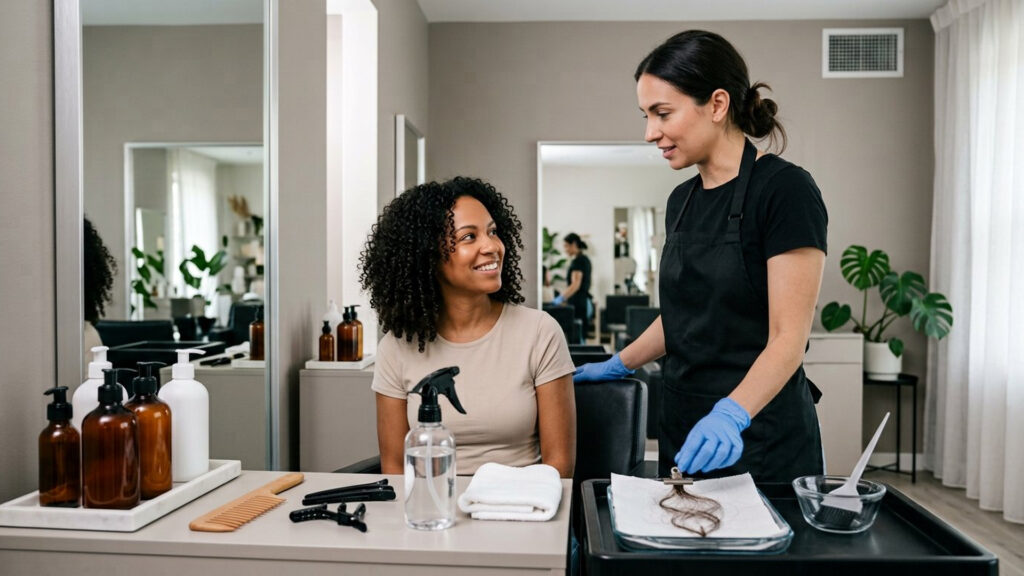
Chemical straighteners or relaxers are hair treatments that alter the chemical structure of curly, coily, or wavy hair to produce a straighter or less tightly curled appearance. Depending on the product, formulations can use hydroxide based relaxers, thioglycolate chemistry, or other straightening systems designed for particular hair types and techniques. Because these products can cause scalp burns, eye injuries, hair breakage, and other adverse effects when misused, following manufacturer instructions, avoiding incompatible chemical processes, and using a properly trained professional can be important safety measures.
Chemical straightening is different from temporarily smoothing hair with a blow dryer or flat iron. The portion of hair that has been chemically altered retains that structural change as it grows out, although newly produced hair emerges with its natural texture.
Understanding that distinction is central to safe maintenance. Repeatedly processing already relaxed hair can increase damage because the hair shaft has already undergone significant chemical alteration.
What Are Chemical Straighteners or Relaxers?
Chemical hair straighteners are formulations that change structural bonds within hair so that its shape can be reorganized.
The exact chemistry varies by product category.
Hair is made primarily from keratin proteins. Its shape and mechanical characteristics depend partly on chemical bonds within and between protein structures.
Straightening treatments alter some of those bonds, enabling hair to take a different form.
What Is a Hair Relaxer?
A hair relaxer is a chemical treatment commonly used to reduce curl or straighten tightly curled and coily hair.
Relaxers can be categorized according to their active chemistry.
Common categories include:
• Sodium hydroxide relaxers
• Other hydroxide based relaxers
• Guanidine hydroxide systems
• Thioglycolate based straightening systems
• Other manufacturer specific chemical straighteners
These systems should not be treated as interchangeable.
How Do Chemical Straighteners or Relaxers Work?
Different straightening systems alter hair chemistry through different reactions.
This is one reason mixing products or switching chemical systems without understanding compatibility can cause severe damage.
Hydroxide Relaxers
Hydroxide based relaxers use strongly alkaline chemistry to alter the hair’s structure.
Sodium hydroxide products are commonly called lye relaxers.
Other formulations marketed as no lye can use different chemical systems while remaining highly alkaline.
Thioglycolate Straightening
Thioglycolate based systems use reducing chemistry followed by neutralization to rearrange bonds in the hair.
They are chemically distinct from hydroxide relaxers.
Never Mix Incompatible Straightening Systems
Applying incompatible chemical systems to previously processed hair can increase the risk of severe breakage.
A stylist should establish the hair’s chemical history before selecting a product.
9 Safety Tips for Chemical Straighteners or Relaxers
Chemical straightening requires careful product selection and application.
1. Follow the Manufacturer’s Instructions
Hair relaxers are formulated with specific application, timing, rinsing, and neutralization requirements.
Do not leave a product on longer because you assume that will create straighter results.
Longer exposure can increase damage and chemical burns.
2. Do Not Apply Relaxer to an Irritated Scalp
Scratches, sores, dermatitis, inflammation, or other scalp damage can increase discomfort and chemical exposure.
Treatment may need to be postponed until the scalp has recovered.
Avoid Scratching Before Treatment
Aggressive scratching, brushing, or manipulating the scalp immediately before relaxer application can create small abrasions.
Follow the product manufacturer’s preparation instructions and professional guidance.
3. Protect Skin and Eyes
Chemical straighteners can irritate or burn skin and seriously injure eyes.
Use protective procedures specified on the label.
If a chemical enters the eyes, immediately follow the product’s first aid instructions and seek urgent medical advice as appropriate.
4. Avoid Overlapping Previously Relaxed Hair
During a retouch, product is generally intended for appropriate new growth rather than repeatedly coating already processed lengths.
Overlap can weaken hair and contribute to breakage.
5. Respect Processing Time
Use a timer and follow the product instructions.
Application time itself may contribute to total exposure, making organized sectioning important.
6. Rinse Thoroughly
Residual chemical product can continue affecting the hair and scalp.
Follow the complete rinsing procedure specified by the manufacturer.
7. Use the Required Neutralization Process
Certain straightening systems require particular neutralization steps.
Skipping or shortening them can compromise the result and hair integrity.
8. Keep Chemical History Records
Know which products have previously been used on the hair.
This information becomes particularly important when switching salons or considering coloring, bleaching, perming, or another straightening system.
9. Stop if Significant Burning Occurs
Severe burning is not evidence that a relaxer is working effectively.
Treatment should follow the product’s safety instructions, and significant scalp or skin injury needs appropriate medical attention.
Lye vs No Lye Relaxers
The words lye and no lye are often interpreted as dangerous versus gentle, but the reality is more complicated.
Lye Relaxers
Lye relaxers generally use sodium hydroxide as the primary active relaxing ingredient.
They work through strongly alkaline chemistry and can cause burns if misused.
No Lye Relaxers
No lye products do not use sodium hydroxide in the same manner, but they can still contain highly alkaline chemical systems capable of damaging hair and skin.
Some formulations can also contribute to mineral deposits on the hair depending on chemistry and water conditions.
Is No Lye Automatically Safer?
No.
Both categories require careful application.
The right choice depends on hair condition, scalp, previous chemical history, and professional assessment.
Chemical Straighteners for Different Hair Types
Texture alone should not determine product selection.
Hair condition, strand diameter, porosity, previous treatments, scalp health, and desired result all matter.
Fine Hair
Fine strands can be particularly vulnerable to overprocessing.
A conservative approach and careful assessment are important.
Coarse Hair
Coarse hair does not mean unlimited chemical resistance.
Individual strands can still become weakened through excessive processing.
Previously Colored Hair
Color treated hair may already be structurally compromised.
Some combinations of coloring and straightening treatments can significantly increase damage.
Bleached Hair Needs Particular Caution
Bleaching changes the hair shaft substantially.
Applying strong straightening chemistry to heavily lightened hair can create a high risk of breakage.
Seek advice from a suitably trained professional familiar with both processes.
Chemical Straighteners vs Keratin Treatments
These services are sometimes grouped together because both can make hair appear straighter, but they work differently.
Traditional Relaxers
Relaxers chemically alter hair structure to create a lasting change in the treated portion of the shaft.
Keratin and Smoothing Treatments
Salon smoothing treatments vary widely in chemistry.
Some reduce frizz and loosen curl without functioning like traditional hydroxide relaxers.
Formaldehyde Concerns
Some hair smoothing treatments have raised concerns about formaldehyde or chemicals that can release formaldehyde when heated.
Occupational exposure is especially relevant to salon workers who perform treatments repeatedly.
Ask What Product Is Being Used
Clients and salon professionals should consult product labels and safety information rather than relying on generic descriptions such as natural keratin treatment.
Ventilation and occupational safety requirements should be followed.
Chemical Straighteners vs Thermal Straightening
Thermal tools temporarily change hair shape through heat and manipulation.
Flat Ironing
Flat irons can straighten hair until moisture or washing causes the natural pattern to reappear.
Frequent excessive heat can damage hair.
Chemical Relaxing
Chemical treatment changes the processed portion more persistently.
New growth still develops according to the person’s natural hair characteristics.
Hair Relaxer Application at Home
Home kits are available, but users should recognize that relaxers contain powerful chemicals.
Read Everything Before Starting
Do not begin application before reading the complete directions, warnings, timing requirements, and first aid information.
Have necessary supplies prepared beforehand.
Do Not Improvise Chemistry
Never add substances to a relaxer unless the manufacturer specifically instructs you to do so.
Do not mix products from unrelated systems.
Children and Relaxers
Products can have age restrictions or specific warnings.
Follow the label and consult an appropriately qualified healthcare or hair professional when safety is uncertain.
Professional Hair Relaxer Services
Professional application can reduce some risks because a trained stylist can assess scalp condition, hair history, new growth, and existing damage.
It does not eliminate all possibility of adverse effects.
Consultation Before Treatment
A stylist should ask about:
• Previous relaxers
• Hair color
• Bleach
• Perms
• Straightening treatments
• Scalp conditions
• Breakage
• Medications or health factors when relevant
• Desired result
Be transparent even if the previous chemical service happened months earlier.
Strand Testing
A strand test applies or evaluates a product on a limited amount of hair according to manufacturer instructions.
It can provide information about processing response and compatibility.
What a Strand Test Can Show
It may reveal excessive weakening, unexpected color changes, or undesirable processing.
A successful test cannot guarantee that the entire service will have no adverse reaction.
Scalp Burns From Hair Relaxers
Chemical burns are a known risk of strong relaxers.
Signs of Scalp Injury
Potential symptoms include:
• Significant burning
• Persistent redness
• Blistering
• Open sores
• Swelling
• Weeping or crusting
• Severe tenderness
A substantial burn should be medically assessed.
Do Not Reprocess Damaged Skin
Allow appropriate healing and obtain professional advice before considering another chemical treatment.
Hair Breakage After Chemical Straightening
Relaxed hair can become more fragile because chemical processing alters its structure.
Signs of Breakage
Short fragments, uneven lengths, weakened sections, and excessive snapping can indicate structural damage.
Breakage differs from hair shedding from the root.
Reduce Additional Stress
Avoid stacking unnecessary chemical, heat, and mechanical stress on compromised hair.
Gentle handling and appropriate conditioning can help reduce further damage, but severely damaged hair cannot literally be restored to its original unprocessed structure.
Chemical Straighteners and Hair Loss
Hair loss associated with straightening can have different mechanisms.
Breakage of the shaft can make hair look thinner, while scalp injury or other health conditions can affect hair at the follicle.
Persistent Hair Loss Requires Assessment
Seek professional medical advice for:
• Bald patches
• Scarring
• Significant scalp inflammation
• Sudden shedding
• Progressive thinning
• Persistent pain
A dermatologist can help determine the cause.
Health Research on Chemical Hair Straighteners
Research has examined possible associations between use of chemical hair straightening products and certain health outcomes.
Some observational studies have reported associations between frequent use of chemical straighteners and increased risks of particular cancers, including uterine cancer.
Association Is Not the Same as Proof of Causation
Observational studies can identify statistical relationships but cannot automatically establish that a specific product or ingredient caused an individual case.
Exposure can also vary substantially across products and historical formulations.
Why the Research Matters
The findings justify continued research and informed consideration of potential exposures, particularly among frequent users and salon professionals.
People concerned about personal risk can discuss their history with an appropriate healthcare professional.
Chemical Straighteners and Pregnancy
People may have questions about hair treatments during pregnancy because chemical exposure can occur through skin or inhalation.
Evidence for individual products varies.
Ask About the Specific Product
A healthcare professional can provide personalized advice based on pregnancy, health history, workplace exposure, and the formulation involved.
Salon workers may face different exposure considerations from someone receiving an occasional treatment.
Hair Relaxer Aftercare
Chemically straightened hair can benefit from gentle maintenance.
Use Appropriate Shampoo
Follow product and stylist guidance after a relaxer service.
Some systems require a specific neutralizing shampoo during the treatment process before ordinary hair care resumes.
Condition Regularly
Conditioners can improve manageability and reduce friction.
They cannot reverse chemical changes inside severely damaged hair.
Limit Excessive Heat
High heat adds another source of stress.
Use conservative temperatures and appropriate heat protection when styling.
How Often Can Hair Be Relaxed?
There is no universal safe interval suitable for everyone.
Retouches are generally intended to address sufficient new growth rather than repeatedly process existing relaxed lengths.
Growth Rate Varies
Hair growth and styling needs differ among individuals.
A professional stylist can assess whether enough new growth exists for controlled application.
Do Not Relax Damaged Hair on Schedule
A calendar date should not override hair or scalp condition.
If there is significant breakage, irritation, or another problem, further chemical treatment may need to be postponed.
Maintaining Relaxed Hair
Maintenance focuses on reducing avoidable breakage and preserving manageability.
Gentle Detangling
Work carefully through tangles using tools appropriate to your hair.
Avoid aggressive pulling.
Protective Styling
Low tension styles can reduce daily manipulation.
Styles that pull tightly at the hairline can contribute to traction related hair loss when used repeatedly.
Nighttime Hair Care
Some people use smooth pillowcases, scarves, or bonnets to reduce friction.
Choose methods that feel comfortable and do not create excessive tension.
Can You Color Relaxed Hair?
Chemical coloring and relaxing can both affect the hair shaft.
Whether they can be combined safely depends on product chemistry and hair condition.
Follow Manufacturer Compatibility Guidance
Some color and relaxer combinations may be permitted with particular timing, while others are inappropriate.
Do not assume all permanent colors, bleaches, and relaxers are compatible.
Alternatives to Chemical Straighteners or Relaxers
People who want temporarily straighter hair have several options.
Blow Drying
Controlled blow drying can temporarily stretch and straighten hair.
Use suitable heat settings.
Flat Ironing
Flat ironing can create a smoother result without permanently relaxing the strand, though repeated excessive heat can still cause damage.
Stretching Styles
Depending on hair type, braiding, banding, roller sets, or other nonchemical techniques can elongate the appearance of hair.
Natural Texture Styling
Some people choose to stop chemically straightening and wear their natural texture.
Transitioning can involve managing two textures until previously processed hair grows out or is cut away.
How to Choose a Chemical Straightener
If you decide to use a straightening product, choose according to hair history and product instructions rather than marketing claims.
Check the Label
Review:
• Active ingredients
• Warnings
• Hair compatibility
• Application instructions
• Processing times
• Neutralization requirements
• First aid information
Never transfer chemicals into an unlabeled container.
Avoid Counterfeit Products
Purchase professional or consumer hair products through reputable suppliers.
Counterfeit cosmetics can contain unknown or improperly labeled ingredients.
Salon Safety for Chemical Straightening
Salon employees can experience repeated chemical exposure across many clients.
Ventilation
Appropriate ventilation can reduce airborne exposure to vapors generated by certain treatments.
Protective Equipment
Gloves and other protective measures should be selected according to product safety information and workplace requirements.
Safety Data Sheets
Professional salons should have access to relevant safety documentation for workplace chemical products.
Common Chemical Straightening Mistakes
Many problems arise from excessive processing or incompatible treatments.
Avoid:
• Relaxing an already irritated scalp
• Leaving products on longer than directed
• Repeatedly overlapping processed hair
• Combining incompatible chemical systems
• Ignoring previous bleach or color
• Treating burning as normal
• Skipping required neutralization
• Using excessive heat on weakened hair
• Applying unknown products
• Ignoring persistent scalp injury or hair loss
Chemical services should prioritize hair and scalp integrity over maximum straightness.
Frequently Asked Questions
What are chemical straighteners or relaxers?
Chemical straighteners or relaxers are products that alter bonds within the hair structure to produce a straighter or less tightly curled appearance.
What is the difference between lye and no lye relaxers?
Lye relaxers commonly use sodium hydroxide, while no lye products use other chemical systems. Both can be strongly alkaline and require careful application.
Are chemical hair relaxers permanent?
The structural change to the treated portion of hair is generally lasting. New hair growth retains the person’s natural texture and may require separate styling or treatment.
Can chemical straighteners damage hair?
Yes. Overprocessing, overlapping applications, incompatible treatments, or improper technique can cause dryness, weakening, breakage, and scalp injury.
Can you use hair relaxer on bleached hair?
Combining strong chemical processes can significantly increase damage. Product compatibility and hair condition should be assessed by a suitably trained professional before treatment.
Are chemical hair straighteners associated with health risks?
Research has reported associations between frequent use of some chemical straightening products and certain health outcomes. Research is ongoing, and associations do not establish individual causation.
Conclusion
Chemical straighteners or relaxers can produce long lasting changes to the treated portion of curly, coily, or wavy hair, but their strong chemistry requires careful use. Product compatibility, scalp condition, previous coloring or bleaching, processing time, and appropriate neutralization all influence safety and hair integrity. Significant burning, scalp damage, or persistent hair loss should receive appropriate medical assessment rather than further chemical treatment. For people who prefer to avoid permanent chemical alteration, heat styling and nonchemical stretching methods provide alternative ways to create a temporarily straighter appearance.