
Choosing among the best Optic Brands in the United States means comparing far more than magnification or price. The U.S. optics market includes American companies and international...
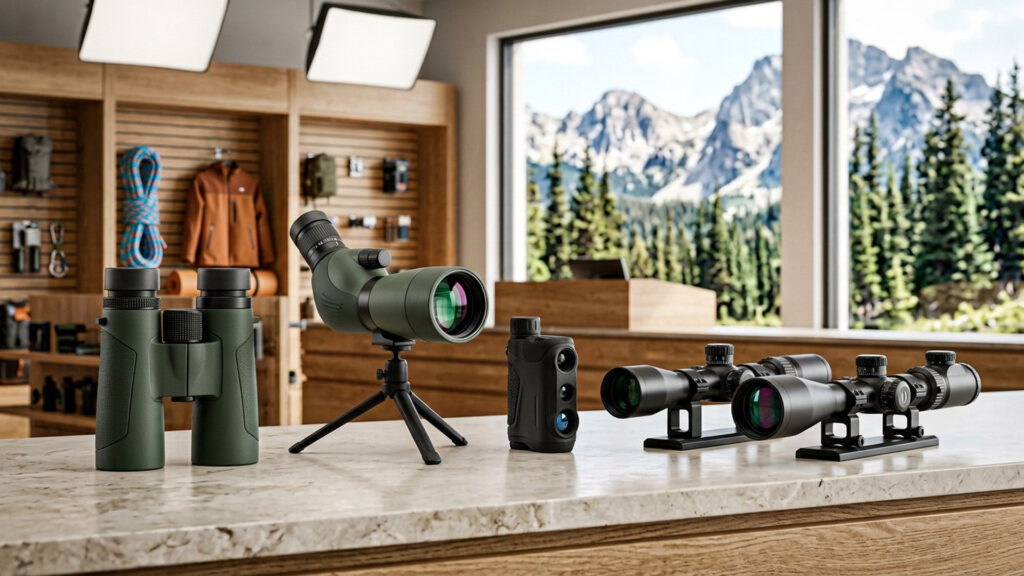
Choosing among the best Optic Brands in the United States means comparing far more than magnification or price. The U.S. optics market includes American companies and international manufacturers offering binoculars, spotting scopes, riflescopes, rangefinders and other optical products across entry level, enthusiast and premium categories. Optical clarity, mechanical construction, weather resistance, ergonomics, warranty coverage and service can differ substantially between brands and even between product lines from the same company. Country of manufacture also varies by model, so an American brand should not automatically be described as American made without checking the specific product.
What Defines the Best Optic Brands in the United States?
There is no universally best optics company because users prioritize different characteristics.
A birdwatcher may value low light clarity, field of view and low weight. A hunter may prioritize weather resistance and durability. A wildlife observer using a spotting scope may care about resolution at longer viewing distances.
Price also changes expectations.
An affordable binocular can be excellent value without matching the optical characteristics or construction of a premium model costing several times more.
For a useful comparison, evaluate brands according to measurable specifications, independent testing where available, warranty terms, long term support and hands on usability.
American Optic Brands Versus Optics Made in America
Brand origin and manufacturing origin are separate concepts.
A company headquartered in the United States may source components or complete products internationally. Some brands manufacture different product lines in different countries.
Manufacturing arrangements can also change over time.
If U.S. manufacturing matters to you, verify the country of origin for the exact model through the manufacturer rather than assuming every product carrying an American brand name is domestically made.
9 Best Optic Brands in the United States Market
The following companies are prominent options in the U.S. optics market. This is not a universal performance ranking because quality, specifications and value vary by individual model.
1. Vortex Optics
Vortex Optics is a Wisconsin based company with a broad product portfolio.
Its catalog includes binoculars, spotting scopes, monoculars, rangefinders, riflescopes and related optical products.
The company serves multiple price categories, making it accessible to both newer users and experienced enthusiasts.
Why Vortex Is Among the Best Optic Brands in the United States
Vortex is particularly well known for its broad distribution and VIP Warranty.
Check Each Vortex Product Line Separately
Different Vortex series use different optical designs, materials, features and manufacturing arrangements. The brand name alone does not establish identical quality throughout the catalog.
2. Leupold
Leupold and Stevens has longstanding roots in Oregon and is one of the better known American sporting optics manufacturers.
The company offers riflescopes, binoculars, spotting scopes, rangefinders and related products.
Leupold is especially recognizable in hunting and outdoor optics.
Its catalog spans different price points, so buyers should compare specifications within the relevant product family.
3. Trijicon
Trijicon is a Michigan based optics company known particularly for sighting systems.
Its portfolio includes various optical and electronic sight products.
The company has a strong presence in military, law enforcement and commercial markets.
Trijicon Optics
Its products are generally associated more strongly with sighting systems than with conventional birding binoculars or broad outdoor optical categories.
Choose Brands by Product Category
A company highly regarded for one type of optic does not automatically offer the best option in every optical category.
4. Burris Optics
Burris has a long history in sporting optics and sells products across the U.S. market.
Its range includes riflescopes and other optical products for outdoor users.
The brand offers several product families positioned at different levels.
As with every manufacturer, current warranty terms and product specifications should be verified for the exact item.
5. Bushnell
Bushnell is one of the most widely recognized optics brands in the American consumer market.
Its portfolio has historically included binoculars, spotting scopes, rangefinders and additional outdoor optical products.
Bushnell for General Outdoor Optics
The company’s broad catalog has made it accessible across numerous retail channels.
Compare Model Level Specifications
Long established brand recognition is useful context, but individual products should still be evaluated on optics, construction, warranty and current user requirements.
6. Athlon Optics
Athlon has become a visible competitor across several sporting optics categories in the U.S.
The company offers binoculars, spotting scopes, riflescopes and related equipment.
Its catalog covers several price levels.
Buyers looking for value can compare Athlon models directly with similarly priced products from established competitors.
7. Maven
Maven is a Wyoming based optics brand focused strongly on outdoor viewing products.
The company offers binoculars, spotting scopes and other optical equipment.
Maven has developed recognition among hunters, wildlife observers and outdoor enthusiasts.
Maven and Premium Outdoor Optics
Some product lines target users who prioritize image quality and durable construction.
Direct Comparisons Still Matter
Premium positioning alone does not establish superior optical performance. Compare models under similar lighting and viewing conditions whenever possible.
8. Nightforce Optics
Nightforce is a premium optics company with a significant presence in the American market.
Its product identity is particularly associated with precision riflescopes and demanding professional or sporting applications.
The brand generally occupies a higher price category than mainstream consumer optics.
For buyers considering premium products, mechanical reliability, warranty, reticle options and intended use deserve careful comparison.
9. Primary Arms Optics
Primary Arms is a Texas based company offering a wide selection of sporting optics and related products.
Its optics portfolio covers several configurations and price points.
The company is known in the U.S. shooting sports market for proprietary reticle concepts as well as conventional optical products.
Primary Arms Among U.S. Optic Brands
The brand can appeal to consumers looking for diverse options across multiple budgets.
Verify Manufacturing Origin by Model
As with many American optics companies, headquarters location does not establish that every item is manufactured domestically.
Best Optic Brands in the United States for Binoculars
Binocular selection should begin with intended use.
Wildlife observation, birding, stadium events and hunting can require different balances of magnification, objective size, weight and field of view.
Binocular Magnification
Specifications such as 8×42 have two principal numbers.
The first indicates magnification. The second indicates objective lens diameter in millimeters.
Higher magnification is not automatically superior.
It can narrow the field of view and make handheld image movement more noticeable.
Optical Clarity
Resolution, contrast, chromatic aberration control and color representation contribute to perceived image quality.
Low Light Performance
Larger objective lenses can gather more light, but glass quality, coatings and optical design also affect performance.
Test With Your Own Eyes
Visual perception and eyeglass use differ among people. Trying binoculars before buying can be especially valuable.
Best Optic Brands in the United States for Spotting Scopes
Spotting scopes provide higher magnification than ordinary binoculars and are useful for observing distant wildlife, landscapes and other subjects.
Brands such as Vortex, Leupold, Maven, Bushnell and Athlon offer options in this category, with availability changing by product line.
Angled Versus Straight Spotting Scopes
Angled eyepieces can be comfortable for shared viewing and certain tripod positions.
Straight designs can make initial target acquisition intuitive for some users.
Neither configuration is universally better.
Tripod Quality Matters
High magnification amplifies vibration.
Budget for a Stable Support
An expensive spotting scope placed on an unstable tripod may provide a frustrating viewing experience despite strong optical performance.
Best Optic Brands for Riflescopes
Riflescopes are regulated or treated differently in some jurisdictions, particularly when exported internationally.
In the United States, buyers should follow applicable federal, state and local requirements related to their equipment and intended activity.
For ordinary product selection, focus on optical quality, reliability, eye relief, weather sealing, manufacturer support and compatibility requirements specified by the relevant equipment manufacturer.
Professional installation may be appropriate where correct setup cannot be verified by the user.
Understanding Lens Quality
Optical performance depends on the entire optical system.
Marketing terms such as premium glass can be vague when not supported by meaningful specifications or independent evaluation.
Lens Coatings
Optical coatings can reduce reflections and improve light transmission.
Manufacturers use different coating formulations and terminology.
Fully Multi Coated Optics
This commonly refers to multiple anti reflective coatings being applied to relevant air to glass surfaces.
Proprietary Names Are Difficult to Compare Directly
Two brands may describe coating systems differently, so real world evaluation can be more useful than comparing marketing terminology.
ED Glass in Premium Optics
ED means extra low dispersion.
Such glass can help optical designers control chromatic aberration.
It is commonly found in higher quality binoculars and spotting scopes.
Does ED Glass Guarantee Better Optics?
No.
Glass type is only one part of an optical design.
Lens geometry, coatings, alignment, manufacturing consistency and quality control all influence final performance.
Field of View
Field of view describes how much of a scene is visible through the optic at a specified distance or angle.
A wider field can make it easier to locate moving wildlife.
Binocular Field of View
Birdwatchers can particularly benefit from a generous field of view.
Magnification Tradeoffs
Higher magnification often corresponds with a narrower field, although optical designs differ.
Compare Actual Specifications
Do not infer field of view from magnification alone.
Eye Relief and Eyeglass Use
Eye relief describes the distance from the eyepiece at which the user can obtain the intended field of view.
This can be especially important for people wearing glasses.
Adjustable Eyecups
Twist up eyecups allow users to modify eye position on many binoculars.
Comfort Matters
An optic with excellent laboratory performance can still be a poor choice if it is uncomfortable to use.
Try Before Buying When Possible
Face shape, glasses and eye position can influence the viewing experience.
Waterproof and Fog Resistant Optics
Outdoor optics are frequently exposed to rain, snow, humidity and rapid temperature changes.
Manufacturers may use sealed housings and internal gas purging to reduce internal fogging.
Waterproof Ratings
Not every brand expresses water resistance through the same testing method.
Verify the Specification
Marketing descriptions such as weatherproof can be less informative than documented test conditions.
Follow Manufacturer Care Instructions
Water resistant products still have operating limits.
Durability and Construction
Outdoor optics can experience vibration, impacts and temperature changes.
Housing materials may include aluminum alloys, magnesium alloys or engineered polymers depending on product category.
Rubber Armor
External armor can improve grip and provide some surface protection.
Impact Resistance
No consumer optic should be treated as indestructible unless a specific standard supports the claim.
Protect Precision Optics
A protective case and appropriate storage remain worthwhile even for rugged products.
Best Optic Brands in the United States for Low Light Viewing
Low light performance depends on objective size, exit pupil, optical transmission and the viewer’s own eyes.
A larger objective is not automatically better because it adds weight and size.
Exit Pupil
Exit pupil can be approximated by dividing objective diameter by magnification.
For example, an 8×42 binocular has an exit pupil of approximately 5.25 millimeters.
Real World Performance Is More Complex
Optical transmission and image contrast also matter.
Do Not Rely on One Specification
Evaluate the complete system rather than selecting optics from exit pupil alone.
Best U.S. Optic Brands for Value
Value does not mean buying the least expensive product.
A value oriented optic provides appropriate performance and support for its price.
Vortex, Bushnell, Athlon, Burris and Primary Arms all compete in portions of the American value oriented market, depending on product category and current model.
Prices and product lines change, so comparison should be made at the model level.
Premium Optic Brands
Premium brands generally compete through advanced optical design, construction, mechanical performance and quality control.
Within the U.S. market, buyers may also compare American brands with European and Japanese manufacturers.
U.S. Brand Does Not Always Mean U.S. Manufacturing
Globalized supply chains are common in the optics industry.
Check Country of Origin
Product packaging and official manufacturer information can provide details.
Country Alone Does Not Determine Quality
Engineering, tolerances, materials and quality control matter regardless of where a product is manufactured.
Warranties From Leading Optic Brands
Warranty coverage can substantially influence long term value.
Vortex is particularly known for broad warranty positioning, while other manufacturers offer their own limited or lifetime warranty structures depending on product type.
Read Current Warranty Terms
Coverage can change.
Electronics May Be Treated Differently
A brand may provide different coverage periods for optical components and electronic systems.
Warranties Have Conditions
Always review the manufacturer’s official policy rather than relying on a retailer’s summary.
How to Compare Optic Brands
Begin with a budget and intended use.
Then shortlist specific models rather than comparing company names alone.
Optic Buying Checklist
Evaluate:
• Magnification
• Objective diameter
• Optical clarity
• Field of view
• Eye relief
• Weight
• Dimensions
• Weather protection
• Build quality
• Warranty
• Service availability
• Country of origin if relevant
• Price
• Independent testing
• User comfort
For electronic optics, battery life and environmental specifications may also matter.
Where to Buy Optics in the United States
Consumers can buy optics through manufacturer websites, authorized dealers, specialty outdoor retailers and other established stores.
Authorized Dealers
Buying through an authorized seller can simplify warranty support and authenticity concerns.
Marketplace Sellers
Large ecommerce marketplaces can contain numerous independent sellers.
Verify the Seller
Check authorization, return policies and warranty eligibility before purchasing an expensive optic.
Buying Used Optics
Used binoculars and scopes can offer good value, but condition needs careful assessment.
Check lenses for scratches or damage.
Optical Alignment
Misalignment can make viewing uncomfortable.
Mechanical Condition
Inspect adjustment controls, eyecups and focus mechanisms.
Warranty Transferability
Some manufacturers provide transferable coverage while others impose different requirements. Verify current terms before purchase.
Counterfeit Optics
Popular brands can attract counterfeit products.
Unusually low pricing from unknown sellers deserves additional scrutiny.
Verify Product Authenticity
Purchase through reputable channels and preserve receipts.
Serial Numbers
Serial information can help with support on some products.
A Serial Number Alone Is Not Definitive Proof
Counterfeiters may reproduce markings, so seller provenance remains important.
Caring for Optical Equipment
Avoid rubbing dry dirt directly across optical surfaces.
Remove loose particles according to manufacturer cleaning guidance before using approved lens materials.
Lens Cleaning
Use suitable optical cleaning tools and solutions.
Storage
Store equipment in an appropriate dry environment.
Prevent Fungus and Moisture Problems
Long term storage in excessively damp conditions can harm optical equipment.
What to Avoid When Choosing an Optic Brand
Do not choose solely from advertising claims about clarity or brightness.
These terms can be subjective.
Likewise, a large magnification number does not automatically create a better viewing experience.
Avoid assuming every product from a respected manufacturer performs equally.
Most major brands offer multiple tiers with meaningful differences in design and materials.
Comparing Warranties and Customer Service
Optics can be long term purchases.
Repair availability and responsive customer service can therefore influence value.
Service Location
Ask whether repairs are performed domestically or sent elsewhere.
Turnaround Time
Service times can vary with product and season.
Keep Documentation
Receipts and product information can simplify warranty requests.
Best Optic Brands in the United States for Different Users
A wildlife observer might prioritize binocular ergonomics and optical clarity.
A traveler may choose compact size and weight.
A stargazer using binoculars may prioritize larger objectives and tripod compatibility.
A sporting user may care more about rugged mechanical construction.
There is no responsible way to crown one company as the absolute best for all of these situations.
GEO and SEO for Optic Brand Research
AI powered search engines increasingly summarize brand comparisons.
High quality comparison content should distinguish factual specifications from subjective impressions.
EEAT for Optics Reviews
Firsthand testing can provide useful evidence when methodology is explained.
Disclose Affiliate Relationships
Publishers earning commissions from recommended products should provide appropriate disclosures.
Avoid Manufactured Rankings
A list should not rank brands solely according to which retailer pays the largest commission.
Frequently Asked Questions
What are the best Optic Brands in the United States?
Vortex, Leupold, Trijicon, Burris, Bushnell, Athlon, Maven, Nightforce and Primary Arms are prominent brands in the U.S. market, although the best choice depends on product and use.
Which American optic brands are made in the USA?
Manufacturing origin varies by company and product line. Some American brands manufacture selected products domestically while sourcing other models internationally, so verify the exact model.
What should I look for when buying optics?
Compare image quality, field of view, eye relief, durability, weather resistance, ergonomics, warranty and price according to your intended application.
Are expensive optics always better?
No. Premium optics can offer improved glass, coatings, construction or quality control, but whether those differences justify the price depends on the user and application.
Which optic brand has the best warranty?
Warranty terms vary and change over time. Vortex is widely known for broad coverage, but buyers should compare official current warranties for the specific products considered.
Should I buy optics online or in a store?
Either can work. In store testing helps evaluate comfort and optical preferences, while online purchasing can offer more selection. Use reputable or authorized sellers in either case.
Conclusion
The best Optic Brands in the United States include established names such as Vortex, Leupold, Trijicon, Burris, Bushnell, Athlon, Maven, Nightforce and Primary Arms, but brand reputation should only begin the comparison. Optical quality, ergonomics, weather protection, warranty and price can vary significantly between individual product lines. Buyers should also verify country of manufacture rather than assuming an American headquartered company produces every model domestically. Comparing exact models under realistic conditions is the most reliable way to select optics suited to your budget and intended use.