
A reliable plumbing system is essential for keeping commercial buildings functional, hygienic, and comfortable. Restaurants depend on clean water and effective drainage, offices need dependable...
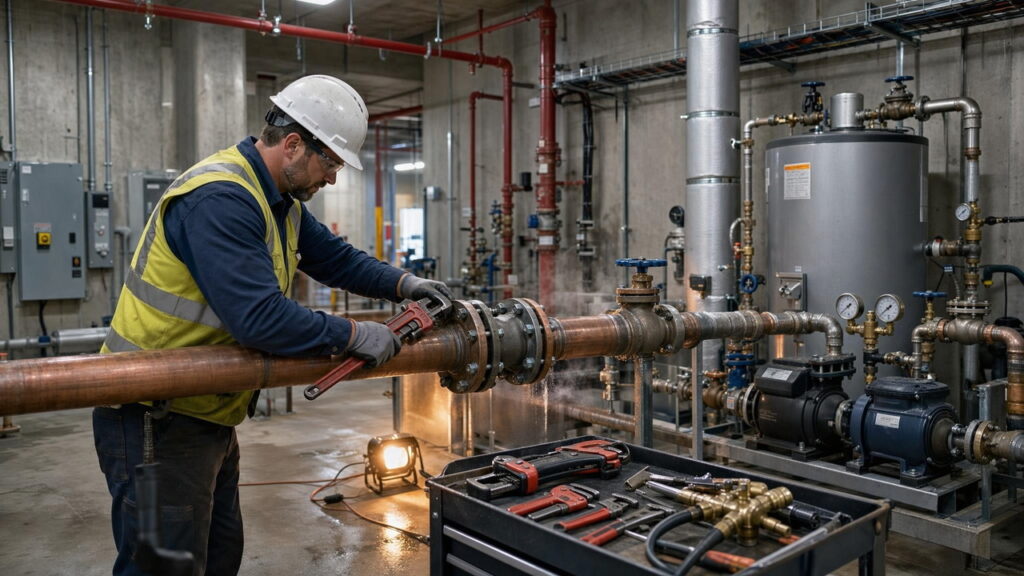
A reliable plumbing system is essential for keeping commercial buildings functional, hygienic, and comfortable. Restaurants depend on clean water and effective drainage, offices need dependable restrooms, and industrial facilities often require specialized water distribution systems. Professional Commercial Plumbing services help businesses maintain these essential systems while reducing the risk of leaks, drainage failures, equipment damage, and unexpected interruptions.
Unlike residential plumbing, commercial plumbing frequently involves larger buildings, more demanding water usage, specialized fixtures, and complex regulatory requirements. Understanding how these systems work, recognizing common problems, and scheduling appropriate maintenance can help property owners and facility managers make informed decisions about repairs, installations, and long-term infrastructure investments.
What Is Commercial Plumbing?
Commercial Plumbing refers to the installation, inspection, maintenance, and repair of water supply, drainage, and related plumbing systems in buildings used for business, institutional, or other nonresidential purposes. These properties include offices, restaurants, hotels, retail stores, hospitals, warehouses, schools, and manufacturing facilities.
A commercial plumbing system typically includes water distribution pipes, drainage networks, plumbing fixtures, valves, water heaters, and equipment that supports safe water use and wastewater removal. Depending on the building, it may also include backflow prevention devices, grease interceptors, commercial pumping systems, and specialized process-water connections.
Professional Commercial Plumbing services address both everyday operational needs and complex infrastructure requirements. Contractors may install piping in new buildings, repair damaged lines, maintain commercial restrooms, or replace aging equipment.
The work must follow applicable plumbing codes, health regulations, and construction requirements. Because regulations vary by location and building use, qualified professionals must identify the standards governing each project.
Why Commercial Plumbing Matters
Plumbing failures can interfere with normal business operations. A leaking supply pipe may damage inventory, while a blocked drain can make restrooms or food preparation areas unusable.
Reliable Commercial Plumbing supports sanitation, employee comfort, customer access, and property protection. It also helps businesses maintain the water services required for their operations.
However, even well-designed plumbing systems can develop problems as components age or building conditions change. Regular inspections and timely repairs help identify deterioration before it causes more extensive damage.
Commercial Plumbing vs Residential Plumbing
Commercial and residential plumbing share many basic principles, but their scale and operating requirements often differ significantly.
Residential plumbing primarily serves houses and dwelling units. Commercial Plumbing serves buildings that may accommodate hundreds of occupants, multiple businesses, or specialized industrial activities.
These differences influence system design, material selection, maintenance, and repair procedures.
Building Size and System Complexity
A typical house has a relatively limited number of plumbing fixtures. Large commercial buildings may contain multiple restroom groups, kitchens, mechanical rooms, and water distribution zones.
Commercial Plumbing systems may need to distribute water across several floors while maintaining appropriate pressure and flow.
Larger buildings can require booster pumps, pressure-regulating valves, multiple water heaters, and carefully designed drainage networks. These systems must operate together without creating excessive pressure or unreliable water delivery.
Water Usage and Demand
Commercial buildings frequently experience different water usage patterns from residential properties.
Restaurants may use substantial amounts of water for food preparation and cleaning. Hotels can experience simultaneous demand from showers, laundry facilities, and kitchens.
Commercial Plumbing design must account for expected demand and peak operating conditions. An undersized system can create pressure problems and interfere with equipment operation.
Maintenance Requirements
Commercial plumbing equipment may experience more frequent use than comparable residential fixtures.
Public restrooms, commercial kitchens, and high-occupancy facilities often require regular inspections and component replacement.
A structured Commercial Plumbing maintenance program can help facility managers detect leaks, monitor equipment, and plan repairs before failures disrupt operations.
Regulatory Considerations
Commercial buildings may be subject to additional plumbing, accessibility, sanitation, and occupational requirements.
Commercial Plumbing installations in the United States commonly follow a locally adopted plumbing code, such as the International Plumbing Code or Uniform Plumbing Code.
The applicable code depends on the jurisdiction. Local amendments, health department requirements, and specialized facility regulations may also apply.
Essential Commercial Plumbing Services
Commercial plumbing contractors provide services throughout a building’s life cycle. Some work primarily on new construction, while others specialize in maintenance, troubleshooting, and emergency repairs.
Understanding the available Commercial Plumbing services helps business owners determine which type of assistance their property needs.
Commercial Pipe Installation
Pipe installation is a fundamental part of commercial building construction.
A Commercial Plumbing contractor installs water supply, drainage, venting, and other permitted piping systems according to approved designs.
Material selection depends on water conditions, operating temperatures, pressure requirements, building use, and applicable codes.
Common plumbing materials include copper, PEX, CPVC, cast iron, and other approved products. Not every material is permitted for every application.
Correct installation requires suitable pipe support, connections, protection, and testing before the system enters service.
Water Supply System Repairs
Commercial buildings depend on reliable water distribution for drinking, cleaning, sanitation, and equipment operation.
Commercial Plumbing repairs may involve leaking supply pipes, damaged valves, pressure problems, or malfunctioning fixtures.
The contractor should identify the cause of the problem before replacing components. For example, repeated pipe failures may indicate excessive pressure, corrosion, or inappropriate materials rather than isolated defects.
Drain Cleaning and Sewer Services
Blocked drains can interrupt daily operations and create unsanitary conditions.
Commercial Plumbing contractors use appropriate methods to investigate and remove blockages from drainage systems.
Depending on the situation, equipment may include mechanical drain-cleaning machines, inspection cameras, or high-pressure water jetting systems.
The method should match the pipe material, condition, and type of obstruction. Excessive pressure or unsuitable equipment can damage deteriorated pipes.
Commercial Water Heater Services
Restaurants, hotels, hospitals, and other facilities often need dependable hot water.
Commercial Plumbing services may include installing, maintaining, and repairing storage water heaters, tankless systems, and other water-heating equipment.
Problems can involve heating components, valves, circulation systems, sediment accumulation, or temperature controls.
Hot-water systems also require attention to scald prevention, pressure protection, and applicable sanitation requirements.
Restroom Plumbing Repairs
Commercial restrooms experience frequent use and can develop problems with toilets, faucets, urinals, flush valves, and drainage connections.
Commercial Plumbing repairs help restore functionality while reducing water waste.
Recurring fixture failures may indicate underlying pressure, installation, or drainage problems. Replacing individual parts without investigating repeated defects may provide only temporary relief.
Backflow Prevention Services
Backflow occurs when water moves in an unintended direction, potentially allowing contaminants to enter a potable water system.
Commercial Plumbing systems may require backflow prevention assemblies at specific connections or service points.
Requirements depend on the hazards present and the local water authority’s rules.
Testing and maintenance of these devices may need to be performed by specifically certified personnel. A general plumbing license does not automatically authorize every type of backflow testing.
7 Common Commercial Plumbing Problems Businesses Should Know
Commercial plumbing problems can develop gradually or occur without warning. Recognizing the most common issues helps businesses arrange inspections and minimize unnecessary disruption.
1. Leaking Pipes and Connections
Leaks may develop because of corrosion, damaged fittings, excessive pressure, freezing, or mechanical movement.
In commercial buildings, concealed leaks can affect walls, ceilings, flooring, and neighboring units.
Commercial Plumbing professionals may use pressure testing, moisture assessment, or specialized leak detection equipment to locate the problem.
Visible water is not always found directly beneath the leak. Water can travel along pipes, structural elements, and building materials before appearing elsewhere.
Prompt repair helps limit water damage and unnecessary consumption.
2. Blocked Commercial Drains
Commercial kitchens, restrooms, and service areas can experience drainage blockages.
Grease, food particles, wipes, foreign objects, and accumulated debris may restrict wastewater flow.
Commercial Plumbing maintenance should address recurring blockage patterns rather than repeatedly clearing the same drain without investigation.
A camera inspection may be appropriate when blockages return frequently or damaged pipes are suspected.
Businesses should also train staff on appropriate waste disposal practices.
3. Low Water Pressure
Low water pressure can affect faucets, equipment, cleaning operations, and customer facilities.
Possible causes include leaking supply pipes, partially closed valves, pressure-regulating equipment problems, or inadequate distribution capacity.
Commercial Plumbing technicians evaluate the system to determine whether the issue affects one fixture, a particular area, or the entire building.
Pressure complaints should be assessed carefully because unnecessary adjustments can create excessive pressure elsewhere.
4. Running Toilets and Faulty Flush Valves
Toilets that continuously run can waste substantial amounts of water.
Commercial restrooms may use flushometer valves or other systems that differ from typical residential toilets.
Commercial Plumbing repairs may involve replacing seals, diaphragms, valves, or control components.
If multiple fixtures experience similar problems, the contractor should consider water pressure and supply conditions.
5. Commercial Water Heater Problems
Insufficient hot water can disrupt restaurants, hospitality operations, and other businesses.
Common causes include heating component failures, control problems, sediment accumulation, circulation faults, and inadequate system capacity.
Commercial Plumbing contractors should evaluate both equipment condition and actual hot-water demand.
A heater that is functioning correctly may still be unsuitable if the building’s demand has increased beyond its designed capacity.
6. Sewer Odors and Drainage Problems
Unpleasant odors may indicate dry traps, venting defects, drainage blockages, or other plumbing problems.
Commercial Plumbing professionals can inspect relevant fixtures and drainage systems to identify the source.
Not every odor originates from a sewer pipe. Building ventilation, contaminated surfaces, and other conditions can create similar complaints.
Persistent sewage odors should be investigated, particularly when accompanied by wastewater backups.
7. Aging and Corroded Plumbing Infrastructure
Commercial buildings may contain piping installed decades earlier.
Material deterioration can increase the likelihood of leaks, restrictions, and component failures.
Commercial Plumbing inspections can help determine whether localized repairs remain appropriate or larger replacement projects should be considered.
Age alone does not establish that all piping requires replacement. Material condition, water chemistry, maintenance history, and operating conditions are also important.
Commercial Plumbing Installation for New Buildings
New construction requires coordinated plumbing design and installation.
A commercial building’s plumbing system must support expected occupancy, fixture demand, wastewater flow, and specialized equipment.
Commercial Plumbing contractors typically work with architects, engineers, general contractors, and local inspectors.
Plumbing System Design
The design process identifies water supply requirements, drainage capacity, fixture locations, and equipment needs.
Commercial Plumbing planning may include water pressure calculations, pipe sizing, venting arrangements, and backflow protection.
Some projects require designs prepared or reviewed by licensed professional engineers.
The requirements depend on the building and jurisdiction.
Material Selection
Plumbing materials must be appropriate for the intended service.
Potable water systems require approved materials, while drainage and process-water applications may have different specifications.
Commercial Plumbing professionals must also consider temperature, pressure, corrosion resistance, and compatibility with connected equipment.
Selecting materials based only on initial cost can lead to unsuitable installations.
Installation and Testing
Pipes, valves, drains, and fixtures must be installed according to applicable plans and requirements.
Commercial Plumbing installations commonly undergo inspections and specified tests before use.
Testing procedures may address leakage, pressure performance, drainage integrity, and other relevant conditions.
Completed work should be documented where required.
Commercial Plumbing Maintenance and Why It Matters
Preventive maintenance helps businesses identify developing problems and maintain reliable plumbing performance.
Commercial Plumbing maintenance programs should reflect building size, occupancy, equipment, water conditions, and previous repair history.
A restaurant has different maintenance priorities from an office building or warehouse.
Regular Plumbing Inspections
Routine inspections may identify leaking fixtures, corroded connections, abnormal pressure, and drainage concerns.
Commercial Plumbing contractors can assess accessible components and recommend further investigation when hidden problems are suspected.
Inspections do not guarantee that every concealed defect will be discovered.
However, maintaining records helps identify recurring problems and changes in system condition.
Drainage System Maintenance
Businesses that produce grease, food waste, or other materials affecting drains may need more frequent maintenance.
Commercial Plumbing maintenance can include cleaning appropriate drainage components and evaluating recurring restrictions.
Grease interceptors should be serviced according to applicable regulations and actual operating conditions.
The required cleaning frequency depends on local rules and the system’s capacity and use.
Water Heater Maintenance
Commercial water heaters need servicing appropriate to their design.
Maintenance may involve inspecting valves, checking operating temperatures, evaluating pressure protection, and addressing sediment where recommended.
Commercial Plumbing professionals should follow manufacturer instructions.
Incorrect maintenance procedures can damage equipment or create safety hazards.
Valve and Shutoff Inspections
Accessible shutoff valves are important during emergencies.
Commercial Plumbing inspections should identify critical isolation points and verify their condition using appropriate procedures.
Facility managers should know where essential water shutoffs are located.
However, operating unfamiliar valves without understanding the connected system can interrupt essential services or damage equipment.
Emergency Commercial Plumbing Services
Some plumbing problems require immediate attention because they threaten property, sanitation, or business operations.
Emergency Commercial Plumbing services help assess urgent failures and perform necessary repairs when conditions permit.
Burst Water Pipes
A major pipe failure can release water into offices, retail spaces, equipment rooms, and other areas.
If safe, building personnel should isolate the affected water supply using an appropriate shutoff.
Commercial Plumbing professionals can then evaluate the damage and repair the failed section.
Electrical hazards must be addressed before entering flooded areas or operating equipment.
Sewer Backups
Sewage backups can create serious sanitation concerns.
Affected areas should be isolated from occupants until appropriate cleanup and repairs are completed.
Commercial Plumbing contractors may investigate the blockage or damaged sewer connection.
Contaminated materials may require specialized cleaning and restoration.
Employees should not handle sewage without suitable training and protective equipment.
Major Water Heater Failures
Commercial water heaters can develop leaks, control failures, or pressure-related problems.
A significant leak may require shutting down the equipment and isolating its water supply.
Emergency Commercial Plumbing repairs should prioritize safety, particularly where hot water, electricity, gas, or pressurized components are involved.
Overflowing Restrooms
Overflowing toilets and blocked drains can quickly affect customer access and sanitation.
Commercial Plumbing technicians can identify whether the issue is localized or part of a larger drainage problem.
Businesses should restrict access to affected areas until the problem is corrected and cleaning is completed.
Commercial Plumbing Costs Explained
Commercial Plumbing costs depend on the project, equipment, materials, labor, and property conditions.
A minor faucet repair is fundamentally different from replacing a commercial water main or installing plumbing throughout a new building.
For this reason, businesses should rely on detailed project estimates rather than universal pricing claims.
Factors Affecting Plumbing Repair Costs
Several considerations influence the final expense.
Project complexity: Difficult diagnostic work or major infrastructure repairs generally require more labor.
Building accessibility: Pipes located behind walls, beneath slabs, or above occupied areas can increase repair difficulty.
Material requirements: Specialized piping, valves, and commercial fixtures may cost more than standard components.
Emergency scheduling: After-hours services may involve additional charges.
Permits and inspections: Certain installations and modifications require regulatory approval.
Business operations: Repairs requiring shutdowns or phased work can involve additional coordination.
Damage restoration: Water-damaged flooring, drywall, or other materials may require separate repairs.
A Commercial Plumbing contractor should explain which activities are included in the estimate.
Repair vs Replacement Costs
Repairing a localized leak may be economical when the surrounding piping remains sound.
However, repeated failures across an aging system can make replacement more practical.
Commercial Plumbing professionals should evaluate the broader condition before recommending extensive work.
A business may benefit from comparing the immediate repair cost with expected future maintenance and operational risks.
Replacement should not be recommended solely because a system is old.
How to Choose a Reliable Commercial Plumbing Contractor
Selecting the right contractor is essential for safe installation, dependable repairs, and regulatory compliance.
Commercial Plumbing work can involve specialized systems that require experience beyond ordinary residential service.
The following considerations help businesses evaluate potential contractors.
Verify Licensing and Insurance
Plumbing licensing requirements vary by jurisdiction.
Businesses should verify that the contractor holds the credentials required for the project.
Commercial Plumbing companies should also carry appropriate insurance, including relevant liability and workers’ compensation coverage.
Ask for current documentation rather than relying on advertising claims.
Check Commercial Experience
Experience with residential plumbing does not automatically establish expertise in complex commercial facilities.
Ask whether the contractor has completed similar Commercial Plumbing projects.
For example, restaurant grease management, hospital water systems, and industrial piping can require specialized knowledge.
References and examples of comparable work may help establish suitability.
Request Detailed Written Estimates
A written proposal should identify the scope of work, materials, labor, permits, and expected schedule.
Commercial Plumbing estimates should also explain exclusions and potential additional charges.
For large projects, ask how unexpected conditions will be handled.
Clear change-order procedures help reduce disagreements.
Review Safety Practices
Commercial plumbing may involve confined spaces, hot water, pressurized systems, excavation, and hazardous environments.
Contractors should follow applicable occupational safety requirements.
Commercial Plumbing work in occupied buildings may also require coordination to protect employees and customers.
Ask how the contractor plans to isolate work areas and manage service interruptions.
Understand Warranties and Support
Ask what workmanship warranty applies and whether equipment has separate manufacturer coverage.
Commercial Plumbing contracts should explain any maintenance obligations that affect warranty terms.
For facilities requiring reliable service, ongoing maintenance agreements may also be useful.
Commercial Plumbing for Different Industries
Commercial buildings have different plumbing requirements depending on how they operate.
A contractor should understand these differences before recommending repairs or installations.
Restaurants and Commercial Kitchens
Restaurants depend on water for food preparation, dishwashing, sanitation, and cleaning.
Commercial Plumbing systems may include specialized sinks, hot-water equipment, grease interceptors, and backflow prevention devices.
Drainage and sanitation requirements can be particularly important.
Plumbing failures may interrupt food preparation or create conditions that require operational restrictions.
Hotels and Hospitality Buildings
Hotels often have numerous bathrooms, laundry facilities, and hot-water distribution systems.
Commercial Plumbing must accommodate varying demand throughout the day.
Pressure management, circulation, and hot-water availability can affect guest comfort.
Larger properties may require multiple equipment zones or centralized systems.
Office Buildings
Offices depend on restrooms, drinking water, breakroom sinks, and building maintenance facilities.
Commercial Plumbing repairs may involve fixtures, water supply distribution, and drainage systems.
In multi-tenant buildings, work may need to be scheduled to minimize disruption to neighboring businesses.
Hospitals and Healthcare Facilities
Healthcare buildings can have specialized plumbing and water management requirements.
Commercial Plumbing may support patient care areas, sanitation systems, laboratories, and other clinical functions.
Water safety is especially important because certain patients may be vulnerable to waterborne pathogens.
The Centers for Disease Control and Prevention provides guidance on healthcare water management and infection prevention.
Warehouses and Industrial Facilities
Industrial properties may require process-water systems, equipment connections, and specialized drainage.
Commercial Plumbing installations should be evaluated according to the facility’s operations.
Industrial wastewater may require pretreatment or separate regulatory approvals.
Not every plumbing contractor is qualified to work on specialized industrial systems.
Commercial Drain Cleaning and Sewer Line Maintenance
Drainage systems are essential for removing wastewater from commercial buildings.
Blocked or damaged pipes can create sanitation problems and interrupt operations.
Mechanical Drain Cleaning
Mechanical equipment can remove certain obstructions from drains.
Commercial Plumbing contractors select tools based on pipe size, condition, and blockage type.
Improper equipment use can damage old or fragile piping.
A professional should evaluate recurring blockages rather than relying on repeated temporary clearing.
Hydro Jetting
Hydro jetting uses pressurized water to remove suitable deposits and obstructions.
It can be effective for certain grease accumulations and other drainage restrictions.
However, not every pipe is suitable for high-pressure cleaning.
Commercial Plumbing contractors should assess pipe condition before using this method.
Sewer Camera Inspections
Drain cameras allow technicians to observe accessible pipe interiors.
They can help identify root intrusion, displaced joints, structural damage, or recurring obstructions.
Commercial Plumbing camera inspections provide useful diagnostic information, although some conditions may require additional testing.
Accurate findings help determine whether cleaning, repair, or replacement is appropriate.
Water Pressure Management in Commercial Plumbing
Commercial buildings need suitable water pressure for fixtures and equipment.
Excessively low pressure affects performance, while excessive pressure can increase stress on plumbing components.
Pressure-Regulating Valves
Pressure-regulating valves help control downstream water pressure.
Commercial Plumbing systems may use these devices where supply pressure exceeds the building’s requirements.
Valve failure can contribute to pressure fluctuations.
Professional testing helps determine whether adjustment, maintenance, or replacement is necessary.
Booster Pump Systems
Taller buildings may require booster pumps to deliver water to upper floors.
Commercial Plumbing designs must account for pressure zones and demand.
Improper pump operation can create inconsistent service or excessive pressure.
These systems should be maintained according to manufacturer instructions.
Water Hammer
Water hammer occurs when changes in water velocity create pressure surges.
It may produce banging sounds in pipes.
Commercial Plumbing professionals can investigate the cause and recommend appropriate control measures.
Potential solutions depend on the system and may involve water hammer arrestors, valve adjustments, or piping modifications.
Commercial Plumbing and Water Efficiency
Water efficiency can help businesses manage utility costs and resource use.
However, reducing consumption should not compromise sanitation or fixture performance.
Water-Efficient Fixtures
Modern commercial faucets, toilets, and urinals may use less water than older equipment.
Commercial Plumbing upgrades can involve selecting suitable fixtures that meet applicable performance standards.
Actual savings depend on usage patterns and the equipment being replaced.
Leak Detection
Small leaks can continue unnoticed for extended periods.
Commercial Plumbing maintenance may include meter monitoring, inspections, and appropriate leak detection technology.
Some buildings use automated systems that identify unusual water consumption.
However, monitoring equipment does not replace routine inspections or repairs.
Smart Water Management
Certain commercial properties use connected water meters, sensors, and automatic shutoff systems.
These technologies may help identify abnormal water use.
Commercial Plumbing contractors can assist with compatible installations.
The value of monitoring depends on proper configuration, maintenance, and response procedures.
Backflow Prevention and Water Safety
Protecting potable water from contamination is a major consideration in commercial buildings.
Backflow can occur through backsiphonage or backpressure when conditions allow nonpotable water to move toward the drinking water supply.
Commercial Plumbing systems may require specific protective devices at hazardous connections.
Common Backflow Risks
Potential cross-connections may involve irrigation systems, chemical dispensing equipment, boilers, and certain commercial processes.
The appropriate protection depends on the hazard classification and applicable regulations.
Commercial Plumbing professionals should select approved assemblies based on the installation requirements.
Testing Requirements
Some jurisdictions require periodic testing of certain backflow prevention assemblies.
Testing must often be performed by authorized or certified personnel.
Commercial Plumbing maintenance records should include relevant inspection and test documentation.
Businesses should confirm the requirements established by their local water supplier.
Commercial Plumbing and Building Code Compliance
Plumbing codes establish requirements intended to protect health, safety, and building performance.
Commercial Plumbing contractors must follow the codes legally adopted in the project’s jurisdiction.
Plumbing Installation Standards
Applicable codes address subjects such as pipe sizing, fixture requirements, drainage, venting, materials, and water supply protection.
Commercial Plumbing installations may require permits and inspections.
The correct code edition should be confirmed before work begins.
Accessibility Requirements
Commercial restrooms may be subject to accessibility requirements.
In the United States, the Americans with Disabilities Act and applicable building regulations can influence fixture placement and restroom design.
Commercial Plumbing contractors should coordinate with designers and accessibility specialists when modifications affect accessible facilities.
Health and Sanitation Regulations
Restaurants, healthcare facilities, and other specialized businesses may face additional sanitation rules.
Commercial Plumbing design should account for these requirements.
Health department approvals may be necessary for certain projects.
Preventing Commercial Plumbing Emergencies
Although not every failure can be prevented, planning can reduce certain risks.
A proactive Commercial Plumbing strategy combines inspections, maintenance, documentation, and staff awareness.
Create a Maintenance Schedule
Maintenance intervals should reflect the building’s equipment and operating conditions.
Commercial Plumbing inspections may be scheduled more frequently for heavily used systems.
A contractor can help identify appropriate priorities.
Train Employees to Report Problems
Employees often notice plumbing problems before maintenance personnel do.
Encourage reporting of leaks, unusual odors, slow drains, and malfunctioning fixtures.
Early notification can help Commercial Plumbing teams investigate problems before conditions worsen.
Maintain Accurate Records
Keep records of repairs, inspections, equipment replacements, and recurring problems.
Commercial Plumbing documentation can reveal patterns that support better maintenance decisions.
It can also help contractors understand previous work.
Identify Emergency Shutoffs
Facility managers should know how to isolate affected water systems during emergencies.
Commercial Plumbing contractors can help label important valves and explain their functions.
However, emergency procedures must account for systems that cannot be interrupted without special precautions.
Commercial Plumbing Repair vs Complete System Replacement
Businesses sometimes face difficult decisions when plumbing infrastructure begins to deteriorate.
Localized repairs may be appropriate when the surrounding system remains reliable.
However, repeated failures can indicate broader problems.
When Repairs Are Appropriate
Commercial Plumbing repairs may be sufficient for isolated leaks, damaged valves, or individual fixture failures.
The contractor should verify that the defect is localized.
Repairs should restore appropriate performance without creating new problems.
When Replacement Should Be Considered
Replacement may become appropriate when piping shows widespread corrosion, repeated leakage, or inadequate capacity.
Commercial Plumbing system upgrades may also be necessary when building use changes substantially.
A qualified contractor should evaluate repair history, material condition, and expected future demand.
Planning Phased Replacement
Large buildings may not be able to shut down all water services simultaneously.
Commercial Plumbing replacement projects can sometimes be completed in phases.
Temporary service arrangements and carefully scheduled shutdowns may help reduce disruption.
However, these plans require suitable engineering and safety coordination.
How to Prepare for a Commercial Plumbing Project
Good preparation helps projects proceed efficiently.
Before scheduling Commercial Plumbing work, identify the affected areas, operational requirements, and available building documentation.
Review Existing Plumbing Drawings
Accurate drawings can help contractors identify pipe routes and equipment locations.
However, older buildings may contain undocumented modifications.
Commercial Plumbing contractors should verify relevant conditions rather than relying entirely on historical plans.
Coordinate Business Operations
Plumbing repairs may require temporary water shutdowns or restricted restroom access.
Commercial Plumbing work should be scheduled around critical operations when practical.
Businesses should communicate anticipated interruptions to affected occupants.
Prepare Work Areas
Clear accessible work areas and identify important equipment or inventory that needs protection.
Commercial Plumbing contractors should explain their access requirements.
For extensive work, temporary barriers or other site controls may be necessary.
Arrange Final Inspection and Documentation
After installation or major repairs, required testing and inspections should be completed.
Commercial Plumbing project records may include permits, equipment information, warranties, and maintenance recommendations.
Keeping this documentation organized supports future facility management.
FAQ’s
1. What is Commercial Plumbing?
Commercial Plumbing involves installing, repairing, and maintaining water supply, drainage, fixtures, and related plumbing systems in business and institutional buildings.
2. How much does Commercial Plumbing cost?
Commercial Plumbing costs depend on project complexity, materials, labor, building accessibility, and required permits. A detailed written estimate provides the most reliable pricing.
3. What is the difference between commercial and residential plumbing?
Commercial Plumbing typically involves larger systems, greater water demand, specialized equipment, and additional regulatory requirements compared with residential plumbing.
4. How often should commercial plumbing systems be inspected?
Inspection frequency depends on building use, equipment, and operating conditions. High-demand facilities may require more frequent Commercial Plumbing maintenance.
5. When should a business call an emergency commercial plumber?
Immediate assistance is appropriate for major water leaks, sewer backups, overflowing fixtures, or plumbing failures that threaten safety, sanitation, or essential operations.
6. Can Commercial Plumbing maintenance reduce water bills?
Yes. Commercial Plumbing maintenance can identify leaks, faulty fixtures, and inefficient equipment that contribute to unnecessary water consumption.
Conclusion
Commercial Plumbing plays an essential role in keeping businesses safe, functional, and efficient. Reliable water supply, effective drainage, properly maintained fixtures, and suitable equipment all contribute to daily operations. Understanding common plumbing problems and arranging timely professional service can help businesses reduce disruptions and protect their properties from avoidable damage.
Whether managing an office, restaurant, hotel, warehouse, or larger commercial facility, investing in appropriate Commercial Plumbing maintenance and repairs supports long-term reliability. Choosing qualified contractors, following applicable regulations, and maintaining accurate service records can help property owners make informed decisions about their plumbing infrastructure.