
A thoughtful pre-nursery curriculum gives young children opportunities to explore, play, communicate, and build everyday skills in a safe, supportive setting. Rather than rushing children...
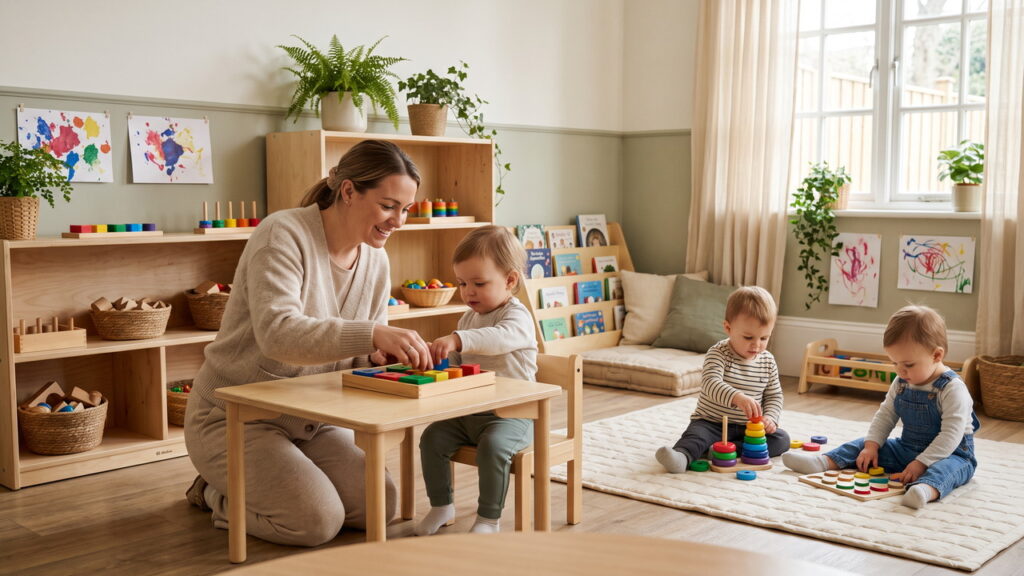
A thoughtful pre-nursery curriculum gives young children opportunities to explore, play, communicate, and build everyday skills in a safe, supportive setting. Rather than rushing children into formal lessons, it balances caring relationships, routines, hands-on discovery, and activities suited to their development.
The term “pre-nursery” can mean different things in different places, so no single curriculum or age range applies everywhere. This guide explains common learning areas, practical classroom routines, inclusive teaching, family involvement, and what to look for when evaluating a program.
What Is a Pre-Nursery Curriculum?
A pre-nursery curriculum is a planned approach to supporting the learning and wellbeing of young children, often toddlers who attend a group early childhood program. It brings together the environment, educator interactions, routines, play opportunities, and care practices that shape children’s daily experiences.
A pre-nursery curriculum is broader than a list of activities or a timetable. It describes what children can explore, how educators support their interests, and how the setting promotes communication, movement, relationships, curiosity, and growing independence.
An effective program remains flexible. Educators observe children, respond to their interests, and adjust the pre-nursery curriculum when a child needs more time, a different type of support, or a new challenge.
Age and Terminology Vary by Location
“Pre-nursery” is not a universal age category. Some providers use it for children around two to three years old; others may welcome younger children or use terms such as toddler care, nursery, preschool, or early learning.
Check the provider’s published age range, licensing requirements, staffing arrangements, and program description. When comparing a pre-nursery curriculum, focus on what children actually experience each day rather than relying on a label that may mean something different elsewhere.
Children also develop at different rates. A child may communicate confidently but need support with movement, or be physically adventurous while still learning how to join group activities. A suitable pre-nursery curriculum responds to individual strengths and needs without treating ordinary differences as failures.
Why a Strong Pre-Nursery Curriculum Matters
The early years offer children many opportunities to build relationships, communication, movement, and curiosity through everyday experiences. A thoughtful pre-nursery curriculum organizes those opportunities into a setting that is predictable without making every moment rigid.
Young children learn through people as well as materials. Warm, responsive interactions help them feel secure enough to explore, ask for help, and return to play after a difficult moment. The pre-nursery curriculum should make room for these relationships, not treat care and learning as separate activities.
A curriculum also helps educators plan with purpose. Instead of choosing activities only because they look attractive, staff can consider what children might explore, how to adapt the activity, and what observations would help them plan next steps.
Six Important Areas of Learning
Children’s development is interconnected. A building activity may involve movement, language, problem-solving, creativity, and cooperation at once. A pre-nursery curriculum can identify learning areas for planning, but it should not divide children’s everyday experiences into isolated subjects.
1. Communication, Language, and Early Literacy
Children develop communication through conversations, songs, stories, gestures, listening, and opportunities to express needs. Educators can support language by naming familiar objects, describing what a child is doing, pausing for a response, and giving children time to communicate in their own way.
In a pre-nursery curriculum, books can be explored for enjoyment rather than treated as tests. Children might point to a picture, turn pages, repeat a familiar phrase, or connect a story to something they have experienced.
Language development is more than saying words aloud. Eye contact, gestures, facial expressions, picture cards, signs, and communication devices may all help children express themselves. Educators should follow the child’s needs and family guidance rather than assume every child communicates in the same way.
2. Social and Emotional Development
Children learn about relationships by interacting with educators and peers in everyday situations. Educators can model gentle communication, acknowledge emotions, and support children who are learning to join play or cope with frustration.
A supportive pre-nursery curriculum does not expect toddlers to share perfectly or manage every conflict independently. Children may play beside one another without sustaining a shared game, and they may need adult help to wait, exchange a toy, or express a boundary.
Educators can offer simple language such as “You’re waiting for a turn” or “Let’s find another block.” Calm, consistent support helps children understand what is happening without shaming them for having strong feelings.
3. Physical Development and Movement
Large-muscle movement can include walking, climbing, balancing, dancing, pushing, and throwing soft objects. Opportunities for movement should be planned around children’s abilities and the space available, with active supervision and suitable equipment.
Fine-motor experiences involve smaller movements, such as turning pages, stacking blocks, using chunky crayons, or handling large safe objects. The aim is exploration and coordination, not producing perfect artwork or completing a worksheet.
A pre-nursery curriculum should balance active and quieter experiences. Children may need access to both energetic play and comfortable spaces to pause, rest, or observe.
4. Thinking, Problem-Solving, and Early Mathematics
Young children explore ideas when they test what objects do, notice changes, sort materials, or try different ways to solve a problem. Everyday play can introduce concepts such as more and less, size, shape, distance, sequence, and cause and effect.
For example, educators might ask, “Which block is bigger?” or “What could help the tower stay up?” These questions make the pre-nursery curriculum richer without requiring formal lessons or expecting every child to answer verbally.
Children also learn through repetition. Filling and emptying containers or rebuilding a tower can be meaningful exploration, even when an adult does not see an obvious finished product.
5. Creativity, Music, and Imaginative Play
Creative experiences may include painting, singing, movement, pretend play, and exploring materials with different textures. Provide suitable choices and let children use them in their own ways, while following safety and supervision requirements.
A pre-nursery curriculum can include open-ended materials such as blocks, washable crayons, large fabric pieces, or simple pretend-play objects. Not every activity needs a model to copy; children benefit from opportunities to experiment and make their own choices.
Stories and songs can also support creativity and connection. Repeating familiar songs gives children ways to join in through a word, movement, gesture, or smile.
6. Independence and Everyday Skills
Daily routines offer chances for children to practise age-appropriate self-help skills. They might try putting away a toy, choosing between two books, washing hands with support, or helping carry a lightweight item.
In a pre-nursery curriculum, independence does not mean expecting children to manage tasks without help. Educators can break an activity into manageable steps, demonstrate what to do, and offer assistance while allowing the child to participate.
Progress may look different from child to child. A child might begin by watching, then help with one step, and later try more independently. The aim is supported participation, not speed.
Why Play Belongs at the Centre
Play is one of the main ways young children explore materials, people, and ideas. A play-based pre-nursery curriculum gives children time to investigate and repeat experiences while educators notice what interests them and respond thoughtfully.
Play can be child-led, adult-supported, or shared. During child-led play, children make many choices themselves. In a guided experience, an educator may introduce a material or ask a question while leaving room for children to decide what happens next.
Repetition should not be mistaken for a lack of learning. A toddler who keeps filling and emptying a container may be exploring movement, quantity, sound, and cause and effect. A useful pre-nursery curriculum lets children return to an activity without demanding a new result every time.
Educators need not direct every minute. They can observe, provide materials, join play when invited, and offer a gentle challenge when it fits the child’s interest. Too much adult direction can narrow opportunities for independent exploration.
Planning a Flexible Daily Routine
A predictable routine can help children understand what may happen next. The pre-nursery curriculum should include a balance of arrivals, free play, meals, movement, stories, outdoor or active experiences, rest, and transitions, adjusted to the children and the setting.
There is no ideal timetable for every program. A child’s age, nap needs, group size, local requirements, and family arrangements all affect the schedule. Transitions should be handled calmly, with advance cues where practical and enough time for children to shift between activities.
The following example is a planning prompt, not a required schedule:
| Part of the day | Example experience | Planning consideration |
|---|---|---|
| Arrival | Greeting, settling in, choosing a familiar toy | Allow time for children and families to separate comfortably |
| Morning play | Blocks, books, pretend play, sensory materials | Offer safe choices and observe children’s interests |
| Snack or meal | Eating together and practising routines | Follow individual dietary and care needs |
| Active time | Movement games or outdoor exploration | Match supervision and equipment to children’s abilities |
| Rest | Quiet space, nap, or calm activity | Respect individual sleep and rest needs |
| Later play | Art, music, stories, or small-group exploration | Keep options flexible and avoid over-scheduling |
A pre-nursery curriculum should allow routines to shift when children need more rest, time to eat, or support with a transition. Predictability means that children can understand the rhythm of the day, not that every experience must happen at an exact minute.
Activities That Support Learning
Good activities are accessible, safe, and open to different ways of participating. An educator might offer a few large blocks and containers, then watch how children move, sort, stack, carry, or describe them.
For communication, share a picture book and pause to let children point, vocalize, or choose a page. For movement, provide a clear space for dancing or practising balance with appropriate equipment and close supervision. These ideas support a pre-nursery curriculum without needing elaborate materials.
Art activities can offer washable crayons, large paper, or child-safe paint when the products and supervision are suitable for the group. Sensory play requires careful attention to choking risks, allergies, hygiene, and the ages and abilities of children; small loose objects may be unsafe for young children.
Outdoor exploration can include noticing leaves, sounds, shadows, or changes in the weather. Adjust the activity for local conditions, sun exposure, surfaces, and children’s needs. Educators should follow the setting’s health, safety, and supervision procedures.
Designing a Safe and Inviting Environment
The environment is part of the learning plan. Low, accessible shelves can help children choose and return suitable materials, while clear walkways and defined activity areas may make movement easier to supervise.
A well-planned pre-nursery curriculum uses materials that suit the children’s ages and abilities. Check toys and equipment for damage, small parts, cleanliness, and relevant safety guidance. Remove materials that do not meet the setting’s safety requirements.
Provide choices without overcrowding the room. Too many materials in one area can make it difficult for children to focus or for educators to monitor activity. A pre-nursery curriculum can rotate some materials according to children’s interests while retaining familiar options that provide comfort.
Include spaces for active play, quiet observation, books, and rest where the setting allows. Consider children who may be sensitive to noise, light, or busy surroundings, and discuss adjustments with families and relevant specialists when appropriate.
The Educator’s Role
Educators help bring the curriculum to life through observation, communication, and responsive care. They notice children’s interests, offer suitable materials, and adjust the challenge so the experience remains meaningful without becoming frustrating.
An educator using a pre-nursery curriculum might observe a child repeatedly placing objects into a box. Rather than taking over, the educator could provide different safe objects or describe what the child is doing, then see whether the child wants to continue.
Warm interactions are important across the day, including during meals, toileting, rest, and transitions. These moments can support communication and trust while meeting children’s care needs.
Educators should work as a team. Shared planning and consistent routines can make experiences more predictable for children, particularly when several adults support the same group. Staff also need time to reflect on whether the curriculum suits the children currently attending.
Observation and Assessment Without Pressure
For young children, assessment often involves observation rather than tests or formal grading. Educators can note interests, emerging skills, communication, participation, and the type of support a child finds useful.
These observations can inform the pre-nursery curriculum. If several children are interested in carrying and sorting objects, educators might add suitable containers and materials while considering safety and possible learning opportunities.
Assessment should be respectful and proportionate. Avoid comparing children unnecessarily or presenting a single observation as a complete picture of a child’s abilities. Development can vary, and a child’s actions may be affected by mood, familiarity, health, or the environment.
Records and photographs should be handled according to the setting’s privacy, consent, and data-protection procedures. Share information with families through appropriate channels, and explain the purpose of observations rather than treating documentation as an end in itself.
Inclusion and Individual Support
An inclusive pre-nursery curriculum makes space for children with different interests, abilities, communication styles, cultures, and support needs. Inclusion may involve adjusting materials, routines, the physical environment, instructions, or the way a child participates.
A child might benefit from extra transition time, a visual cue, accessible play materials, or a quieter place to regroup. Ask the family what works at home and consult relevant professionals with appropriate consent when additional guidance is needed.
Do not assume what a child can or cannot do based on a diagnosis, language background, or brief observation. A pre-nursery curriculum should make reasonable, child-specific adjustments while following local regulations and the policies of the setting.
If educators or families have concerns about a child’s development, discuss the observations clearly and sensitively. A classroom program is not a substitute for a qualified health or developmental assessment. Families can seek advice from appropriate local health or early-intervention professionals.
Supporting Multilingual Children
Children may hear and use one or more languages at home and in their care setting. Families can share useful words, songs, books, and routines in the languages the child knows, helping educators build familiar points of connection.
A pre-nursery curriculum can support communication through speech, gestures, pictures, play, and patient interaction. Children should not be pressured to abandon a home language or to speak before they feel ready.
Educators can learn key words that help with comfort and daily routines, while continuing to speak naturally and clearly. The right approach depends on the child, family preferences, and the setting’s language resources.
Health, Safety, and Wellbeing
Care practices are inseparable from learning for young children. Meals, rest, handwashing, toileting, and transitions need routines that protect children’s dignity and respond to individual needs.
A pre-nursery curriculum must operate within the setting’s current health, safeguarding, supervision, and emergency procedures. Requirements such as staff-to-child ratios, qualifications, food practices, and medication handling vary by jurisdiction and program type. Families should ask the provider how it meets the rules that apply locally.
Follow the setting’s procedures for allergies, illness, medication, incidents, and authorized collection. Educators should know how to report concerns through the appropriate safeguarding process. A curriculum document alone does not demonstrate that daily care practices are safe.
Partnering With Families
Families know a great deal about a child’s routines, interests, communication, and comfort. A pre-nursery curriculum is more responsive when educators make time to learn from families and share relevant observations respectfully.
Communication can include conversations at arrival or collection, written updates, meetings, and agreed digital channels. Share information that helps families understand what the child explored and how the setting supported them, while protecting the privacy of other children.
Invite family perspectives without assuming that every household has the same schedule, resources, or educational preferences. If a child’s routine changes, ask whether there is information the setting should know. Partnership works best as a two-way exchange, not a one-way report.
Extending Learning at Home
Families do not need to recreate a classroom or buy special equipment to support young children’s learning. Everyday conversation, shared books, safe household routines, simple pretend play, and opportunities to move can all provide meaningful experiences.
A pre-nursery curriculum can connect with home life by building on a child’s interests. If a child enjoys helping with simple tasks, an adult might name familiar objects or offer a safe, age-appropriate role, while keeping expectations relaxed.
Avoid turning ordinary play into a constant lesson. Children also need time to explore without being quizzed, corrected, or directed. Follow the child’s attention, respond warmly, and stop when they are tired or ready to move on.
How to Evaluate a Pre-Nursery Program
When visiting a setting, ask how educators plan activities, respond to children’s interests, and adapt experiences for different needs. Ask to see a sample planning document, but also observe what children and educators are doing in practice.
A thoughtful pre-nursery curriculum should be reflected in everyday interactions, not only in a polished brochure. Notice whether children can access suitable materials, whether adults speak respectfully, and whether the daily routine allows time for play, care, movement, and rest.
Useful questions include:
- How do educators learn about each child’s interests and needs?
- How are families involved in planning and communication?
- What happens when a child needs additional support?
- How does the setting handle sleep, meals, allergies, and safeguarding?
- Which local standards or early childhood framework does the program follow?
Frameworks and rules differ between countries and regions. For example, England has an Early Years Foundation Stage framework, Australia has an Early Years Learning Framework, and the United States has different state and program requirements. These frameworks are not interchangeable; check the current official guidance that applies to your location.
Common Mistakes to Avoid
One mistake is treating the pre-nursery curriculum as a list of academic targets. Young children can explore early ideas, but extended worksheets, constant testing, or pressure to produce uniform outcomes may not suit their age or needs.
Another mistake is assuming that a busy schedule means children are learning more. Too many transitions or adult-led activities can leave little room for child-directed exploration, rest, or sustained play.
Avoid comparing children against one another as the main measure of progress. Observations are more useful when they help educators understand an individual child and plan appropriate support.
Finally, do not treat a curriculum statement as proof of quality by itself. Look at the program’s staffing, interactions, inclusion practices, safeguarding, family communication, and compliance with local requirements.
Preparing Children for Their Next Setting
A pre-nursery curriculum can support transitions by helping children become familiar with routines, relationships, and everyday group experiences. Readiness is not a single skill or a requirement that every child act independently in the same way.
When a child is moving to another room or setting, families and educators can share relevant information with appropriate consent. Familiar routines, a gradual introduction where available, and clear communication can help the transition feel more manageable.
Do not promise that one curriculum will prepare every child identically for the next stage. Children bring different strengths and needs. A useful program focuses on their current wellbeing and development while building a foundation for continued learning.
FAQ’s
1. What age is a pre-nursery curriculum for?
The age range varies by provider and location. Some programs use the term for toddlers around two to three years old, but families should check the setting’s exact admission ages.
2. What should a pre-nursery curriculum include?
It commonly includes play, communication, movement, social and emotional development, creative exploration, daily routines, and support for growing independence.
3. Is a play-based pre-nursery curriculum important?
Play-based learning gives young children opportunities to explore, communicate, repeat experiences, and try ideas. Educators can guide play while respecting children’s interests.
4. Do all children follow the same curriculum activities?
No. Educators can adapt materials, support, and participation to children’s interests, abilities, cultures, communication, and developmental needs.
5. How do educators assess progress in pre-nursery?
They commonly observe children’s play, communication, relationships, and emerging skills, then use those observations to plan appropriate experiences and discuss learning with families.
6. How can parents evaluate a pre-nursery curriculum?
Ask how the setting supports play, safety, inclusion, family communication, and individual needs. Observe daily interactions and check which local standards apply.
Conclusion
A well-designed pre-nursery curriculum gives young children time to play, communicate, move, explore, rest, and build relationships in a supportive environment. Its value lies in responsive teaching and thoughtful care, not in how many activities or academic targets appear on a schedule.
When choosing a program, look beyond its curriculum statement to the way educators interact with children and families. A flexible, inclusive approach that follows local requirements and responds to individual needs offers a stronger foundation for early learning.