
A drawing that looks perfect on screen can still become scrap if the shop, material, or tolerances are wrong. Choosing a custom CNC machining service...
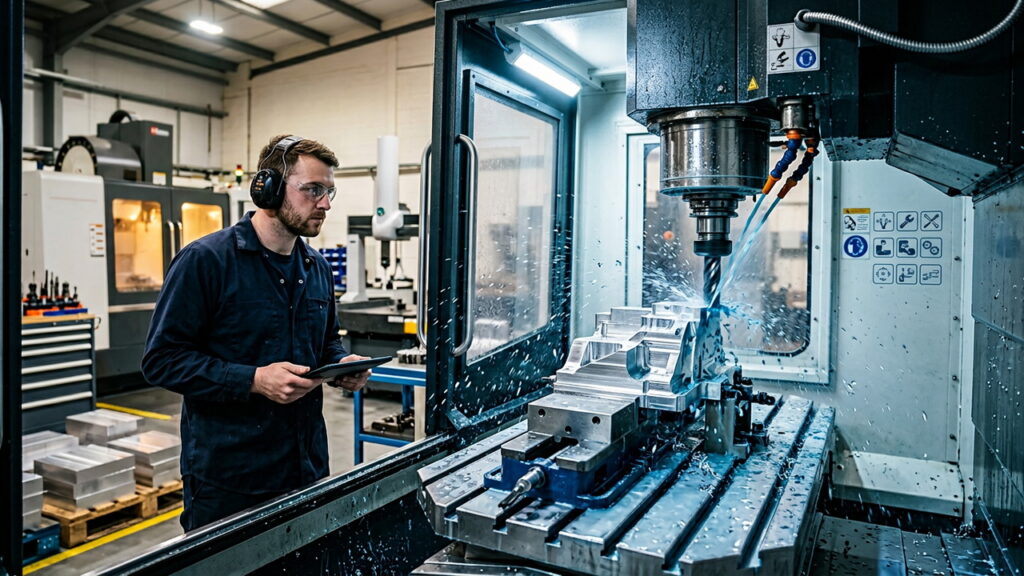
A drawing that looks perfect on screen can still become scrap if the shop, material, or tolerances are wrong. Choosing a custom CNC machining service is less about finding the lowest quote and more about finding a partner that can hold your specifications order after order.
This guide explains how a custom CNC machining service works, which processes and materials to consider, how pricing is built, and how to prepare your files. It offers general information, so confirm capabilities, certifications, and current lead times directly with each shop.
Key Takeaways About a Custom CNC Machining Service
- A custom CNC machining service builds parts to your drawings, so clear files and realistic tolerances matter most.
- Tight tolerances, hard materials, and complex shapes raise cost, so specify precision only where the part needs it.
- Request a design for manufacturability review before you approve a quote.
- Verify certifications, inspection methods, and sample reports instead of relying on marketing claims.
- Compare quotes that cover the same material, finish, inspection, and lead time.
- Use a nondisclosure agreement when you share sensitive designs with a CNC machining service.
What Is a Custom CNC Machining Service?
CNC stands for computer numerical control. A CNC machine follows programmed instructions to remove material from a solid block, bar, or sheet until the part matches the design. A custom CNC machining service applies this method to parts built for a specific customer, from a single prototype to thousands of production pieces.
Unlike catalog components, custom parts are made to your own drawing, material, and finish. Because the process is subtractive, it suits parts that need accurate dimensions, strong materials, and repeatable quality. Both metal and plastic parts can be made, and the same program can be rerun whenever you reorder.
Quick Answer About a Custom CNC Machining Service
- It is a manufacturing service that cuts metal or plastic parts to your design.
- Common methods include milling, turning, drilling, and multi axis machining.
- Cost depends on material, complexity, tolerances, quantity, and finish.
- Certifications, inspection ability, and lead times must be verified with each shop.
Who Needs a Custom CNC Machining Service
- Product designers and startups building prototypes
- Engineers who need low volume production parts
- Aerospace, medical, automotive, robotics, and energy manufacturers
- Maintenance teams that need replacement parts for older equipment
- Inventors and hobbyists working on custom builds
How a Custom CNC Machining Service Works
Most shops follow a similar workflow, and knowing it helps you ask better questions.
- You send a CAD model and a technical drawing.
- The shop reviews the design for manufacturability and prepares a quote.
- You approve the material, finish, tolerances, and quantity.
- A programmer creates toolpaths in CAM software.
- Machinists set up fixtures and cutting tools.
- The machine cuts the parts.
- Parts are deburred, finished, and inspected.
- The shop packs the order and ships it with any agreed documents.
From CAD File to Finished Part With a Custom CNC Machining Service
Computer aided manufacturing software converts your 3D model into toolpaths, which are the exact routes the cutting tool follows. The programmer chooses tools, speeds, and feeds based on the material and the required finish. Simple parts may need one setup, while complex parts need several, and each setup adds time and a small chance of alignment error.
Fixturing and Setup for a Custom CNC Machining Service
Fixtures hold the workpiece firmly while it is cut. A poor fixture can cause vibration, movement, or distorted thin walls, so good fixturing is a sign of an experienced shop. For small runs, general purpose vises are common. For larger runs, shops may build dedicated fixtures that speed up loading and improve consistency.
Core Processes in a Custom CNC Machining Service
Many shops that provide custom CNC machining combine several processes under one roof. The table shows the most common ones and the parts they suit.
| Process | What it does | Typical parts |
|---|---|---|
| CNC milling | A rotating cutter removes material from a fixed workpiece | Housings, brackets, plates, enclosures |
| CNC turning | The workpiece spins while a cutting tool shapes it | Shafts, pins, bushings, fittings |
| Swiss turning | A sliding headstock supports long, slender stock | Small medical and electronic parts |
| Multi axis machining | The tool or part tilts to reach several faces in one setup | Impellers, complex aerospace parts |
| Drilling and tapping | Creates holes and internal threads | Fastener features on most parts |
| Wire EDM | Electrical discharge cuts hard conductive metals | Tooling, sharp internal corners |
| Grinding | An abrasive wheel produces very flat or smooth surfaces | Precision fits and sealing faces |
CNC Milling for a Custom CNC Machining Service
Milling is the most common process in this field because it makes flat faces, pockets, slots, and holes in one setup. Three axis mills move the cutter along three directions and handle most prismatic parts. They are widely available, which keeps quotes competitive.
CNC Turning for a Custom CNC Machining Service
Turning suits round parts. Bar stock spins in a lathe while a tool removes material, which is fast and accurate for shafts, pins, and fittings. Live tooling lets many lathes also mill flats and drill cross holes, which reduces setups. Parts that are mostly round are usually cheaper to turn than to mill.
Multi Axis Work in a Custom CNC Machining Service
Five axis machines tilt the part or the tool so it can reach several faces in one clamping. That improves accuracy on complex shapes and cuts the number of setups. These machines cost more to run, so reserve multi axis work for parts that truly need it, such as contoured housings or turbine style shapes.
Materials for a Custom CNC Machining Service
Material choice shapes strength, weight, corrosion resistance, cost, and lead time in any custom CNC machining service. Share the application, load, temperature, and environment with the shop, since engineers there can often suggest a better or cheaper option.
| Material | Common use | Notes |
|---|---|---|
| Aluminum 6061 | Brackets, enclosures, general parts | Good strength to weight and easy to machine |
| Aluminum 7075 | Aerospace and high stress parts | Stronger but less corrosion resistant |
| Stainless steel 304 and 316 | Food, marine, and medical parts | Corrosion resistant but harder to cut |
| Carbon and alloy steel | Shafts, gears, tooling | Strong, may need a coating against rust |
| Titanium | Aerospace and medical parts | Strong and light but costly and slow to cut |
| Brass and copper | Fittings and electrical parts | Brass machines easily, copper conducts heat well |
| Acetal | Gears and bearings | Low friction and dimensionally stable |
| Nylon | Wear parts and spacers | Tough but absorbs moisture |
| PEEK | High performance plastic parts | Heat and chemical resistant but expensive |
Choosing Metals for a Custom CNC Machining Service
Aluminum is the usual starting point because it machines quickly and offers good strength for its weight. Stainless steel resists corrosion but is tougher on tools and slower to cut, which raises machining time. Titanium is valued for strength and low weight, but it is expensive and demands careful cutting. When traceability matters, request material certification so you can trace the alloy back to its source.
Plastics for a Custom CNC Machining Service
Plastics suit parts where weight, electrical insulation, or low friction matter. They can flex or move as they are cut and as temperature changes, so tolerances are usually looser than for metals. Moisture absorption in materials such as nylon can change dimensions over time, so discuss the operating environment with the shop.
Tolerances and Precision in a Custom CNC Machining Service
A tolerance is the allowed variation from a stated dimension. A custom CNC machining service can usually hold general tolerances on standard equipment, but each tighter step adds inspection time, slower cutting, and cost. General tolerances for milled parts are often around plus or minus 0.005 inch, or 0.13 millimeters, while tighter work such as plus or minus 0.001 inch, or 0.025 millimeters, may be possible on specific features. Capabilities differ by shop, material, and part size, so confirm them before you design around a number.
| Level | Typical use | Cost effect |
|---|---|---|
| General | Non critical features, covers, brackets | Lowest |
| Precision | Press fits, bearing seats, mating faces | Moderate to high |
| Tight | Critical fits, sealing surfaces, medical or optical parts | Highest, needs extra inspection |
Where Tight Tolerances Belong in a Custom CNC Machining Service
Apply tight tolerances only to features that mate with other parts, seal fluids, or carry load. Leave other dimensions at the general tolerance. Geometric dimensioning and tolerancing describes flatness, position, and concentricity more clearly than simple plus and minus limits, and it helps the shop understand what matters for function.
Surface Finishes for a Custom CNC Machining Service
Raw machined parts show fine tool marks. Many parts also need a finish for appearance, corrosion resistance, or wear. Some shops finish in house while others use trusted partners, which can add days to the schedule.
| Finish | Benefit | Notes |
|---|---|---|
| As machined | Lowest cost, visible tool marks | Good for internal or hidden parts |
| Bead blasting | Uniform matte texture | Can slightly alter very fine tolerances |
| Anodizing | Corrosion and wear resistance for aluminum | Adds a thin layer, color options available |
| Passivation | Improves corrosion resistance of stainless steel | Removes surface iron contamination |
| Powder coating | Durable colored coating | Thicker, so mask critical surfaces |
| Plating | Corrosion resistance or conductivity | Choose the type for the base metal |
| Black oxide | Mild corrosion resistance and dark look | Often used on steel parts |
| Polishing | Smooth, reflective surface | Labor intensive |
Tell the shop which surfaces must stay uncoated and which dimensions apply after finishing, because coatings add thickness. Threads and tight bores are common trouble spots.
Design Tips for a Custom CNC Machining Service
Design choices decide whether a part is easy or expensive to cut. Small adjustments often reduce cost without hurting function.
- Add radii to internal corners, since round cutters cannot make sharp inside corners.
- Keep walls thick enough to resist vibration, especially in aluminum and plastic.
- Limit pocket depth to a few times its width so tools stay stable.
- Keep hole depth within common drill ratios and use standard drill sizes where possible.
- Specify standard thread sizes and note thread depth and class.
- Reduce setups by keeping features on as few faces as practical.
- Avoid very small text or fine decorative detail unless it is needed.
Design Review With a Custom CNC Machining Service
A design for manufacturability review is a quick check where the shop’s engineer flags features that raise cost or risk. A good custom CNC machining service will point out thin walls, unreachable features, and tolerances that look unnecessary, then suggest alternatives. Treat this feedback as free engineering help. Ask for it in writing so changes are tracked against the drawing.
Preparing Files for a Custom CNC Machining Service
Complete files lead to accurate quotes and fewer questions later. Send the items below with every request.
| Item | Why it matters |
|---|---|
| 3D CAD model in STEP format | A neutral format that nearly any shop can open |
| 2D drawing in PDF | Shows tolerances, threads, finishes, and notes |
| Material and grade | Avoids substitution and cost surprises |
| Surface finish and coating | Defines appearance and protection |
| Quantity and reorder forecast | Affects setup cost and price breaks |
| Inspection requirements | Sets expectations for reports and certificates |
| Target delivery date | Helps the shop plan capacity |
Check that the model and drawing agree. Shops commonly treat the drawing as the controlling document, but confirm which one governs so a mismatch does not lead to wrong parts.
Pricing Factors in a Custom CNC Machining Service
Pricing in a custom CNC machining service reflects the time, material, labor, and risk involved. This guide does not quote figures because they vary widely by region, shop, and market.
| Cost driver | How it affects price |
|---|---|
| Material | Raw stock cost and how hard it is to cut |
| Machine time | Longer cycle times cost more |
| Setup and programming | One time cost spread across the quantity |
| Tolerances | Tighter limits need slower cutting and inspection |
| Finishing | Coatings and treatments add steps and fees |
| Inspection and documentation | Reports and certificates take labor |
| Quantity | Larger runs lower the cost per part |
| Lead time | Rush orders often carry a premium |
Prototype and Production Pricing in a Custom CNC Machining Service
A single prototype carries the full setup and programming cost, so the price per part is high. As quantity grows, that cost is spread out and the price per part falls. Ask for quotes at several quantities, such as one, ten, and one hundred, to see where the price breaks occur. For ongoing parts, a reorder agreement can help with both scheduling and pricing.
Ways to Lower the Cost of a Custom CNC Machining Service
- Loosen tolerances on non critical features.
- Use common materials and standard stock sizes.
- Simplify geometry and reduce setups.
- Order in larger batches when demand is steady.
- Allow normal lead time instead of rush service.
- Choose finishes only where function requires them.
Lead Times for a Custom CNC Machining Service
Lead time depends on shop workload, part complexity, material availability, and finishing. Simple prototypes can sometimes ship within days, while complex or finished parts may take several weeks. Treat any number as an estimate and confirm it in writing.
| Phase | What affects the time |
|---|---|
| Quoting | Completeness of files and design review |
| Material sourcing | Alloy availability and certification needs |
| Programming and setup | Complexity and number of operations |
| Machining | Cycle time and quantity |
| Finishing | In house work or outside vendors |
| Inspection and shipping | Report requirements and destination |
Quality Control and Certifications in a Custom CNC Machining Service
Quality systems show how a shop controls its work. Certifications do not guarantee perfect parts, but they show that processes are documented and audited.
| Certification | Common industry |
|---|---|
| ISO 9001 | General quality management across industries |
| AS9100 | Aerospace |
| ISO 13485 | Medical devices |
| IATF 16949 | Automotive |
| ITAR registration | US defense related work |
| Nadcap | Aerospace special processes |
Ask to see current certificates and check the issuing body, scope, and expiry date. Ordinary industrial parts do not need aerospace or medical certification, so match the requirement to your application.
Inspection Methods Used by a Custom CNC Machining Service
Inspection tools range from calipers and micrometers to coordinate measuring machines, which probe a part and compare it with the model. Optical comparators and surface roughness testers cover other needs. For critical parts, ask for a first article inspection report, which documents every dimension on the first piece before production begins.
You can also request material certificates and certificates of conformance with each shipment. For larger runs, agree in advance on sampling rules and what happens when a part fails inspection.
7 Tips for Choosing a Custom CNC Machining Service
| Tip | What to do |
|---|---|
| 1. Define requirements | Set material, tolerance, finish, and quantity |
| 2. Check capabilities | Match machines and processes to your part |
| 3. Verify certifications | Request current certificates for your industry |
| 4. Review samples | Ask about similar parts or request a sample |
| 5. Compare full scope | Match quotes on finish, inspection, and lead time |
| 6. Test communication | Note how quickly and clearly the shop answers |
| 7. Start small | Place a pilot order before a large run |
Questions to Ask a Custom CNC Machining Service
- Which machines and axis counts do you run, and what is your maximum part size?
- What tolerances can you hold on my material?
- Do you offer design reviews, and are they free?
- Which inspection equipment and reports are included?
- Do you handle finishing in house?
- How do you protect confidential designs?
- What is your policy for rejected or nonconforming parts?
- How do you manage reorders and engineering changes?
Red Flags When Hiring a Custom CNC Machining Service
- A quote with no itemized scope
- Reluctance to share certificates or inspection methods
- A price far below others with no explanation
- No questions about your drawing
- Pressure to approve before a design review
- Vague or constantly shifting lead times
- No clear process for handling nonconforming parts
Custom CNC Machining Service Compared With Other Methods
A custom CNC machining service is one of several ways to make parts. The right choice depends on quantity, material, shape, and budget.
| Method | Best for | Limits |
|---|---|---|
| CNC machining | Accurate metal and plastic parts, from prototypes to medium runs | Material waste, and cost rises with complexity |
| 3D printing | Complex shapes and fast concept models | Surface finish and strength vary by process |
| Injection molding | Large volumes of plastic parts | High tooling cost and long setup time |
| Sheet metal fabrication | Enclosures, brackets, and flat patterns | Limited to formed sheet shapes |
| Casting | Complex metal shapes at volume | Tooling cost, and often needs machining afterward |
Many projects combine methods, such as casting a rough shape and machining the critical surfaces, or printing early concepts before moving to machined prototypes.
Pros and Cons of a Custom CNC Machining Service
Pros
- High accuracy and repeatable results
- Wide range of metals and plastics
- No tooling cost for most parts
- Fast for prototypes and low volumes
- Easy design changes through file updates
Cons
- Material waste from cutting
- Cost increases with complexity and tight tolerances
- Some internal shapes cannot be machined
- Per part cost may exceed molding or casting at very high volumes
- Quality varies between shops
Confidentiality and Intellectual Property With a Custom CNC Machining Service
Your drawings are valuable. Before sending files to a custom CNC machining service, ask for a nondisclosure agreement and check how files are stored and who can access them. Clarify whether the shop may show your parts in marketing and whether fixtures or programs created for your job belong to you or the shop.
Keep a record of which revision was sent and approved. For export controlled work, confirm that the shop holds the proper registrations and follows the required procedures.
Common Mistakes With a Custom CNC Machining Service
- Choosing a custom CNC machining service on price alone
- Applying tight tolerances to every dimension
- Sending a model without a drawing
- Leaving out the material grade or finish
- Skipping the design review
- Ignoring the added thickness from coatings
- Not requesting inspection reports for critical parts
- Placing a large first order without a pilot run
Trust and Transparency in a Custom CNC Machining Service
Trust is built with evidence. Ask for certificates, sample inspection reports, customer references, and photos or a tour of the shop. Independent reviews and long standing customer relationships help, but verify each claim directly. Request a written quote that lists scope, assumptions, and exclusions.
This article gives general information and cannot confirm the capabilities, prices, or certifications of any particular company. Verify details with each shop, and consult a qualified engineer for safety critical, medical, or aerospace parts.
FAQ’s
What is a custom CNC machining service?
It is a service that uses computer controlled machines to cut metal or plastic parts to your own design.
How much does a custom CNC machining service cost?
Cost depends on material, complexity, tolerances, quantity, and finish, so request itemized quotes for your exact part.
What files do I need for a custom CNC machining service?
Send a 3D CAD model, usually in STEP format, plus a 2D drawing that lists tolerances, material, and finish.
How long does a custom CNC machining service take?
Simple prototypes may take days, while complex or finished parts can take weeks, so confirm lead time in writing.
What tolerances can a CNC machining service hold?
General work is often around plus or minus 0.005 inch, and tighter limits are possible on specific features at higher cost.
Is a custom CNC machining service good for prototypes?
Yes. It makes accurate parts in real materials without tooling, which suits testing and design changes.
Conclusion
A custom CNC machining service works best when you give it clear files, realistic tolerances, and a defined material and finish. Ask for a design review, compare quotes on the same scope, and verify certifications and inspection methods before you commit.
Start with a small pilot order, review the first parts against your drawing, and build from there. With careful preparation, a custom CNC machining service can deliver accurate, repeatable parts that keep your project on schedule.