
Hiring a great electrician is one of the smartest ways to protect your home, your business, and the people inside them. Electrical-work is hidden behind...
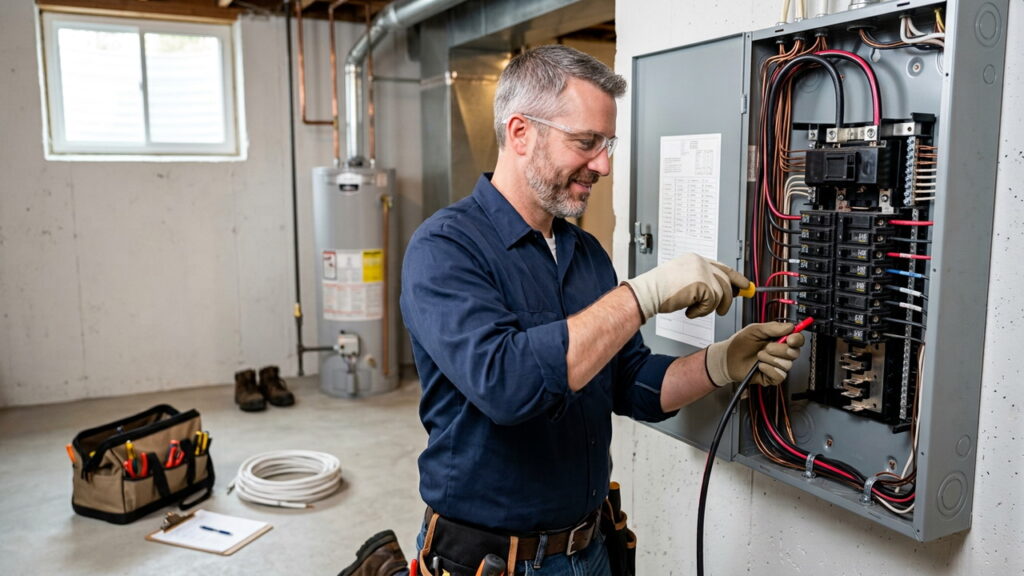
Hiring a great electrician is one of the smartest ways to protect your home, your business, and the people inside them. Electrical-work is hidden behind walls and panels, so poor work can sit unnoticed for years before it causes a shock, a fire, or an expensive failure.
This guide explains what separates a great electrician from an average one, how licensing and insurance work, how pricing is structured, and which red flags to avoid. It is general and educational, and it does not quote prices. Rules vary by state and city, so confirm local requirements before you hire.
Key Takeaways About Hiring an Electrician
- A great electrician is licensed where required, insured, clear in communication, and willing to put the scope and price in writing.
- Low price is rarely the best measure. Cost includes safety, code compliance, warranty, and the risk of redoing poor work.
- Electrical licensing rules differ by state, county, and city, so always check with your local licensing authority.
- Permits and inspections protect you. A good pro explains when they are needed and handles them properly.
- Ask for proof of license and insurance, and verify both directly instead of trusting a business card or website badge.
- Warning signs include pressure tactics, vague estimates, cash-only demands, and a refusal to pull permits.
- Never ignore sparks, burning smells, or hot outlets. Treat them as urgent and call a professional.
- For fire, smoke, or serious shock, call 911 first.
What Is an Electrician?
An electrician is a trained tradesperson who installs, repairs, tests, and maintains electrical systems. That includes wiring, outlets, switches, lighting, circuit breaker panels, grounding, and the equipment that connects to them. Some electricians work in homes, some in commercial buildings, and some in factories or on specialized systems.
Most learn through a mix of classroom study and paid, supervised on-the-job training, often called an apprenticeship. After meeting experience and exam requirements, they can earn a license. The details differ by location, which is why the same job title can mean different credentials in different places.
Quick Answer: What Makes a Great Electrician?
A great electrician holds the right license for your area, carries insurance, follows the electrical code, pulls permits when required, gives a clear written estimate, and explains the work in plain language. They test their work, tidy the site, and stand behind it with a warranty. That combination is what makes the cost worth it.
Who Needs an Electrician?
Homeowners need one for new circuits, panel work, outlet and lighting upgrades, and recurring breaker trips. Renters and landlords need help for repairs that go beyond a simple fix. Business owners rely on licensed pros for compliance, equipment installation, lighting, and preventive maintenance.
Contractors, real estate agents, and property managers also work with these tradespeople regularly. A trusted relationship saves time when inspections, repairs, or renovations come up.
Signs You Need an Electrician Right Away
Some problems can wait for a convenient appointment. Others should not. Learn the difference so you can act at the right speed.
| Warning Sign | Urgency | What to Do |
|---|---|---|
| Burning smell from an outlet or panel | Urgent | Turn off power if safe, stay clear, and call a licensed pro, or 911 if you see smoke |
| Sparks or visible scorch marks | Urgent | Stop using the circuit and call a pro immediately |
| Outlets or switches that feel hot | Urgent | Unplug devices and call an electrician to inspect the circuit |
| Breaker that trips repeatedly | High | Reduce the load and book an inspection soon |
| Flickering or dimming lights | Moderate | Have the cause checked, especially if it spreads |
| Buzzing or crackling sounds | High | Avoid the area and call a professional |
| Two-prong outlets or very old wiring | Planned | Discuss safe upgrade options |
| Mild shocks from appliances | High | Unplug the item and have the wiring and grounding tested |
Emergencies and Your Electrician
If there is a fire, heavy smoke, or someone has received a serious shock, call 911 first. Do not touch a person who is still in contact with a live source. Stay far away from downed power lines and call 911 and the utility company.
For a non-fire emergency such as a dead panel or storm damage, many offer emergency service. Expect a higher rate for after-hours calls, and ask about the call-out fee before they arrive.
Types of Electrician and What They Do
Choosing the right kind of professional saves money and avoids mismatched skills. The table below summarizes common types.
| Type | Typical Work | Best For |
|---|---|---|
| Residential | Home wiring, panels, outlets, lighting, smoke alarm wiring | Homeowners and landlords |
| Commercial | Offices, shops, restaurants, tenant build-outs | Business owners and property managers |
| Industrial | Machinery, motors, controls, and plant systems | Factories and large facilities |
| Maintenance | Ongoing inspections and repairs | Buildings that need regular upkeep |
| Low-voltage and data specialist | Network cabling, security, and audio systems | Smart homes and offices |
| Solar and EV charger installer | Panel tie-ins, dedicated circuits, and equipment installs | Homes and businesses adding new technology |
Residential Electrician Services
A residential electrician handles most household jobs, from adding outlets to replacing a panel. They are familiar with common home layouts, older wiring, and the code rules that apply to dwellings.
Ask whether they have experience with your type of home. Older houses can hide surprises, and a seasoned pro knows what to look for.
Commercial Electrician Services
Commercial work follows different rules for load, lighting, emergency systems, and safety. A commercial electrician plans around business hours, tenant needs, and inspection requirements.
For a business, downtime costs money. A good contractor schedules work to limit disruption and explains the timeline before starting.
When to Hire a Specialist Electrician
Some jobs need specific experience, such as EV charger installs, generator hookups, solar tie-ins, or hazardous locations. Ask any electrician how many similar jobs they have completed and whether they hold relevant certifications.
Licensing and Credentials for an Electrician
Licensing exists to confirm that a tradesperson has met training and testing standards. In many places it is a legal requirement, and unlicensed work can void insurance coverage or fail inspection.
| Level | Typical Role | Note |
|---|---|---|
| Apprentice | Learns on the job under supervision | Should not work alone on regulated tasks |
| Journeyman | Licensed to perform electrical work independently in many areas | Requirements vary by state |
| Master | Often allowed to supervise others and pull permits | Definitions and exams differ by location |
| Contractor license | Allows a business to take on jobs | Often requires insurance and may require a bond |
How to Verify an Electrician License
Ask for the license number and check it with your state or local licensing board, which often has an online lookup. Confirm that the name on the license matches the person or company you are hiring and that the license is active.
Do not rely on a logo or badge on a van or website. A quick lookup takes only a few minutes.
Insurance and Bonding for an Electrician
A reputable electrician usually carries general liability insurance, which covers property damage, and workers’ compensation if they have employees. Ask for a certificate of insurance and confirm it is current.
Some areas also require or encourage a surety bond. Requirements differ, so ask your licensing authority what applies to your project.
Electrical Codes and Your Electrician
Electrical work follows safety codes, and in much of the US the National Electrical Code is the base standard. States and cities adopt specific versions and add their own rules, so what is required in one place may differ in another.
A great electrician knows the local code, explains why a requirement exists, and does not skip steps to save time.
What Makes a Great Electrician Worth the Cost
Skill is only one part of the picture. The best electricians combine technical ability with honesty and good habits. The table below shows what to look for.
| Quality | What It Looks Like | Why It Is Worth Paying For |
|---|---|---|
| Proper licensing | Shows credentials without being asked | Confirms training and legal authority |
| Clear communication | Explains the problem and options in plain words | Helps you make informed choices |
| Written estimates | Lists scope, materials, and timeline | Prevents surprises and disputes |
| Code and permit awareness | Pulls permits and schedules inspections | Protects safety and resale value |
| Testing and documentation | Tests circuits and labels the panel | Makes future repairs safer and faster |
| Tidy workmanship | Neat wiring and clean job site | Reflects care and reduces risk |
| Warranty and follow-up | Stands behind the work in writing | Gives you recourse if issues appear |
| Reliability | Shows up on time and returns calls | Saves your time and stress |
Honesty and Transparency From a Great Electrician
A trustworthy electrician tells you what is urgent and what can wait. They show you the problem, offer options, and do not push upgrades you do not need.
Be wary of anyone who creates panic to rush a decision. A good one is comfortable with you getting a second opinion.
Workmanship You Can See From an Electrician
Quality work leaves clues. Panels are labeled clearly, wires are neatly arranged and secured, covers are fitted properly, and holes are patched. After the job, outlets and switches sit flush and function correctly.
If you are not sure what good looks like, ask them to walk you through the finished work and explain what they changed.
Safety Habits of a Great Electrician
Look for simple safety habits: power is shut off and verified before work, protective equipment is used, tools are in good condition, and the work area is kept organized. These habits show professionalism and reduce risk to your property.
Why Cheaper Is Not Always Better With an Electrician
A low quote can look attractive, but electrical mistakes are costly. Poor connections can overheat, missed grounding can create shock hazards, and unpermitted work can cause trouble with insurance and home sales.
| Hidden Cost of a Cheap Job | How It Can Hurt |
|---|---|
| Unpermitted work | Fines, forced rework, and sale delays |
| Poor connections | Overheating, nuisance trips, or fire risk |
| No warranty | You pay again if something fails |
| Wrong materials | Faster wear and failed inspections |
| Insurance gaps | Claims may be disputed after damage |
This does not mean the highest price is always best either. The goal is fair value from a qualified electrician who is clear about what you are paying for.
How an Electrician Prices a Job
Pricing varies by region, job type, and the contractor’s experience, so this guide does not quote figures. It does explain the main models so you can compare quotes fairly.
| Pricing Model | How It Works | What to Watch For |
|---|---|---|
| Hourly rate | You pay for time on the job plus materials | Ask for an estimated number of hours |
| Flat rate per job | A set price for a defined task | Check exactly what is included |
| Service call fee | A fee to visit and diagnose | Ask whether it is credited toward the repair |
| Project estimate | A quote for a larger scope, such as a rewire | Look for itemized materials and labor |
| Emergency or after-hours rate | Higher rate for urgent calls | Confirm the rate before they arrive |
Getting a Clear Estimate From an Electrician
For anything beyond a simple repair, ask for a written estimate. It should list the work to be done, the materials, the labor, the permit costs if any, and the expected timeline. It should also say how changes or surprises will be handled.
Get at least two or three quotes for larger jobs, and compare scope as well as price. A lower quote that leaves out permits or materials is not really lower.
Factors That Affect Electrician Costs
- The age and condition of the existing wiring.
- Access to walls, ceilings, and the panel.
- The size and complexity of the job.
- Permit and inspection requirements.
- Material quality and availability.
- Your location and local labor market.
Understanding these factors helps you ask better questions and spot an estimate that is unrealistically low.
Questions to Ask Before You Hire an Electrician
A short conversation tells you a lot. Use the list below on the phone or during a site visit.
- Are you licensed in this area, and what is the license number?
- Do you carry liability insurance and workers’ compensation?
- Will you pull the required permits, and who schedules the inspection?
- Can I have a written, itemized estimate?
- Who will actually do the work, you or a subcontractor?
- Do you offer a warranty on labor and materials?
- What is the expected start date and timeline?
- How will you handle surprises, such as hidden damage?
- Can you provide references or recent similar jobs?
Red Flags When Choosing an Electrician
- No license number, or a license that does not check out.
- Pressure to decide immediately or a deal that is only good today.
- Refusal to pull permits or a suggestion that permits are unnecessary.
- A demand for full payment upfront or cash only.
- Vague estimates with no scope or materials listed.
- Door-to-door offers after a storm with no verifiable credentials.
- Dismissing your questions or becoming defensive about them.
Reading Reviews of an Electrician
Reviews help, but read them carefully. Look for patterns across many reviews instead of focusing on a single comment. Details about punctuality, communication, and how problems were handled are more useful than general praise.
Check how the business responds to criticism. A calm, professional reply is a good sign. Also ask neighbors, friends, and local property managers for referrals.
Electrician Jobs and What Not to DIY
Small tasks such as changing a light bulb or replacing a cover plate are fine for most people. Many other jobs are not, and mistakes can cause shocks or fires.
| Job | DIY or Pro | Reason |
|---|---|---|
| Changing a bulb | DIY | Low risk with power off |
| Replacing a faceplate | DIY | Low risk if the power is off |
| Swapping a fixture or switch | Consider a pro | Wiring errors can create hazards |
| Adding a new circuit | Pro | Requires load calculation and code knowledge |
| Panel replacement or upgrade | Pro | High risk, often needs a permit |
| Wiring an EV charger or hot tub | Pro | Needs a dedicated circuit and correct protection |
| Troubleshooting buzzing or hot outlets | Pro | Could signal a dangerous fault |
| Rewiring an older home | Pro | Complex, regulated work |
Rules about homeowner electrical work vary by location. Some areas allow it with a permit, while others do not. Check with your local building department before you start any project.
Basic Safety Before You Call an Electrician
If you suspect a problem, reduce the risk while you wait. Unplug devices from the affected circuit, avoid using water near outlets, and keep children and pets away. Turn off the breaker for the affected circuit if you can do it safely.
Do not open the panel yourself, and do not assume a switch off means the wires are dead. Electrical hazards are not always visible.
Working With an Electrician as a Business Owner
For businesses, an electrician is also a planning partner. Reliable electrical systems protect equipment, staff, and customers. Poor planning can lead to downtime, failed inspections, or costly repairs.
Planning Projects With an Electrician
Share your goals and schedule early. Ask the contractor about load capacity, future expansion, and any code changes that may affect your building. Clear plans reduce change orders and delays.
Preventive Maintenance and an Electrician
Many businesses schedule periodic inspections to catch loose connections, aging equipment, and overloaded circuits before they fail. Ask an electrician what inspection schedule suits your building and what the inspection covers.
Documentation and Your Electrician
Keep copies of permits, inspection reports, panel schedules, and invoices. This record helps with insurance, resale, and future repairs, and a good contractor will provide the paperwork you need.
How to Work Well With an Electrician
A good working relationship makes the job faster and smoother.
- Describe the problem clearly, including when it started and what you noticed.
- Clear access to the panel and work areas before they arrive.
- Confirm the scope, price, and timeline in writing.
- Ask questions as the work goes on, and approve any changes in writing.
- Walk through the finished work and test outlets and switches with the installer.
- Keep the invoice, permit records, and warranty details.
Communication Tips for Working With an Electrician
Be specific. Instead of saying the power is weird, explain which rooms are affected, what happens, and whether it is constant or occasional. Photos and videos can help.
Respect their time and safety rules. Keep pets and children out of the work area, and tell them about any known issues in the building.
7 Tips for Hiring a Great Electrician
| Tip | Why It Helps |
|---|---|
| 1. Verify the license with the licensing authority | Confirms legal authority and training |
| 2. Ask for proof of insurance | Protects you if there is damage or injury |
| 3. Get a written, itemized estimate | Prevents surprises and misunderstandings |
| 4. Confirm permits and inspections | Ensures code compliance and safer work |
| 5. Compare scope, not just price | Gives a fair view of value |
| 6. Ask about warranty and follow-up | Shows confidence in the work |
| 7. Trust your instincts on honesty and communication | Reveals reliability before you commit |
Pros and Cons of Hiring a Professional Electrician
Pros of Hiring an Electrician
- Work is done to code, which improves safety and protects property value.
- Permits and inspections are handled correctly.
- Insurance and warranty give you protection if something goes wrong.
- Troubleshooting is faster because trained pros know common faults.
- Your time is freed up for other priorities.
Cons of Hiring an Electrician
- Professional work costs more than doing it yourself or hiring unqualified help.
- Good ones can be busy, so scheduling may take time.
- Quotes can vary widely, which makes comparison hard.
- Permits and inspections can add time to a project.
- Finding a trustworthy professional takes some research.
Common Mistakes When Hiring an Electrician
- Choosing the lowest quote without comparing scope.
- Skipping the license and insurance check.
- Agreeing to unpermitted work to save money or time.
- Paying the full amount upfront.
- Accepting a verbal estimate with no written details.
- Ignoring warning signs such as hot outlets or frequent breaker trips.
- Hiring an unqualified handyman for regulated electrical work.
- Waiting for a storm or breakdown before finding a reliable contractor.
Trust and Transparency in Electrician Guidance
This article is independent and educational. It does not recommend a specific company, and it is not a substitute for advice from a licensed electrician, your local building department, or a qualified inspector. It uses general public knowledge and does not state prices or local legal requirements.
Codes, licensing rules, and permit requirements change and differ by location. Confirm details with your state or local licensing board and building authority before you start any work. For fire, heavy smoke, or serious shock, call 911.
FAQ’s
What does an electrician do?
They install, repair, test, and maintain electrical wiring, panels, outlets, lighting, and related equipment.
How do I know if an electrician is licensed?
Ask for the license number and check it with your state or local licensing board. Confirm it is active and matches the business name.
Is a more expensive electrician always better?
Not always. Compare the scope, license, insurance, warranty, and communication, not just the price.
Do I need a permit for electrical work?
Many projects such as new circuits and panel upgrades need one, but rules vary. Ask your contractor and local building department.
How many quotes should I get for a big job?
Two or three written quotes are a good starting point. Compare scope and materials as well as price.
What should I do if an outlet smells like burning?
Stop using it, turn off the circuit if it is safe, and call an electrician. If you see smoke or fire, call 911.
Conclusion
A great electrician is worth every penny because the value goes far beyond the wiring itself. You are paying for training, licensing, insurance, code knowledge, clear communication, and a warranty that stands behind the work. Those qualities protect your home or business from risks that are hard to see until something goes wrong.
Take time to verify credentials, get written estimates, and ask about permits before you hire. Compare value instead of chasing the lowest price. Find a reliable electrician before you have an emergency, and you will have help ready when you need it.