
Distributed systems are collections of independent computers that work together so they appear to users as one single system. They power the internet, streaming, banking,...
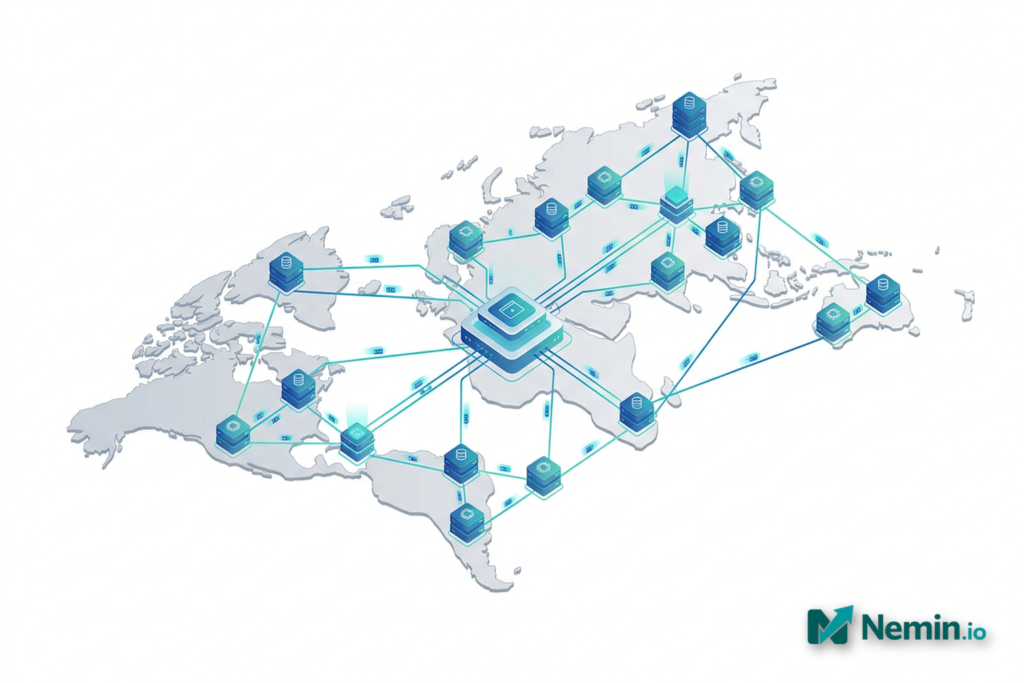
Distributed systems are collections of independent computers that work together so they appear to users as one single system. They power the internet, streaming, banking, gaming, and cloud computing. The distributed cloud market alone was worth about 7.9 billion dollars in 2026 and is growing at roughly 10 percent a year, and they are the invisible engine behind modern digital life.
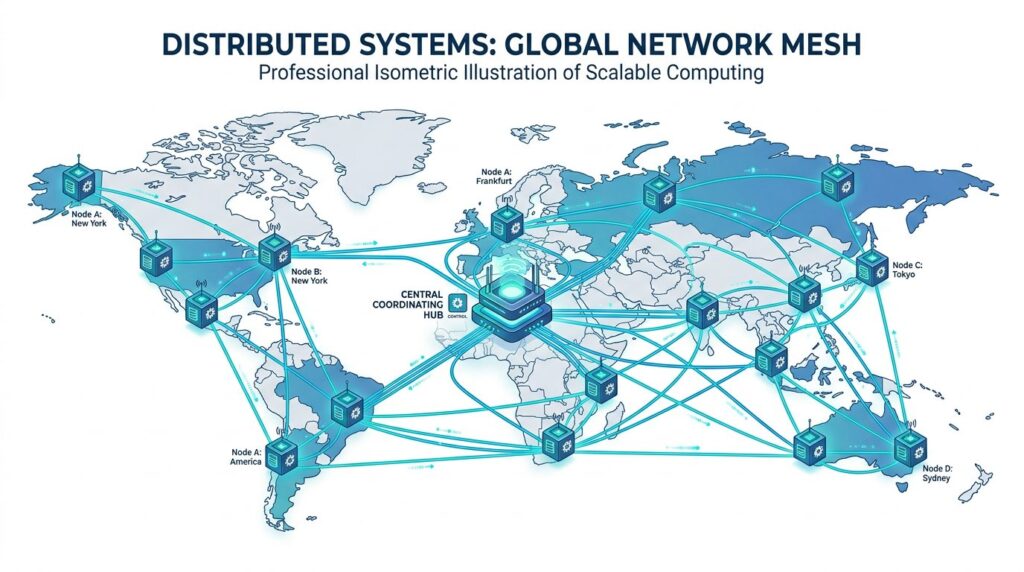
Every time you stream a movie, send a message, make a payment, play an online game, or search the web, you are relying on this architecture. Distributed systems are collections of independent computers that work together as one seamless whole, sharing workloads, storing copies of data, and covering for each other when failures happen. They are the architecture behind the internet itself, and they are why modern services stay fast, reliable, and always available.
This guide explains the topic in plain language, including what distributed systems are, how they differ from centralized systems, real-time market data and statistics, the ten proven benefits of distributed systems, cost calculations that show the business impact, and what they mean for consumers and businesses in the United States.
Distributed Systems Explained: A Simple Definition
Distributed systems are simply groups of independent computers, called nodes, that coordinate their actions to appear as one system. Each node has its own memory and storage, and the nodes communicate over a network to share work and data. To a user, the whole collection feels like a single machine, even though it is spread across many machines, and that illusion is what makes them powerful.
Think of a team of workers as an analogy. A centralized system is one worker doing every task alone, so when the worker gets tired or leaves, everything stops. A distributed system is a team where each member handles part of the work, shares updates with the others, and steps in when someone is unavailable. The team finishes the job faster, survives losing a member, and handles far more work than any single person could.
The same logic applies to technology. They split tasks across many machines, replicate data so copies exist in several places, and keep the service running when individual machines fail. That is why the biggest platforms on earth, including Netflix, Amazon, Google, and your bank, all run this way.
Centralized vs Distributed Systems
To understand the concept, it helps to compare it with the centralized approach it replaced.
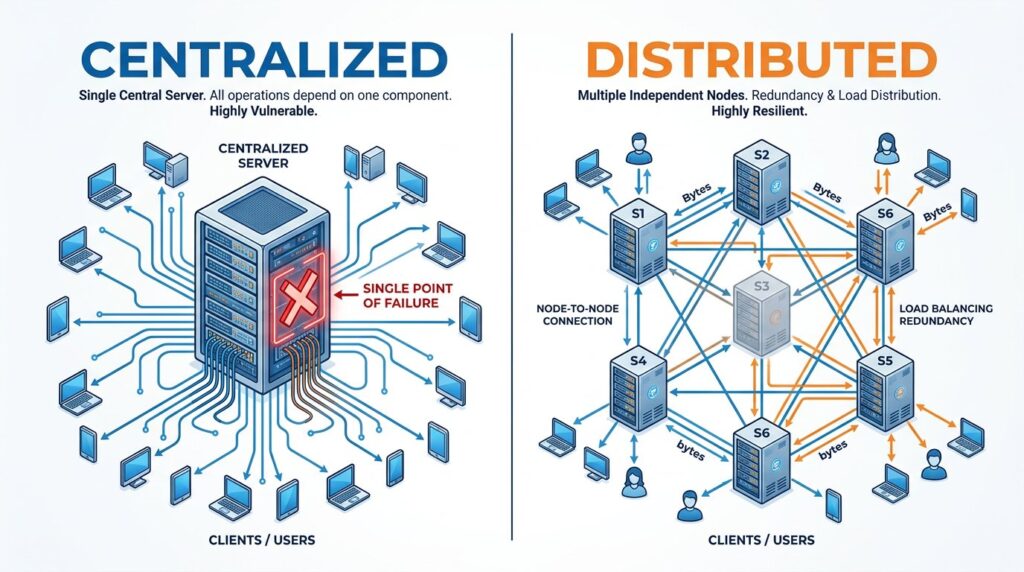
A centralized system runs everything on one machine or one data center. It is simple to build and manage, but it has a single point of failure, which means if that one machine fails, the entire service stops. It also struggles to scale, because one machine can only grow so large, and every user competes for the same limited resources.
Distributed systems spread the work across many machines, so there is no single point of failure, capacity can grow by adding more nodes, and users connect to the nearest or least busy server. The table below shows the key differences.
| Dimension | Centralized System | Distributed Systems |
|---|---|---|
| Architecture | One machine or data center | Many connected machines |
| Failure impact | One failure stops everything | Failures are isolated and covered |
| Scaling | Limited by one machine | Add nodes to scale horizontally |
| Performance under load | Slows for everyone | Work spread across nodes |
| Cost model | One big expensive machine | Many smaller cost effective machines |
| Complexity | Lower | Higher, needs coordination |
| Best for | Small, simple workloads | Large, global, always on services |
The trade off is real. Distributed systems bring reliability, scale, and speed, but they also bring complexity in coordination, consistency, and security. That complexity is the price of running the modern internet.
Real-Time Data and Statistics for Distributed Systems
The technology is measured across several related markets, and the numbers all point upward.
| Market | 2025 or 2026 Value | Projected Value | Growth Rate |
|---|---|---|---|
| Distributed cloud market | 7.94 billion dollars in 2026 | 14.37 billion dollars by 2032 | 10.3 percent CAGR |
| Distributed data grid market | 1.54 billion dollars in 2025 | 5.67 billion dollars by 2034 | 16.3 percent CAGR |
| Distributed enterprise market | 7.99 billion dollars in 2025 | 20.54 billion dollars by 2035 | 9.9 percent CAGR |
| Distributed control system market | 23.16 billion dollars in 2026 | 36.24 billion dollars by 2035 | 5.1 percent CAGR |
Beyond these markets, the technology is embedded in everything everyone uses. Cloud platforms like AWS and Azure are giant examples. Content delivery networks replicate content across thousands of distributed servers worldwide. Blockchains are decentralized networks that verify transactions across many nodes. Edge computing moves processing closer to users, and 5G networks are themselves spread across cell sites.
North America leads adoption of many of these technologies, and the United States is home to the companies that built the largest examples in history.
How Distributed Systems Work
A working distributed system has several moving parts, and understanding them matters.
At the core are nodes, which are individual computers that each run part of the workload. Nodes communicate over a network using messages, and they coordinate through protocols and algorithms. Load balancers spread incoming requests across nodes so no single machine is overwhelmed.
Data is handled through replication, where copies of the same data live on multiple nodes, so a failure on one node never loses the data. Consistency algorithms like Paxos and Raft keep the copies in agreement, which is one of the hardest problems in this field. When a node fails, other nodes detect the problem and take over its work automatically, and this self healing behavior is what makes them reliable.
Orchestration tools like Kubernetes manage clusters of nodes automatically, handling deployment, scaling, and recovery. Distributed databases store data across many machines while presenting a single view, and distributed tracing tools follow a request across every node it touches. Together, these pieces form the systems that run modern software.
The 10 Proven Benefits of Distributed Systems
These ten benefits explain why this architecture has become the standard, and each one matters for consumers and businesses in the USA.
1. High Availability and Uptime in Distributed Systems
The first benefit is that services stay online. Because work and data are spread across many nodes, the failure of one machine does not stop the service, and other nodes take over instantly. This is why your favorite apps rarely go down.
2. Horizontal Scalability in Distributed Systems
Distributed systems scale by adding more machines, which is called scaling horizontally. When demand grows, operators add nodes, and capacity grows with them. There is no ceiling the way there is with one powerful machine, and it is why platforms can serve millions of users at once.
3. Fault Tolerance and Self Healing in Distributed Systems
Distributed systems are built to survive failures. Nodes fail, networks drop, and hardware breaks, but the system detects the problem and reroutes work around it. Netflix even tests its architecture by deliberately breaking parts of it, a practice called chaos engineering, to prove it recovers.
4. Performance at Global Scale in Distributed Systems
Distributed systems serve users from the nearest available node, which keeps response times low no matter where the user is. Content delivery networks cache video and images close to viewers, and edge computing processes data near the source. This global performance is why streaming starts instantly around the world.
5. Cost Efficiency in Distributed Systems With Commodity Hardware
Distributed systems run on many ordinary, affordable machines instead of one extremely expensive supercomputer. Organizations buy commodity hardware, spread the workload, and get more total power for less money. The savings scale as the system grows.
6. Better Resource Utilization in Distributed Systems
With this architecture, workloads are balanced across nodes so no machine sits idle while another is overloaded. Load balancers and schedulers keep utilization high, and during quiet periods, nodes can be scaled down to save money.
7. Support for Big Data and AI in Distributed Systems
Modern analytics and artificial intelligence depend on this architecture. Training a large AI model requires thousands of processors working in parallel, and analyzing massive datasets requires splitting the work across clusters. Without it, modern AI would be impossible.
8. Geographic Redundancy in Distributed Systems
Distributed systems replicate data across multiple locations, sometimes across continents, so a natural disaster or outage in one region does not destroy the data or stop the service. This geographic redundancy is why businesses trust the cloud with critical data.
9. Capacity on Demand in Distributed Systems
With this architecture, adding capacity is as simple as adding a node, and cloud platforms make it instant. During a surge, such as holiday shopping or a live event, capacity grows automatically, and it shrinks when the surge ends.
10. Innovation and Modern Development in Distributed Systems
Finally, distributed systems enable the modern development practices behind today’s fastest moving companies. Microservices, containers, serverless computing, and DevOps all build on this architecture, and teams that master it ship faster and innovate more.
Distributed Systems Cost Calculations
The technology has real financial impact, and the math shows why businesses adopt it.
Calculation 1: Downtime Cost Comparison
A centralized system that fails for two hours can cost a business heavily. For an online retailer doing 240,000 dollars in daily revenue, two hours of downtime costs about 20,000 dollars in lost sales at 10,000 dollars per hour. Replication and automatic failover reduce full outages dramatically, so a business might lose only 15 minutes instead of two hours, cutting the loss from 20,000 dollars to about 2,500 dollars.
| Scenario | Downtime per Incident | Cost at 10,000 Dollars per Hour |
|---|---|---|
| Centralized system outage | About 2 hours | About 20,000 dollars |
| Distributed systems failover | About 15 minutes | About 2,500 dollars |
| Savings per incident | About 1.75 hours | About 17,500 dollars |
Calculation 2: Scaling Cost Comparison
Scaling a centralized system means buying a bigger, more expensive machine. A large server capable of handling peak load might cost 50,000 dollars, and it sits underused most of the year. The architecture scales with several smaller machines, each costing about 5,000 dollars, and you add them only when needed. For the same peak capacity, you might use 6 smaller machines at 30,000 dollars total, and during quiet periods, the business runs only 2 of them, cutting idle cost dramatically.
| Approach | Hardware Cost | Idle Cost During Quiet Periods |
|---|---|---|
| Centralized big server | About 50,000 dollars | Full server cost all year |
| Distributed systems nodes | About 30,000 dollars | Only active nodes run |
Calculation 3: Data Loss Risk
A centralized system that loses its only storage during a failure can lose customer data permanently, and the cost of that loss, including recovery, legal exposure, and lost trust, can reach hundreds of thousands of dollars. Replication across multiple nodes and locations means a single failure never loses data. Avoiding even one major data loss event pays for the extra complexity many times over.
These calculations are estimates, but the direction is clear. The architecture saves money through less downtime, smarter scaling, and data protection, which is why it wins for modern businesses.
Distributed Systems for US Consumers
For consumers in the United States, this architecture is the invisible engine behind nearly every digital habit.

When you stream a movie and it starts instantly, a content delivery network is serving it from a server near you. When you play an online game with friends across the country, distributed game servers are synchronizing every action in real time. When you send a message and it arrives in seconds, distributed messaging systems are routing it across the network. When you pay with your phone, payment networks are processing and verifying the transaction across many nodes.
This architecture also protects consumers. When you store photos in the cloud, copies live on multiple servers, so your memories survive a hardware failure. When a streaming service stays up during a huge event, the architecture is absorbing the load. For US consumers, this simply means the apps you rely on are faster, safer, and always available, and that reliability works for you every day.
Distributed Systems for US Businesses
For businesses in the United States, this architecture delivers advantages that directly affect revenue, reliability, and growth.

Ecommerce businesses use distributed systems to handle holiday traffic spikes without crashing. Banks and financial firms use it to process millions of transactions reliably and detect fraud in real time. Healthcare organizations use distributed systems to connect records, run diagnostics, and support telemedicine across locations. Manufacturers use distributed control systems to monitor and coordinate industrial equipment.
Startups benefit too, because the architecture on cloud platforms lets a two person team launch with enterprise grade reliability, paying only for what they use. Large enterprises use it to run global operations, and the market data shows adoption growing fast.
For US businesses, the strategic question is rarely whether to adopt the architecture, because almost every modern service already runs on it. The real questions are how to design it well, how to control cost, and how to build the skills to run it.
Honest Challenges of Distributed Systems
The architecture is powerful, but it is not simple, and an honest guide must cover the trade offs.
Complexity is the biggest challenge. Coordinating many nodes, keeping data consistent, and debugging problems across a network is harder than running one machine. Teams need specialized skills in this field, and those skills are in demand and expensive.
Network issues are unavoidable. Distributed systems depend on the network, and networks are imperfect. Latency, packet loss, and partitions can slow or break communication between nodes, and handling these gracefully is a core skill in distributed systems.
Consistency is a constant tension. Keeping every copy of data perfectly in sync across nodes is hard, especially during failures, and designers must choose between strong consistency and high availability. This trade off, captured in the CAP theorem, is one of the defining ideas in distributed systems.
Security and governance are harder at scale. With data spread across many nodes and locations, controlling access, meeting privacy rules, and knowing where data lives becomes more complex. Cost control is also harder, because scaling out can quietly raise bills if nobody monitors usage.
None of these challenges means distributed systems are the wrong choice. It means they must be designed, operated, and budgeted deliberately, which is the honest lesson in distributed systems explained.
How to Build and Operate Distributed Systems Successfully
For a business adopting distributed systems, a disciplined approach works best, and that approach is distributed systems explained as a roadmap.
Start with clear requirements. Know your scale, your availability target, and your consistency needs before choosing architecture, because those choices drive everything else in distributed systems. Design for failure from day one, assuming nodes will break, and build redundancy, retries, and graceful degradation into the system.
Use proven building blocks. Cloud platforms, container orchestration like Kubernetes, managed databases, and message queues give you reliable pieces of distributed systems without building everything from scratch, which saves time and reduces risk. Monitor everything with logging, metrics, and distributed tracing, because you cannot manage distributed systems you cannot see.
Automate operations. Use infrastructure as code, automated deployments, and automated scaling so distributed systems run consistently, and test failure scenarios regularly, like Netflix does with chaos engineering, to prove your system recovers. Control costs with budgets, alerts, and right sizing, and build team skills through training and certification.
Adopt distributed systems in stages. Start with one workload, prove it works, and expand gradually, which is distributed systems explained as a growth path, and it is how most successful organizations make the transition.
Frequently Asked Questions
These are the questions people ask most about distributed systems.
- What is a distributed system in simple words? A distributed system is a group of independent computers that work together so they appear to users as one single system.
- What are examples of distributed systems? Cloud platforms, content delivery networks, online games, messaging apps, streaming services, blockchains, and edge computing are all examples of distributed systems.
- How are distributed systems different from centralized systems? A centralized system runs on one machine and stops if it fails, while distributed systems spread work across many machines and keep running when individual nodes fail.
- Why are distributed systems important? Distributed systems provide scalability, reliability, speed, and global reach, which is why the largest services on the internet run on them.
- Are distributed systems expensive? Distributed systems can cost more in complexity and management, but they often save money through commodity hardware, less downtime, and smarter scaling.
- What are the challenges of distributed systems? The main challenges are coordination complexity, network failures, data consistency, security, and cost control.
- How do distributed systems stay available when nodes fail? Distributed systems use replication, redundancy, load balancing, and automatic failover so other nodes take over when one fails.
- Do consumers benefit from distributed systems? Yes, consumers get faster streaming, reliable messaging, instant payments, safe cloud storage, and apps that rarely go down, all thanks to distributed systems.
Conclusion
Distributed systems are the foundation of the modern digital world, and the data confirms their importance. The distributed cloud market alone was worth about 7.9 billion dollars in 2026 and is growing at roughly 10 percent a year, and distributed systems power the streaming, gaming, messaging, banking, and cloud services that billions of people use daily, which is distributed systems explained at market scale.
For consumers in the United States, distributed systems mean apps that start instantly, stay online, protect your data, and work no matter where you are, and for US businesses, distributed systems mean high availability, horizontal scaling, cost efficiency, and the ability to compete globally, which is distributed systems explained as a competitive advantage.
The honest picture matters too, because distributed systems require skill, discipline, and deliberate design, and businesses that respect the complexity get the full benefit of reliability and scale. Whether you are a consumer wondering why your favorite app never seems to break or a business leader planning your technology strategy, understanding distributed systems is essential, because distributed systems are how the modern world computes, and this guide gives you the foundation to use them well.