
Traditional birdwatching has long relied on binoculars, field guidebooks, and hours of patient outdoor observation from a distance. However, deploying bird cameras has fundamentally transformed how nature...
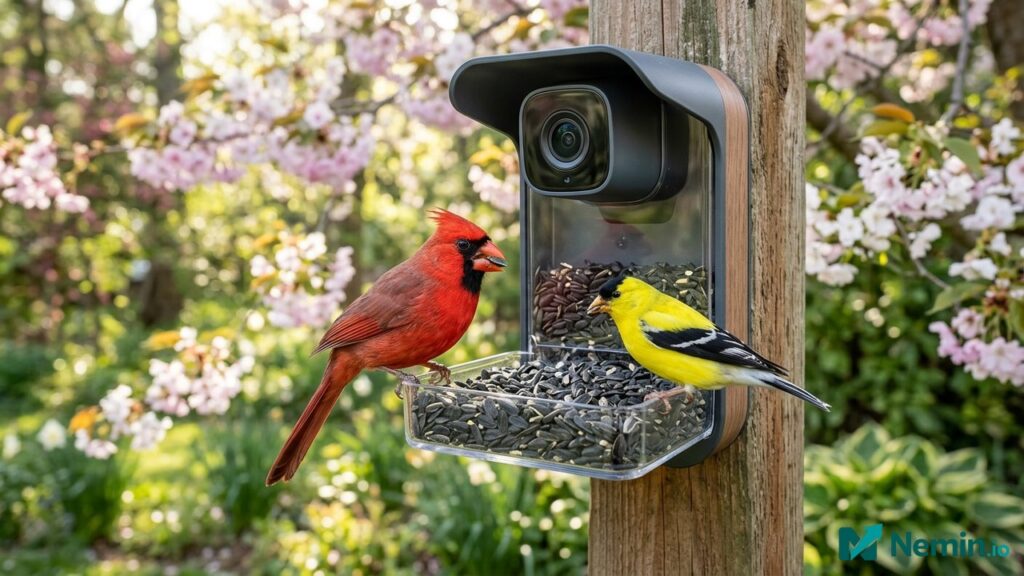
Traditional birdwatching has long relied on binoculars, field guidebooks, and hours of patient outdoor observation from a distance. However, deploying bird cameras has fundamentally transformed how nature lovers connect with local wildlife by bringing high-definition, micro-level avian behavior directly to smartphones and smart displays. Equipped with specialized macro optics, intelligent motion sensors, solar recharging panels, and machine learning species classifiers, modern bird cameras capture intimate feeding rituals, plumage details, and social interactions that are impossible to view with the naked eye. By integrating intelligent optics into your garden, you can transform your backyard into an interactive wildlife sanctuary and contribute valuable observational data to global ornithological science.
What Are Smart Bird Cameras and How Do They Work?
Smart bird cameras are weatherized optical devices combining close-range macro lenses, passive infrared (PIR) motion detectors, and wireless network radios inside a protective feeder or nesting housing.
| Component System | Hardware Specification | Purpose in Avian Observation |
|---|---|---|
| Close-Range Macro Lens | 1080p / 4K sensor with 10–30cm focal plane | Captures ultra-sharp feather textures and eye rings without close-up distortion |
| Passive Infrared (PIR) Sensor | Dual-zone thermal motion trigger | Activates video recording within 0.2 seconds of a bird landing on the perch |
| AI Neural Processing Unit | Onboard edge processor or cloud vision API | Analyzes visual patterns to identify specific bird species in real time |
| Solar Roof Charging Panel | High-efficiency monocrystalline solar cells | Delivers continuous trickle-charging to internal lithium-ion batteries |
| Long-Range Wi-Fi Antenna | 2.4 GHz high-gain wireless transceiver | Transmits high-bitrate video streams through exterior residential walls |
| Integrated Microphone & Speaker | High-sensitivity condenser with 2-way audio | Records natural bird songs and broadcasts deterrent sirens for squirrels |
Unlike standard home security cameras designed to monitor broad human-scale driveways from a distance, bird cameras are engineered with an ultra-short focal length. A standard security camera pointed at a bird feeder produces blurry, out-of-focus images because its optical lens is calibrated for objects several meters away.
Bird cameras position their optical elements mere inches from the feeding perch, allowing their image sensors to capture individual barbules on a hummingbird’s wing or the microscopic grain texture on a chickadee’s beak with remarkable clarity.
What Are the Primary Benefits of Watching Birds with Special Bird Cameras?
Investing in dedicated bird cameras provides profound educational, psychological, and scientific advantages over traditional birding methods.
| Primary Benefit Category | Technical / Behavioral Mechanism | Everyday Backyard Impact |
|---|---|---|
| Unrivaled Intimate Observation | Macro-focus optics positioned 15cm from feeding birds | Reveals subtle feeding behaviors, courtship displays, and pecking hierarchies |
| Automated Species Identification | Deep-learning neural networks classifying bird plumage | Identifies rare migrating birds instantly and logs personal digital life lists |
| Engaging Family Education | Real-time smartphone video alerts and cloud clip sharing | Connects children and seniors with local biodiversity effortlessly |
| Proactive Predator & Pest Defense | AI identification of squirrels, raccoons, and feral cats | Triggers white-light strobes or acoustic alarms to protect vulnerable birds |
| Citizen Science Contribution | Automated logging of arrival times and seasonal migrations | Feeds global biodiversity research platforms like eBird and iNaturalist |
| All-Weather 24/7 Monitoring | IP65 weatherproofing and night-vision infrared sensors | Captures nocturnal visitors like flying squirrels, owls, and early-morning feeders |
1. Close-Up Behavioral Insights
When humans approach bird feeders, wild birds become cautious and alter their natural behaviors. Bird cameras operate as silent, non-intrusive observation blinds. This allows viewers to observe natural behaviors—such as seed caching, dominant wing fluttering, and delicate preening—without triggering avian fight-or-flight responses.
2. Instant Artificial Intelligence Species Recognition
Novice birders often struggle to differentiate between confusing species, such as female finches, sparrows, and warblers. Advanced bird cameras process captured video frames through machine learning classifiers, identifying the exact species within seconds and providing educational background on their habitat, diet, and migration patterns.
3. Automated Digital Life Lists and Cloud Archiving
Every time a feathered visitor lands on the perch, bird cameras automatically record a 10- to 30-second high-definition clip and store it in your personal cloud archive. This allows users to review daily visitor logs, track annual migration arrivals, and share stunning slow-motion video clips with friends and family.
How Does AI Species Recognition Work in Modern Bird Cameras?
Modern bird cameras utilize sophisticated convolutional neural networks (CNNs) trained on millions of ornithological images to achieve species identification accuracy exceeding 90 percent.
| AI Processing Stage | Computational Pathway | Operational Result for the Birder |
|---|---|---|
| Stage 1: Motion Trigger | Dual PIR sensors detect thermal heat signature | Camera wakes from ultra-low power standby in under 200ms |
| Stage 2: Frame Extraction | Image processor captures burst frames at 30 fps | Isolates sharpest, highest-contrast frame of the landing bird |
| Stage 3: Feature Extraction | Neural network maps bill shape, wing bars, plumage | Compares extracted biological vectors against a database of 10,000+ species |
| Stage 4: Confidence Scoring | AI calculates statistical probability match | Validates species when confidence threshold exceeds 85% |
| Stage 5: Notification Dispatch | Push notification sent to smartphone application | Displays bird photo, common/scientific name, and direct live video link |
Edge Processing vs. Cloud AI Classifiers
High-performance bird cameras employ a hybrid computing architecture. Lightweight edge AI algorithms running directly on the camera’s internal chipset filter out false motion triggers—such as blowing tree branches, rain droplets, or shadows—preventing unnecessary battery drain.
Once a genuine bird is verified, the high-resolution frame is uploaded to high-performance cloud servers where comprehensive avian databases identify rare geographical subspecies and distinct juvenile plumage variations.
Smart Feeder Cameras vs. Nest Box Cameras vs. Trail Cameras: Which Bird Cameras Are Best?
Choosing the right type of bird cameras depends on whether your primary observational focus is feeding habits, breeding cycles, or broad territory tracking.
| Camera Category | Primary Mounting Location | Core Optical Focus | Power Source | Best Suited For |
|---|---|---|---|---|
| Smart Feeder Bird Cameras | Garden posts, trees, patio railings | Macro feeder perch (10–25cm) | Integrated solar panel + lithium battery | General backyard birdwatching, species logging, daily family viewing |
| Nest Box Bird Cameras | Inside dark wooden birdhouse ceilings | Ultra-close nest cup (5–15cm) | Hardwired DC cable or PoE | Watching egg laying, incubation, chick hatching, and fledging |
| Outdoor Trail Cameras | Strapped to distant forest trees | Wide landscape (3–15 meters) | AA batteries (multi-month life) | Ground-foraging game birds (turkeys, pheasants, grouse) in wild acreage |
| Window-Mounted Bird Cameras | Suction-mounted directly to window glass | Transparent seed hopper (5–10cm) | USB rechargeable battery | Apartment balconies, urban birders, indoor cat entertainment |
Why Smart Feeder Bird Cameras Are the Most Popular Option
While nest box cameras provide intimate views during spring nesting weeks, they remain unoccupied for the remaining nine months of the year. Smart feeder bird cameras provide continuous, year-round entertainment, attracting dozens of resident and migratory species across every season.
Key Technical Specifications to Evaluate in Bird Cameras
Selecting high-quality bird cameras requires evaluating optical performance, power independence, wireless reliability, and environmental durability.
| Evaluation Metric | Minimum Recommended Standard | Premium Benchmark | Why It Matters for Bird Photography |
|---|---|---|---|
| Video Resolution | 1080p Full HD (1920×1080) | 2K to 4K Ultra HD with HDR | High resolution allows digital zooming on tiny songbirds without pixelation |
| Field of View (FoV) | 110-degree wide angle | 135-degree to 160-degree FoV | Captures both the feeder perch and surrounding aerial flight approaches |
| Battery & Solar Capacity | 5000 mAh battery + 2W solar panel | 6500+ mAh battery + 3.5W solar roof | Guarantees continuous power during prolonged overcast winter weeks |
| Weather Resistance | IP65 weatherproof certification | IP66 / IP67 waterproof rating | Protects electronics against driving rain, heavy snow, and high humidity |
| Storage Flexibility | Local MicroSD slot (up to 128GB) | MicroSD + Encrypted Cloud Backup | Ensures video recording continues even during home Wi-Fi network outages |
| Night Vision System | 850nm Infrared LEDs | Starlight Full-Color Night Vision | Captures nocturnal visitors without emitting visible light that startles birds |
1. High Dynamic Range (HDR) and Backlight Compensation
Backyard bird feeders are frequently exposed to harsh outdoor lighting conditions, where bright midday sunlight creates dark shadows beneath feeding birds. Premium bird cameras incorporate advanced High Dynamic Range (HDR) sensors that automatically balance extreme highlights and deep shadows, keeping colorful plumage vivid and clear.
2. Audio Capture and Bird Song Bioacoustics
A significant dimension of the birdwatching experience is avian vocalization. Quality bird cameras feature high-fidelity microphones equipped with wind-noise cancellation filters, recording crystal-clear chirps, trills, and complex mating calls alongside visual video footage.
Strategic Placement Masterclass: Positioning Bird Cameras for Maximum Visits
Proper physical positioning determines how quickly wild birds discover your feeder and how clear your recorded videos will be.
| Strategic Parameter | Optimal Installation Standard | Critical Risk to Avoid |
|---|---|---|
| Mounting Height | 5 to 6 feet (1.5 to 1.8 meters) above ground | Mounting too low allows ground predators and rodents easy access |
| Solar Orientation | Facing South or Southeast | Facing North starves solar panels; facing West causes blinding sunset glare |
| Predator Clearance | 10 to 12 feet (3 to 3.5 meters) from tree overhangs | Placing too close to branches gives squirrels a launch platform |
| Shelter Proximity | 8 to 15 feet from dense shrubbery or bushes | Placing in vast open lawns leaves small songbirds vulnerable to hawks |
| Wi-Fi Signal Strength | Minimum -65 dBm signal at installation site | Poor Wi-Fi causes delayed notification delivery and choppy live feeds |
| Positioning Zone | Environmental Factor | Recommended Distance / Angle | Benefit to Wild Birds |
|---|---|---|---|
| Solar Exposure | Morning sunlight vector | Face South to Southeast | Optimizes battery charging and eliminates afternoon lens flare |
| Ground Clearance | Predator defense barrier | 5 to 6 feet above ground level | Prevents ground rodents and outdoor cats from ambushing birds |
| Shelter Buffer | Escape cover proximity | 8 to 12 feet from dense bushes | Provides instant shelter against hawks while keeping squirrels out |
1. Eliminating Solar Backlighting and Glare
Never point the lens of your bird cameras directly toward the setting afternoon sun. Position your camera facing north or northeast so that incoming morning and midday sunlight illuminates the front of the feeding birds, producing rich, vibrant colors.
2. Providing Essential Protective Cover
Small songbirds like goldfinches, nuthatches, and titmice are hesitant to visit feeders located in wide-open, exposed lawns where they are vulnerable to birds of prey. Install your bird cameras roughly 8 to 12 feet away from natural trees or dense evergreen bushes. This provides birds with an immediate escape refuge while keeping tree-dwelling squirrels beyond jumping distance.
Matching Bird Feeds to Attract Specific Species to Your Bird Cameras
The variety of wild birds visiting your bird cameras is directly influenced by the types of seed, nectar, or suet you provide in the feeding hopper.
| Bird Food Variety | Target Avian Species | Nutritional Composition | Feeder Hopper Recommendation |
|---|---|---|---|
| Black Oil Sunflower Seeds | Cardinals, Chickadees, Nuthatches, Finches, Grosbeaks | High in healthy fats, crude protein, and calories | Universal standard hopper in most smart bird cameras |
| Nyjer / Thistle Seed | American Goldfinches, Purple Finches, Siskins | Tiny, oil-rich seeds tailored for slender beaks | Specialized fine-mesh feeding insert |
| Safflower Seeds | Northern Cardinals, Titmice, Doves | High-protein seed disliked by squirrels and starlings | Standard gravity-fed seed hopper |
| Suet Cakes / Blocks | Woodpeckers, Flickers, Wrens, Nuthatches | High-energy rendered beef tallow with nuts and seeds | Side-mounted metal wire suet cage attachment |
| Mealworms (Dried/Live) | Bluebirds, Robins, Wrens, Orioles | Extremely high protein for insectivorous birds | Shallow accessory feeding cup attachment |
Discouraging Bullies and Squirrels Naturally
If invasive house sparrows, European starlings, or squirrels monopolize your bird cameras, switch your seed blend to 100 percent white safflower seeds. Cardinals, chickadees, and nuthatches enjoy safflower, but squirrels and blackbirds find its bitter taste unpalatable.
Step-by-Step Installation and Wi-Fi Setup Protocol for Bird Cameras
Follow this systematic setup workflow to ensure reliable wireless performance and secure outdoor mounting.
| Setup Phase | Primary Operational Task | Critical Verification Checkpoint |
|---|---|---|
| Phase 1: Indoor Pre-Charge | Charge internal battery fully via USB-C cable | Verify green LED charging status before outdoor mounting |
| Phase 2: Wi-Fi Pairing | Pair camera to home 2.4 GHz Wi-Fi network via app | Confirm live video stream functions smoothly indoors |
| Phase 3: Outdoor Signal Audit | Test Wi-Fi signal strength at chosen garden post | Ensure minimum 2 to 3 signal bars on your smartphone |
| Phase 4: Physical Mounting | Secure mounting bracket with stainless steel screws | Ensure post is vertically level and stable in high winds |
| Phase 5: Solar Panel Alignment | Angle solar roof toward unobstructed southern sky | Check charging icon in application during daylight hours |
- Step 1: Complete Initial Indoor Pairing: Always pair your bird cameras to your home Wi-Fi network and smartphone app while sitting near your router. Ensure your smartphone is connected to a 2.4 GHz Wi-Fi band, as most outdoor cameras do not support 5 GHz frequencies.
- Step 2: Perform an Outdoor Range Test: Take the connected camera to your intended garden location and open the live video feed. If the video stutters or disconnects, install an affordable outdoor Wi-Fi range extender to boost signal coverage.
- Step 3: Secure the Mounting Bracket: Attach the heavy-duty mounting bracket to a solid wooden 4×4 post, wall, or tree trunk using exterior-grade wood screws. Fasten the camera securely into the locking bracket.
- Step 4: Configure Notification Sensitivity: In the companion application, set motion detection to prioritize avian-sized targets and adjust alert frequency to prevent smartphone notification fatigue during busy morning feeding rushes.
Hygiene, Maintenance, and Winterizing Protocols for Bird Cameras
Maintaining clean feeding stations protects wild bird populations from communicable diseases such as avian conjunctivitis, salmonellosis, and trichomoniasis.
| Maintenance Procedure | Recommended Frequency | Proper Cleaning Technique | Critical Safety Guideline |
|---|---|---|---|
| Debris Clearing & Seed Top-Up | Every 2 to 4 days | Dump hulls and refill with clean dry seed | Discard any clumping or moldy seed immediately |
| Full Disinfection Wash | Every 2 to 3 weeks | Scrub with 1:9 diluted bleach-to-water solution | Rinse thoroughly and air-dry completely before refilling |
| Camera Lens Cleaning | Weekly or after rainstorms | Wipe with optical microfiber cloth and lens spray | Never use abrasive scouring pads that scratch acrylic lenses |
| Solar Roof Dusting | Monthly | Wipe dust, pollen, and bird droppings off solar cells | Ensures maximum solar energy conversion efficiency |
| Sub-Zero Winter Prep | Prior to first heavy snowfall | Clear snow from solar roof and check seed flow | Keep seed dry to prevent freezing inside feeding ports |
Preventing Avian Disease Outbreaks
Feeder hygiene is an essential responsibility for every bird lover. If you notice a sick bird visiting your bird cameras—exhibiting lethargy, puffed feathers, or crusty eyes—immediately take down the feeder, disinfect all components in a 10 percent bleach solution, and leave the station empty for one week to encourage the flock to disperse naturally.
Frequently Asked Questions
Do bird cameras require a monthly subscription to identify bird species?
Many smart bird cameras include basic AI species recognition for free, though some manufacturers offer optional premium cloud subscriptions for extended video history and advanced bird sound bioacoustics.
Will bird cameras work in the winter during freezing temperatures?
Yes, high-quality bird cameras are built with IP65 weatherproofing and operate in sub-zero temperatures, though lithium battery efficiency decreases slightly during extreme freezes.
How do bird cameras prevent squirrels from stealing seed and triggering false alerts?
Advanced bird cameras feature built-in AI recognition that detects squirrels and triggers flashing lights or sirens, while physical squirrel baffles prevent rodents from climbing mounting posts.
How far can bird cameras be placed from a home Wi-Fi router?
Most bird cameras operate reliably up to 50 to 100 feet from a home router, though dense brick walls or metal siding may require an outdoor Wi-Fi range extender.
Can multiple family members view the live feed from bird cameras simultaneously?
Yes, companion mobile applications allow the primary account holder to share live feeds and saved bird visitor clips with multiple family members and friends.
How long does the battery last on a solar-powered bird camera?
With an integrated solar roof receiving 2 to 3 hours of direct daily sunlight, bird cameras maintain continuous 100 percent battery power indefinitely without manual recharging.
Conclusion
Integrating smart bird cameras into your backyard transforms casual nature observation into an immersive, educational adventure. By uniting close-range macro optics, artificial intelligence species identification, and sustainable solar power, these innovative devices capture the beauty, diversity, and intricate behaviors of wild birds with unprecedented clarity.
Whether you are seeking to introduce children to the wonders of local ecology, build your personal digital bird life list, or simply enjoy peaceful morning bird songs from your smartphone, bird cameras provide endless discovery. Choose a quality model with robust weatherproofing and AI capabilities, position your feeder with care, and experience the extraordinary joy of connecting with nature right outside your window.