
Cash usage across British high streets, cafes, retail stores, salons, and service trades has declined sharply while shoppers expect fast contactless taps, mobile wallets, and...
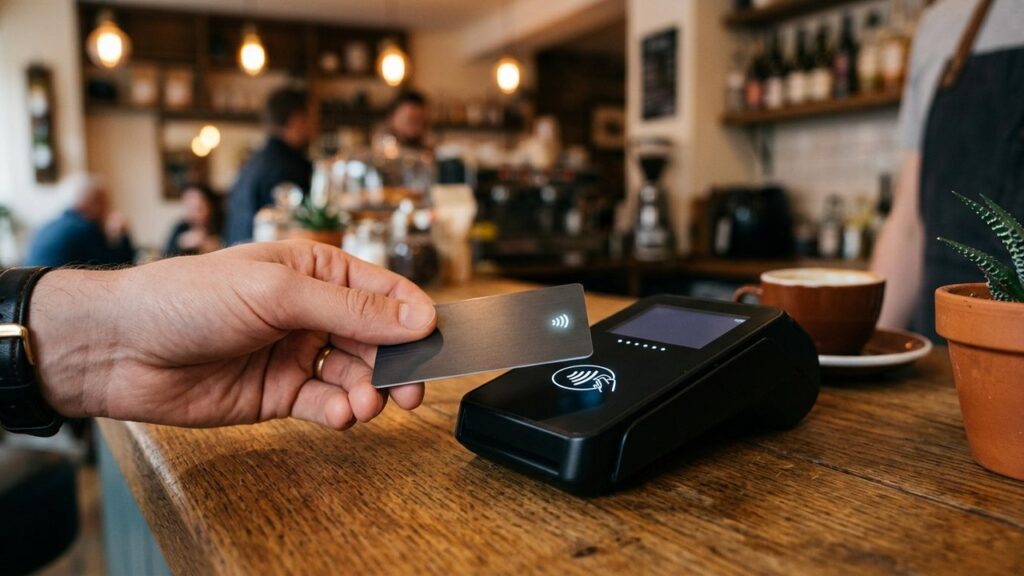
Cash usage across British high streets, cafes, retail stores, salons, and service trades has declined sharply while shoppers expect fast contactless taps, mobile wallets, and seamless checkout everywhere they spend. Choosing the right setup for card payments protects profit margins, accelerates cash flow, and keeps queues moving smoothly across face-to-face counters, online shops, and telephone orders. Because merchant acquiring rates, terminal rentals, and hidden monthly minimums vary dramatically between providers, comparing UK card payments before signing a multi-year contract can save small and mid-sized businesses thousands of pounds every year.
Whether you accept under £1,000 a month as a new sole trader or process over £80,000 monthly across busy hospitality venues, understanding how card payments work behind the scenes empowers owners to negotiate cleaner rates. Exploring machine types, fee structures, leading UK merchant providers, PCI compliance basics, and fast six-step quote comparisons ensures your card payments infrastructure supports growth instead of quietly eroding every sale.
How UK Business Card Payments Work Behind Every Tap
Whenever a customer taps a debit card, credit card, Apple Pay, or Google Pay at your till, a coordinated chain of financial networks authorizes and settles those card payments in seconds. Three core entities participate in every transaction: the cardholder’s issuing bank, the card scheme such as Visa, Mastercard, or American Express, and your merchant acquirer or payment processor that routes funds safely into your business bank account.
Understanding this chain demystifies why two neighboring cafes processing identical card payments often pay radically different effective fees. Every transaction combines an interchange fee paid to the card issuer, a scheme fee set by Visa or Mastercard, and the acquirer’s markup, plus any monthly terminal rental, authorization pence fee, PCI fee, or minimum monthly service charge bundled into your contract. Comparing card payments quotes side by side exposes inflated markups immediately.
Three Core Channels for Accepting Business Card Payments
Modern UK enterprises rarely rely on a single checkout channel. Matching each sales touchpoint to the right processing setup keeps card payments reliable and cost-effective.
- Face-to-face card payments use countertop, portable Wi-Fi, or mobile 4G terminals to capture contactless, Chip and PIN, and smartphone wallet taps at lower card-present risk rates.
- Online card payments rely on hosted e-commerce payment gateways and pay-by-link invoices with Strong Customer Authentication (3D Secure) to convert web and mobile shoppers safely.
- Over-the-phone card payments run through secure virtual terminals inside a browser so tradespeople, clinics, wholesalers, and hospitality booking desks accept remote deposits quickly.
Why Comparing Card Payments Providers Pays Off Across Every Turnover Band
Platforms trusted by more than 10,000 UK businesses and rated 5 stars on Trustpilot, such as Compare Your Business Costs, let owners benchmark quotes across major acquirers including Barclaycard, Worldpay, Elavon, First Data, and Retail Merchant Services in six quick steps taking roughly 30 seconds. Filtering offers by existing provider, industry sector (retail, food and hospitality, health and leisure, construction, or services), payment channel, and monthly card turnover ensures merchants only review tailored card payments deals aligned with their real volume, and owners can verify how lower merchant fees expand net margins using a profit margin calculator.
Comparing Card Payment Machines for UK Businesses
Selecting the wrong physical terminal leads to dead batteries during lunch rush, dropped Wi-Fi signals at tableside, or unnecessary monthly leasing costs. Comparing hardware classes clarifies which machine handles your daily card payments most smoothly.
| Card Machine Type | Connectivity | Best Industry Fit | Key Operational Advantage |
|---|---|---|---|
| Countertop Terminal | Ethernet broadband or Wi-Fi | Retail shops, pharmacies, reception desks | Always powered, ultra-fast EPOS till integration |
| Portable Terminal | Bluetooth base or business Wi-Fi | Restaurants, bars, salons, garden centres | Takes card payments right at the customer table |
| Mobile 4G / Roaming SIM | Multi-network 4G SIM + Wi-Fi | Construction, deliveries, markets, mobile trades | Processes card payments reliably anywhere in the UK |
| Smart Android POS Reader | Wi-Fi and 4G with touchscreen apps | Cafes, boutiques, multi-staff hospitality | Combines receipts, tipping, catalog, and card payments |
| Virtual Terminal and Links | Secure browser portal or SMS/email | Consultancies, clinics, phone bookings, B2B | No hardware required for remote phone or invoice pay |
Matching Card Payments Pricing Models to Monthly Turnover
The cheapest deal for a weekend market stall taking £800 a month is rarely the cheapest deal for a busy restaurant processing £35,000 in card payments monthly. Choosing the right pricing tier saves significantly over a 12 to 36 month period.
| Pricing Model | Monthly Fixed Fee | Typical Transaction Rate | Best Monthly Card Volume |
|---|---|---|---|
| Pay-As-You-Go Flat Rate | £0 monthly (buy reader upfront) | Higher flat percentage (~1.5% to 1.75%) | Under £1,000 to £3,000 per month or seasonal sellers |
| Monthly Merchant Account | Terminal rental + small service fee | Much lower debit/credit percentages (often under 1%) | £3,000 to £50,000+ monthly card payments |
| Interchange Plus Custom | Negotiated enterprise fee schedule | True wholesale interchange + tiny transparent margin | £50,000 to £80,000+ high-volume UK merchants |
Spotting Hidden Fees in UK Card Payments Contracts
Headline debit card percentages rarely tell the full story on merchant statements. Before locking into any card payments contract, examine six line items carefully so surprise charges never eat into net margins.
- Minimum Monthly Service Charge (MMSC) penalties that charge extra during quieter winter months when card payments drop below a set floor.
- PCI DSS compliance or non-compliance fees that can add £20 to £40 monthly if annual security questionnaires are left incomplete.
- Authorization fees of 1p to 5p per tap that quietly inflate costs for cafes and newsagents handling hundreds of small-ticket card payments daily.
- Higher commercial, corporate, and international card surcharges applied on top of standard UK consumer debit rates.
- Auto-renewing 36 to 48 month terminal leases with steep early termination penalties if you switch card payments acquirers early.
- Slow payout settlement cycles taking three to five working days compared with next-day or same-day settlement options.
How Fast Settlement and EPOS Integration Improve Daily Cash Flow
Reliable card payments do more than capture revenue; they streamline evening cashing-up and keep working capital liquid. Pairing your terminal with EPOS till integration sends exact basket totals automatically to the reader so staff never mistype £45.00 as £4.50, while next-day or weekend payout schedules keep funds available to pay suppliers and payroll smoothly.
Switching UK Card Payments Providers Without Losing a Single Sale
Many established UK shops overpay for years on outdated legacy agreements simply because owners worry that switching card payments providers will disrupt live trading. In practice, switching works seamlessly when handled in parallel.
Practical Five-Step Switching Checklist for Business Owners
Follow a clean verification sequence to lower your monthly merchant processing bill with zero checkout downtime.
- Step 1 Pull your last two monthly merchant statements to check total monthly turnover, average transaction size, consumer vs corporate card mix, and contract expiry dates.
- Step 2 Submit a quick comparison request covering your current provider, industry sector, payment channels, and monthly volume to review competing acquiring offers transparently.
- Step 3 Compare true effective rates by dividing total monthly fees (including rental, PCI, and authorization fees) by total monthly card turnover rather than relying on teaser headlines.
- Step 4 Confirm buyout or contract-end dates cleanly so you avoid duplicate terminal lease charges while testing the new machine alongside your till before disconnecting the old unit.
- Step 5 Complete simple annual PCI DSS self-assessment attestation promptly to eliminate unnecessary non-compliance surcharges on your new merchant account.
Security, PCI DSS Compliance, and Chargeback Protection for Card Payments
Every business taking card payments carries responsibility for safeguarding cardholder data under the Payment Card Industry Data Security Standard (PCI DSS). Modern point-to-point encrypted terminals and hosted online checkout pages reduce merchant compliance workload dramatically because sensitive card numbers never touch local computers or unencrypted Wi-Fi networks.
Preventing Fraud and Chargebacks Across Channels
Face-to-face Chip and PIN and biometric Apple Pay or Google Pay card payments carry very low fraud liability for merchants compared with manual keyed phone transactions. When accepting remote card payments, always enable Address Verification Service (AVS), CVV checks, 3D Secure authentication on online checkouts, and clear billing descriptors matching your trading name so customers recognize charges on bank statements and never file accidental chargebacks.
Pros and Cons of Dedicated Merchant Accounts vs Pay-As-You-Go Card Payments
Evaluating both options clearly ensures startups and established UK retailers pick the card payments structure that matches growth plans.
Pros of Comparing Dedicated UK Merchant Accounts
- Significantly lower per-transaction percentages save hundreds to thousands of pounds annually once monthly card payments exceed roughly £3,000.
- Dedicated UK telephone support, rapid next-day hardware swaps, and faster next-day bank payouts protect high-footfall retail and hospitality venues.
- Seamless EPOS integration, multi-terminal fleet management, and tailored sector rates across retail, catering, leisure, and construction.
- Transparent side-by-side comparison helps merchants leverage competing quotes from Barclaycard, Worldpay, Elavon, First Data, and Retail Merchant Services.
Cons and Trade-Offs to Watch
- Dedicated merchant accounts involve fixed monthly terminal rentals and minimum contract periods (often 12 to 36 months) that can penalize very low-volume or intermittent traders.
- Pay-as-you-go readers carry zero monthly commitment for startups taking under £1,000 monthly, yet their flat percentage becomes expensive rapidly as card payments grow.
- Comparing offers without reviewing full fee schedules including PCI, authorization pence fees, and corporate card rates can hide real effective costs.
Future Trends Shaping UK Card Payments Beyond 2026
Consumer habits around card payments continue to accelerate toward zero-friction speed. Tap-to-Pay smartphone acceptance lets mobile sole traders turn compatible phones into backup readers without extra hardware, Open Banking pay-by-bank links offer low-cost alternatives for large B2B invoices, and smart Android terminals unify inventory, digital receipts, loyalty rewards, and card payments on one handheld screen. Keeping contracts flexible and reviewing card payments quotes every 12 to 18 months ensures UK businesses capture lower fees and modern checkout tech as the market evolves.
Sector-by-Sector Guide to Choosing the Right Card Machine Setup
Every UK business sector handles distinct basket sizes, connectivity conditions, and customer tipping expectations. Selecting hardware and acquiring tariffs tailored to how your business actually trades eliminates checkout bottlenecks and prevents paying for terminal features you never use.
Retail Shops, Boutiques, and High-Street Stores
Brick-and-mortar retailers benefit most from wired countertop terminals or EPOS-linked smart readers that process rapid contactless taps in under two seconds. Because high-street shops often process high volumes of low-to-medium value debit transactions, avoiding per-transaction pence authorization surcharges can cut total monthly processing bills significantly while keeping checkout queues short during weekend rushes.
Hospitality, Cafes, Restaurants, and Bars
Table-service restaurants, pubs, and busy coffee bars need portable Wi-Fi or roaming 4G terminals with all-day battery life, built-in bill-splitting prompts, optional tipping flows, and rugged spill resistance. Pairing portable readers directly with kitchen and bar EPOS systems ensures servers never re-key table totals manually, cutting reconciliation errors to zero at closing time.
Construction, Trades, Health, Leisure, and Mobile Services
Plumbers, electricians, landscape contractors, mobile therapists, and delivery drivers rarely work beside reliable broadband routers. Multi-network roaming 4G card machines paired with browser virtual terminals and pay-by-link SMS invoices allow tradespeople to collect deposits upfront over the phone and take instant final balance settlements on site as soon as work finishes, eliminating slow bank transfer chasing and improving weekly cash flow.
Understanding Interchange, Scheme, and Acquirer Fee Splits
Knowing the three components behind every merchant rate gives UK business owners sharp negotiating confidence. UK consumer debit interchange is tightly regulated and very low, whereas business credit cards and overseas cards issued outside the UK carry higher wholesale interchange and cross-border scheme fees. Asking prospective providers to quote separate clear rates for UK debit, UK credit, commercial cards, and international cards prevents blended averages from masking expensive markups on your core domestic sales.
Contactless Limits, Mobile Wallets, and Multi-Currency Acceptance
Modern British shoppers expect effortless checkout regardless of basket value or issuing bank. While physical contactless plastic taps follow UK contactless transaction limits before prompting for Chip and PIN verification, mobile wallets such as Apple Pay and Google Pay verify cardholders biometrically via Face ID or fingerprint sensors, supporting higher-value taps rapidly with minimal fraud risk. Retailers and hotels serving international tourists or overseas corporate travelers should also review Dynamic Currency Conversion and multi-currency acquiring terms carefully so foreign customers enjoy transparent pricing without hidden FX spreads hurting guest satisfaction.
Keeping backup connectivity active, such as Wi-Fi with automatic 4G roaming failover, protects weekend and holiday trading whenever local broadband drops unexpectedly. Businesses that combine resilient dual-network terminals, transparent itemized rate tables, and periodic annual comparisons maintain dependable checkout speed and market-leading processing costs year after year.
FAQ’s
What is the cheapest way for a UK small business to take card payments?
Businesses processing under £1,000 to £3,000 monthly usually save most with a zero-monthly-fee pay-as-you-go reader, whereas companies taking £3,000 plus in card payments monthly almost always pay far less with a compared dedicated merchant account featuring lower transaction percentages.
How fast do funds from card payments reach my business bank account?
Standard UK merchant accounts typically settle card payments within one to three working days, while several modern acquirers offer next-day or seven-day settlement schedules depending on your risk profile and plan.
Can one provider handle face-to-face, online, and phone card payments together?
Yes, most major UK acquirers bundle physical terminals, e-commerce payment gateways, payment links, and browser virtual terminals under one unified merchant account so all card payments reconcile cleanly in one statement.
What hidden fees should I watch out for in card payments contracts?
Always check for Minimum Monthly Service Charges, PCI DSS compliance or non-compliance fees, per-transaction authorization fees, elevated commercial or international card rates, and long auto-renewing terminal leases.
How long does it take to compare UK card payments quotes and switch?
Comparing tailored UK card payments quotes takes roughly 30 seconds through a six-step comparison form, and once approved, pre-configured card machines typically arrive ready to plug in and trade within a few working days.
Do all businesses taking card payments need PCI DSS compliance?
Yes, every business accepting card payments must maintain PCI DSS compliance, though using modern encrypted terminals and hosted payment gateways simplifies compliance to a brief annual online questionnaire.
Conclusion
Optimizing how your business accepts card payments is one of the quickest ways to strengthen cash flow, keep queues moving, and cut silent recurring overhead across retail, hospitality, leisure, and trade sectors. By matching terminal hardware and pricing models directly to your real monthly volume and auditing every hidden statement fee before signing, owners protect margins on every tap.
Taking 30 seconds to compare competing UK card payments quotes across leading merchant acquirers puts negotiating leverage squarely in your hands and ensures your payment setup scales cleanly alongside your customers’ changing checkout habits.