
Whether you are trying to prevent dry winter air from causing sinus issues, stop summer humidity from encouraging mold in your basement, or protect delicate...
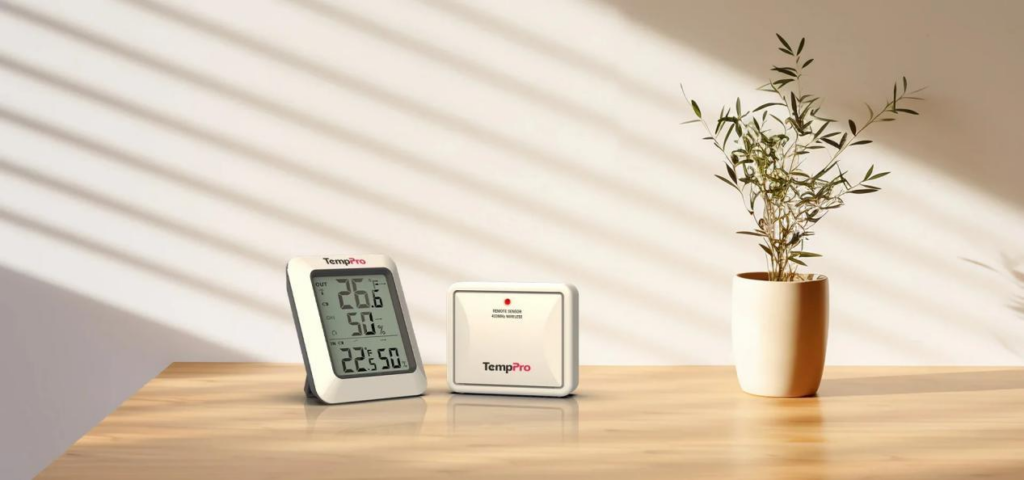
Whether you are trying to prevent dry winter air from causing sinus issues, stop summer humidity from encouraging mold in your basement, or protect delicate houseplants and wood furniture, keeping track of your home’s climate makes a big difference. A reliable digital hygrometer thermometer takes the guesswork out of indoor and outdoor air conditions.
However, with dozens of models on the market, it is easy to end up with a device that gives sluggish readings or loses connection through drywall. Below is a practical guide to the exact features American homeowners should look for when shopping for a digital hygrometer thermometer, along with a closer look at a top-performing wireless option.
Sensor Accuracy and Measuring Range
The primary job of any thermometer hygrometer is to give you numbers you can trust. Cheap sensors can drift by several degrees or percentage points, leading you to run your humidifier or dehumidifier when you do not actually need to.
- Temperature Accuracy: Look for a tolerance of ±2.0°F or better. Since households rely on Fahrenheit, verify that the unit displays °F clearly and allows easy switching between °F and °C.
- Humidity Accuracy: Aim for ±2% to ±3% RH (Relative Humidity).
- Wide Operating Range: If you plan to monitor an unheated garage, patio, or greenhouse, check the outdoor sensor’s limits. A solid unit should read temperatures from at least -4°F to 158°F (-20°C to 70°C) and humidity from 10% to 99% RH.
Fast Refresh Rate
Air conditions change quickly when your HVAC system kicks on, a door opens, or a summer storm rolls in. A slow device that updates only once every few minutes leaves you reacting to outdated numbers.
- Indoor Base Station: Look for a refresh rate of 30 seconds or faster so you can see real-time adjustments as your heating or cooling runs.
- Outdoor Remote Sensor: A wireless transmitter should update in under 60 seconds, giving you near-instant feedback on outdoor weather shifts before you step outside.
Wireless Transmission Range and Signal Stability
Many homeowners prefer wireless indoor/outdoor monitors so they can check backyard, porch, or basement conditions from the kitchen counter. However, advertised ranges are measured in open air. Thick brick walls, stucco, metal siding, and household appliances can cut that distance significantly.
- Minimum 300-500 Feet Range: Choosing a model rated for up to 500 feet (150 meters) in open air ensures reliable signal penetration through standard American home construction.
- Simple Frequency Connection: Devices that operate on dedicated radio frequencies rather than Wi-Fi or Bluetooth pair automatically right out of the box. You do not have to worry about router dropouts, app updates, or complicated passwords.
Multi-Sensor Expandability
Your living room, baby nursery, crawl space, and backyard greenhouse all have completely different microclimates. Instead of buying three separate monitors and walking from room to room to check them, look for a base station that supports multiple channels.
A digital hygrometer with multi-sensors let you place remote sensors in different zones, such as a patio, wine cellar, and upstairs bedroom, and toggle through every reading from one central screen.
High/Low Records and Trend Arrows
A single snapshot of the current temperature does not tell the whole story. Knowing how much conditions fluctuate overnight or throughout the week helps you spot insulation leaks or HVAC inefficiencies.
- 24-Hour and All-Time Max/Min: Look for a monitor that automatically logs the highest and lowest temperature and humidity levels over the past 24 hours and all time.
- Trend Indicators: Small arrows next to the readings show at a glance whether the air is warming up, cooling down, or getting more humid, helping you adjust your thermostat or humidifier proactively.
Readability and Placement Options
Even the most accurate thermometer is frustrating if you have to squint to read it from across the room.
- Clear Layout: Choose a screen with bold digits that clearly separate indoor and outdoor metrics.
- Flexible Mounting: A great base station includes both a fold-out tabletop stand for desks or nightstands and a keyhole slot for wall mounting. Similarly, outdoor sensors should feature a weather-resistant housing with a hanging loop for easy placement under a covered porch or eaves.
Which Digital Hygrometer Thermometer is Good for Everyday Home Monitoring
If you want a dependable, straightforward humidity and temperature monitor that checks all the right boxes without unnecessary tech headaches, the TempPro TempAir PLUS TP60B Wireless Indoor Outdoor Thermometer Hygrometer is built for everyday households. Designed for accuracy and simplicity, it lets you track both indoor comfort and outdoor weather conditions from a single compact LCD screen.
Key Features and Benefits
- High Precision: Delivers ±2.0°F (±1.1°C) temperature accuracy and ±2% RH humidity accuracy, giving you trustworthy data to manage your thermostat, humidifier, or dehumidifier.
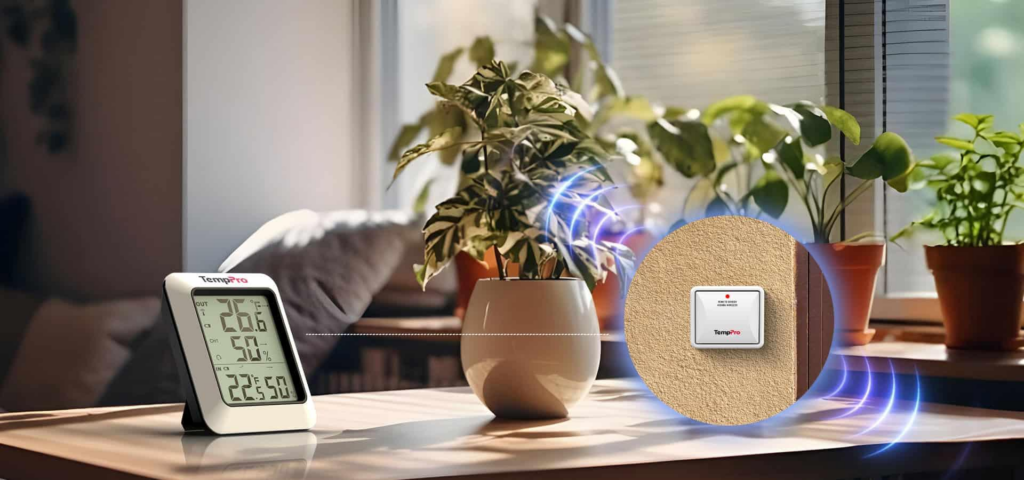
- 500-Foot Wireless Range: Offers strong signal penetration up to 500 feet in open air, making it easy to monitor a distant backyard, detached garage, or basement from inside your home.
- Rapid Updates: The indoor base station refreshes every 30 seconds, while the outdoor sensor updates in under 60 seconds, keeping you informed as weather fronts or indoor airflow shift.
- Expandable Multi-Zone Tracking: Supports up to 3 wireless remote sensors (one included, additional sensors sold separately). You can easily switch channels to check your nursery, patio, and greenhouse on one display.
- Smart Memory & Trend Arrows: Tracks 24-hour and all-time high/low records alongside directional trend arrows, so you know immediately if overnight temperatures dipped too low for sensitive plants or pipes.
- Zero Setup Hassle: Powered by standard AAA batteries with no Wi-Fi, Bluetooth, or smartphone app required. Just insert the batteries, place the rain-proof sensor upright outdoors, and view your readings right away.
FAQs about Digital Hygrometer Thermometers
What is the ideal indoor humidity level for a home?
According to the U.S. Environmental Protection Agency (EPA), indoor relative humidity should ideally stay between 30% and 50% and always below 60%. Keeping levels in this range prevents mold growth, reduces dust mites, and stops static electricity and dry skin during winter heating months.
Where is the best place to put an outdoor thermometer sensor?
Mount your outdoor sensor in a shaded, well-ventilated spot, such as on a north-facing wall, under a covered patio, or beneath roof eaves. Avoid direct sunlight, which causes artificially high temperature spikes, and keep it away from dryer vents or AC exhaust units.
Why do wireless thermometer hygrometers need a 500-foot range?
Even if your yard is much smaller than 500 feet, residential building materials like brick, concrete, insulated walls, and low-E glass windows absorb radio signals. Starting with a 500-foot open-air range ensures a steady, drop-free connection through multiple indoor walls.
Conclusion
Choosing the right digital hygrometer thermometer comes down to dependable accuracy, fast refresh speeds, strong wireless range, and effortless daily readability. By keeping an eye on your home’s microclimates, you can protect your family’s health, lower energy bills, and safeguard your property from extreme moisture or dryness. With its 500-foot range, multi-sensor capability, and plug-and-play reliability, the TempPro TempAir PLUS TP60B Wireless Indoor Outdoor Thermometer Hygrometer makes creating a balanced, comfortable living environment easier than ever.