
Writing original broadcast-ready music once forced creators to master sprawling digital audio workstations, license expensive sample libraries, or hire studio musicians for every campaign. A...
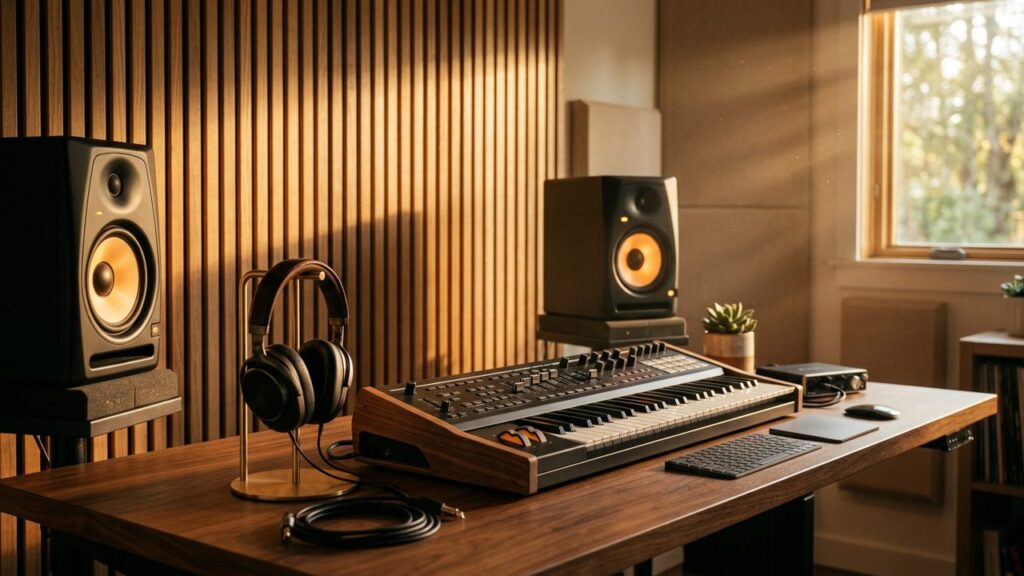
Writing original broadcast-ready music once forced creators to master sprawling digital audio workstations, license expensive sample libraries, or hire studio musicians for every campaign. A conversational AI Music Agent replaces technical studio friction with natural creative direction from concept through finished master. Platforms like SongAgent let marketers, podcasters, game developers, and musicians describe a mood, review an explicit musical blueprint, iterate interactively, and export 100 percent royalty-free commercial masters.
Unlike black-box generators that spit out random clips you cannot steer or revise cleanly, a true AI Music Agent collaborates like a seasoned studio producer. You inspect key, tempo, song structure, and instrumentation before rendering, refine sections conversationally, and even batch-produce cohesive multi-track albums or EPs. This guide explains how SongAgent works and how creative teams deploy an AI Music Agent for commercial audio production.
How an AI Music Agent Differs From Basic Prompt-to-Audio Generators
First-generation AI music tools worked like slot machines: type three genre words, click generate, wait two minutes, and hope the chorus did not collapse into muddy distortion. When a video editor liked the bassline but wanted warmer strings or a slower outro, the only option was rolling the dice again and losing everything that worked.
A modern AI Music Agent such as SongAgent upgrades that workflow from blind guessing into structured musical collaboration. Instead of rushing straight to opaque audio waveforms, the agent interprets your artistic brief, drafts a transparent musical blueprint first, and collaborates step by step across arrangement, lyrics, stems, and final polish.
Transparent Musical Blueprints Before Audio Generation
Real studio producers never start recording before agreeing on tempo, key signature, instrumentation, and structural dynamics. SongAgent brings that exact discipline into its AI Music Agent workflow by surfacing a readable blueprint before committing to audio synthesis. You confirm intro length, verse energy, chorus lift, bridge contrast, tempo, key, and instrument palette upfront.
Catching structural mismatches at the blueprint stage saves hours of trial-and-error rendering. If a product launch trailer requires a tight 118 BPM build that drops cleanly at thirty seconds for voiceover clarity, you shape those exact parameters in plain language before hearing the first preview.
The Autonomous Multi-Agent Studio Architecture
SongAgent’s roadmap reflects how elite commercial records are actually built by specialized roles working in harmony: Composer, Arranger, Producer, and Mixer. Separating melodic ideation, instrumental orchestration, dynamic pacing, and final loudness balance lets an AI Music Agent deliver studio-grade cohesion rather than flat one-pass loops.
Inside the Four-Step Conversational Workflow in SongAgent’s AI Music Agent
Whether you have never touched a MIDI keyboard or have produced albums for twenty years, SongAgent’s AI Music Agent organizes every track inside four clear stages that keep creative ownership firmly in your hands. Each step inside this AI Music Agent builds transparently on the previous creative decision.
| Workflow Stage | What Happens Inside SongAgent | Creator Control Lever | Practical Time Saver |
|---|---|---|---|
| 1. Vision Brief | Describe mood, genre, story, or target video pace naturally | Plain-language creative direction without DAW jargon | Eliminates hours of hunting stock libraries |
| 2. Musical Blueprint | Review structured plan for key, tempo, sections, and instruments | Approve or tweak arrangement before synthesis starts | Stops wasted renders with wrong energy or length |
| 3. Real-Time Refinement | Generate preview and iterate conversationally on melody or lyrics | Adjust vocals, extend tracks, or reshape specific beats | Keeps winning hooks while polishing weak sections |
| 4. Commercial Master | Export clean studio-grade audio and separated vocal stems | 100% royalty-free commercial ownership, zero attribution | Ready immediately for YouTube, ads, podcasts, or games |
Because SongAgent is free to start, creators can experience all four steps on a real project before deciding how heavily to weave an AI Music Agent into ongoing client or channel workflows.
Multi-Genre Models, Intelligent Lyrics, and Track Extensions
Commercial projects rarely live inside one narrow genre box. An agency might need lo-fi acoustic warmth for a morning wellness podcast, punchy synthwave for a SaaS feature demo, and cinematic orchestral percussion for a gaming trailer within the same week. SongAgent integrates multi-genre models inside its AI Music Agent so tonal authenticity stays sharp across pop, electronic, cinematic, acoustic, hip-hop, jazz, and ambient briefs.
Beyond instrumentals, SongAgent’s AI Music Agent includes intelligent lyric drafting, seamless track extensions when a two-minute cue needs a longer ending for credits, and clean vocal separation. Editors who love a generated hook from their AI Music Agent can pull the vocal layer out cleanly for dialogue-heavy ad cutdowns while keeping the full vocal mix for standalone promotional edits.
Batch Composition for Full Albums, EPs, and Game Soundtracks
Single-track generators struggle terribly when a creator needs eight songs that genuinely belong to the same sonic world. SongAgent’s batch composition capabilities let an AI Music Agent plan cohesive albums, EPs, podcast season themes, or multi-level indie game soundtracks sharing consistent tempo families, harmonic motifs, and mix warmth across every track. Running cohesive batch sessions inside an AI Music Agent saves indie studios weeks of manual scoring coordination.
Commercial Licensing, Ownership, and Cost Economics
Copyright claims on YouTube, muted Instagram reels, and tangled sync licensing contracts routinely derail creators who rely on unclear royalty-free marketplaces. Commercial certainty is one of the strongest operational advantages of adopting a purpose-built AI Music Agent. Every track exported from SongAgent’s AI Music Agent ships clear of surprise content disputes.
| Audio Sourcing Path | Turnaround Speed | Custom Revision Flexibility | Licensing and Attribution Terms |
|---|---|---|---|
| Custom Studio Composer | 1 to 3 weeks per project | High, but costly per revision round | Negotiated buyouts or recurring sync royalties |
| Stock Music Subscription | Minutes to browse, hours to settle | Low, fixed tracks used by thousands of rivals | Platform allowlists and recurring subscription ties |
| Generic AI Clip Generator | Minutes per random render | Weak structural control over sections | Varies widely; often requires paid tiers or attribution |
| SongAgent AI Music Agent | Minutes with transparent blueprints | High conversational iteration, stems, and extensions | 100% royalty-free commercial ownership, zero attribution |
Owning 100 percent royalty-free commercial masters with zero attribution requirements simplifies publishing across client commercials, monetized YouTube channels, mobile games, podcasts, and streaming releases. Production leads comparing stock subscription bills and freelance composer retainers against an AI Music Agent can estimate annual cost savings cleanly with our ROI calculator.
High-Impact Use Cases Across Creative Industries
Because an AI Music Agent removes technical DAW barriers without sacrificing structural polish, teams across five major sectors now use SongAgent every week to elevate sound design.
- YouTube creators and podcasters build signature show intros, ad-read beds, and clean instrumental versions via vocal separation without risking Content ID demonetization.
- Performance marketing teams tailor custom 15-second and 30-second audio hooks matched precisely to video edit cuts instead of slicing awkward stock tracks.
- Indie game developers use batch composition inside an AI Music Agent to score exploration loops, boss themes, and menu screens sharing one coherent musical palette.
- Songwriters and vocalists prototype chord progressions, intelligent lyrics, and full backing arrangements rapidly before stepping into vocal booths.
- Filmmakers and ad agencies produce client pitch animatics with bespoke emotional scores in an afternoon rather than presenting temp tracks they cannot legally license.
When audio stops being an afterthought pasted onto finished video at the final hour, audience retention climbs noticeably. Viewers immediately sense when music breathes with on-screen pacing instead of fighting dialogue.
Prompting and Direction Best Practices for Your AI Music Agent
Getting breathtaking studio masters from an AI Music Agent comes down to directing it the way a confident filmmaker briefs a human composer. Vague prompts like “make a happy corporate song” yield forgettable background filler, whereas clear musical direction unlocks remarkable emotional precision.
How to Brief SongAgent for Broadcast-Ready Results
- Specify narrative purpose and emotional arc first, such as opening with intimate piano curiosity before swelling into confident rhythmic momentum at the chorus.
- Anchor three concrete sonic elements: primary lead instrument, rhythm texture, and acoustic space such as dry modern pop clarity or warm tape-saturated room ambience.
- Review SongAgent’s proposed musical blueprint carefully before generation, confirming BPM, key feel, and section transitions match your edit timeline.
- Use conversational refinement to tweak one dimension at a time, such as pulling back busy hi-hats during spoken-word verses or brightening acoustic guitar phrasing.
- Export separated stems and instrumental variants using vocal separation whenever tracks will run beneath voiceover or dialogue mixes.
Treating your AI Music Agent as a collaborative partner rather than a vending machine immediately lifts mix clarity. Small iterative notes inside an AI Music Agent during stage three consistently produce tracks indistinguishable from boutique studio sessions, giving every AI Music Agent user studio confidence on tight deadlines.
Common AI Music Agent Production Mistakes to Avoid
First, avoid stuffing six conflicting genres into a single creative prompt, which muddies frequency balance and confuses arrangement logic. Second, always leave midrange headroom when scoring spoken videos by directing your AI Music Agent to keep vocals or busy brass out of the voiceover register. Finally, check loudness consistency across batch-composed tracks so album or episode transitions feel seamless on headphones and phone speakers alike.
Evaluating When to Pair an AI Music Agent With Human Musicians
Adopting an AI Music Agent does not mean sidelining human artistry; many working musicians embrace SongAgent as a tireless co-writer and arranger. Producers sketch five contrasting rhythmic blueprints in twenty minutes, choose the strongest harmonic backbone, export vocal-separated stems, and overdub live acoustic guitar or lead vocals on top inside their studio.
For agencies handling flagship broadcast spots, an AI Music Agent also revolutionizes client alignment. Clients approve exact tempo, mood, and instrumentation on realistic masters early in pre-production, eliminating expensive late-stage revisions whether you ship the final SongAgent master directly or layer bespoke live soloists on top.
Building Cohesive Sonic Branding Systems With an AI Music Agent
Memorable brands and creators do not treat music as disposable background filler swapped randomly on every upload. Audiences recognize flagship podcasts, SaaS product channels, and indie game universes within two seconds because every episode shares a cohesive sonic identity. Deploying an AI Music Agent like SongAgent lets lean creative teams build complete sonic brand kits covering main themes, short ad stingers, subtle dialogue beds, and upbeat outro loops without hiring an agency composer on annual retainer.
Standardizing Key Families, Tempo Ranges, and Instrument Palettes
When working with an AI Music Agent across a twelve-week campaign, document three anchor rules in a short one-page sonic brief before generating your first blueprint. Specify your brand’s core instrument palette (such as warm felt piano, plucked acoustic bass, and crisp minimal percussion), approved tempo bands for calm explainer videos versus high-energy product drops, and preferred emotional color across major or modal keys.
Sharing those exact constraints inside every conversational prompt keeps an AI Music Agent producing unmistakable sibling cues across every video, podcast segment, and social ad. Using SongAgent’s batch composition engine takes sonic consistency even further by generating multi-track EPs, full podcast season packs, or cohesive game level suites inside one unified session.
Leveraging Track Extensions and Vocal Separation for Multi-Cut Deliverables
Modern video campaigns require five edits from every hero shoot: a ninety-second YouTube launch film, a thirty-second paid social commercial, a fifteen-second vertical hook, a six-second bumper, and a clean dialogue-heavy webinar intro. Instead of slicing stock music awkwardly mid-bar, an AI Music Agent lets you generate the core blueprint once, apply Track Extensions cleanly when a hero video runs longer than expected, and export clean instrumentals via Vocal Separation so spoken voiceovers sit crisply on top.
Quality Control Checklist Before Publishing AI Music Agent Masters
Even with SongAgent’s studio-grade export fidelity and multi-agent Composer, Arranger, Producer, and Mixer design philosophy, running a quick sixty-second audio QC check guarantees every track translates cleanly across smartphones, car stereos, and studio headphones.
- Check dynamic flow across section transitions: Verify inside your AI Music Agent blueprint and rendered master that intro builds, chorus lifts, and outro resolves feel natural rather than stopping abruptly.
- Test voiceover clarity at low volume: Drop your instrumental or vocal-separated track beneath a real spoken script at -18 dB to -22 dB to confirm busy mids never compete with speech articulation.
- Compare playback on small phone speakers: Many social viewers hear your AI Music Agent master on mobile hardware first, so confirm melody hooks and rhythmic punch stay audible even without sub-bass frequencies.
- Verify batch loudness consistency: When shipping batch-composed albums, EPs, or multi-scene game soundtracks from an AI Music Agent, spot-check perceived volume across tracks so listeners never jump to adjust their volume dial.
- Archive blueprint notes alongside final masters: Save the approved SongAgent musical blueprint (key, BPM, instrumentation, and lyric sheet) inside your project folder so future campaign follow-ups match effortlessly.
This light editorial habit elevates creative output immediately. Creators who treat an AI Music Agent with the same respect they give a human studio engineer consistently ship audio that feels custom-scored for ten times the budget.
Scaling Creator Workflows From Solo Channels to Agency Studios
As creative output scales from one weekly video to twenty client assets per week, audio bottlenecks normally force studios to recycle tired stock loops. Integrating an AI Music Agent across your pre-production pipeline removes both creative fatigue and copyright risk simultaneously. Every track generated inside SongAgent arrives with 100 percent royalty-free commercial ownership and zero attribution strings, letting agencies hand finished masters directly to global clients cleanly.
Because SongAgent is free to start, solo creators, podcasters, game developers, and marketing leads can test its multi-genre models, intelligent lyrics, transparent blueprints, vocal separation, and batch composition live without upfront commitments. Once you feel how naturally an AI Music Agent turns plain-language artistic vision into broadcast-ready commercial masters, returning to tedious stock searches or clunky DAW templates feels like stepping backward a decade.
Whether you need a single unforgettable podcast signature, a batch-composed indie game soundtrack, or weekly ad-hook variations tailored to exact visual pacing, a conversational AI Music Agent transforms audio from a slow technical chore into your fastest creative superpower. Put an AI Music Agent into your very next production sprint and hear the difference cohesive, blueprint-driven sound design makes immediately.
Practical Team Handoff Rules for AI Music Agent Assets
As video editors, podcast producers, and social managers adopt an AI Music Agent across shared campaigns, clean asset labeling prevents mix confusion. Save each finalized AI Music Agent export inside a dedicated audio folder holding the full stereo mix, vocal-separated instrumental bed, extended cut, and approved musical blueprint text.
Recording exact BPM, key signature, and genre notes produced by the AI Music Agent makes future seasonal refreshes seamless for any teammate opening the project six months later. Treating every AI Music Agent session like a structured studio archive turns rapid AI Music Agent generation into long-term brand consistency across YouTube, podcasts, games, and paid campaigns.
FAQ’s
What makes SongAgent an AI Music Agent rather than a simple audio generator?
Unlike single-click generators that produce unpredictable clips, SongAgent acts as a collaborative AI Music Agent. It follows a structured four-step process: understanding your vision, drafting a transparent musical blueprint covering key, tempo, structure, and instruments, enabling conversational real-time refinement, and exporting studio-ready masters.
Can I use music created with an AI Music Agent for commercial projects?
Yes. Tracks produced through SongAgent include 100 percent royalty-free commercial ownership with zero attribution required. Creators, brands, agencies, podcasters, and game developers can monetize and distribute their audio across commercial campaigns cleanly.
Does SongAgent support creating full albums or multi-track soundtracks?
Yes. SongAgent supports batch composition specifically designed to build cohesive albums, EPs, and multi-track soundtracks. Creators maintain unified musical themes, moods, and production fidelity across multiple songs without starting from scratch every time.
Can I remove vocals or extend a track once it is generated?
Yes. SongAgent’s AI Music Agent includes built-in vocal separation so editors can isolate vocals or pull clean instrumental beds for voiceover-heavy videos, alongside track extension tools and intelligent lyric capabilities for full arrangement flexibility.
Do I need music theory knowledge or DAW software to use SongAgent?
No. You direct SongAgent in plain conversational language while the AI Music Agent translates your goals into structured musical blueprints covering tempo, harmony, and instrumentation. Experienced producers can still fine-tune technical choices, yet beginners get studio-grade results immediately.
Is SongAgent free to try before scaling production?
Yes. SongAgent is free to start, allowing creators and teams to test conversational blueprints, multi-genre generation, iterative refinements, and export quality firsthand on live projects before expanding usage.
Conclusion
Audio quality quietly defines whether audiences perceive a video, podcast, game, or brand campaign as amateur or unforgettable. A conversational AI Music Agent like SongAgent eliminates DAW bottlenecks and stock-library sameness through transparent musical blueprints, iterative refinement, vocal separation, batch album composition, and 100 percent royalty-free commercial ownership.
Start a free session with SongAgent on your next video intro, ad cutdown, or soundtrack brief, inspect the blueprint carefully before generating, and experience how fast studio-grade music production becomes when an intelligent AI Music Agent sits beside you.