
B2B ecommerce payment processing has become a critical competitive advantage for businesses selling to other companies online. Unlike consumer transactions, B2B payments often involve higher...
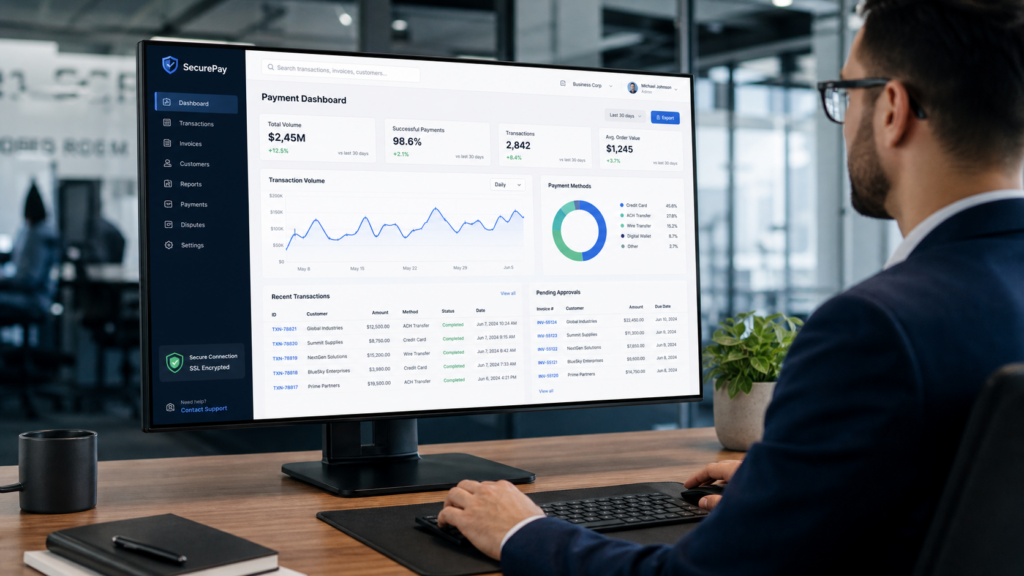
B2B ecommerce payment processing has become a critical competitive advantage for businesses selling to other companies online. Unlike consumer transactions, B2B payments often involve higher order values, longer sales cycles, complex invoicing, and multiple approval layers. A well-designed payment system can significantly reduce administrative burden, improve cash flow, minimize late payments, and create a smoother buying experience for corporate customers.
Why Efficient B2B Ecommerce Payment Processing Matters
Traditional B2B payment methods such as checks, wire transfers, and manual invoicing are slow, error-prone, and expensive. Modern B2B ecommerce payment processing solutions address these challenges by automating invoicing, offering multiple secure payment options, and providing real-time reconciliation. Companies that optimize this area typically see faster payment cycles, reduced days sales outstanding (DSO), and improved customer satisfaction.
Businesses that invest in advanced payment infrastructure also gain better visibility into their financial operations, allowing for more accurate forecasting and strategic decision-making.
Common Challenges in B2B Payment Processing
B2B transactions present unique difficulties compared to B2C ecommerce. High transaction values often require credit checks and purchase order matching. Many buyers prefer net-30 or net-60 payment terms, which can strain supplier cash flow. Manual processes frequently lead to errors in invoicing, delayed payments, and reconciliation issues.
Additionally, international B2B sales introduce currency conversion fees, tax compliance complexity, and varying regional payment preferences. A robust payment processing system helps overcome these obstacles through automation and flexibility.
Key Features of Modern B2B Ecommerce Payment Processing Solutions
Leading platforms now offer several essential capabilities:
- Automated Invoicing and Billing: Generate and send professional invoices instantly with automatic reminders.
- Multiple Payment Methods: Support for ACH, credit cards, wire transfers, digital wallets, and buy now pay later options for businesses.
- Purchase Order Integration: Match orders, invoices, and payments automatically.
- Real-Time Reconciliation: Reduce accounting workload with instant matching and reporting.
- Secure Payment Links: Send secure, personalized payment links that customers can pay without creating an account.
- Analytics and Reporting: Gain deep insights into payment performance, customer behavior, and cash flow trends.
These features collectively reduce friction in the buying process while strengthening financial controls.
Top Payment Methods for B2B Ecommerce
The most effective B2B ecommerce payment processing strategies offer buyers flexibility. ACH transfers remain popular due to low fees, while virtual cards and commercial credit cards provide convenience and rewards for buyers. Increasingly, businesses are adopting embedded finance solutions that allow customers to pay directly within the supplier’s platform.
For international trade, multi-currency support and local payment methods (such as SEPA in Europe or UPI in India) are becoming essential competitive requirements.
How to Choose the Right B2B Payment Processing Provider
Selecting the appropriate solution requires careful evaluation. Consider transaction volume, average order value, international reach, and integration capabilities with your existing ecommerce platform and accounting software.
The table below compares critical factors:
| Criteria | Important Considerations | Priority Level |
|---|---|---|
| Payment Methods Supported | ACH, Cards, Wire, BNPL, International | High |
| Integration Ease | ERP, CRM, and Ecommerce Platform Compatibility | Very High |
| Fees and Pricing Structure | Transaction fees, monthly charges, setup costs | High |
| Security & Compliance | PCI DSS, SOC 2, GDPR, encryption standards | Critical |
| Automation Capabilities | Invoicing, reminders, reconciliation | High |
| Customer Support Quality | Dedicated account management and response time | Medium-High |
Prioritize providers that offer dedicated B2B features rather than general ecommerce gateways designed primarily for B2C transactions.
Implementation Best Practices
Successful deployment of B2B ecommerce payment processing begins with mapping your current customer journey and identifying friction points. Integrate the payment solution deeply with your ERP and CRM systems to eliminate manual data entry. Provide clear payment instructions and multiple options at checkout to reduce abandoned orders.
Staff training is equally important. Sales and finance teams should understand the new processes and be prepared to guide customers toward preferred payment methods that benefit both parties.
Security and Compliance Considerations
Security remains paramount in B2B transactions due to high values. A trusted payment processor should offer tokenization, end-to-end encryption, and robust fraud detection tools. Compliance with PCI DSS Level 1 standards and regular security audits are non-negotiable requirements.
Modern solutions also help maintain compliance with evolving tax regulations and international trade requirements, reducing legal and financial risk.
Future Trends in B2B Ecommerce Payment Processing
The industry is moving toward embedded payments, where checkout becomes part of the supplier’s native platform experience. Artificial intelligence is being used to predict payment delays and automate collections. Blockchain-based solutions and smart contracts are also gaining attention for cross-border B2B transactions.
Businesses that adopt flexible, technology-forward payment systems will be better positioned to build stronger customer relationships and maintain healthy cash flow.
Frequently Asked Questions
What is B2B ecommerce payment processing?
B2B ecommerce payment processing refers to the systems and methods used to accept, process, and reconcile payments between businesses through online platforms.
What payment methods are most popular in B2B ecommerce?
ACH transfers, virtual credit cards, wire payments, and commercial credit cards are currently the most widely used methods in B2B transactions.
How does B2B payment processing differ from B2C?
B2B payments typically involve higher values, purchase orders, net payment terms, invoicing, and more complex approval workflows than consumer transactions.
Can B2B ecommerce payment processing improve cash flow?
Yes. Automation, faster payment collection, and reduced manual errors can significantly shorten payment cycles and improve liquidity.
What should I look for in a B2B payment processor?
Look for strong security, multiple payment options, seamless ERP integration, automated invoicing, and transparent pricing tailored to business transactions.
Is B2B ecommerce payment processing secure for large transactions?
When using PCI-compliant processors with proper encryption and fraud tools, B2B payment processing is highly secure for high-value transactions.
Conclusion
Effective B2B ecommerce payment processing is no longer a back-office function but a strategic growth driver that influences customer experience, operational efficiency, and financial health. By implementing modern, automated solutions with multiple payment options and strong security measures, businesses can reduce costs, accelerate cash flow, and build stronger relationships with corporate buyers. Companies that treat payment processing as a competitive advantage consistently outperform those relying on outdated manual systems. Investing in the right infrastructure today positions organizations for sustainable success in an increasingly digital B2B marketplace.
Pingback: Pest Control 9 Powerful Ways to Protect Your Home Safely
Pingback: Benchtop Environmental Chamber 7 Powerful Testing Insights
Pingback: Business App Development: 9 Steps for Lasting Success