
Choosing the best DTF ink is the single most consequential decision a direct-to-film printing business makes, because ink quality determines everything downstream, from color vibrancy and wash...
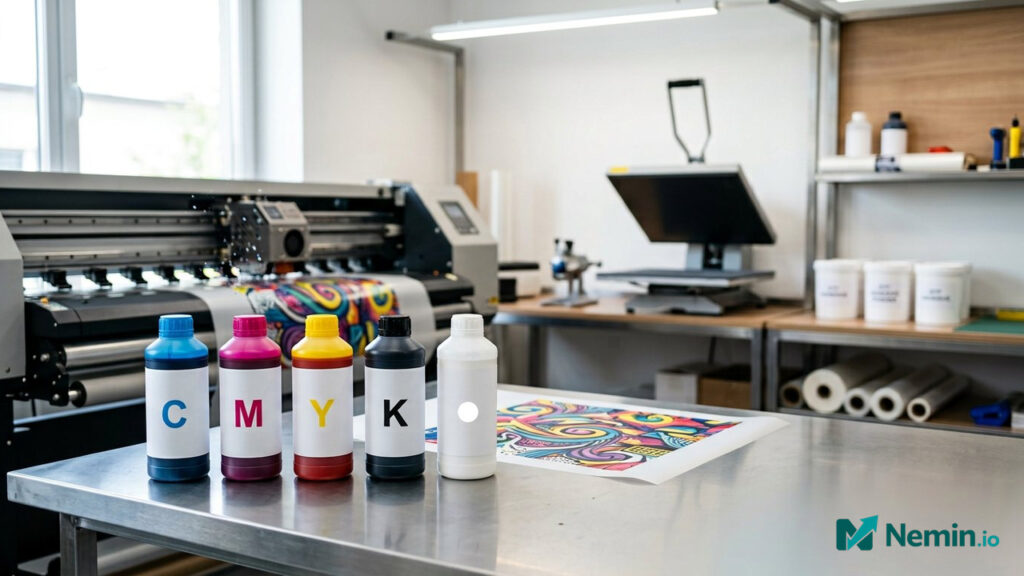
Choosing the best DTF ink is the single most consequential decision a direct-to-film printing business makes, because ink quality determines everything downstream, from color vibrancy and wash durability to printer head longevity, transfer adhesion strength, and the consistency of output across thousands of production runs. The DTF printing market has expanded at a remarkable pace. According to a 2024 market analysis by Grand View Research, the global DTF printing market was valued at approximately 1.6 billion USD in 2023 and is projected to grow at a compound annual growth rate of 11.3 percent through 2030, driven by demand for customized apparel, short-run production capability, and the operational advantages DTF offers over screen printing and direct-to-garment methods.
With that growth has come an explosion of ink brands, formulations, and supply options that range from genuinely professional-grade to dangerously substandard. This guide cuts through that complexity, covering the seven most important dimensions of DTF ink and supply selection, supported by real performance data, cost calculations, and technical criteria that professional printing businesses can apply immediately.
What Makes DTF Ink Different From Other Textile Printing Inks
Direct-to-film ink is a specialized pigment-based ink formulation designed to be printed onto PET film, bonded with hot melt adhesive powder, cured, and then heat transferred onto fabric. Unlike sublimation inks, which require polyester substrates, or plastisol inks, which require screen printing infrastructure, DTF ink is compatible with cotton, polyester, nylon, leather, and blended fabrics, making it one of the most versatile textile printing technologies currently available.
The chemistry of DTF ink requires specific properties that distinguish professional-grade formulations from inferior alternatives. Pigment particle size must be sufficiently fine to prevent printhead clogging while delivering the color density required for vibrant output. The ink must maintain stable viscosity across varying temperature and humidity conditions to ensure consistent drop formation from piezoelectric printheads. White ink, which serves as the foundation layer in DTF printing and accounts for the highest ink consumption in most production environments, must deliver sufficient opacity to support color vibrancy on dark garments while remaining fluid enough to prevent the sedimentation and clogging that makes white DTF ink one of the most technically challenging components to manage.
The Real Cost of DTF Ink: Calculations Every Print Business Must Understand
Before examining specific ink qualities, understanding the true cost structure of DTF ink consumption is essential for building a profitable printing operation. Many operators evaluate ink cost on a per-liter basis without accounting for the full cost-per-transfer calculation that determines actual profitability.
A standard DTF print covering a 30cm by 40cm area, which is a typical full-front garment print, consumes approximately 8 to 12 milliliters of combined CMYK and white ink depending on design coverage, color saturation, and printer calibration. At a mid-market professional DTF ink price of approximately 35 to 50 USD per liter, this translates to an ink cost of approximately 0.28 to 0.60 USD per transfer for ink alone.
When adhesive powder consumption of approximately 8 to 12 grams per transfer at a powder cost of approximately 8 to 12 USD per kilogram is added, the combined ink and powder cost per transfer ranges from approximately 0.36 to 0.72 USD per full-front print. For a printing operation producing 200 transfers per day at an average sale price of 3.50 USD per transfer, the daily material cost for ink and powder ranges from 72 to 144 USD, against daily revenue of 700 USD, representing a material margin of approximately 79 to 90 percent before labor, equipment depreciation, and overhead.
Understanding these calculations makes the cost differential between premium and budget DTF inks interpretable in business terms. A premium ink at 50 USD per liter versus a budget alternative at 20 USD per liter represents a cost difference of approximately 0.24 to 0.36 USD per transfer in direct ink cost. If the premium ink delivers 15 percent lower clogging-related waste, 20 percent better wash durability that reduces reprints and customer complaints, and measurably longer printhead life, the total cost of ownership calculation frequently favors the premium formulation despite its higher per-liter price.
7 Critical Dimensions of DTF Ink and Supply Selection for Professional Results
1. Pigment Quality and Color Gamut Performance
The pigment formulation in a DTF ink determines the achievable color gamut, which is the range of colors the ink can reproduce accurately. Professional-grade DTF inks use micronized pigment particles typically in the range of 100 to 200 nanometers in diameter, which is fine enough to pass through printhead nozzles reliably while delivering the color density required for vivid, saturated output.
Color gamut performance is typically measured against the sRGB color space, with premium DTF inks achieving gamut coverage in the range of 85 to 95 percent of the sRGB space. Budget formulations with lower pigment quality frequently fall in the 65 to 75 percent range, producing noticeably less vibrant output, particularly in saturated reds, deep blues, and vivid greens that are common in custom apparel designs.
When evaluating DTF ink for professional use, request spectrophotometric gamut data from the supplier or conduct independent testing using a colorimeter against a standardized color target to verify gamut claims before committing to a supply relationship.
2. White Ink Opacity and Suspension Stability
White DTF ink is the most technically demanding and highest-consumption ink in the DTF system. It serves as the reflective base layer that allows CMYK colors to appear vibrant on dark and colored garments, and it must be sufficiently opaque to block the substrate color without requiring multiple passes that slow production and increase ink consumption.
White ink opacity is measured as optical density, with professional-grade white DTF inks targeting an optical density of 1.8 to 2.2 on a single pass over standard PET film. Inks falling below an optical density of 1.6 typically require additional white passes, which increases ink consumption by 30 to 50 percent and reduces production throughput proportionally.
Suspension stability is equally important. Titanium dioxide, the pigment component of white ink, has a natural tendency to settle out of suspension, which is why white ink channels require regular agitation and circulation. Premium white DTF inks use suspension agents that extend the settling time significantly, reducing the frequency of clogging events and the waste associated with purging and cleaning cycles. A printer producing 150 transfers per day that experiences even one printhead clogging event per week requiring a 15-minute cleaning cycle and 50 milliliters of ink for the purge loses approximately 1.25 hours of productive time and approximately 2.50 USD in ink waste per week, or roughly 130 USD annually per printer, from this single failure mode.
3. Wash Durability and Adhesion Performance
The functional performance of a DTF transfer after application is determined by the interaction between the ink formulation, the adhesive powder, and the heat pressing parameters. However, ink quality is a primary variable in determining wash durability outcomes. Professional-grade DTF inks are formulated to maintain color integrity and adhesion strength through a minimum of 40 to 60 wash cycles at 40 degrees Celsius, which is the standard wash durability benchmark used in commercial apparel decoration quality assessment.
Independent wash durability testing conducted by several European print industry testing bodies in 2023 found that premium DTF ink brands consistently outperformed budget alternatives in wash durability tests, with premium inks averaging 52 wash cycles before measurable color degradation and adhesion failure, compared to an average of 28 wash cycles for the lowest-performing budget inks tested.
For printing businesses offering any form of quality guarantee or serving commercial clients with performance expectations, wash durability data is not a marketing specification. It is a business liability consideration. A single reprinting order to replace failed transfers on a 50-unit order costs more in material, labor, and client relationship damage than the per-transfer cost savings from using cheaper ink across that entire order.
4. Printhead Compatibility and Longevity Impact
DTF printing relies primarily on Epson piezoelectric printhead technology, with the Epson I3200 and XP600 series heads being the most widely deployed in professional DTF printers at the mid-market level. Printhead replacement represents one of the largest maintenance cost items in DTF printer operation, with I3200 heads retailing between 180 and 280 USD depending on supplier, and XP600 heads ranging from 80 to 140 USD.
Ink chemistry directly affects printhead longevity. Inks with improperly formulated humectants, pH levels outside the optimal range of 7.5 to 8.5 for most piezoelectric heads, or pigment particles at the upper boundary of printhead tolerance accelerate wear and increase clogging frequency. A printing operation that replaces printheads 30 percent more frequently due to inferior ink chemistry can expect an additional annual maintenance cost of 400 to 800 USD per printer head set, which significantly erodes the per-liter price advantage of cheaper ink formulations.
Request printhead compatibility certifications from ink suppliers and prioritize formulations that have been independently tested with the specific printhead model used in your printer configuration.
5. DTF Adhesive Powder Selection and Ink Compatibility
The best DTF ink performs only as well as the adhesive powder it is paired with. DTF hot melt adhesive powder is available in three primary formulations: fine particle size at 80 to 120 microns for detailed designs with fine line elements, medium particle size at 120 to 180 microns for standard apparel decoration applications, and coarse particle size at 180 to 250 microns for applications requiring particularly strong adhesion on textured or performance fabric substrates.
Powder selection must be matched to both the ink formulation and the fabric type being decorated. Incompatible powder and ink combinations can result in incomplete adhesion during heat pressing, excessive powder residue visible at the edges of the transfer, or reduced wash durability regardless of heat press parameter optimization.
Leading professional DTF ink suppliers provide powder compatibility specifications as part of their technical documentation. Working within validated ink and powder combinations eliminates one of the most common sources of transfer quality problems and reduces the variable cost of troubleshooting and reprinting.
6. PET Film Quality and Its Interaction With Ink Performance
The PET film onto which DTF ink is printed is not a passive substrate. Its surface coating, thickness, and dimensional stability interact directly with ink performance during printing, powder application, curing, and transfer. Cold peel and hot peel film formulations are the two primary categories, and the choice between them affects workflow speed, transfer feel, and the fine detail resolution achievable in the finished transfer.
Professional cold peel films with a coating weight of 30 to 50 grams per square meter and a base film thickness of 75 microns deliver the best combination of ink adhesion during printing, clean powder release during curing, and controlled peel behavior during transfer application. Films with insufficient coating weight absorb ink inconsistently, producing banding and saturation variation across the print width that is difficult to correct through printer calibration alone.
The cost differential between professional PET film and budget alternatives is relatively modest. Professional cold peel film typically costs between 0.015 and 0.025 USD per square centimeter, while budget films may be priced 30 to 40 percent lower. Given that film cost represents a relatively small proportion of total transfer cost compared to ink and labor, the quality assurance benefits of professional film specification are rarely worth trading for the modest per-unit cost saving of inferior alternatives.
7. Ink Storage, Handling, and Shelf Life Management
DTF ink shelf life and storage requirements are practical operational considerations that directly affect ink cost efficiency. Most professional DTF ink formulations carry a shelf life of 12 to 18 months from the date of manufacture when stored under recommended conditions of 15 to 25 degrees Celsius away from direct sunlight and temperature extremes.
Improper storage accelerates pigment settling, viscosity drift, and pH change, all of which degrade print quality and increase clogging risk. A printing operation that purchases ink in volume to secure better per-liter pricing but stores it under suboptimal conditions may find that ink purchased at a 20 percent discount loses usable quality before it can be consumed, effectively eliminating the purchasing advantage and potentially introducing print quality problems that cost more to resolve than the discount saved.
Inventory management best practices for DTF ink include first-in-first-out stock rotation, dedicated climate-controlled storage separate from the printing area where temperatures fluctuate with equipment heat output, and regular viscosity monitoring using a viscometer to verify that stored ink remains within specification before loading into production printers.
Building a Complete DTF Supply Chain for Professional Operations
A professional DTF printing operation requires more than quality ink. The complete supply ecosystem includes a calibrated printer with appropriate printhead configuration for the volume and quality level required, PET film matched to the ink and application type, hot melt adhesive powder in the correct particle size for the fabric types served, a powder shaker and curing oven or combined unit capable of maintaining the 160 to 170 degree Celsius curing temperature required for complete powder activation, and a heat press delivering the 150 to 165 degree Celsius platen temperature and 10 to 15 PSI pressure required for professional transfer application.
Each of these supply components interacts with the others, and optimizing the complete system rather than any individual component is the approach that delivers consistent, professional results across high production volumes. The businesses that build the most profitable DTF printing operations are those that treat supply selection as an integrated system decision rather than a series of independent purchasing choices made primarily on per-unit cost.
Conclusion
The best DTF ink for a professional printing operation is not simply the highest-rated brand or the most affordable per-liter option. It is the formulation that delivers the pigment quality, white ink opacity, wash durability, printhead compatibility, and suspension stability required for the specific production volume, substrate range, and quality standard of that operation, at a total cost of ownership that supports a profitable and scalable business model.
The real-time cost calculations and technical criteria examined in this guide provide a framework for making that evaluation with the rigor that a significant supply decision deserves. In a market growing at 11.3 percent annually with intensifying competition at every price point, the printing businesses that build their operations on verified supply quality and systems-level thinking are the ones positioned to capture and retain the profitable share of that growth.
Frequently Asked Questions
Q1. What is the best DTF ink for vibrant colors on dark garments?
Premium DTF inks with high-opacity white formulations achieving optical density above 1.8 and CMYK pigments covering 85 percent or more of the sRGB color space deliver the most vibrant results on dark substrates.
Q2. How many transfers can one liter of DTF ink produce?
Depending on design coverage and color saturation, one liter of combined DTF ink produces approximately 83 to 125 full-front transfers at the standard 30cm by 40cm print size, based on consumption of 8 to 12 milliliters per transfer.
Q3. How long do DTF transfers last after washing?
Professional-grade DTF transfers using quality ink and properly calibrated heat press parameters maintain color integrity and adhesion through 40 to 60 wash cycles at 40 degrees Celsius under standard washing conditions.
Q4. What is the difference between hot peel and cold peel DTF film?
Hot peel film allows immediate transfer removal after pressing, suitable for faster production workflows, while cold peel film requires cooling before removal and typically delivers finer detail resolution and a softer hand feel.
Q5. How should DTF ink be stored to maximize shelf life?
DTF ink should be stored at 15 to 25 degrees Celsius, away from direct sunlight and temperature fluctuations, in sealed original containers with first-in-first-out stock rotation to maintain quality across the 12 to 18 month shelf life.
Q6. Why is white DTF ink more difficult to manage than CMYK inks?
White DTF ink contains titanium dioxide pigment that naturally settles out of suspension, requiring regular agitation and circulation to prevent clogging, and must achieve high optical density while maintaining the low viscosity required for reliable printhead operation.