
Cannabis seeds are the reproductive seeds of Cannabis plants and carry genetic information that influences characteristics expressed as a plant develops. Commercial seed markets commonly categorize...
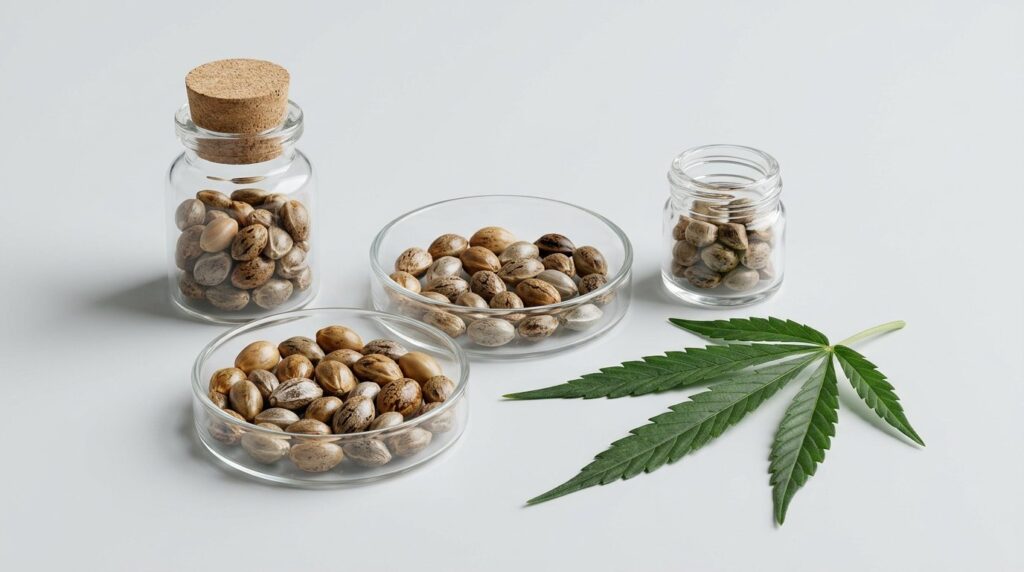
Cannabis seeds are the reproductive seeds of Cannabis plants and carry genetic information that influences characteristics expressed as a plant develops. Commercial seed markets commonly categorize them as regular, feminized, or autoflowering, with individual varieties also differing in genetic background and other traits. Before purchasing or possessing seeds, however, consumers should understand their local laws because cannabis regulations differ substantially between countries, states, provinces, and municipalities, and rules concerning seeds may differ from rules governing cultivation or possession of mature plants.
Interest in cannabis genetics has expanded alongside changing legal frameworks and commercial research. Seed terminology can nevertheless be confusing, especially when vendors make broad claims about potency, guaranteed outcomes, or supposedly superior genetics.Seed terminology can nevertheless be confusing, especially when vendors make broad claims about potency, guaranteed outcomes, or supposedly superior genetics. Clear terminology and verifiable product details also help Dutch consumers veilig CBD olie kopen without relying on broad marketing claims.
Understanding basic seed biology, provenance, storage, and legal status provides a better foundation for evaluating these products responsibly.
What Are Cannabis Seeds?
Cannabis seeds form through sexual reproduction when compatible cannabis flowers are pollinated.
Like seeds from other flowering plants, they contain an embryonic plant and stored resources protected by an outer seed coat.
A seed’s genetics contribute to potential characteristics, but genetics alone do not determine every eventual trait. Environmental conditions and plant development also influence phenotype.
Common commercial categories include:
• Regular cannabis seeds
• Feminized cannabis seeds
• Autoflower cannabis seeds
• Photoperiod genetics
• Hybrid varieties
• Hemp varieties where legally defined
• Breeding and preservation lines
Commercial terminology is not always standardized, so buyers should examine how a particular supplier defines its products.
9 Essential Facts About Cannabis Seeds
Several basic principles can help consumers interpret seed listings more accurately.
1. Cannabis Seed Laws Vary by Location
Legal status is the first issue to check.
Cannabis regulation can distinguish among possession, seeds, germination, cultivation, mature plants, flowering plants, hemp, and regulated commercial production.
Seed Ownership Does Not Automatically Authorize Cultivation
A seed may be lawful to possess in circumstances where germinating or growing it is restricted.
Never interpret a seller’s willingness to ship as proof that cultivation is legal at the destination.
Check current official government guidance applicable to your location.
2. Genetics Influence Plant Characteristics
A seed inherits genetic material from its parent plants.
Genetics can influence morphology, flowering behavior, cannabinoid potential, terpene production, disease susceptibility, and other traits.
Actual expression varies.
3. Regular and Feminized Seeds Are Different
Regular seed populations generally have the potential to produce male or female plants.
Feminized seeds are produced through breeding processes intended to make female plants much more likely.
No biological product should be treated as providing absolute certainty unless the specific claim is properly supported.
4. Autoflower Seeds Have Different Flowering Genetics
Autoflowering varieties contain genetics associated with Cannabis ruderalis ancestry and are selected to flower primarily according to developmental age rather than depending exclusively on photoperiod changes.
Specific characteristics vary between cultivars.
5. Seed Appearance Cannot Reveal Everything
Color, pattern, and surface condition can provide limited information about physical maturity or damage.
They cannot reliably tell you a seed’s complete genetics, cannabinoid profile, or eventual quality.
6. Seed Viability Declines With Poor Storage
Seeds are living biological material.
Heat, moisture, and inappropriate storage conditions can reduce viability over time.
7. Vendor Claims Deserve Verification
Claims about genetic authenticity, feminization rates, cannabinoid potential, or provenance should be evaluated according to available evidence.
A sophisticated package does not establish genetic quality.
8. Cannabis Names Can Be Inconsistent
Cultivar or strain names are not always standardized across the industry.
Two products sold under the same popular name may not necessarily have identical genetics.
9. Responsible Buying Starts With Traceability
Where cannabis seed commerce is lawful, established breeders or regulated businesses may provide more useful information about parentage and product provenance.
Traceability is particularly important for commercial or scientific applications.
Types of Cannabis Seeds
The major commercial categories describe reproduction and flowering characteristics rather than overall quality.
Regular Cannabis Seeds
Regular cannabis seeds are produced through conventional male and female reproductive processes.
They can generate plants of different sexes.
Why Regular Seeds Exist
Regular seeds are relevant to breeding, genetics preservation, research, and other lawful horticultural activities.
They preserve reproductive options that feminized seed production is specifically designed to limit.
Are Regular Seeds Lower Quality?
No.
Regular describes a reproductive category, not a quality grade.
Quality depends on genetics, breeding, handling, storage, provenance, and intended use.
Feminized Cannabis Seeds
Feminized cannabis seeds are produced using breeding techniques intended to generate predominantly female offspring.
They became commercially popular because female plants are the focus of many lawful cannabis production systems.
Are Feminized Seeds Genetically Modified?
Feminized seed production does not inherently mean genetic modification through transgenic laboratory techniques.
It generally involves manipulating reproductive expression and controlled pollination.
Feminized Does Not Mean Identical
Seeds still represent biological offspring and can display variation.
They should not be confused with genetically identical clones.
Autoflower Cannabis Seeds
Autoflowering varieties are selected for flowering behavior less dependent on changes in day length.
This distinguishes them from conventional photoperiod cultivars.
Autoflower Genetics
Modern autoflower varieties commonly combine ruderalis derived flowering traits with genetics selected for other characteristics.
Exact parentage depends on the breeder.
Autoflower vs Photoperiod Cannabis Seeds
The central distinction concerns flowering response.
Neither category is inherently superior. They have different genetic and horticultural characteristics.
Cannabis Seed Genetics
Genetics is one of the most important and most heavily marketed parts of the cannabis seed industry.
Genotype and Phenotype
Genotype refers to an organism’s genetic makeup.
Phenotype refers to observable characteristics produced through interaction between genetics and environment.
This distinction explains why seeds with related genetics do not always produce perfectly identical plants.
Hybrid Genetics
Hybridization combines genetic material from different parental lines.
Breeders can use selection across generations to stabilize desired characteristics.
Indica and Sativa Labels
Commercial cannabis frequently uses indica, sativa, and hybrid labels.
These categories can be useful shorthand in consumer markets but may not accurately describe complete genetic ancestry or predict effects with scientific precision.
Chemical composition and verified product information can provide more meaningful data for regulated consumer products.
Hemp Seeds vs Cannabis Seeds
Botanically, hemp belongs to Cannabis.
The distinction called hemp is primarily legal and agricultural, often based on cannabinoid thresholds and regulatory definitions rather than membership in a different genus.
Legal Definitions Vary
In the United States, federal law defines hemp using a delta 9 THC concentration threshold based on dry weight, but state requirements and specific regulatory contexts can add complexity.
Other countries use different rules.
Consumers should check the law applicable to their jurisdiction.
Food Hemp Seeds
Hulled hemp seeds sold as food are different in practical purpose from viable seeds sold for planting.
Food processing can make seeds nonviable.
What Do Healthy Cannabis Seeds Look Like?
Physical inspection can reveal obvious damage but cannot prove genetics.
Mature viable seeds often have a hard outer coat and can vary in shades of brown, gray, or mottled patterns.
Avoid Overreliance on Visual Tests
Internet myths sometimes claim that color, stripes, hardness, or floating behavior can definitively establish viability.
These characteristics are not complete substitutes for legitimate seed quality testing.
Cannabis Seed Quality
High quality should mean more than an expensive seed with a fashionable cultivar name.
Important Quality Factors
Depending on intended lawful use, relevant factors can include:
• Genetic provenance
• Seed maturity
• Physical integrity
• Viability
• Storage history
• Seed health
• Breeder documentation
• Batch consistency
Commercial producers may require substantially more formal quality controls.
Germination Rate Claims
A supplier may advertise a germination percentage.
Consumers should ask how that rate was tested, over what period, and under what standardized conditions.
Importantly, germination should only be undertaken where cultivation is lawful and authorized.
How Long Do Cannabis Seeds Remain Viable?
There is no exact universal lifespan.
Viability depends on seed condition, genetics, initial quality, moisture, temperature, oxygen exposure, and storage stability.
Older Seeds
Age does not automatically mean a seed cannot remain viable.
However, germination rates generally decline as seeds deteriorate over time.
No seller can guarantee indefinite viability.
How to Store Cannabis Seeds
For lawful seed storage and genetic preservation, the general goal is to reduce conditions that accelerate deterioration.
Seeds should be protected from excessive heat, moisture, direct light, and dramatic environmental fluctuations.
Keep Storage Conditions Stable
Stable conditions are preferable to repeated cycles of heating and cooling.
Moisture management is especially important because excessive humidity can encourage deterioration or microbial growth.
Use Clearly Labeled Containers
For legal collections or research archives, record:
• Cultivar or line name
• Breeder or source
• Purchase or collection date
• Batch details
• Relevant provenance information
Good records help preserve traceability.
Keep Seeds Away From Children and Pets
Store cannabis related materials securely and according to local requirements.
Legal restrictions can include household access and storage rules.
Buying Cannabis Seeds Online
Before buying cannabis seeds online, establish whether purchase, possession, importation, and any intended use are legal where you live.
Check the Seller
Where sales are lawful, consider:
• Business identity
• Breeder reputation
• Product provenance
• Refund policies
• Seed viability policies
• Secure payment options
• Customer service
• Accurate legal notices
Avoid sellers who falsely imply that shipping availability overrides local law.
International Shipping
Import restrictions can apply even where domestic possession is permitted.
Customs, phytosanitary, agricultural, and controlled substance laws may interact in complicated ways.
Check current government rules before placing an international order.
Cannabis Seed Banks
The phrase seed bank can refer either to a commercial retailer or to a collection maintained for genetic conservation.
Commercial Seed Banks
Retail seed banks may sell genetics from their own breeding programs or distribute seeds from multiple breeders.
The business model should be transparent.
Genetic Preservation
Formal genetic collections can contribute to preserving plant biodiversity and research material.
Professional preservation relies on documented provenance and controlled storage rather than cultivar names alone.
How to Evaluate a Cannabis Seed Seller
Where purchasing is lawful, transparency is an important quality signal.
Look for Clear Genetics Information
A breeder may provide documented parentage and relevant characteristics.
Be cautious with extravagant claims that cannot be independently substantiated.
Review Replacement Policies
Seed viability policies vary.
A seller may impose specific requirements around claims for damaged or nonviable seeds.
Read these conditions before purchasing.
Examine Independent Reputation
Third party reviews can provide additional context.
Reviews can also be manipulated, so patterns across multiple credible sources are more useful than isolated testimonials.
Cannabis Seed Prices
Seed prices vary significantly according to breeder, genetics, rarity, packaging, market, and number of seeds.
High prices do not automatically indicate better genetics.
What Influences Price?
Potential factors include:
• Breeding work
• Provenance
• Demand
• Seed quantity
• Distribution
• Brand positioning
• Scarcity
• Commercial licensing arrangements
Collectors should avoid assuming that a high price guarantees future value.
Cannabis Seeds for Research
Cannabis genetics are studied in plant science, agriculture, medicine, genomics, and related fields.
Research institutions operate within licensing and regulatory frameworks applicable to their jurisdiction.
Scientific Research Requires Controlled Material
Reliable research benefits from documented genetic identity, controlled handling, reproducible conditions, and proper recordkeeping.
Cultivar names alone can be insufficient for rigorous scientific characterization.
Cannabinoids and Cannabis Genetics
Cannabis plants can produce numerous cannabinoids, with THC and CBD among the best known.
Genetics influence biosynthetic potential, but seed appearance itself does not reveal eventual cannabinoid concentration.
A Seed Does Not Contain a Guaranteed Potency Outcome
Vendor descriptions of potential cannabinoid levels are not guarantees for every plant or final product.
Cultivation environment, plant development, sampling, processing, and laboratory methodology all affect measured outcomes.
Terpenes and Cannabis Seeds
Terpenes are aromatic compounds produced by many plants, including Cannabis.
Genetics can influence terpene production potential.
Environmental Influence
Plant chemistry can also vary according to developmental and environmental conditions.
Seed marketing claims should therefore be interpreted as descriptions of potential characteristics rather than absolute outcomes.
Legal Considerations Before Buying Cannabis Seeds
Cannabis law is changing rapidly in many jurisdictions.
Always use current official sources.
United States
Cannabis laws can involve both federal and state frameworks.
State legalization does not erase every federal restriction, and rules differ among states regarding possession, home cultivation, seed commerce, and age requirements.
Canada
Canada regulates cannabis federally while provinces and territories establish additional rules around distribution, possession, and other matters.
Home cultivation rules can also be affected by provincial requirements and legal developments.
United Kingdom
Cannabis is controlled under UK law, and possessing seeds does not itself provide permission to cultivate cannabis.
Cultivation generally requires appropriate legal authority.
Other Countries
Some jurisdictions allow adult cultivation, some permit only licensed medical or commercial production, and others prohibit cannabis cultivation entirely.
Never infer local legality from information about another country.
Cannabis Seeds and Responsible Compliance
Businesses dealing in cannabis genetics face greater obligations than ordinary consumers.
Potential issues can include licensing, age verification, taxation, advertising, packaging, importation, seed health, and recordkeeping.
Commercial Producers
Commercial operations should obtain qualified legal and regulatory advice applicable to their licenses.
Internet guides cannot replace jurisdiction specific compliance requirements.
Common Cannabis Seed Buying Mistakes
Where seed purchasing is lawful, avoid decisions based solely on marketing.
Common mistakes include:
• Failing to check local laws
• Assuming possession allows cultivation
• Trusting cultivar names without provenance
• Equating high price with high quality
• Believing seed appearance predicts potency
• Ignoring seller policies
• Assuming international shipping is automatically legal
• Confusing food hemp seeds with viable planting seeds
• Treating feminized seeds as genetically identical
• Ignoring secure storage requirements
Informed buying starts with legal status and traceability.
Frequently Asked Questions
What are cannabis seeds?
Cannabis seeds are reproductive seeds produced by Cannabis plants. Their genetics contribute to characteristics that may be expressed during plant development.
Are cannabis seeds legal?
Legality varies by jurisdiction and intended use. Possession of seeds may be treated differently from germination or cultivation, so check current official local laws.
What are feminized cannabis seeds?
Feminized seeds are produced through breeding methods intended to make female plants substantially more likely than with conventional regular seed populations.
What are autoflower cannabis seeds?
Autoflower seeds contain genetics selected to initiate flowering primarily according to developmental age rather than relying exclusively on changes in day length.
How should cannabis seeds be stored?
For lawful preservation, protect seeds from excessive heat, moisture, direct light, and unstable conditions while keeping batches clearly labeled and securely stored.
Can you tell cannabis genetics by looking at a seed?
No. Visual appearance cannot reliably establish a seed’s genetic identity, cultivar, cannabinoid potential, or complete viability.
Conclusion
Cannabis seeds vary substantially in genetics, reproductive type, provenance, viability, and intended purpose. Regular, feminized, and autoflower seeds describe meaningful biological or breeding characteristics, but none of these labels alone establishes overall quality. Consumers should prioritize reliable provenance, realistic claims, appropriate storage, and reputable suppliers where purchasing is lawful. Most importantly, seed possession and cannabis cultivation can have different legal statuses, so current local government guidance should be checked before any purchase or intended use.