
Cheap designer radiators can give a room a distinctive look without requiring a premium-priced model. The best-value choice still needs to provide suitable heat output,...
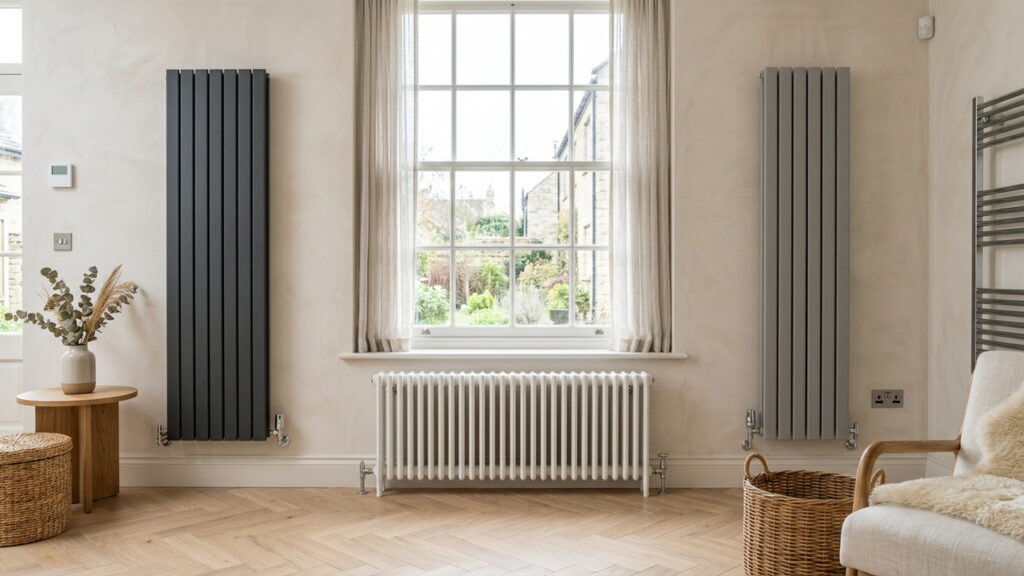
Cheap designer radiators can give a room a distinctive look without requiring a premium-priced model. The best-value choice still needs to provide suitable heat output, match your heating system, and fit the available space safely.
This guide explains how to compare cheap designer radiators by output, material, style, connections, and total cost. Use it to distinguish a genuinely suitable radiator from a low-priced model that may not work well in your home.
Quick answer on cheap designer radiators
Cheap designer radiators are decorative heating emitters available in a range of styles and price points. Whether a model is good value depends on its heat output, finish, dimensions, compatibility, warranty, and total installed cost, not just its appearance.
Start with the heating needs of the room, then compare manufacturer specifications for products of similar size and type. Check connection positions, pipe centres, valve requirements, delivery charges, and installation costs before choosing cheap designer radiators.
For a quick comparison, check the following before you buy
- Confirm the required heat output for the room.
- Check that the radiator works with your heating system and water temperature.
- Measure the wall, pipe positions, and available clearance.
- Compare the full price, including valves, delivery, and fitting.
- Read the warranty, returns policy, and product instructions.
What makes cheap designer radiators different
The term designer radiator usually describes a style rather than a specific technical standard. It can refer to a vertical panel, a column radiator, a sculptural shape, a coloured finish, or a towel radiator with a more decorative appearance.
Cheap designer radiators may be affordable because of a promotion, a standard size, a straightforward finish, or a particular model being cleared.
A lower price does not automatically mean poor quality, just as a stylish appearance does not guarantee suitable heat output or dependable construction.
Compare the actual product specifications rather than relying on the word designer. Check the material, dimensions, output, connection details, finish, included parts, and warranty. A clear product data sheet makes it easier to compare similar cheap designer radiators fairly.
Choose heat output before style
A radiator transfers heat from the heating system into a room. Its output is usually listed in watts, but the amount of heat needed depends on the room and the conditions under which the radiator operates.
Before choosing cheap designer radiators, consider room size, ceiling height, insulation, window area, outside walls, and the temperature used by your heating system. These factors affect heat loss, so two rooms with the same floor area may need different radiator outputs.
Estimate the room’s heating requirement
A room heat-loss calculation is a more reliable starting point than choosing a radiator by appearance or by a rough rule of thumb. An installer can assess the building and system, or you can use a reputable calculator as an initial estimate and ask a professional to confirm it.
For cheap designer radiators, compare the calculated requirement with the output stated for the exact model and size. If the product offers several configurations, do not assume that similar-looking versions deliver the same heat.
When estimating the room, consider
- Floor area and ceiling height.
- Window size, glazing, and external walls.
- Insulation and whether the room is above, below, or beside unheated space.
- The heating system’s operating temperatures and expected flow rate.
Read output ratings carefully
Manufacturers state radiator outputs under specified test conditions. Compare figures only when the conditions are equivalent, and check the product data sheet for the rating basis. A number without its conditions may not describe the output you can expect from your system.
A large-looking cheap designer radiator is not automatically powerful enough, and a compact model is not automatically unsuitable. The material, surface area, design, water temperature, and installation all affect performance.
Compare radiator materials
Material can influence weight, appearance, response, and price, but it does not determine performance on its own. For cheap designer radiators, compare the output and operating requirements of each exact model rather than assuming one material is always the best choice.
| Material | What to consider | Check before buying |
|---|---|---|
| Steel | Commonly available in panel, column, and decorative designs | Exact output, finish, dimensions, and warranty |
| Aluminium | Often lighter than some alternatives and available in modern styles | System compatibility, connections, and manufacturer’s output data |
| Cast iron | Distinctive appearance and greater thermal mass | Weight, wall or floor support, warm-up response, and installation needs |
| Steel radiators are available in many shapes and finishes. Some standard steel models may cost less than more elaborate designs, but prices vary by brand, size, and finish. Cheap designer radiators in steel still need suitable output and a finish appropriate for their location. | ||
| Aluminium has different thermal properties from steel and cast iron. Its lower thermal mass can allow a radiator to respond differently as the heating system changes, but actual room performance depends on the complete system, model, size, and controls. | ||
| Cast iron radiators are valued for their traditional appearance and substantial feel. Their mass affects handling and response, so check the weight and support requirements before ordering. A cast iron style may be right for a period interior, but it may not be the most practical option for every wall. |
Pick a shape that works in the room
The best shape depends on wall space, furniture, access, and how the room is used. Cheap designer radiators come in vertical, horizontal, column, flat-panel, and towel-rail styles, but each design has different dimensions and connection options.
Vertical radiators
A vertical radiator can use a narrow section of wall where a wider horizontal model may not fit. Measure the available height and width carefully, leaving the clearances required by the manufacturer and ensuring that furniture or curtains will not block it.
Check its stated heat output before buying cheap designer radiators in a tall format. A vertical model should be selected for its published performance and fit, not simply because it looks prominent or occupies less wall width.
Horizontal and column radiators
Horizontal radiators can fit below windows or along wider walls, depending on the room layout. Column designs create a more traditional or industrial look, but their depth and weight may differ from a flat panel radiator.
With cheap designer radiators in either style, compare the full dimensions, including any valves and pipe connections. A radiator can fit the wall while still interfering with skirting, furniture, curtains, or a door swing.
Towel radiators
A heated towel rail can warm towels and provide heat to a bathroom, but its output may not be enough to heat the whole room. Check the manufacturer’s heat figure and compare it with the bathroom’s heating requirement before treating it as the only heat source.
Cheap designer radiators for bathrooms should be suitable for the intended environment and compatible with the heating system. Ask the supplier or installer whether the model is intended for that location and whether its finish and fittings meet the product instructions.
Finish, colour, and details
A simple finish or standard colour may offer more choice at a lower price than a special order, but availability varies. Ask whether the quoted finish is in stock, whether the product is made to order, and whether a colour sample is available.
Look closely at valves, brackets, pipe covers, and connection points. Some cheap designer radiators are sold without valves or accessories, so include those items when comparing the delivered product rather than comparing the radiator body alone.
Check the heating system and pipework
A radiator must suit the system it will connect to. Cheap designer radiators may be made for hot-water central heating, electricity, or a dual-fuel arrangement, and these versions are not interchangeable by default.
For a central-heating radiator, confirm that the material, pressure rating, connections, and output match the system. Ask a heating professional to check compatibility if the existing system is old, has unusual pipework, or has previously had circulation problems.
Central heating and heat pumps
Homes with a boiler usually use radiators connected to a hot-water heating circuit. The suitable size and output depend on the system design and operating temperatures, not solely on the boiler type.
Heat pumps often operate with lower water temperatures than some traditional radiator systems. Cheap designer radiators can work with a heat pump if the model and size provide the required output at the intended temperatures. Ask the system designer or installer to confirm the figures rather than assuming an existing radiator size will be sufficient.
Electric and dual-fuel options
An electric radiator has an electrical heating element and may need a suitable power supply, controls, and mounting arrangement. Check the manufacturer’s instructions and have electrical work completed by an appropriately qualified professional.
Some towel rails can operate on central heating and may also accept an electric element. This is often described as dual fuel, but the configuration and controls vary. Confirm that the element is approved for the particular rail and installed according to the instructions.
Check pipe positions and connections
Measure the distance between the existing pipe centres and note where the flow and return pipes enter the radiator. Cheap designer radiators can have different connection positions from the unit they replace, which may require pipe alterations or different valves.
Ask whether the model supports the required connection arrangement and whether the valves are included. Do not assume that standard-looking connections will line up with existing pipework. Have the installer confirm the details before ordering.
How to find cheap designer radiators for less
A lower price can come from standard dimensions, a basic finish, a sale, or clearance stock. Compare the specification and included parts before deciding that a deal offers better value than another cheap designer radiator.
Consider models that fit the existing pipe positions and wall space. A less complicated replacement may involve less alteration, although the installer should confirm this for your home. Avoid choosing a model that creates extra work just because its headline price is attractive.
Ask suppliers whether a discounted product is new, complete, and covered by the stated warranty.
For cheap designer radiators in clearance stock, confirm the exact model, colour, size, and connection details, since substitutions may not be available later.
A lower-priced option can be a sensible purchase if its output, materials, finish, and warranty meet your needs. Check product reviews as one source of information, but rely on the manufacturer’s data and written terms for specifications and coverage.
Compare the full price
The radiator price is only part of the project. Cheap designer radiators may require separate valves, brackets, pipe covers, delivery, removal of the old unit, and professional installation.
| Cost item | What to check |
|---|---|
| Radiator | Exact model, size, material, and finish |
| Valves and fittings | Included parts, valve type, and connection compatibility |
| Delivery | Cost, delivery date, and access requirements |
| Installation | Labour, pipe changes, draining, and testing |
| Old radiator | Removal, disposal, or collection arrangements |
| Ask for a written quote that lists the work and parts included. Check whether the quote covers VAT where applicable, delivery, and any pipework changes. Two prices are only comparable when they describe a similar product and installation scope. | |
| When comparing cheap designer radiators, ask what happens if the delivered product is damaged, the measurements are wrong, or the installer finds an unexpected issue. Clarify the return process, restocking charges, and who is responsible for arranging a replacement. |
Plan installation and replacement safely
Replacing a radiator involves hot water, pipework, heavy components, and the possibility of leaks. Cheap designer radiators are not automatically simple to fit, especially if the new unit has different dimensions or connection points from the old one.
A capable homeowner may be able to handle some straightforward work, but first read the product instructions and understand the heating system. If you are unsure how to isolate, drain, reconnect, or refill the circuit, use a qualified heating professional.
When to use an installer
Professional installation is a sensible choice when the radiator is heavy, the pipework needs alteration, the wall is unsuitable, or the heating system has a fault. The installer can check the brackets, connections, valves, system pressure, and operation after fitting.
For cheap designer radiators, ask whether the installer has experience with the chosen design and can fit the specified valves. Agree what happens to the old radiator and whether any follow-up adjustment is included.
Electrical and bathroom safety
Electric and dual-fuel radiators require extra care. Bathroom electrical requirements depend on the product, location, and local regulations, so do not select a model based on appearance alone or install an element without confirming that it is permitted.
Ask a qualified electrician or installer to confirm the correct product, controls, and installation method. Keep the instructions and any compliance paperwork with the product documents.
After fitting, check that the radiator is secure, valves operate correctly, and there are no visible leaks. Cheap designer radiators should be installed, tested, and balanced according to the system and manufacturer’s guidance.
Do designer radiators reduce running costs
A radiator transfers heat; it does not create energy savings simply because it has a designer appearance. Cheap designer radiators will not automatically lower bills. Energy use depends on the heat source, home insulation, system settings, controls, and how much heat the rooms need.
Correct sizing matters for comfort and operation. A radiator that is too small may struggle to meet the room’s heating requirement, while an unnecessarily large model may take up extra space and cost more to buy.
Thermostatic radiator valves can help control heat in individual rooms when used as part of a suitable system. Ask an installer how they should be set alongside the main thermostat and heating controls, because system layouts and control strategies vary.
If you have a heat pump, ask whether the chosen radiator can provide the required output at the system’s planned water temperature. Cheap designer radiators may need a different size or configuration from a radiator chosen for a higher-temperature system.
Where cheap designer radiators can work well
Start with the room’s heating needs and available wall space, then choose a shape that complements the layout. Cheap designer radiators can suit many interiors when the product specification and installation are right.
In a living room, consider furniture placement, curtains, and the distance between the radiator and seating. A vertical design can fit a narrow wall, while a horizontal model may suit a wider area. Keep the required airflow space clear.
For a kitchen or home office, check that cabinets, desks, and appliances will not block the radiator. Cheap designer radiators should be positioned where they can provide useful warmth without creating an obstacle or restricting access to controls.
In a bedroom, think about bed placement, curtains, and how the radiator’s heat output matches the room. A compact model may look unobtrusive, but check the measured output instead of choosing by appearance alone.
In a bathroom, a towel rail can be useful for towels and warmth, but check its output against the room requirement. Confirm the model’s suitability for the location and arrange electrical work professionally if the product uses an element.
How to compare suppliers and models
Request the product data sheet and installation instructions for each model you are considering. Cheap designer radiators are easier to compare when you have matching details for output, dimensions, material, connection positions, finish, and warranty.
Ask suppliers whether the radiator is available in the exact size and colour shown, whether valves are included, and how long delivery may take. Confirm the returns policy before buying, especially if the product is made to order or a clearance item.
A useful list of questions includes
- What is the heat output under the stated test conditions?
- Are the valves, brackets, and other required parts included?
- Do the connections match my existing pipe positions?
- Is the radiator suitable for my heating system and water temperature?
- What do the warranty and returns terms cover?
- What installation work might be needed?
Keep the answers and quote together with the product model number. This helps prevent confusion if a retailer offers similar-looking cheap designer radiators with different outputs, connections, or included parts.
Common mistakes to avoid
Choosing by appearance alone is a frequent mistake. Cheap designer radiators need to suit the room’s heat requirement, system temperature, wall space, and pipe positions as well as the decor.
Do not assume that a low price includes valves, delivery, removal, or fitting. Check each item in writing, and confirm that the selected model is complete and covered by the stated warranty.
Avoid comparing heat-output figures from different test conditions. Ask the supplier to explain the rating and have an installer check whether it meets the room requirement.
Do not order until measurements and connections have been checked. Cheap designer radiators can require pipe changes if their valves or centres do not line up with the existing installation.
FAQ’s
Are cheap designer radiators good quality?
They can be, but price and appearance alone do not prove quality. Check the manufacturer’s specifications, finish, warranty, and suitability for your heating system.
How do I choose the right size?
Start with a room heat-loss calculation, then compare the result with the radiator’s published output under the relevant operating conditions.
Can cheap designer radiators work with a heat pump?
Yes, if the model and size provide the required output at the system’s intended water temperature. Ask the system designer or installer to confirm compatibility.
Do cheap designer radiators save energy?
Not by themselves. Energy use depends on the heating system, controls, insulation, and the heat required by the home.
Are cheap designer radiators suitable for bathrooms?
Some models are designed for bathroom use, but suitability depends on the product and installation. Check the instructions and local electrical requirements.
What should I check before ordering?
Confirm the output, dimensions, pipe connections, included fittings, delivery, warranty, and return terms for the exact model.
Conclusion
Cheap designer radiators can offer a distinctive finish at a manageable price when the size, heat output, materials, and connections suit your home. Compare the full installed cost and check product data rather than relying on a photograph or headline discount.
Measure carefully, ask suppliers clear questions, and have a qualified professional confirm compatibility where needed. A well-chosen radiator should fit the room and heating system as well as the look you want.