
High quality Chrome plated tubing combines a metal tube with an electroplated chromium containing surface system to create an attractive, reflective finish that can also provide useful...
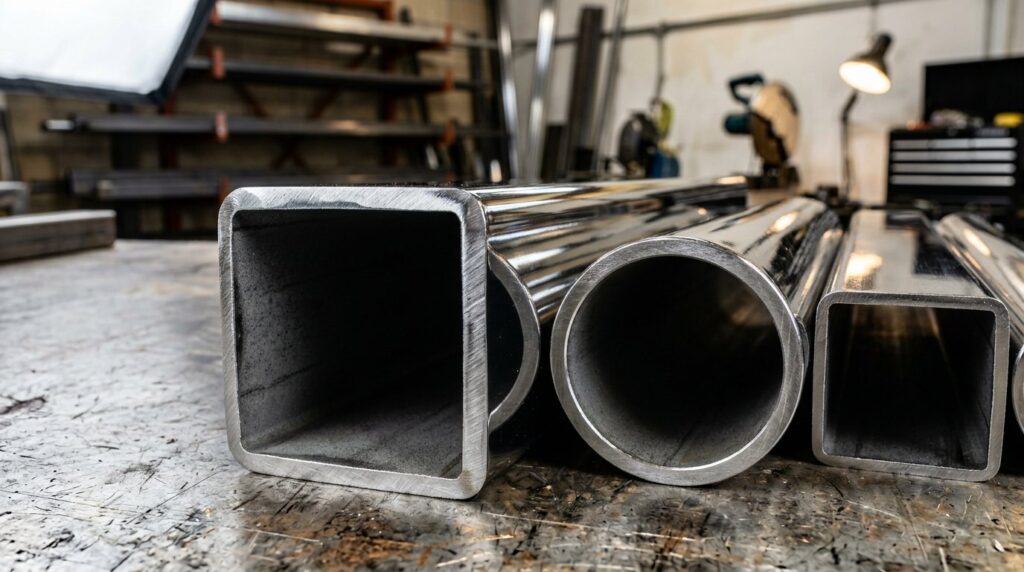
High quality Chrome plated tubing combines a metal tube with an electroplated chromium containing surface system to create an attractive, reflective finish that can also provide useful surface characteristics. It is widely associated with furniture, retail displays, architectural fittings, interior fixtures, racks and decorative fabrication where appearance matters alongside structural performance. However, chrome plating does not automatically make every tube suitable for outdoor exposure, hydraulic service or highly corrosive conditions. Base material, wall thickness, plating system, manufacturing tolerances and intended environment all need to be considered when choosing tubing for a project.
What Is Chrome Plated Tubing?
Chrome plated tubing is metal tubing whose exterior surface has undergone a plating process that produces a chromium based finish.
The substrate is commonly steel, although the exact material and plating system depend on the manufacturer and intended application.
Decorative chromium finishes are usually much thinner than industrial hard chrome coatings. Decorative systems commonly use underlying metal layers, such as nickel, to contribute corrosion resistance, leveling and visual appearance, with a thin chromium layer at the surface.
This distinction is important because decorative chrome tubing and hard chrome plated engineering components are not interchangeable products.
The finished material can be produced in round, square, rectangular or other profiles depending on supplier capability.
How Chrome Plated Tubing Is Manufactured
Manufacturing begins with the tubing itself.
The substrate must have suitable dimensions, surface condition and mechanical properties for the finished product’s intended use. Surface defects can remain visible after plating if preparation is inadequate.
The surface is cleaned and prepared before electroplating.
Electroplating Chrome Plated Tubing
Electroplating uses an electrical process to deposit metallic layers onto a conductive workpiece.
Commercial processes vary by manufacturer, chemistry and specification.
Why Surface Preparation Matters
Plating cannot reliably compensate for severe substrate defects. Scratches, scale, contamination, poor polishing and other imperfections can affect the final appearance and coating performance.
For decorative products, preparation quality can be just as important as the final chromium layer.
9 Powerful Benefits of Chrome Plated Tubing
The practical advantages vary according to the plating specification and environment. When properly selected, chrome finished tubing can offer several useful characteristics.
1. Chrome Plated Tubing Provides a Distinctive Appearance
The most immediately recognizable characteristic is its bright metallic finish.
Polished decorative chrome can create a highly reflective surface associated with modern furniture, commercial interiors and retail fixtures.
It coordinates readily with glass, painted surfaces, timber and other metallic finishes.
This makes it useful in applications where tubing forms a visible part of the finished design rather than being concealed inside a structure.
2. The Finish Can Improve Surface Protection
A properly engineered plating system can provide greater environmental protection than an untreated steel surface.
However, corrosion performance depends on the entire coating system, including substrate preparation, intermediate layers, chromium layer, porosity, coating thickness and service conditions.
Corrosion Resistance of Chrome Plated Tubing
Decorative nickel chromium plating is commonly used where both appearance and corrosion protection are desired.
Chrome Plating Is Not Corrosion Proof
Scratches, cut ends, pores or other coating damage can expose the underlying metal. Moisture and contaminants can then contribute to corrosion.
For severe environments, material and coating selection should be based on an appropriate corrosion specification rather than appearance alone.
3. Smooth Surfaces Are Easy to Maintain
Chrome finished surfaces are relatively easy to wipe clean when used in ordinary indoor environments.
This characteristic contributes to their popularity for visible furniture and store fixtures.
Dust, fingerprints and marks can nevertheless be particularly noticeable on reflective surfaces.
Cleaning should therefore be performed with products compatible with the plating. Abrasive materials can scratch polished finishes and should generally be avoided unless specifically approved by the manufacturer.
4. Chrome Tubing Works With Numerous Fabrication Designs
Tubing provides a useful combination of geometry and structural efficiency.
Depending on its dimensions and grade, it can be cut and incorporated into racks, furniture, frames, rails and other assemblies.
Manufacturing operations performed after plating need additional thought.
Cutting exposes the substrate at tube ends, while welding can damage surrounding plated surfaces and generate hazardous fumes. In many applications, components are fabricated before final finishing instead.
5. Multiple Shapes and Sizes Are Available
Round chrome tubing is common, but it is not the only profile available.
Square and rectangular sections are used where flat joining surfaces or a more angular appearance is desirable.
Suppliers may offer standard dimensions or manufacture tubing to specific requirements.
Dimensions should be specified precisely rather than ordering by appearance.
6. The Material Suits Decorative Interior Applications
Interior designers and manufacturers often choose chrome plated metal because it provides the appearance of a polished metallic surface without requiring the entire component to be manufactured from a more expensive decorative alloy.
This can be useful for furniture and retail projects produced at scale.
Cost comparisons should still be made on a finished component basis.
Plating, polishing, freight, fabrication and quality requirements can significantly influence final pricing.
7. Chrome Plated Tubing Can Offer Good Wear Characteristics
Chromium surfaces are associated with hardness and wear resistance, but this benefit needs qualification.
Hard chrome used in industrial applications is specifically engineered for functional surface properties and is substantially different from thin decorative chrome.
A decorative chrome surface can tolerate ordinary handling but should not automatically be specified for high wear sliding contact.
8. Consistent Finishing Can Support Commercial Production
For manufacturers producing repeated furniture or fixture components, a controlled plating specification can create a relatively consistent visual finish across production batches.
Color, brightness and surface quality still require appropriate quality standards.
Chrome Plated Tubing Quality Control
A purchaser can define requirements for dimensions, finish quality, coating performance, packaging and visible defects.
Approved Samples Improve Consistency
For appearance critical projects, approving a representative sample can help establish expectations. Written specifications should accompany the sample because visual references alone cannot define all performance requirements.
9. Chrome Tubing Can Deliver Long Service in Suitable Environments
A correctly specified tube used indoors and maintained appropriately can provide durable service.
Longevity depends on far more than the word chrome.
Base material, plating quality, exposure, cleaning chemicals, mechanical damage and design details all influence service life.
Avoid supplier claims promising a universal lifespan unless they are supported by relevant testing and defined service conditions.
Chrome Plated Tubing Materials
Steel is a common substrate because it offers useful mechanical properties and can be formed into numerous tubing profiles.
The grade and manufacturing method should be selected according to structural requirements.
Chrome Plated Steel Tubing
Chrome plated steel tubing is often chosen for furniture, displays, racks and decorative fabrication.
Steel contributes the underlying mechanical structure, while the plated system provides the visible surface.
Base Metal Specifications
Not all steel tubing has identical strength, chemistry, weldability or dimensional tolerances.
Specify Structural Requirements Separately
A chrome finish does not indicate structural grade. Engineers and fabricators should specify the appropriate substrate, dimensions and mechanical requirements independently of surface finish.
Decorative Chrome Plating Versus Hard Chrome
This is one of the most important distinctions when researching chrome products.
Decorative chrome is primarily specified for appearance combined with useful surface protection.
Hard chrome is an industrial coating used on components where properties such as wear behavior, dimensional restoration or surface performance are important.
Decorative Chrome Plated Tubing
Decorative applications typically use a multilayer plating approach in which nickel plays a significant role beneath a thin chromium surface layer.
The result is the familiar polished chrome appearance.
Furniture and retail display tubing commonly falls into this general category.
Hard Chrome Plated Tubing
Hard chrome is deposited more heavily and is commonly associated with engineering components.
Industrial Applications
Hard chrome coated surfaces may be found in hydraulic, mechanical and manufacturing applications.
Do Not Substitute Decorative Tubing
A decorative furniture tube should never be substituted for an engineered hard chrome component in hydraulic cylinders or similar systems simply because both products contain chrome plating.
The engineering requirements are fundamentally different.
Common Applications for Chrome Plated Tubing
Chrome finished tubing appears across numerous industries.
Its suitability is strongest where designers need a clean metallic appearance combined with suitable substrate properties.
Furniture Manufacturing
Chairs, tables, shelving, garment racks and furniture frames can incorporate chrome tubing.
The reflective finish pairs well with upholstery, glass and timber.
Retail Display Fixtures
Stores often require fixtures that look clean and allow merchandise to remain visually dominant.
Chrome rails and frames can meet this aesthetic requirement.
Garment Rails
Round tubing is commonly used for clothes rails and display systems.
Load Capacity Must Be Calculated
Tube diameter alone does not determine how much weight a rail can safely support. Wall thickness, material strength, unsupported span, fixing method and load distribution all matter.
Architectural and Interior Uses
Interior architectural applications can include rails, screens, partitions, decorative frames and custom fittings.
For any component serving a safety critical function, applicable building codes and engineering requirements take priority over appearance.
A decorative tube should not be assumed suitable for handrails, barriers or structural systems without proper verification.
Chrome Plated Tubing Sizes
Tube dimensions are commonly described using outside diameter, wall thickness and length.
For non round profiles, outside width and height are also relevant.
Outside Diameter
The outside diameter affects appearance, stiffness, compatibility with fittings and overall geometry.
Never confuse outside diameter with nominal pipe sizing conventions.
Tube and pipe terminology can differ across industries.
Wall Thickness
Wall thickness affects weight, stiffness and structural capacity.
Length and Cutting
Standard stock lengths vary by supplier.
Allow for Fabrication Waste
Cutting plans should account for saw kerf, damaged ends, tolerance requirements and rejected cosmetic sections when calculating the quantity needed.
Round Chrome Plated Tubing
Round tubing offers smooth lines and is widely used for rails, furniture legs and display structures.
It can work with numerous clamps, connectors and end caps.
Its appearance makes it particularly common in minimalist interior designs.
Round geometry also allows easy handling from multiple directions, which can be helpful for garment hanging rails.
Square Chrome Plated Tubing
Square profiles provide a more angular appearance.
Flat surfaces can simplify certain mechanical connections and alignments.
The exposed corners require particular attention during transportation because impact damage can compromise the decorative surface.
Protective packaging is therefore important for appearance grade material.
Chrome Plated Tubing Versus Stainless Steel
Chrome plated steel and stainless steel are fundamentally different materials.
Chrome plating applies a surface system to a substrate. Stainless steel contains sufficient chromium within the alloy to develop a passive surface film responsible for its characteristic corrosion behavior.
Appearance
Polished stainless steel and decorative chrome can both provide attractive reflective surfaces, but their appearance is not necessarily identical.
Chrome often has a distinctive bright finish.
Corrosion Considerations
Stainless steel can be preferable in many demanding moisture or corrosion environments when an appropriate grade and finish are selected.
Cost Considerations
Chrome plated steel can be economically attractive for suitable decorative interior projects.
Compare Total Lifecycle Requirements
Purchase price alone should not determine material selection. Environment, maintenance, fabrication, replacement difficulty and expected service conditions all affect total value.
Chrome Plated Tubing Versus Polished Aluminum
Aluminum provides low density and natural corrosion behavior that differs significantly from plated steel.
Chrome plated steel generally offers a different appearance and strength to weight profile.
The better choice depends on the project.
For lightweight assemblies, aluminum may be attractive. For designs requiring the visual characteristics of decorative chrome and the properties of a steel substrate, plated steel may be more appropriate.
Corrosion Resistance of Chrome Plated Tubing
Corrosion performance cannot be determined simply by looking at a shiny surface.
An appropriate specification may include coating requirements and corrosion testing appropriate to the intended service environment.
Salt spray testing is sometimes referenced in coating specifications, but test hours should not automatically be translated into years of real world service.
Laboratory corrosion tests are primarily useful for controlled comparison and quality assessment under defined standards.
Indoor Versus Outdoor Use
Many decorative chrome tubes are best suited to controlled interior conditions.
Outdoor use can expose plating to rain, salts, temperature cycling and airborne contaminants.
Coastal Environments
Salt rich coastal environments can be particularly aggressive.
Confirm Environmental Suitability
For outdoor, marine, poolside or chemically exposed locations, obtain material and coating recommendations from the manufacturer or a qualified materials professional.
Surface Finish and Appearance
A reflective finish makes underlying imperfections easy to notice.
For this reason, cosmetic specifications should identify what level of appearance is acceptable.
Possible concerns include scratches, pits, dull areas, staining and handling marks.
Bright Chrome Finish
Bright chrome is commonly associated with highly reflective decorative products.
Its visual quality depends significantly on underlying polishing and plating.
Satin and Alternative Finishes
Not every metallic surface needs to be mirror bright.
Match Finish Across Components
If a project combines multiple plated components, request samples because surface tone and reflectivity can differ between suppliers and manufacturing batches.
Fabricating Chrome Plated Tubing
Whenever possible, fabrication sequence should be planned before plating.
Operations such as welding, aggressive bending and grinding can damage an already finished surface.
Cutting Chrome Plated Tubing
Cutting creates exposed edges.
The correct protection method depends on environment and product design.
End caps can conceal tube ends in some furniture and fixture applications but should not automatically be considered corrosion protection.
Bending Tubing
Bending can stretch and compress the plated surface.
Bend Radius and Coating Integrity
Excessive deformation can create surface defects.
Test Production Before Large Orders
For appearance critical bent components, prototype the intended material, bend radius, tooling and finish sequence before mass manufacturing.
Welding Chrome Plated Tubing Safely
Welding plated metals creates important occupational safety considerations.
Heating coatings and base metals can generate hazardous fumes, including compounds associated with chromium and other plating constituents.
Welding should be performed only under appropriate professional procedures with applicable exposure controls.
For many manufactured products, welding and finishing are planned in a sequence that avoids welding directly through completed decorative plating.
Workplace safety requirements and qualified welding guidance should always be followed.
Cleaning Chrome Plated Tubing
Routine cleaning can preserve appearance.
Start with the least aggressive method recommended by the manufacturer.
A soft cloth and compatible mild cleaning solution may be appropriate for ordinary surface dirt.
Avoid Abrasive Cleaning
Abrasive pads and harsh polishing compounds can scratch decorative chrome.
Strong chemicals can also harm certain plating systems or adjacent materials.
Drying After Cleaning
Removing residual moisture can help prevent water spotting.
Protect Damaged Areas
If coating damage exposes the base metal, consult the manufacturer or a finishing specialist about appropriate repair. Simply polishing exposed steel will not recreate the original multilayer plated system.
How to Choose Chrome Plated Tubing
Begin by defining the application and environment.
A garment rail inside a climate controlled retail store has very different requirements from tubing exposed to weather or used in machinery.
Next, establish dimensions and mechanical requirements.
Chrome Plated Tubing Specifications to Request
Useful purchasing information can include:
• Base material and grade
• Tube profile
• Outside dimensions
• Wall thickness
• Length and tolerances
• Plating specification
• Surface finish
• Corrosion performance requirements
• Cosmetic acceptance criteria
• Packaging requirements
• Applicable test standards
Precise documentation makes quotations easier to compare.
Quality Inspection for Chrome Plated Tubing
Incoming inspection should assess both dimensions and finish.
Visual inspection can identify obvious scratches, pits, discoloration and handling damage.
Dimensional inspection can verify outside measurements, wall thickness where appropriate, straightness and length.
Plating Inspection
More demanding projects may require coating thickness or adhesion related testing under applicable specifications.
Corrosion Testing
Relevant standardized testing can form part of supplier qualification.
Use Appropriate Standards
Testing should reflect the actual product requirements. A test result has limited value when the test method, sample preparation, acceptance criteria or coating specification is unclear.
Packaging and Shipping
Chrome surfaces can be damaged before they ever reach production.
Tubes may rub together during transportation, producing scratches that make otherwise functional material unsuitable for visible applications.
Individual sleeves, separators, protective films or other packaging methods may be appropriate depending on finish quality.
Buyers should specify packaging requirements when cosmetic consistency is commercially important.
Cost of Chrome Plated Tubing
Pricing depends on substrate material, dimensions, wall thickness, plating specification, polishing requirements, quantity, tolerances, packaging and freight.
Commodity metal prices can also influence quotations.
Custom lengths or specialized profiles may require minimum order quantities.
Instead of comparing only price per metre, consider defect rates, fabrication suitability, corrosion performance, packaging quality and supplier consistency.
A slightly lower material price provides little value if excessive surface damage causes significant rejection during production.
Frequently Asked Questions
What is Chrome plated tubing?
Chrome plated tubing is metal tubing finished through an electroplating system that creates a chromium containing surface, commonly for decorative appearance and surface protection.
Does chrome plated tubing rust?
The chrome plating system can improve corrosion resistance, but exposed base steel may corrode if the coating is porous, damaged or unsuitable for the environment.
Is chrome plated tubing suitable for outdoor use?
Some specifications may be appropriate for certain exterior conditions, but ordinary decorative chrome tubing should not automatically be assumed weather resistant. Confirm environmental suitability with the supplier.
What is the difference between hard chrome and decorative chrome tubing?
Decorative chrome prioritizes appearance and commonly uses thin chromium over underlying plating layers. Hard chrome is a thicker functional engineering coating used for wear and other mechanical requirements.
Can chrome plated tubing be welded?
Welding plated material requires specialized safety precautions because heating coatings can generate hazardous fumes. Professional procedures and applicable workplace controls are essential.
How do you clean chrome plated tubing?
Use nonabrasive materials and cleaning products approved for the particular finish. Avoid harsh chemicals and abrasive pads that could scratch or degrade the plated surface.
Conclusion
Chrome plated tubing provides an attractive metallic finish for furniture, retail displays, fixtures and many decorative fabrication projects while offering useful surface protection when correctly specified. Its performance depends on the base material, plating system, dimensions, fabrication process and service environment rather than appearance alone. Buyers should distinguish decorative chrome from engineered hard chrome and verify corrosion and structural requirements before ordering. Clear specifications and careful handling are key to obtaining consistent, durable finished components.