
The global craft brewing industry continues to expand rapidly, driven by consumer demand for distinct flavor profiles, artisanal quality, and locally produced ales and lagers....
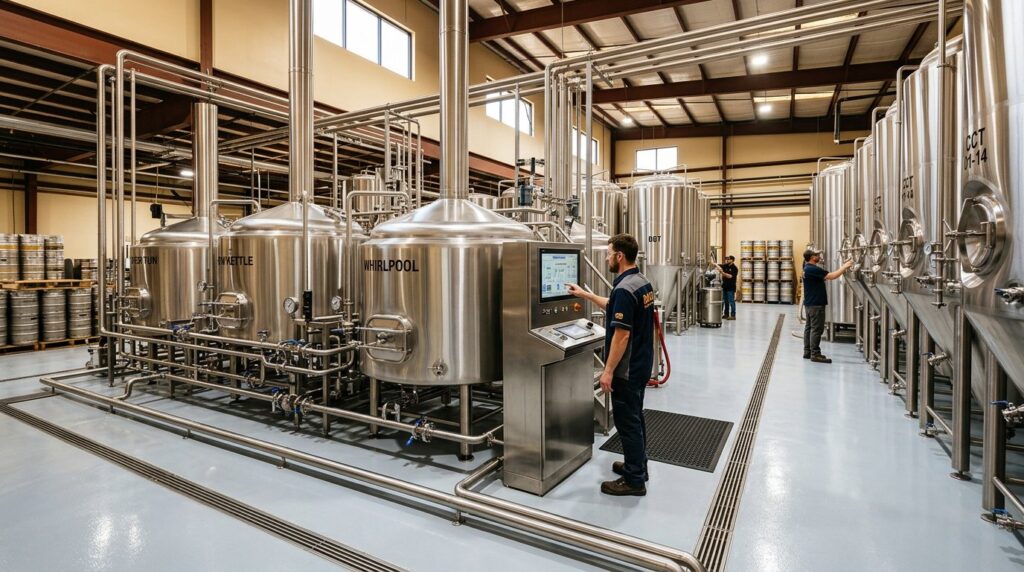
The global craft brewing industry continues to expand rapidly, driven by consumer demand for distinct flavor profiles, artisanal quality, and locally produced ales and lagers. Investing in precision-engineered brewery equipment provides commercial brewmasters and beverage entrepreneurs with the technical capabilities required to scale production while maintaining uncompromising batch consistency. Furthermore, modern brewing technology integrates automated process controls, hygienic sanitary welding, and high-efficiency thermal recovery systems that lower operational energy overheads.
Whether you are designing a boutique taproom nano-brewery, launching a regional production brewhouse, or expanding an established packaging facility, selecting appropriate equipment is critical. In addition, understanding the mechanical integration between mashing vessels, cellar tanks, glycol refrigeration circuits, and clean-in-place (CIP) sanitation systems prevents costly brewing bottlenecks. Consequently, investing in durable, sanitary-grade brewery equipment guarantees superior wort extraction, reliable fermentation control, and long-term commercial profitability.
Why Precision-Engineered Brewery Equipment Dictates Craft Beer Quality
In commercial brewing, producing exceptional beer requires exact control over biochemical reactions, thermal curves, enzymatic conversions, and microbiological environments. When craft breweries procure specialized brewery equipment, they gain precise control over strike water temperatures, lautering runoff rates, and hop utilization efficiency. In fact, advanced brewhouse engineering increases grain extract efficiency by up to fifteen percent compared to basic manual setups.
Ensuring Consistent Enzymatic Mash Conversion
Specifically, achieving target fermentability and mouthfeel depends on maintaining tight temperature tolerances during the mashing process. In modern insulated mash tuns, digital temperature probes and automated steam jackets eliminate hot spots and prevent grain scorching. Therefore, master brewers achieve repeatable starch-to-sugar enzymatic conversion across every commercial batch.
Preventing Bacterial Contamination with Sanitary Construction
Unwanted wild yeast strains and anaerobic bacteria pose continuous biological threats to beer flavor stability. High-grade brewing systems utilize food-grade AISI 304 and 316L stainless steel with interior surface finishes polished to a smooth roughness average below zero point four microns. For this reason, smooth sanitary welds eliminate microscopic crevices where bacteria can harbor, protecting beer purity.
Core Components of a Commercial Brewhouse System
The brewhouse represents the operational engine where raw malted grains, water, and hops transform into fermentable, clarified wort. When evaluating commercial brewhouse configurations, brewmasters select vessel combinations tailored to their daily production schedule.
1. Mash Tun and Lauter Tun Vessels
Specifically, in two-vessel configurations, mashing and wort separation occur in dedicated or combined vessels equipped with precision-milled false bottom screens. Specifically, motorized variable-speed rake systems gently plow the grain bed during sparging, optimizing wort clarity and accelerating spent grain evacuation.
2. Brew Kettle and Whirlpool Integration
Afterward, the boil kettle utilizes high-efficiency internal or external steam calandrias to achieve vigorous, rolling boils that sterilize wort, coagulate proteins, and volatilize unwanted dimethyl sulfide (DMS). Subsequently, tangential inlet nozzles generate high-velocity whirlpool rotation, collecting trub and hop particulates into a tight central cone for clean wort runoff.
3. High-Efficiency Plate Heat Exchangers (Wort Chillers)
Dual-stage sanitary plate heat exchangers rapidly crash boiling wort temperatures down to yeast pitching ranges between ten and twenty degrees Celsius in under forty-five minutes. Furthermore, captured cooling water returns hot water directly to the hot liquor tank (HLT) for subsequent brewing cycles, maximizing thermal energy conservation.
4. Hot Liquor Tank (HLT) and Cold Liquor Tank (CLT)
Simultaneously, dedicated hot and cold water storage reservoirs ensure continuous water availability for mashing, sparging, vessel preheating, and rapid heat exchanger cooling without interrupting active cellar operations.
Advanced Cellar Equipment: Unitanks, Fermenters, and Bright Tanks
Once cooled and aerated wort enters the cellar, specialized pressure vessels maintain optimal biochemical conditions during primary fermentation, dry-hopping, and carbonation. During cellar planning, selecting certified stainless steel vessels ensures absolute pressure and temperature control.
Conical Unitank Fermenters
Conical fermenters feature sixty-degree cone bottoms and dimpled dual-zone glycol cooling jackets that enable primary fermentation and yeast harvesting in a single vessel. Specifically, the steep conical geometry allows flocculating yeast and heavy hop sediment to settle cleanly at the cone bottom for easy dumping without transferring beer between tanks.
Bright Beer Conditioning Tanks (BBTs)
In addition, dish-bottomed bright tanks serve as sterile maturation and carbonation vessels prior to packaging into kegs, cans, or bottles. Integrated carbonation stones diffuse fine CO2 bubbles throughout the liquid matrix, allowing brewers to achieve precise carbonation volumes rapidly.
Multi-Circuit Glycol Chilling Units
Furthermore, cellar temperature stability relies on closed-loop glycol refrigeration units circulating chilled food-grade propylene glycol through tank cooling jackets. As a result, automated digital temperature controllers maintain fermentation temperatures within fractions of a degree, preventing unwanted off-flavors caused by yeast heat spikes.
Clean-In-Place (CIP) Sanitation and Process Automation
Maintaining impeccable microbiological sanitation across extensive stainless steel pipework requires automated cleaning systems. Incorporating automated brewhouse modules streamlines cellar workflows while reducing chemical handling risks.
Mobile and Stationary CIP Skid Systems
In daily operations, clean-in-place (CIP) skids utilize dedicated caustic and acid wash tanks connected to high-flow sanitary pumps and rotating orbital spray balls. In practice, automated CIP cycles circulate heated alkaline detergents and peracetic acid sanitizers at high mechanical impingement velocity, scouring vessel walls without requiring manual tank scrubbing.
Programmable Logic Controller (PLC) Automation
Similarly, modern brewhouses feature touchscreen PLC automation interfaces that manage automated valve manifolds, variable-frequency pump drives, flow meters, and recipe automation scripts. Consequently, automated process monitoring frees brewing personnel to focus on recipe refinement, raw material procurement, and quality assurance.
Step-by-Step Execution: Setting Up a Commercial Brewery Facility
Launching a production brewery requires a structured, multi-phase project management roadmap from initial floor plan design to first commercial packaging. Working with experienced brewery equipment manufacturers guarantees seamless facility commissioning.
Phase 1: Capacity Planning and Utility Sizing
To begin with, engineering consultants calculate annual barrel production targets, steam boiler capacity, electrical load requirements, and floor drainage layouts. Next, CAD spatial layouts map vessel placement to ensure ergonomic workflow, chemical containment, and future expansion space.
Phase 2: Equipment Fabrication and Factory Acceptance Testing
Next, certified fabricators roll, weld, and passivate stainless steel vessels according to international pressure vessel standards (ASME, CE, or PED). Rigorous factory hydrostatic pressure tests and dimensional inspections confirm flawless craftsmanship before international freight staging.
Phase 3: Facility Preparation and Flooring Installation
Afterward, facility contractors install sloped antimicrobial urethane concrete flooring, high-capacity stainless steel trench drains, and overhead utility drops for steam, glycol, and compressed air.
Phase 4: Mechanical Installation and Process Piping
Subsequently, certified sanitary pipefitters erect vessels, install hard-piped stainless steel manifolds, wire digital control panels, and connect chiller cooling lines.
Phase 5: Passivation, Water Brew Trials, and Commissioning
Finally, technicians circulate nitric acid solutions to form a protective chromium oxide passivated layer across all interior stainless steel surfaces. Following comprehensive water trials that calibrate temperature probes and flow meters, the brewhouse is fully commissioned for its maiden commercial mash.
Essential Practical Tips for Optimizing Brewhouse Longevity
Above all, implementing proactive maintenance routines ensures your stainless steel infrastructure delivers decades of reliable commercial production. Following disciplined equipment care alongside quality brewery equipment engineering guarantees uninterrupted operations.
- Inspect Tri-Clamp Gaskets and Butterfly Valves Monthly: Replace worn EPDM and silicone gaskets regularly to prevent micro-leaks, oxygen ingress, and bacterial colonization in pipe unions.
- Maintain Strict Glycol Concentration Levels: Test closed-loop propylene glycol concentration levels quarterly with an optical refractometer to prevent evaporator freeze-ups and maintain optimal chilling efficiency.
- Calibrate Digital RTD Temperature Probes Bi-Annually: Check temperature sensors against certified laboratory thermometers in ice-water and boiling-water baths to ensure precise mash temperature readings.
- Perform Chemical Acid Descaling on Heat Exchangers: Periodically flush plate heat exchangers with specialized acid descaling solutions to dissolve beerstone and mineral scale from internal plates.
Frequently Asked Questions About Brewery Equipment
What size brewery equipment should a new craft brewery start with?
In general, commercial taproom brewpubs typically launch with a seven-barrel (7 BBL) or ten-barrel (10 BBL) two-vessel brewhouse, which provides the ideal balance between initial capital expenditure and taproom production volume.
What is the difference between steam, electric, and direct-fire heating?
Specifically, steam heating utilizes an external boiler and vessel steam jackets to provide gentle, even heat distribution without scorching wort. In comparison, direct-fire systems use gas burners beneath the kettle, while electric systems use immersed heating elements suited for smaller nano-breweries.
What is the purpose of passivating stainless steel brewery vessels?
In technical terms, passivation uses nitric or citric acid washes to remove free iron from stainless steel surfaces, creating a microscopic, corrosion-resistant chromium oxide barrier that prevents rust and metallic off-flavors in beer.
Can unitanks replace separate fermentation and bright beer tanks?
Yes, unitanks feature steep conical bottoms that allow brewers to ferment, harvest yeast, dry-hop, cold-crash, and carbonate beer in a single vessel, saving valuable cellar floor space and reducing equipment purchase costs.
How much floor space does a commercial craft brewery require?
In practice, a standard ten-barrel brewpub requires approximately fifteen hundred to three thousand square feet of dedicated production space to accommodate the brewhouse, cellar tanks, grain storage, cold room, and packaging line.
How often should commercial brewery tanks undergo CIP cleaning?
Without exception, every fermentation tank, bright beer vessel, and wort transfer line must undergo comprehensive caustic CIP washing, acid neutralization, and sanitization immediately following every beer transfer or packaging run.
Conclusion
Building a successful craft brewing enterprise demands passion, recipe innovation, and dependable industrial manufacturing tools. Investing in top-tier brewery equipment equips your brewing team with the thermal precision, microbiological security, and process automation necessary to brew award-winning beer consistently. By selecting premium stainless steel fabrication, efficient heat recovery systems, and scalable cellar capacity, craft breweries position themselves for sustainable commercial growth and brand prestige. In conclusion, choosing certified commercial brewing systems ensures your craft brewery operates smoothly, efficiently, and profitably for decades of brewing excellence.