
Most sales don't die in the first conversation. They die in the silence that follows it. A prospect responds to an outreach email. They book...
Most sales don’t die in the first conversation. They die in the silence that follows it.
A prospect responds to an outreach email. They book a call. The call goes well, real interest, some questions, a vague “let me think about it.” And then nothing happens for four days because the person who was supposed to follow up had three other things on their plate that felt more urgent in the moment.
By the time they circle back, the prospect has cooled. Someone else followed up faster. The window closed.
This is not a discipline problem. It’s a structural one. And for freelancers, agencies, and small businesses, where one person is often handling sales, delivery, and client management simultaneously, the follow-up gap is not the exception. It’s the default.
Why Follow-Up Fails at Small Business Scale
Enterprise sales teams solve this with headcount. They have SDRs whose only job is to keep leads warm, move conversations forward, and make sure nothing slips through. The sales rep focuses on closing. Someone else handles everything that comes before and after.
Small businesses and freelancers don’t have that luxury. The person pitching is usually the same person doing the work. When a project gets busy or a deadline moves, sales follow-up gets deprioritised, not deliberately, but inevitably.
The consequences are predictable. Leads go cold faster than most people expect. Research consistently shows that response time matters enormously in sales, prospects who receive a follow-up within five minutes of expressing interest are significantly more likely to convert than those who wait even an hour. For a solo operator juggling delivery and sales simultaneously, a five-minute response window is an impossible standard to maintain manually.
Automation has been the obvious answer for years. Automated email sequences, CRM reminders, drip campaigns, these tools exist and they help. But they have a fundamental limitation: they’re one-directional. They send messages. They don’t have conversations.
A prospect who replies to an automated email with a question doesn’t get an answer, they get the next scheduled email in the sequence, which may or may not be relevant to what they actually asked. That gap between what automation can do and what a real conversation requires is exactly where sales opportunities get lost, even when the automation is running correctly.
What Changes When AI Can Actually Talk
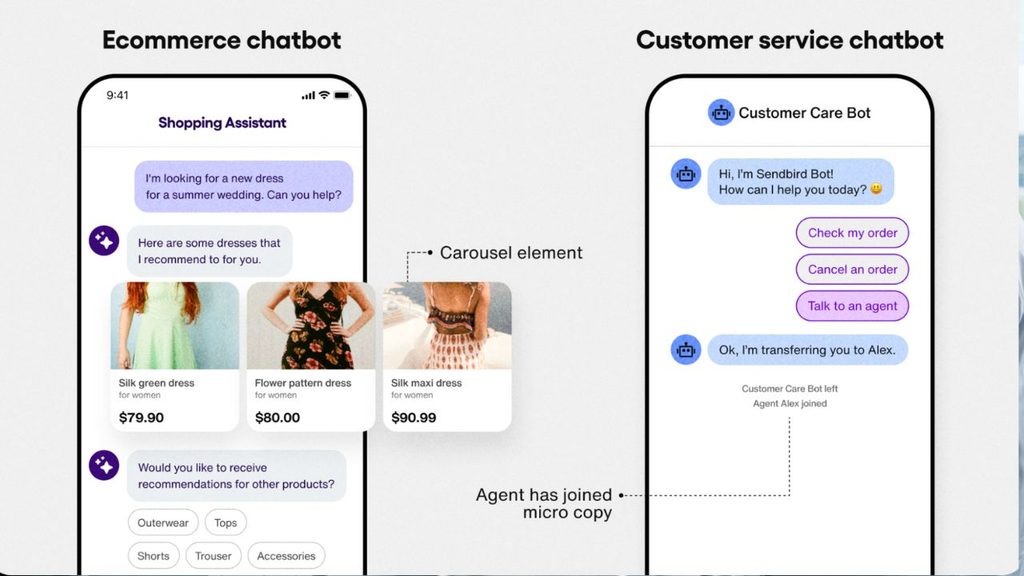
The category of tools now described as conversational AI for sales isn’t automation in the traditional sense. It’s closer to having a voice agent or chatbot that can hold a genuine two-way conversation, asking qualifying questions, responding to what the prospect actually says, adjusting tone and content based on real-time input, and handing off to a human at exactly the right moment.
The distinction matters practically. A prospect who asks “does this work with our existing CRM?” gets an actual answer, not a redirect to a contact form. Someone who says they’re not ready to decide for three weeks gets a follow-up scheduled for three weeks from now, automatically, without anyone on your team having to remember it. A lead who expresses strong interest at 11pm on a Sunday gets an immediate response, not an email that hits their inbox Monday morning when they’ve already moved on to something else.
This is what Conversational AI for Sales is actually designed to do: close the gap between when a prospect is engaged and when a human can realistically respond, without that gap costing you the deal. The numbers behind this shift are striking, 81% of sales leaders are now using AI in their sales process, and 83% of them report revenue growth as a result. That’s not a marginal improvement from better note-taking. It’s a structural change in how sales conversations happen.
The Qualification Problem Nobody Talks About
There’s a parallel problem to follow-up that conversational AI also addresses, and it’s one that freelancers and agency owners feel even more acutely: wasted time on the wrong leads.
When you’re the one selling and the one delivering, every hour spent on a discovery call with a prospect who was never going to convert is an hour not spent on client work, or on conversations with people who actually were ready to buy. Poor lead qualification doesn’t just reduce sales efficiency, it takes a direct toll on capacity.
Conversational AI can handle the early stages of qualification automatically. Before a prospect ever gets on a call with you, a well-configured AI agent has already asked them about their timeline, their budget range, their specific problem, and their decision-making process. You receive that context before the conversation even starts. You’re not spending the first twenty minutes of a call figuring out whether this person is a real opportunity, you already know.
This changes what a sales call is. Instead of a discovery conversation that might go nowhere, it becomes a qualified conversation with someone who has already indicated they’re a fit. Close rates improve. Wasted time decreases. And the mental overhead of managing a pipeline full of half-qualified leads, which is genuinely exhausting for small operators, goes down.
What This Actually Looks Like Day to Day
The practical implementation for a small business or freelancer doesn’t require enterprise infrastructure or a team to manage it. The tooling has reached a point where setting up a basic conversational AI sales flow is a realistic afternoon project, not a multi-month IT initiative.
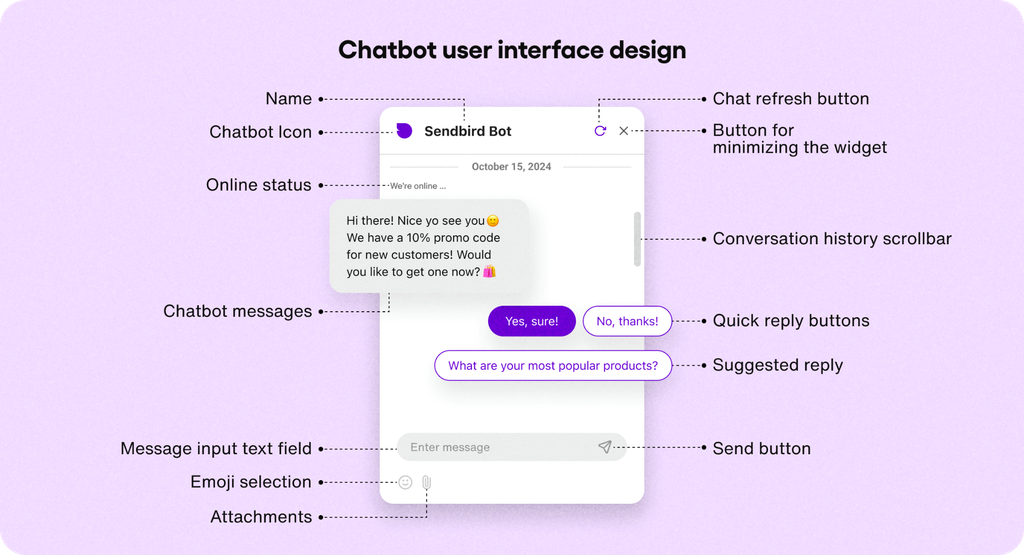
A typical setup might look like this. Someone lands on your website, fills out a contact form, or responds to an outreach message. Instead of waiting for you to respond manually, they immediately receive an AI-driven conversation that gathers context, answers basic questions about your services, and either schedules a call if they’re ready or asks a few more questions if they’re still in discovery mode.
If they go quiet, the system follows up, not with a generic “just checking in” email, but with a contextually relevant message based on where the conversation left off. If they respond at an unusual hour, they get a response at an unusual hour. The conversation stays alive without anyone on your team having to actively manage it.
The handoff to a human happens when it actually matters: when there’s a qualified, interested prospect who is ready to have a real conversation about working together. By that point, you’re not doing sales, you’re closing.
The Objection Worth Taking Seriously
The most common pushback on conversational AI in sales is that it feels impersonal, and that prospects will disengage the moment they realise they’re talking to a bot.
This concern was more valid three years ago than it is now. The quality of AI voice and text agents has improved to the point where the interaction genuinely doesn’t feel scripted, it adapts to what the prospect says, maintains conversational flow, and doesn’t break down when someone asks something unexpected. The experience is closer to talking to a responsive, well-informed assistant than to navigating a phone menu.
The more important point is about context. Most prospects don’t object to interacting with AI when the interaction is actually useful. What people find frustrating is irrelevant automation, messages that don’t reflect what they said, follow-ups that ignore their timeline, questions they already answered. Conversational AI that pays attention doesn’t produce that experience.
There’s also a reasonable argument that for many small businesses, the alternative to an AI follow-up isn’t a personal human follow-up. There’s no follow-up at all. Given that choice, most prospects would prefer the AI.
Why This Matters More for Small Operators Than for Enterprise
It’s worth naming something that enterprise sales technology discussions often miss: the ROI of conversational AI is proportionally larger for smaller operations than for large ones.
A company with a ten-person sales team that improves follow-up rates by 20% gains some additional revenue. A freelancer or two-person agency that stops losing leads to slow response times doesn’t just improve revenue, they change the fundamental economics of running the business. Deals that were previously lost to the gap between interest and response become deals that actually close.
The upfront investment is also smaller relative to the return. Enterprise deployments involve integration work, compliance review, and change management across teams. A small operator deploying a conversational AI sales flow is investing a few hours of setup time against a problem that has been costing them deals every month.
There’s also something less quantifiable but genuinely significant: the mental load reduction. Managing a pipeline of leads manually, tracking who you’ve followed up with, who’s gone quiet, who needs a nudge, is a constant low-level cognitive burden. Handing that tracking and follow-up function to a system that handles it automatically doesn’t just save time. It frees up mental space that was previously occupied by sales admin and redirects it toward work that actually requires human judgment.
A Different Way to Think About It
Sales follow-up is often framed as a discipline problem, if only people were more consistent, more persistent, better at maintaining their pipeline. That framing puts the solution in the category of habits, tools, and willpower.
The more useful framing is structural. The follow-up gap exists because human attention is finite and sales requires consistency that humans aren’t naturally built to deliver at scale. The prospects who get followed up with quickly and consistently are the ones whose salesperson happened to have capacity at the right moment. That’s a structural failure, not a personal one.
Conversational AI addresses the structure, not the habit. It doesn’t make the salesperson more disciplined, it removes the need for discipline in the parts of the sales process that don’t actually benefit from human judgment. The qualifying questions, the scheduling, the follow-up timing, the initial responses to common questions, none of these require a person. What requires a person is the conversation that matters, the one where genuine trust gets built and a real decision gets made.
Getting to more of those conversations, more often, without losing prospects in the gap before them, that’s what this technology is actually for.
For freelancers and small agencies who have been managing the follow-up gap with willpower and calendar reminders, the shift to conversational AI in sales is less about adopting new technology and more about fixing a structural problem that has been costing them business quietly, consistently, for years.