
A cordless vacuum cleaner uses a rechargeable battery instead of a continuous mains power connection, allowing users to move between rooms, stairs, furniture, and vehicles without changing...
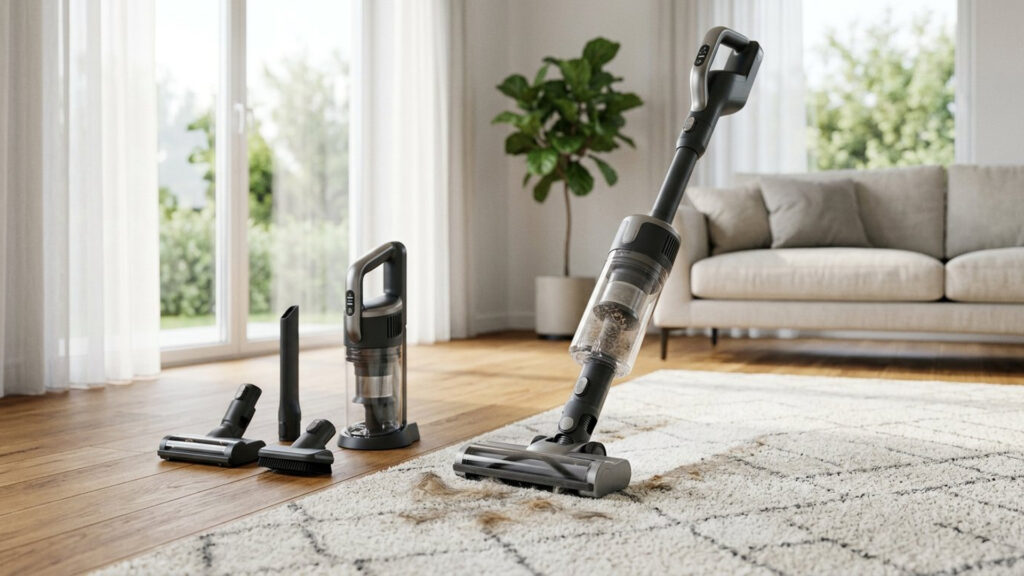
A cordless vacuum cleaner uses a rechargeable battery instead of a continuous mains power connection, allowing users to move between rooms, stairs, furniture, and vehicles without changing electrical outlets or managing a trailing cable. Modern cordless vacuums range from lightweight machines for quick daily cleaning to more powerful stick models designed to handle hard floors, carpets, pet hair, and whole home cleaning. The best choice depends on real world battery runtime, cleaning performance, floor heads, filtration, weight, dust bin capacity, replacement part availability, and how easily the machine can be maintained.
Cordless designs have become increasingly capable, but specifications can be difficult to compare. A manufacturer may quote maximum runtime using low power settings or without a motorized floor head, while the time available during demanding carpet cleaning can be much shorter.
For this reason, buyers should consider independent cleaning tests and model specific operating conditions rather than focusing on a single headline number.
What Is a Cordless Vacuum Cleaner?
A cordless vacuum cleaner is a portable battery powered appliance designed to remove dust, debris, hair, and other loose material from household surfaces.
Most contemporary models use a stick configuration and can include removable handheld units.
Common components include:
• Rechargeable battery
• Electric motor
• Dust bin or collection container
• Filtration system
• Floor cleaning head
• Brush roll
• Extension tube or wand
• Handheld cleaning unit
• Crevice and upholstery accessories
• Charging dock or cable
Exact features differ substantially between manufacturers.
How Does a Cordless Vacuum Cleaner Work?
Battery power operates an electric motor that creates airflow through the cleaner.
Air carrying dust and debris travels through the floor head or attachment into the collection system.
The vacuum then separates debris and filters the airflow before exhausting air back into the room.
Cyclonic Separation
Many bagless cordless vacuums use cyclonic airflow to separate larger particles from the air.
This can reduce the amount of debris reaching downstream filters.
Cyclonic branding alone does not determine cleaning quality.
Motorized Brush Rolls
A powered brush roll agitates carpet fibers and helps collect hair and debris.
Different roller designs are optimized for carpets, hard flooring, or mixed surfaces.
Suction Is Only Part of Cleaning Performance
A powerful motor does not automatically make a vacuum excellent.
Floor head design, brush roll performance, airflow, sealing, filtration, and maneuverability all influence how effectively debris is removed.
9 Benefits of a Cordless Vacuum Cleaner
Cordless machines provide several practical advantages for many households.
1. Freedom From Power Cables
The most obvious benefit is mobility.
You can move between rooms without finding another outlet or pulling a cable behind you.
This is particularly convenient for stairs and quick cleaning.
2. Fast Everyday Cleaning
Cordless vacuums can be easy to grab when you notice crumbs, dust, or pet hair.
Wall mounted or standing charging arrangements can keep a machine readily available.
Convenience Can Encourage More Frequent Cleaning
A vacuum that requires minimal setup may be used more regularly for small messes.
This does not necessarily mean it will replace every deep cleaning appliance in every household.
3. Easy Stair Cleaning
Traditional upright and cylinder vacuums can be awkward on stairs.
Lightweight cordless models allow users to move one step at a time without managing a mains cable.
A handheld configuration can make stair cleaning easier still.
4. Useful for Cars
Many stick vacuums convert into handheld machines.
Crevice tools and compact attachments can help clean seats, footwells, door pockets, and other vehicle areas.
Battery runtime and attachment shape affect usefulness.
5. Multiple Cleaning Attachments
Manufacturers often include specialized tools for different tasks.
These can include:
• Crevice tools
• Upholstery tools
• Dusting brushes
• Mini motorized tools
• Flexible extensions
• Hard floor rollers
Check what is actually included in the package because accessory bundles can differ even for the same vacuum model.
6. Compact Storage
Cordless stick vacuums generally occupy less floor area than full size traditional models.
Wall docks can further reduce storage requirements.
Installation should follow the manufacturer’s instructions.
7. Flexible Power Modes
Many cleaners provide several suction settings.
Lower modes can extend battery runtime, while higher power settings can address more challenging debris.
8. Improved Battery Technology
Lithium ion batteries have enabled stronger and more practical cordless appliances.
Some vacuums also offer removable batteries, allowing eventual replacement or the use of a second charged battery where supported.
9. Suitable for Mixed Cleaning Tasks
A well designed cordless vacuum can move rapidly between hard flooring, carpet, furniture, stairs, and above floor surfaces.
The correct floor heads and attachments remain important.
Cordless Vacuum Cleaner Battery Life
Battery runtime is among the most important buying considerations.
Unfortunately, it is also one of the easiest specifications to misunderstand.
What Does Maximum Runtime Mean?
An advertised runtime may represent operation in the lowest power mode under particular testing conditions.
Runtime can decrease when using:
• Maximum suction
• Motorized floor heads
• Thick carpet
• Specialized attachments
• Older batteries
Read the test conditions accompanying manufacturer claims.
Removable Batteries
A user replaceable battery can extend the practical lifespan of a vacuum because a degraded battery does not necessarily require replacing the whole machine.
A second battery can also extend cleaning time.
Battery Capacity Declines Over Time
Rechargeable lithium ion batteries gradually lose usable capacity through age and charge cycles.
Heat and storage conditions can also influence degradation.
Follow manufacturer charging and storage recommendations.
Cordless Vacuum Cleaner Suction Power
Vacuum specifications can use several different measures, making direct comparison difficult.
Air Watts
Some manufacturers publish air watts as an indication of suction power combined with airflow.
Testing methodologies can differ, so air watt figures should not be treated as the only measure of performance.
Pascals
Some brands advertise suction pressure in pascals.
Again, static pressure alone cannot describe how well the complete vacuum cleans a floor.
Real World Cleaning Tests
Independent tests measuring debris pickup on carpets and hard floors can provide more useful evidence.
Higher Suction Can Reduce Runtime
Maximum power requires more electrical energy.
The strongest mode may therefore provide substantially shorter operating time.
A well designed automatic mode can balance power and battery consumption where available.
Cordless Vacuum Cleaner for Carpets
Carpet cleaning benefits from a suitable powered floor head.
Brush Roll Design
Bristles or other agitation systems help release debris embedded among carpet fibers.
The floor head should move comfortably across the carpet rather than becoming excessively difficult to push.
Carpet Height
High pile and dense carpets can challenge some cordless vacuums.
Check independent testing on carpet types similar to your own.
Cordless Vacuum Cleaner for Hard Floors
Hard surfaces require effective pickup without unnecessary scratching.
Soft Roller Heads
Some vacuums include soft rollers designed to pick up fine dust and larger particles from hard flooring.
Check Flooring Manufacturer Guidance
Certain sensitive wood, stone, or specialty floors may have specific cleaning recommendations.
Use compatible brush rolls and attachments.
Avoid Vacuuming Liquids Unless Approved
A standard dry cordless vacuum is not a wet vacuum.
Liquid can damage the motor, filter, electronics, or battery and create safety risks.
Only collect liquids with appliances specifically designed for that use.
Cordless Vacuum Cleaner for Pet Hair
Pet owners often prioritize hair pickup from floors, upholstery, and stairs.
Anti Tangle Brush Rolls
Some floor heads are designed to reduce hair wrapping around the roller.
No design eliminates maintenance under every condition.
Long human hair can create similar challenges.
Mini Motorized Tools
Small powered attachments can work well on upholstered furniture and pet bedding where permitted by fabric care instructions.
Pet Dander and Filtration
A vacuum can collect some particles associated with pets, but it should not be marketed as a cure for allergies.
People with significant allergic symptoms should follow medical advice and broader environmental management strategies.
Cordless Vacuum Cleaner Filtration
Filtration matters because fine particles should not simply pass through the vacuum and return to the room.
HEPA Filters
HEPA is a technical filtration classification rather than merely a marketing term.
When filtration is important, determine whether the filter itself meets an established HEPA standard and whether the entire vacuum system is adequately sealed.
Sealed Filtration Systems
An efficient filter is less useful if air leaks around it.
Whole machine sealing can therefore matter.
Washable Filters
Many cordless vacuums use washable filters.
If washing is permitted, allow the filter to dry completely for the duration specified by the manufacturer before reinstalling it.
Operating with a wet filter can damage some machines.
Bagless Cordless Vacuum Cleaner
Most cordless stick vacuums use bagless dust containers.
Advantages
Bagless systems eliminate recurring vacuum bag purchases and let users see when the container is full.
Disadvantages
Emptying the bin can release dust back into the air.
People particularly sensitive to airborne dust may prefer systems designed to minimize direct contact or may choose a bagged vacuum where appropriate.
Cordless Stick Vacuum vs Upright Vacuum
Both formats have advantages.
Cordless Stick Vacuum
A stick vacuum emphasizes low weight and portability.
It can be ideal for frequent maintenance cleaning.
Upright Vacuum
Full size uprights can offer larger dust capacity, continuous mains power, and strong carpet cleaning depending on the model.
Which Is Better?
The better choice depends on your home.
Large carpeted properties may benefit from a full size vacuum, while smaller mixed floor homes may be well suited to a cordless machine.
Some households use both.
Cordless Vacuum vs Robot Vacuum
Robot vacuums automate routine floor cleaning, while cordless machines provide direct control.
Robot Vacuum Advantages
A robot can clean according to a schedule with minimal manual operation.
Cordless Advantages
A cordless vacuum can clean stairs, furniture, corners, vehicles, and targeted messes that many robots cannot reach.
They Can Complement Each Other
A robot can handle routine floor maintenance while a cordless vacuum addresses detailed and above floor cleaning.
Weight and Ergonomics
A vacuum’s total weight does not tell you how heavy it feels in use.
Motor and battery placement can make some designs feel top heavy.
Test the Vacuum if Possible
Try:
• Normal floor cleaning
• Turning the floor head
• Carrying the vacuum
• Lifting it above waist height
• Converting it to handheld mode
• Emptying the bin
People with wrist, shoulder, back, or mobility concerns may particularly benefit from hands on testing.
Dust Bin Capacity
Small bins keep vacuums compact but require more frequent emptying.
Larger Homes
A very small dust container can become inconvenient when cleaning large spaces or substantial amounts of pet hair.
Empty Before It Is Overfilled
Most manufacturers provide a maximum fill line.
Exceeding it can interfere with airflow or separation performance.
Noise Levels
Cordless vacuums still generate significant sound from motors, airflow, and powered brush rolls.
Noise can vary by power mode and floor type.
Check Measured Noise
Independent decibel testing can help buyers who are particularly sensitive to noise.
Remember that decibels use a logarithmic scale, so numerical differences should not be interpreted as simple percentages.
Cordless Vacuum Cleaner Charging
Most models charge through an adapter, dock, or charging station.
Charging Time
Recharge times vary substantially.
A fast charging claim should be checked against actual battery capacity and manufacturer specifications.
Wall Mounted Docks
Docks can combine storage and charging.
Before drilling, check wall construction and ensure the installation location can safely support the equipment.
Cordless Vacuum Cleaner Maintenance
Regular maintenance can preserve cleaning performance and reduce unnecessary strain on the motor.
Empty the Dust Bin
Do not allow debris to remain above the recommended fill line.
Clean the Brush Roll
Remove wrapped hair and threads according to manufacturer instructions.
Some brush rolls can be removed without tools.
Maintain Filters
Clean or replace filters according to the maintenance schedule.
Inspect Airways
If suction suddenly declines, check accessible air paths for obstruction after safely powering the appliance off.
Never Insert Tools Into a Running Vacuum
Switch off the machine and remove the battery where the manufacturer recommends doing so before maintenance.
Follow the manual for blockage removal.
How Long Does a Cordless Vacuum Cleaner Last?
There is no universal lifespan.
Durability depends on:
• Battery quality
• Motor design
• Construction
• Frequency of use
• Maintenance
• Availability of replacement parts
• Environmental conditions
A model with replaceable batteries, filters, rollers, and floor heads can be easier to keep operating over time.
How Much Does a Cordless Vacuum Cleaner Cost?
Cordless vacuums range from budget models to premium systems.
Price depends on battery capacity, motor performance, filtration, accessories, sensors, floor heads, build quality, and brand positioning.
Evaluate Total Ownership Cost
Consider future expenses such as:
• Replacement batteries
• Filters
• Brush rolls
• Floor heads
• Specialized attachments
A cheaper appliance can become less economical if essential replacement components are unavailable.
Smart Features
Some premium cordless vacuums include sensors, screens, automatic suction adjustment, or particulate displays.
Automatic Power Adjustment
The vacuum may modify motor power according to floor type or detected debris.
This can potentially balance performance with runtime.
Dust Detection
Some systems illuminate fine debris on hard floors or estimate particle quantities.
These features can be useful but are not substitutes for standardized cleaning performance tests.
How to Choose the Best Cordless Vacuum Cleaner
Start with your flooring and cleaning habits.
For Mostly Hard Floors
Prioritize strong pickup of both fine and larger debris, a suitable floor head, maneuverability, and adequate runtime.
For Mostly Carpet
Look for a capable powered brush roll and strong carpet performance in independent tests.
For Pet Owners
Prioritize hair pickup, anti tangle design, upholstery attachments, and easy brush maintenance.
For Large Homes
Consider longer real world runtime, replaceable batteries, larger bins, and available spare batteries.
Features Worth Paying For
Not every premium feature provides equal value.
Useful features can include:
• Removable battery
• Good filtration
• Replaceable components
• Effective floor head
• Anti tangle roller
• Convenient bin emptying
• Useful attachments
• Adjustable power
• Reliable warranty
Spend according to features you will actually use.
Common Buying Mistakes
Avoid making a decision based on one specification.
Common mistakes include:
• Comparing maximum runtime without test conditions
• Assuming suction numbers predict cleaning performance
• Ignoring machine weight
• Forgetting replacement battery cost
• Buying a tiny bin for a pet heavy household
• Ignoring filter replacement availability
• Assuming every model has HEPA filtration
• Focusing on accessories instead of cleaning performance
• Buying without checking carpet suitability
The complete system matters more than one headline feature.
Frequently Asked Questions
Is a cordless vacuum cleaner powerful enough for carpets?
Many models can clean carpets effectively, particularly with motorized brush rolls. Performance varies, so compare tests on carpet types similar to yours.
How long does a cordless vacuum cleaner battery last?
Runtime varies by model, power mode, floor head, surface, and battery age. Maximum advertised runtime may not represent high power cleaning.
Is a cordless vacuum cleaner good for pet hair?
It can be. Look for strong hair pickup, powered floor heads, anti tangle features, upholstery tools, and easy brush roll maintenance.
Can a cordless vacuum cleaner replace an upright vacuum?
For some households, yes. Large or heavily carpeted homes may still benefit from a full size mains powered vacuum alongside a cordless model.
Are HEPA filters important in cordless vacuums?
Efficient filtration can help retain fine particles. When this matters, check for genuine HEPA specifications and a well sealed whole machine filtration system.
How often should I clean a cordless vacuum filter?
Frequency varies by model and usage. Follow the manufacturer’s cleaning and replacement schedule rather than using one interval for every vacuum.
Conclusion
A cordless vacuum cleaner can make routine cleaning quicker by combining battery powered mobility with versatile floor and handheld attachments. The strongest buying decision considers real world runtime, carpet and hard floor performance, filtration, weight, dust capacity, and replacement part availability rather than advertised suction alone. Pet owners and larger households should pay particular attention to brush roll maintenance, batteries, and bin size. Choosing a model matched to your actual flooring and cleaning habits can provide a better balance of convenience, performance, and long term value.