
A hot tub in Utah has to work across demanding seasonal conditions, from freezing winter temperatures in mountain communities to hot, dry summers in lower...
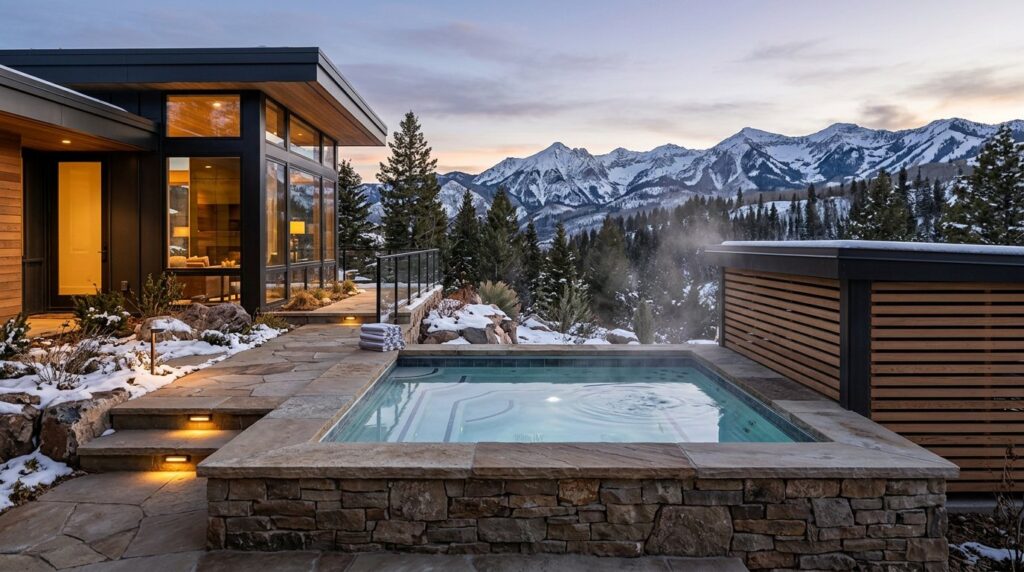
A hot tub in Utah has to work across demanding seasonal conditions, from freezing winter temperatures in mountain communities to hot, dry summers in lower elevation areas. For homeowners who want more control over dimensions, seating, jets, finishes, placement, and integration with an outdoor living area, custom hot tubs in Utah can offer more flexibility than a standard configuration. A successful project requires more than choosing attractive finishes, however. Structural support, electrical service, drainage, freeze protection, energy efficiency, safe access, local permits, and ongoing water care all need to be considered before installation begins.
What Are Custom Hot Tubs in Utah?
Custom hot tubs are spas that provide some level of personalization beyond choosing a standard stocked model.
The term can describe several different products. Some manufacturers customize shell colors, cabinet finishes, seating layouts, jets, controls, lighting, covers, and accessories within an established spa platform. Other projects involve built in concrete or gunite spas designed as part of a pool, patio, deck, or landscape.
Because these construction methods are very different, homeowners should first establish what custom means for their project.
A factory manufactured portable spa may offer easier installation and integrated equipment, whereas a fully built in spa can provide greater architectural freedom but typically involves more design, construction, waterproofing, plumbing, and site coordination.
Why Are Custom Hot Tubs Popular in Utah?
Utah’s climate and outdoor recreation culture make year round outdoor spaces attractive to many homeowners.
A hot tub can be designed for use during cool evenings and winter weather while becoming part of a patio, deck, or backyard during warmer months.
Mountain views and residential landscapes also encourage homeowners to think carefully about placement. A custom configuration can help coordinate sight lines, privacy, seating orientation, and surrounding hardscape.
Are Custom Hot Tubs Different From Spas?
The terms hot tub and spa are often used interchangeably in residential contexts.
Portable spas are usually self contained manufactured units containing an acrylic or similar shell, pumps, filtration, heaters, controls, plumbing, insulation, and an exterior cabinet.
Built in spas may instead be constructed onsite and integrated with separate equipment.
What Makes a Hot Tub Truly Custom?
Customization can involve dimensions, seating depth, jet positions, finishes, exterior cabinetry, steps, covers, water features, lighting, controls, and landscape integration.
The amount of customization depends on the manufacturer or builder and the construction system selected.
7 Amazing Benefits of Custom Hot Tubs in Utah
Personalization can provide practical advantages when it is based on how the household will actually use the spa.
1. Design for Utah’s Climate
A hot tub intended for year round use in Utah should account for local winter temperatures and elevation.
Adequate insulation, an effective cover, protected plumbing, reliable heating equipment, and correct winter operation can help reduce heat loss and freeze related risks.
Climate conditions vary widely across Utah, so equipment suitable for St. George may face very different winter conditions in Park City, Heber Valley, or other higher elevation communities.
2. Personalized Seating Layouts
Custom options can make seating better suited to household preferences.
Buyers may choose lounge seating, upright therapy seats, varied seat heights, cool down positions, or open layouts intended for social use.
Testing seats in person is valuable because body height and proportions affect how well a particular design fits.
3. Customized Hydrotherapy Jets
Many spas allow buyers to select or configure jet arrangements targeting areas such as the back, shoulders, legs, or feet.
Jet count alone is not a useful measure of massage quality. Pump performance, plumbing design, jet type, adjustability, seat ergonomics, and water flow all matter.
4. Better Integration With Outdoor Living Areas
A custom hot tub can be incorporated into a deck, patio, pergola, privacy wall, outdoor kitchen, or landscaped backyard.
Thoughtful placement can make the spa look intentional rather than added after construction.
Service access must still remain available. Equipment should not be permanently enclosed behind decorative structures that prevent technicians from reaching essential components.
5. Flexible Size and Capacity
Households use spas differently.
A couple may prefer a compact model with two highly supportive therapy seats, while a larger family may prioritize open seating capacity.
Choosing based on realistic daily use can prevent paying to heat and maintain substantially more water than necessary.
6. Greater Control Over Finishes
Depending on the product type, owners can coordinate shell colors, cabinets, stone, tile, coping, decking, lighting, and adjacent landscaping.
Material selection should reflect Utah’s climate as well as visual preferences. Outdoor surfaces may experience ultraviolet exposure, temperature fluctuations, snow, ice, and repeated moisture.
7. Opportunity to Plan Energy Efficiency
A customized project allows energy considerations to be addressed before installation.
Insulation, cover quality, wind exposure, equipment efficiency, plumbing design, temperature settings, and maintenance all influence operating energy.
Actual consumption varies too much by climate and usage to guarantee a universal monthly utility cost.
Types of Custom Hot Tubs in Utah
Understanding the primary construction options can make discussions with dealers and builders more productive.
Portable Custom Hot Tubs
Portable spas are manufactured as complete or nearly complete systems and installed on a suitable foundation.
Customization usually occurs within predetermined shell designs and equipment packages.
These units can offer straightforward maintenance access because pumps, heaters, controls, and filters are integrated into the cabinet.
Built In Hot Tubs
Built in spas can be incorporated into patios, decks, or landscaping so that the finished installation appears more permanent.
The term can include both manufactured shells installed within a surround and spas constructed onsite.
Installation details must preserve drainage, ventilation where required, electrical access, and equipment serviceability.
Concrete and Gunite Spas
Concrete or gunite construction can provide extensive freedom over dimensions, depth, bench shapes, finishes, and architectural integration.
These projects generally require specialized structural, plumbing, waterproofing, electrical, and finishing work.
They can be especially suitable when a spa is being designed simultaneously with a swimming pool.
Swim Spas
A swim spa combines a larger water vessel with a current system designed for swimming or water exercise, while many models also provide hot tub style seating.
Swim spas require more space and substantial site preparation. Their foundation, electrical requirements, access, water volume, heating, and operating costs should be evaluated separately from conventional hot tubs.
Designing Custom Hot Tubs in Utah
Good spa design begins with users and site conditions rather than decorative features.
Determine How Many People Will Use It
Manufacturer stated capacity does not always reflect how comfortably adults can sit together.
If possible, physically sit in a dry display model to evaluate legroom, footwell size, seat depth, entry and exit, and personal space.
Choose Seating According to Use
Lounge seats can support a reclined position but occupy considerable shell space.
Open bench configurations may provide more flexibility for social use, while dedicated therapy seats can provide focused jet arrangements.
Families may prefer a combination.
Consider View and Privacy
Utah properties can provide dramatic mountain, desert, valley, and city views.
Orient seating to take advantage of desirable sight lines while considering neighbors, roads, prevailing winds, and privacy.
Plan Equipment Access Early
A built in appearance should never make routine servicing unnecessarily destructive.
Provide access panels and clearances according to manufacturer requirements so pumps, heaters, controls, plumbing, and other components can be repaired.
Best Location for a Custom Hot Tub
Placement affects convenience, privacy, energy use, safety, and maintenance.
Keep the Spa Convenient
A hot tub located reasonably close to the house may receive more frequent use during cold weather than one positioned at the far end of a large property.
Consider the route from an exterior door to the spa, particularly when snow or ice is present.
Evaluate Wind Exposure
Wind can accelerate heat loss at the water surface, especially when the spa is uncovered.
Buildings, privacy structures, and landscaping can provide some protection, but any windbreak should comply with safety and installation requirements.
Think About Drainage
Water will leave the spa during entry, exit, maintenance, and draining.
The site should manage this water appropriately without directing it toward building foundations or creating persistent ice hazards.
Local rules may regulate where treated spa water can be discharged.
Foundation Requirements for Custom Hot Tubs in Utah
Filled spas are extremely heavy because water alone weighs approximately 8.34 pounds per US gallon, before accounting for the shell, equipment, and occupants.
A level, structurally adequate base is essential.
Concrete Pads
Reinforced concrete is commonly used as a hot tub foundation when designed for the actual load and site conditions.
Thickness, reinforcement, drainage, frost considerations, and soil preparation should follow manufacturer requirements and applicable construction guidance.
Deck Installations
Existing decks should not be assumed to support a filled spa.
A qualified structural professional or other appropriate building expert should evaluate load capacity and determine whether reinforcement is necessary.
Avoid Improvised Foundations
An uneven or inadequate foundation can contribute to shell stress, movement, drainage problems, and warranty issues.
Follow the spa manufacturer’s foundation specification and local building requirements.
Utah Winter Conditions and Hot Tub Design
Cold weather makes equipment reliability and freeze protection particularly important.
Insulation
Different manufacturers use different insulation approaches, including various foam and reflective systems.
Rather than judging efficiency by marketing terminology alone, ask about documented energy performance, equipment access, repair implications, and cold climate suitability.
Quality Spa Covers
A well fitting insulated cover reduces heat loss through the water surface and helps keep debris out.
Cover condition deteriorates with age and weather exposure. A waterlogged or damaged cover can become heavy and less effective.
Freeze Protection
Many modern spas have automated freeze protection functions, but these systems rely on power and correctly functioning equipment.
A prolonged winter power failure or equipment malfunction can put plumbing at risk.
What Happens During a Utah Winter Power Outage?
Do not automatically drain a hot tub during freezing weather unless the manufacturer’s emergency procedure calls for it.
Contact the spa manufacturer, dealer, or qualified technician for model specific guidance. Improper draining can leave water trapped in plumbing where it may freeze.
Electrical Requirements for Custom Hot Tubs in Utah
Many full size spas require dedicated electrical circuits and ground fault protection.
Exact requirements depend on the spa and installation.
Electrical work around water presents serious shock and electrocution hazards, so installation should comply with current electrical codes, manufacturer instructions, and local permitting requirements.
Use a Qualified Electrician
A licensed electrical contractor familiar with spas can evaluate service capacity, circuit requirements, disconnect location, grounding and bonding requirements, and other electrical considerations.
Do not use improvised extension cords or modify electrical equipment contrary to manufacturer instructions.
Plan Electrical Service Before Delivery
Determine the selected spa’s requirements before site construction is completed.
This avoids placing concrete, decking, or landscaping where it conflicts with electrical routing or required clearances.
Permits for Custom Hot Tubs in Utah
Permit and inspection requirements depend on the municipality, county, property, installation, and electrical work involved.
There is no single statewide answer that covers every residential spa project.
Check Local Requirements
Contact the local building department serving the property before construction.
Ask about building, electrical, barrier, setback, drainage, and safety requirements relevant to the planned installation.
Homeowners associations may impose additional design or placement restrictions.
Barriers and Safety Requirements
Depending on the installation and jurisdiction, barriers, covers, gates, or other safety measures may be required.
Do not assume that a locking spa cover automatically satisfies every applicable requirement.
Water Care for Custom Hot Tubs
Warm water, relatively small water volume, and frequent bather use make hot tub water care important.
Sanitization
A properly maintained disinfectant system helps control microbial growth.
Common residential systems use chlorine or bromine chemistry, while additional technologies can supplement but generally should not be assumed to eliminate the need for approved sanitization.
Follow the spa manufacturer’s water care instructions and applicable public health guidance.
Water Balance
Parameters such as pH and total alkalinity affect water quality, sanitizer performance, scale formation, corrosion, and user comfort.
Recommended ranges can depend on the sanitizing system and equipment, so follow current manufacturer guidance rather than relying on an arbitrary online formula.
Filtration
Filters capture suspended material and require routine cleaning and eventual replacement.
A dirty filter can reduce circulation and place additional strain on equipment.
How Often Should Hot Tub Water Be Changed?
There is no schedule appropriate for every household.
Water replacement depends on bather load, water chemistry, spa size, maintenance practices, and manufacturer recommendations.
Utah Water Hardness and Hot Tubs
Water mineral content varies across Utah communities and individual water supplies.
Hard water can contribute to scale formation when chemistry is not properly managed.
Preventing Scale
Regular testing and appropriate water balance help limit scaling.
Do not add unverified household chemicals to compensate for mineral issues. Use spa compatible products and follow the equipment manufacturer’s instructions.
Test the Actual Fill Water
Municipal averages may not perfectly represent water at an individual property.
Testing your source water provides a better basis for developing an appropriate startup and maintenance plan.
Custom Hot Tub Energy Efficiency
Heating water outdoors uses energy, particularly during cold Utah winters.
Keep the Cover Closed
Leaving a heated spa uncovered allows substantial heat to escape from the water surface.
Keep the cover properly positioned whenever the spa is not being used.
Maintain Equipment
Restricted filters, malfunctioning heaters, failing covers, leaks, and other problems can reduce system performance.
Routine inspection can identify issues before they become costly failures.
Choose Temperature Settings Thoughtfully
Maintaining unnecessarily high water temperatures can increase energy demand.
Always keep water temperature within safe limits and manufacturer recommendations. The US Consumer Product Safety Commission has advised that hot tub water temperature should not exceed 104°F or 40°C.
Safety Considerations for Custom Hot Tubs in Utah
Hot tubs combine water, heat, electricity, and potentially slippery walking surfaces.
Safe Water Temperature
Excessively hot water can contribute to dangerous overheating.
People who are pregnant or who have certain medical conditions should discuss hot tub use with their healthcare professional because individualized precautions may apply.
Alcohol and Hot Tub Use
Alcohol can increase safety risks around hot water by impairing judgment and potentially worsening heat related effects.
Avoid combining intoxication with spa use.
Children and Hot Tubs
Children require close adult supervision around any body of water.
Temperature exposure can also affect children differently than adults. Families should follow appropriate pediatric and public health safety guidance.
Custom Hot Tubs in Utah for Mountain Homes
Higher elevation properties can present additional design challenges.
Snow Load on Covers and Structures
Heavy snow can place substantial loads on covers, pergolas, roofs, and surrounding structures.
Structural elements should be designed for applicable local snow loads. Do not assume a decorative cover structure is adequate for a mountain climate.
Access for Service Technicians
Remote properties should account for equipment delivery, replacement components, and technician access.
A spectacular site is less practical if a pump replacement requires dismantling permanent landscaping.
Custom Hot Tubs in Utah for Southern Areas
Southern Utah generally experiences milder winters than mountain communities, but high summer temperatures and intense sun create different concerns.
UV Exposure
Strong sunlight can affect cabinets, covers, finishes, and exposed components over time.
Select exterior materials rated for expected outdoor conditions and follow maintenance recommendations.
Shade
Appropriate shade can make the area more comfortable during warmer months.
Any overhead structure should comply with applicable building, electrical, ventilation, and safety requirements.
How Much Do Custom Hot Tubs in Utah Cost?
Pricing varies too widely for one meaningful universal figure.
A factory manufactured spa with customized options occupies a different price category from a fully integrated concrete spa requiring excavation, plumbing, structural work, tile, heating equipment, electrical work, and landscaping.
Factors Affecting Price
Major cost drivers include:
• Spa size and construction type
• Site access and preparation
• Foundation requirements
• Electrical upgrades
• Plumbing and equipment
• Number and type of jets
• Cabinet, stone, or tile finishes
• Steps and accessibility features
• Cover and lifting system
• Crane or specialized delivery requirements
• Decking and surrounding landscaping
Compare Total Installed Cost
An advertised spa price may exclude delivery, foundation work, electrical installation, permits, accessories, landscaping, and startup supplies.
Request an itemized proposal so competing quotes can be compared on equivalent scopes of work.
Portable vs Fully Custom Hot Tubs
Portable spas generally offer lower construction complexity and factory engineered equipment integration.
Fully custom built spas provide greater control over shape, dimensions, finish, and architectural integration.
Which Is Better?
Neither approach is inherently superior.
Choose a portable spa when predictable manufacturing, integrated equipment, and simpler installation are priorities. Consider built in construction when architectural integration and design freedom justify additional project complexity.
How to Choose a Custom Hot Tub Builder in Utah
A reliable provider should be able to discuss site requirements as confidently as colors and jet packages.
Ask about experience with Utah winter conditions, equipment selection, insulation, warranty service, replacement parts, subcontractors, permitting, startup, and water care.
Verify Credentials
Determine which portions of the project require licensed contractors under Utah and local requirements.
Verify applicable contractor licensing and insurance through official sources where required.
Review Warranty Details
Ask which components are covered, how long coverage lasts, who provides onsite service, whether travel charges apply, and what maintenance conditions affect warranty protection.
A long written warranty has limited value if qualified service is difficult to obtain locally.
Questions to Ask Before Ordering
Before signing a contract, confirm:
• What exactly is customizable?
• What are the final exterior and water dimensions?
• How many adults fit comfortably?
• What foundation is required?
• What electrical service is required?
• How is the spa insulated?
• How is freeze protection handled?
• How will equipment remain accessible?
• What is included in the quoted price?
• Who handles permits and inspections?
• What warranties apply?
• Who provides local service after installation?
Frequently Asked Questions
Are custom hot tubs in Utah suitable for winter?
Yes, appropriately designed spas can be used during Utah winters when they have suitable insulation, a quality cover, reliable heating, freeze protection, and proper maintenance.
Do custom hot tubs in Utah require a permit?
Requirements vary by city, county, property, and installation. Check with the local building department for current building, electrical, barrier, and setback rules.
How much do custom hot tubs in Utah cost?
Cost depends on construction type, size, site work, electrical service, equipment, finishes, delivery, permits, and landscaping. Itemized local quotes provide the most accurate estimate.
Can I install a custom hot tub on a deck?
Possibly, but a filled spa is extremely heavy. The deck should be professionally evaluated and designed or reinforced for the actual imposed loads.
How energy efficient are custom hot tubs?
Efficiency varies according to insulation, cover quality, weather, water temperature, equipment, spa size, wind exposure, maintenance, and frequency of use.
How often does a custom hot tub need maintenance?
Water chemistry and equipment require regular attention, while filter cleaning and other tasks follow manufacturer schedules. Exact frequency depends on usage and spa design.
Conclusion
Custom hot tubs in Utah can be designed around household size, hydrotherapy preferences, outdoor architecture, and the state’s varied climate. The strongest projects balance appearance with structural support, electrical safety, freeze protection, water care, energy performance, and future equipment access. Compare builders using detailed specifications and total installed costs rather than the spa purchase price alone. Careful planning before construction can produce a comfortable, serviceable hot tub that is practical through Utah’s changing seasons.