
As businesses increasingly rely on electronic contracts, online transactions, and remote identity verification, digital signatures help establish document authenticity and detect unauthorized changes. However, their...
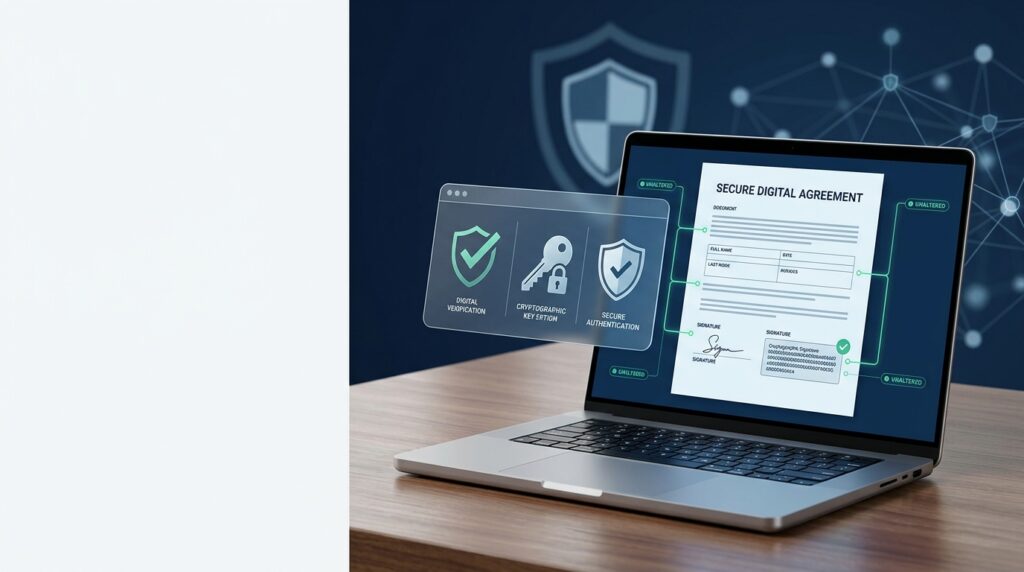
As businesses increasingly rely on electronic contracts, online transactions, and remote identity verification, digital signatures help establish document authenticity and detect unauthorized changes. However, their effectiveness depends on more than the signature itself. Stolen credentials, compromised signing keys, weak identity checks, and social engineering can still expose organizations to fraud.
Cryptographic digital signatures provide strong protection for document integrity, but they cannot guarantee that a signer is legitimate or that a document’s contents are truthful. Businesses must protect both the document and the person signing it.
How Do Cryptographic Digital Signatures Help Prevent Online Fraud and Document Forgery?
How Cryptography Protects Document Authenticity and Integrity
Cryptographic digital signatures use public-key cryptography to verify a document’s integrity and establish whether a signature corresponds to a particular signing key. The signing process typically generates a cryptographic hash of the document and uses the signer’s private key to create a signature. Recipients can use the corresponding public key to verify it.
If someone changes the document after signing, verification will generally detect the modification. This makes digital signatures valuable for contracts, financial agreements, business records, and other documents where unauthorized changes could create legal or financial consequences.
Can Digital Signatures Prevent Document Tampering and Fraudulent Approvals?
Digital signatures make it harder to secretly modify a signed document without detection. If someone changes the payment amount in a signed supplier agreement, for example, a properly implemented verification system should identify that the document no longer matches the signed version.
However, document integrity is not the same as transaction legitimacy. A criminal could prepare a fraudulent invoice and persuade an authorized employee to sign it. The signature may be verified correctly because the document has not changed since signing, even though the transaction is fraudulent.
What Is the Difference Between a Cryptographic Digital Signature and a Standard Electronic Signature?
How Electronic Signatures and Digital Signatures Differ in Security
An electronic signature is a broad term for an electronic method of expressing agreement or approval. It may involve typing a name, drawing a signature on a touchscreen, clicking an acceptance box, or completing an online signing process.
A cryptographic digital signature uses cryptographic keys to sign a document and lets others verify its integrity. It can provide evidence that the signature was created using the private key associated with a particular public key.
Not every electronic signature uses cryptographic protection. A simple acceptance button may record agreement without providing the same technical evidence of document integrity.
Which Signature Method Offers Better Fraud Protection?
The appropriate method depends on transaction value, information sensitivity, potential consequences of fraud, and legal requirements. For routine approvals and lower-risk agreements, an electronic-signature platform with suitable authentication and reliable records may be sufficient. For sensitive contracts and high-value transactions, certificate-based digital signatures may offer additional protection.
What Are the Biggest Vulnerabilities and Limitations of Digital Signatures?
How Stolen Credentials and Compromised Signing Keys Enable Fraud
One major risk is the theft or misuse of a legitimate signing key. Cybercriminals may use phishing, malware, compromised devices, exposed backups, or weak account security to obtain signing credentials. If an attacker controls a private key, they may create signatures that pass cryptographic verification. Verification cannot automatically determine whether the legitimate owner or an unauthorized person used the key.
Ritwick Dey, Co-Founder and CTO at Panto AI, highlights the importance of protecting the systems behind the signature: “Digital signatures are cryptographically sound in isolation, but their security collapses when key management or verification practices are weak.”
How Phishing, Social Engineering, and Weak Verification Processes Undermine Security
Digital signatures cannot independently prevent social engineering. A criminal may impersonate a supplier, executive, or customer and persuade an employee to sign a fraudulent document. Attackers may also use fake websites, stolen email accounts, or convincing messages to manipulate users into approving transactions.
Weak identity checks create further risks. If a platform treats access to an email account as sufficient proof of identity, an attacker who compromises that account may be able to initiate or approve a transaction.
What Digital Signatures Cannot Guarantee
Digital signatures provide evidence about document integrity and the signing key used. They do not automatically establish that every statement is accurate, that the signer understood the agreement, or that the signer was not manipulated.
If attackers compromise a software developer’s signing key or build infrastructure, they may distribute malicious files that appear to come from a trusted source. A signature may be verified successfully even though the software is unsafe.
Why Validation Must Be Consistent
A signature should not be accepted simply because software displays a green check mark. The verification tool must validate the certificate chain, confirm that the certificate is appropriate for signing, and check its status under the applicable policy. Businesses should ensure that staff understand warnings and cannot casually bypass them. Clear user interfaces matter because people may approve a document when a warning is confusing or hidden. Organizations should also preserve the signed file in its original form; printing it, scanning it, or converting it may remove information needed for later cryptographic verification.
How Can Businesses Verify a Signer’s Identity and Prevent Stolen Credentials From Being Used Fraudulently?
Strengthening Identity Verification Before Signing
Businesses should establish a signer’s identity before issuing signing credentials or granting platform access. Depending on transaction risk, verification may involve government-issued identification, trusted identity providers, established customer records, or organizational credentials.
Multifactor authentication adds protection by requiring more than a password. For sensitive transactions, businesses should consider phishing-resistant methods, such as properly implemented FIDO2 security keys or passkeys, which can reduce exposure to common credential-theft attacks.
Rafay Baloch, CEO and Founder of REDSECLABS, emphasizes independent confirmation: “For anything that moves money, confirm the request a second way like calling a number you already have.”
Protecting Private Keys and Monitoring Signing Activity
Businesses should protect private keys with appropriate technical and operational controls. Hardware security modules and other secure hardware can help prevent unauthorized access, particularly where many sensitive documents or software releases require signatures.
Audit logs should record relevant signing and verification events so security teams can investigate suspicious activity. Unexpected locations, unusual transaction values, repeated authentication failures, and unexplained changes in signing behavior may indicate compromise.
If a key or account is suspected of being compromised, the business should restrict access, investigate affected transactions, revoke or replace credentials where appropriate, and preserve evidence.
Which Industries Benefit Most From Digital Signatures?
Banking and Financial Services
Banks, lenders, payment providers, and financial institutions handle transactions where unauthorized approvals can cause substantial losses. Digital signatures can protect loan agreements, account-opening documents, financial contracts, and internal authorization records by making document alterations detectable.
Healthcare and Medical Records
Healthcare organizations exchange sensitive information among hospitals, laboratories, pharmacies, insurers, and other providers. Digital signatures can help establish the integrity and origin of medical records, prescriptions, consent documents, and clinical approvals.
Real Estate and Property Transactions
Real estate transactions involve contracts, disclosures, financing agreements, and approvals from multiple parties. Digital signatures can improve efficiency while helping buyers, sellers, agents, and legal professionals detect unauthorized changes.
E-commerce and Online Business Transactions
E-commerce businesses use electronic agreements for customer onboarding, supplier contracts, partnerships, and other commercial transactions. Digital signatures can strengthen document integrity and provide evidence of approval when agreements have financial or legal consequences.
Ordinary online purchases do not always require cryptographic digital signatures. Payment authentication, secure accounts, fraud detection, and transaction monitoring may be more directly relevant to unauthorized purchases.
What Practical Steps Should Businesses Take to Implement Digital Signatures Securely?
Selecting a Trustworthy Digital Signature Solution
Businesses should identify the documents and transactions that need protection, then choose a solution that meets their requirements for authentication, cryptographic security, key management, validation, and auditability.
The solution should support appropriate cryptographic standards and clear procedures for certificate validation, revocation, timestamps, and document retention. Businesses should evaluate the provider’s security practices, incident response, and compliance with relevant legal requirements.
Matching Controls to Transaction Risk
Not every document needs the same level of protection. A low-risk internal acknowledgment may need a simpler process, while a large transfer, property transaction, or privileged software release may justify stronger identity proofing, multi-person approval, and hardware-protected keys. Risk-based controls help businesses focus resources where fraud would cause the greatest harm. They should document who may approve each transaction type, define escalation rules for unusual requests, and periodically review permissions as employees change roles or leave the organization.
Integrating Digital Signatures Into a Broader Security Framework
A secure signing system needs more than reliable cryptography. Businesses should enforce suitable authentication, restrict signing privileges, protect private keys, and establish clear approval procedures for sensitive transactions.
Businesses should review their signing provider and internal controls regularly, especially after a security incident, major system change, or new regulatory requirement. Testing should include attempts to sign with revoked credentials, alter signed files, bypass approvals, and access keys without authorization. Results should lead to documented fixes and retesting. These checks help confirm that safeguards work in practice rather than existing only in policy documents alone.
Organizations should maintain signed documents and relevant validation evidence. Where documents must remain verifiable for years, businesses should plan for certificate expiration, changing cryptographic standards, and preservation of trusted timestamps and supporting records.
Maintaining Evidence for Disputes and Audits
A secure signing process should preserve more than the final document. Depending on legal and operational needs, records may include the certificate, validation results, timestamp evidence, identity-check outcomes, and relevant audit events. Access to these records should be restricted and retention periods clearly defined. If a dispute arises, reliable evidence helps investigators reconstruct what happened and assess whether the signing process was followed. Businesses should test these procedures before an incident occurs, rather than discovering during an investigation that logs are incomplete or documents can no longer be validated.
Building Digital Trust Through Transparency and Accountability
Digital trust depends on whether customers and business partners understand how their agreements and identities are protected. Businesses should explain signing procedures, provide appropriate ways to verify document authenticity, and make it clear how suspected fraud can be reported.
Conclusion: Are Digital Signatures Effective in Preventing Online Fraud?
Digital signatures help organizations detect document tampering, verify cryptographic authenticity, and maintain evidence of approvals. However, they cannot independently prevent every form of online fraud. Stolen credentials, compromised keys, weak identity checks, and social engineering can undermine their protection.
Businesses should treat digital signatures as one part of a broader cybersecurity strategy. Identity verification, secure key management, independent confirmation of sensitive requests, and reliable monitoring are essential. Digital signatures can establish whether a document has remained intact and whether a particular key signed it; building trust in the person and transaction requires additional safeguards.