
Drive rivets are mechanical fasteners designed to create a secure joint by driving a central pin or mandrel into the rivet body, causing the body to...
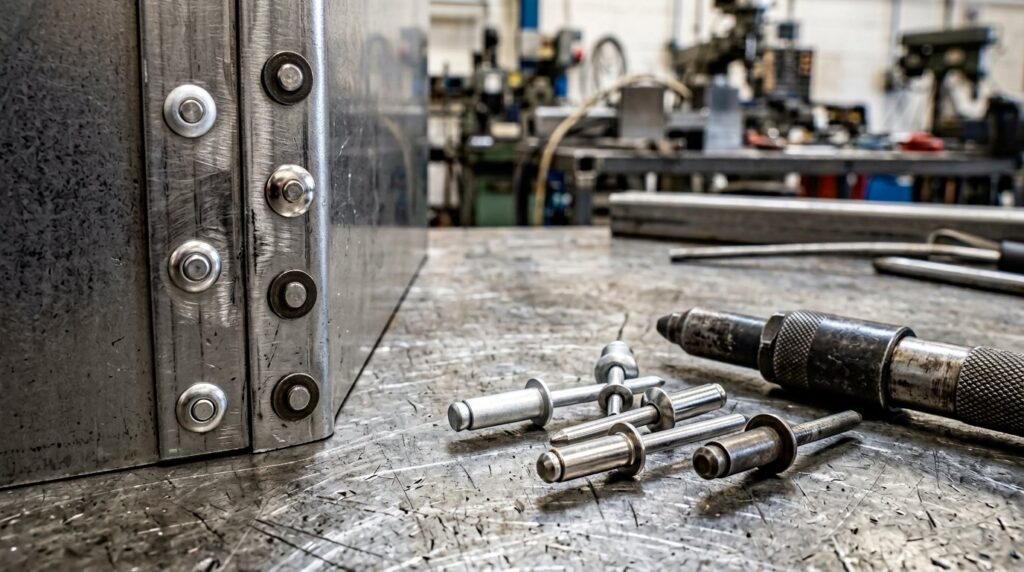
Drive rivets are mechanical fasteners designed to create a secure joint by driving a central pin or mandrel into the rivet body, causing the body to expand, deform, or lock according to the fastener’s design. Many versions are useful where access is available from only one side of an assembly, making them practical for sheet metal, signs, panels, automotive components, appliances, construction products, and other applications. Correct performance depends on matching the rivet diameter, grip range, material, head style, hole dimensions, and installation method to the joint.
Unlike conventional solid rivets that typically require access and tooling on both sides, many drive rivets can be installed with relatively simple tools. This can make assembly faster in suitable applications.
However, drive rivet is a broad term covering different designs. Manufacturer specifications should always take priority when joint strength, vibration, corrosion, structural safety, or regulatory compliance matters.
What Are Drive Rivets?
Drive rivets are fastening devices installed by inserting the rivet body into a prepared hole and then driving a central pin into the body.
The movement of the pin changes the rivet geometry so it grips or expands against the joined materials.
A typical drive rivet can contain:
• A tubular or partially tubular rivet body
• A head that remains on the accessible surface
• A central drive pin
• An expansion or deformation region
• A specified grip range
The precise construction varies by manufacturer and product family.
How Do Drive Rivets Work?
The rivet is first inserted through aligned holes in the components being joined.
A hammer or specified installation tool is then used to drive the pin to the position required by the fastener design.
As the pin moves, it can expand the rivet body or cause it to form a locking shape on the blind side.
The resulting deformation prevents the rivet from simply pulling back through the hole.
Are Drive Rivets Permanent?
Drive rivets are generally regarded as nonreusable mechanical fasteners.
Unlike a bolt and nut, they are not normally designed to be unscrewed and installed again.
Removal often requires drilling, cutting, punching, or another destructive process appropriate to the specific rivet.
9 Benefits of Drive Rivets
Drive rivets can offer significant manufacturing and installation advantages when correctly specified.
1. Fast Installation
A major advantage is installation speed.
Once the hole is prepared and components are aligned, the rivet can often be installed using a relatively simple driving operation.
This can be useful in repetitive manufacturing and field installation.
2. One Sided Access on Many Designs
Many drive rivets function as blind fasteners, meaning installation can be completed from the accessible side.
This is useful when the rear of a panel becomes inaccessible after assembly.
Verify the Exact Fastener Design
Not every fastener sold under a broad drive rivet category operates identically.
Check whether the selected product is specifically designed for blind installation.
3. Simple Installation Equipment
Certain drive rivets can be installed using a hammer or dedicated setting tool rather than complex riveting equipment.
Simple tooling can make field repairs and low volume assembly more practical.
4. No Thread Engagement Required
Drive rivets do not depend on conventional screw threads to develop their primary fastening action.
This eliminates problems such as stripped threads in applications designed specifically for riveting.
5. Useful for Thin Materials
Appropriately selected rivets can join sheet materials and panels where ordinary threaded fasteners may be inconvenient.
The correct grip range and joint design remain essential.
6. Resistant to Casual Loosening
Because there is no conventional threaded joint to rotate loose, drive rivets can be useful where a simple nonremovable connection is desirable.
This does not mean every drive rivet is automatically suitable for high vibration applications.
7. Multiple Material Options
Drive rivets can be manufactured using aluminium, steel, stainless steel, and other materials or combinations.
Material choice allows designers to balance strength, corrosion resistance, weight, and cost.
8. Different Head Styles
Manufacturers offer head configurations designed for different load distribution and appearance requirements.
Large flange designs, for example, can distribute force over a broader surface than smaller heads.
9. Suitable for High Volume Assembly
Their relatively straightforward installation can support efficient repetitive manufacturing.
Automated or specialized installation equipment may further increase productivity in suitable production environments.
Types of Drive Rivets
Understanding terminology is important because several related fasteners can look similar.
Hammer Drive Rivets
Hammer drive rivets are installed by striking the drive pin with a hammer or suitable tool.
Driving the pin causes the rivet body to expand or form its retaining shape.
They are frequently selected for light to moderate fastening applications depending on product specifications.
Blind Drive Rivets
Blind drive designs allow fastening when only the installation side is accessible.
This makes them useful for enclosed sections, panels, and assemblies where reaching the rear would be difficult.
Expansion Drive Rivets
Some rivets expand within or behind the mounting material as the pin is driven.
These can be useful in selected panel or substrate applications.
Plastic Drive Rivets
Plastic versions are widely used for trim, covers, automotive interior components, electronic housings, and lightweight panels.
They generally serve different mechanical requirements from metal drive rivets.
Drive Rivets vs Pop Rivets
Drive rivets and blind pop rivets can both support one sided installation, but their setting methods differ.
A conventional blind rivet uses a mandrel that is pulled using a rivet tool. The rivet body deforms, and the mandrel typically breaks at a designed point.
A drive rivet is generally set by driving its pin inward.
Which Is Better?
Neither fastener is universally superior.
Selection depends on:
• Required joint strength
• Material thickness
• Available access
• Installation equipment
• Appearance
• Corrosion requirements
• Production speed
• Removal needs
• Cost
Engineering requirements should determine the choice.
Drive Rivets vs Solid Rivets
Solid rivets have a solid shank and are commonly formed by deforming the tail to create a second head.
This usually requires access to both sides or specialized tooling arrangements.
Solid Rivet Advantages
Correctly designed solid riveted joints can provide substantial strength and are used in demanding engineering applications.
Installation, however, can require more equipment and access.
Drive Rivet Advantages
Drive rivets can simplify assembly because they frequently avoid the need to form a conventional shop head from the rear.
This convenience makes them particularly useful where joint requirements do not demand a traditional solid rivet.
Drive Rivets vs Screws
Screws and drive rivets serve overlapping but different needs.
When Screws May Be Preferable
Screws are useful when:
• Regular disassembly is required
• Components need adjustment
• Threaded replacement is practical
• Serviceability is important
A properly designed threaded fastener can be removed without destroying the fastener or surrounding material.
When Drive Rivets May Be Preferable
Drive rivets can be useful when assembly speed, one sided installation, simple tooling, and resistance to casual removal are priorities.
Common Drive Rivet Materials
Fastener material influences mechanical properties, corrosion behavior, and compatibility with joined components.
Aluminium Drive Rivets
Aluminium offers low weight and useful corrosion resistance in many environments.
It is commonly used for lightweight assemblies and panels.
Aluminium Limitations
Aluminium generally provides lower mechanical strength than many steel fasteners.
Exact shear and tensile capacities depend on alloy and fastener design.
Never substitute an aluminium rivet for a specified steel product without confirming engineering requirements.
Steel Drive Rivets
Steel can provide higher strength for demanding joints.
Coatings or plating may be used to improve corrosion resistance.
Coating Matters
Zinc and other protective finishes have finite performance.
Exposure to moisture, chemicals, salt, and weather should be considered when specifying the fastener.
Stainless Steel Drive Rivets
Stainless steel is often selected where enhanced corrosion resistance is important.
Different stainless grades provide different mechanical and corrosion properties.
Stainless Steel Is Not Corrosion Proof
Even stainless steel can corrode under certain chemical, marine, high chloride, or contaminated conditions.
Select material according to the actual service environment.
Plastic Drive Rivets
Plastic drive rivets provide a lightweight option for applications that do not need the strength of metal fasteners.
Automotive Trim
Plastic drive rivets are frequently used to retain trim panels, splash shields, liners, and interior components.
Specific automotive replacements should match the required dimensions and retaining geometry.
Electronics and Appliances
Plastic fasteners can also secure covers and lightweight panels.
Electrical properties, heat exposure, fire performance, and service conditions may matter in regulated products.
Drive Rivet Head Styles
Head geometry influences load distribution and appearance.
Standard Heads
A conventional head can suit many general fastening applications.
The manufacturer’s load information should be used when mechanical performance matters.
Large Flange Heads
Large flange heads distribute force across a wider area.
This can help when fastening relatively soft or thin materials.
Countersunk Heads
Countersunk rivets are intended for applications where a relatively flush surface is required.
The receiving hole must be appropriately prepared.
Do Not Countersink Arbitrarily
Removing material to create a countersink can weaken thin sheet.
Use a countersunk design only when the joint and material are suitable.
Drive Rivet Sizes Explained
Rivet sizing normally involves more than length alone.
Important characteristics include:
• Body diameter
• Hole diameter
• Grip range
• Body length
• Head diameter
• Head height
• Pin dimensions
Manufacturers typically publish dimensional data for each product.
What Is Grip Range?
Grip range describes the total material thickness over which a rivet is designed to form an appropriate joint.
For example, the combined thickness of two panels determines the grip the fastener needs to accommodate.
Why Grip Range Matters
A rivet that is too short may not engage properly.
A substantially oversized rivet can also form incorrectly or create an unsuitable joint.
Use the specified grip range rather than estimating from appearance.
How to Choose Drive Rivets
Begin with the joint requirements.
Calculate Total Material Thickness
Measure the combined thickness of all layers being fastened.
Compare this with the manufacturer’s published grip range.
Determine Required Strength
For engineered assemblies, determine expected shear, tension, vibration, and environmental loads.
Use verified manufacturer data or appropriate engineering calculations.
Include an Appropriate Safety Factor
Safety factors depend on application, failure consequences, material behavior, standards, and engineering practice.
Critical structures require qualified design rather than generic online recommendations.
Hole Size for Drive Rivets
Hole dimensions are important because the rivet must fit correctly before setting and develop appropriate expansion after driving.
Avoid Oversized Holes
A hole that is too large can reduce alignment, retention, and load transfer.
Avoid Undersized Holes
An undersized hole can prevent insertion or damage the rivet and surrounding material.
Follow Manufacturer Dimensions
Do not assume all rivets with the same nominal diameter require identical holes.
Use the technical drawing for the exact fastener.
How to Install Drive Rivets
Installation details vary, so product specific instructions should always take priority.
At a general level, the process involves preparing aligned holes, inserting the rivet, supporting the assembly appropriately, and driving the pin using the specified method.
Step 1: Prepare the Materials
Ensure components are correctly positioned and free from debris that would prevent proper seating.
Step 2: Drill the Correct Hole
Use the hole dimensions specified for the selected rivet.
Remove problematic burrs where required without unnecessarily enlarging the hole.
Step 3: Insert the Rivet
The rivet head should seat as intended against the workpiece.
Misalignment can lead to poor setting.
Step 4: Drive the Pin
Use the installation tool recommended by the fastener manufacturer.
Drive the pin to the specified final position rather than continuing to strike it unnecessarily.
Inspect the Completed Joint
Confirm that the head is properly seated, the pin has reached its intended position, and the materials are securely joined.
Critical installations can require formal inspection procedures.
Tools for Installing Drive Rivets
The simplest metal drive rivets may require little more than a suitable hammer and setting tool.
Production environments can use pneumatic, hydraulic, or automated equipment depending on the fastener.
Why Use a Setting Tool?
A correctly designed setting tool can improve alignment and reduce damage to the rivet head or surrounding surface.
Tool requirements should match the manufacturer’s recommendations.
How to Remove Drive Rivets
Most drive rivets are removed destructively.
The exact removal procedure depends on the rivet and surrounding material.
Common Removal Approaches
Professional removal may involve carefully drilling the rivet head, removing the pin, or using appropriate cutting or extraction methods.
Care is needed to avoid enlarging the original hole.
Wear Eye Protection
Metal drilling and cutting can create sharp chips.
Use appropriate personal protective equipment and safe working procedures.
Replace Removed Rivets
A removed drive rivet should normally be replaced rather than reused.
Select a replacement that satisfies the original joint specification.
Drive Rivets for Sheet Metal
Sheet metal is one of the most common applications for riveted fasteners.
Consider Bearing and Pull Through
Thin sheet can deform around a fastener under load.
Head size, material thickness, rivet geometry, and load direction therefore matter.
Dissimilar Metals
Using different metals in contact can create galvanic corrosion under suitable environmental conditions.
Material compatibility should be considered, particularly in wet or marine environments.
Automotive Drive Rivets
Vehicles use various rivet styles in trim, bodywork, shields, and other assemblies.
Use Correct Replacement Fasteners
Automotive rivets can be engineered for specific hole dimensions, panel thicknesses, and retention characteristics.
Match manufacturer specifications where safety or component retention is important.
Do Not Substitute Structural Fasteners Casually
A trim rivet should not replace a fastener used in a structural or safety critical automotive application.
Use manufacturer approved parts or technically validated alternatives.
Drive Rivets for Signs and Displays
Drive rivets can be useful for attaching signs, nameplates, panels, and displays.
Outdoor Signage
Outdoor installations need suitable corrosion resistance and substrate compatibility.
Wind loading and structural requirements can become significant on large signs.
Professional engineering may be required depending on sign size and local regulations.
Drive Rivets in Construction
Construction applications can include panels, sheet materials, signs, cladding related components, and specialized assemblies.
Building Code Requirements
A fastener being physically capable of joining two components does not mean it is approved for every building application.
Structural, façade, fire rated, or life safety assemblies may require tested and specified fastening systems.
Follow design documentation and applicable regulations.
Corrosion Resistance of Drive Rivets
Environmental exposure should influence fastener material and coating.
Indoor Dry Environments
Basic plated or coated fasteners may be sufficient depending on application.
Outdoor Environments
Rain, condensation, pollution, and temperature changes increase corrosion considerations.
Marine Environments
Salt exposure can be especially aggressive.
Choose materials and systems designed for the relevant environment rather than relying on the term corrosion resistant alone.
Common Drive Rivet Installation Mistakes
Most fastening problems begin with poor selection or preparation.
Common mistakes include:
• Using the wrong grip range
• Drilling an oversized hole
• Selecting incompatible materials
• Damaging the rivet during setting
• Failing to seat the head correctly
• Using inappropriate installation tools
• Ignoring corrosion conditions
• Reusing removed rivets
• Substituting rivets in structural applications without approval
• Assuming all drive rivets have identical strength
Technical data should guide installation.
How Strong Are Drive Rivets?
There is no single strength rating for all drive rivets.
Performance depends on:
• Rivet diameter
• Body material
• Pin material
• Rivet design
• Grip condition
• Joined material
• Hole quality
• Load direction
• Installation quality
Manufacturers can provide shear and tensile ratings for particular products.
Shear vs Tensile Loads
Shear loads act broadly across the fastener, while tensile loads attempt to pull the joined materials apart along the fastener axis.
Joint design must account for the relevant loading conditions.
How to Buy Drive Rivets
Industrial fasteners should be purchased by specification rather than appearance.
Information to Provide a Supplier
Have details about:
• Rivet type
• Diameter
• Grip range
• Material
• Head style
• Finish
• Quantity
• Substrate
• Service environment
• Required mechanical performance
For critical applications, also request technical documentation and applicable certification.
Frequently Asked Questions
What are drive rivets?
Drive rivets are mechanical fasteners set by driving a central pin into a rivet body, causing the body to expand or deform and secure joined materials.
Can drive rivets be installed from one side?
Many drive rivets are designed for blind or one sided installation, but exact installation requirements depend on the fastener design.
What materials are drive rivets made from?
Common materials include aluminium, steel, stainless steel, and plastics. Some products combine different materials for the body and drive pin.
Are drive rivets removable?
They are generally considered nonreusable fasteners. Removal commonly requires drilling, cutting, punching, or another destructive method appropriate to the product.
What size drive rivet do I need?
Select a rivet based on hole diameter, total material thickness, required grip range, loads, head style, materials, and manufacturer specifications.
Are drive rivets suitable for structural applications?
Only products specifically designed, tested, and approved for the relevant structural application should be used. Generic drive rivets should not be substituted into safety critical joints.
Conclusion
Drive rivets provide a fast and practical fastening method for sheet metal, panels, automotive components, signs, appliances, and many other assemblies. Their effectiveness depends on selecting the correct diameter, grip range, head style, material, hole size, and installation method rather than treating all rivets as interchangeable. Corrosion exposure and mechanical loads also need consideration when specifying a fastener. For structural or safety critical applications, manufacturer data, engineering requirements, and applicable standards should always govern the final selection.