
Choosing equipment manufacturers is one of the biggest decisions a business can make because it affects product quality, delivery timelines, safety compliance, total cost, and...
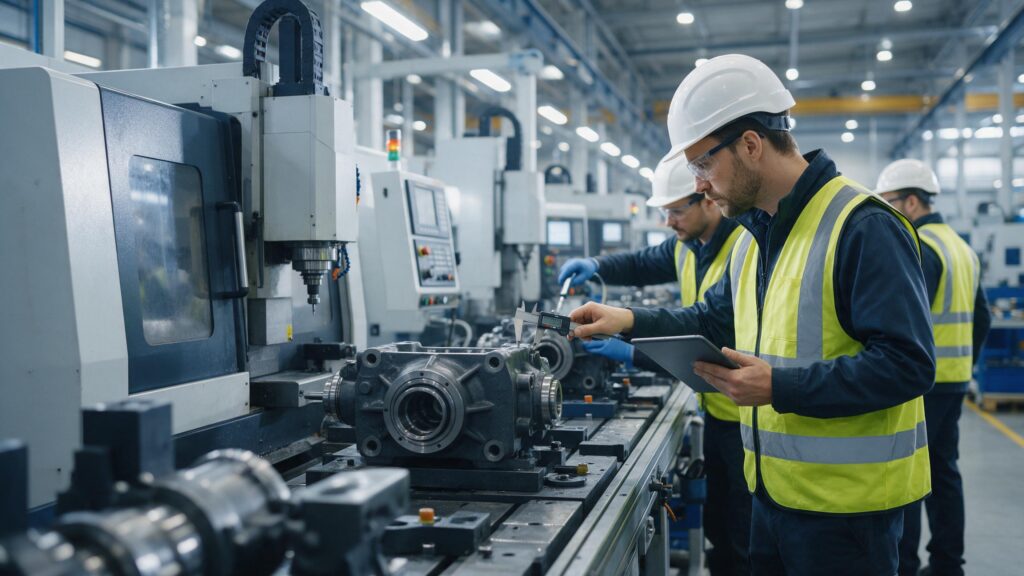
Choosing equipment manufacturers is one of the biggest decisions a business can make because it affects product quality, delivery timelines, safety compliance, total cost, and customer satisfaction. A great manufacturer helps you scale smoothly. A poor one can cause delays, defects, warranty headaches, and reputational damage that’s hard to undo.
This guide explains how equipment manufacturing partnerships work, how to compare suppliers, which questions to ask, what documents to request, and how to reduce risk—whether you’re sourcing industrial equipment, commercial machinery, or custom-built systems.
What Counts as “Equipment” in Manufacturing?
“Equipment” is a wide category. It can include:
- Industrial machines (packaging, filling, labeling, CNC, material handling)
- Construction equipment and attachments
- Agricultural equipment and implements
- Commercial kitchen equipment
- Medical and lab equipment (often highly regulated)
- HVAC and energy systems
- Pumps, compressors, generators, and power tools
- Custom automation cells, conveyors, and robotics setups
- OEM assemblies and subassemblies (frames, housings, enclosures)
The more complex and safety-critical the equipment, the more important your supplier evaluation becomes.
Types of Equipment Manufacturers (And Why It Matters)
Not all manufacturers provide the same service level. Knowing the type helps you set expectations.
OEM (Original Equipment Manufacturer)
An OEM builds equipment under its own brand or builds core products that others integrate into finished solutions.
Best for:
- Proven product lines
- Strong engineering support
- Long-term parts availability (when well established)
Contract manufacturer
A contract manufacturer builds to your design and specifications.
Best for:
- Companies with their own engineering or detailed requirements
- Scaling production without owning a factory
ODM (Original Design Manufacturer)
An ODM designs and manufactures equipment you can rebrand or lightly customize.
Best for:
- Faster time to market
- Private-label opportunities
- Standard platforms with customization options
Custom equipment builder / systems integrator
These manufacturers design and build specialized systems (often automation) for your process.
Best for:
- Unique production workflows
- Integration with sensors, PLCs, and software
- Turnkey projects with installation and commissioning
The Real Goal: Total Cost of Ownership (Not Just Purchase Price)
Many buyers focus on unit price. For equipment, that’s rarely the best metric.
Total cost of ownership includes:
- Freight, packaging, and import duties (if applicable)
- Installation and commissioning costs
- Consumables and routine maintenance
- Spare parts pricing and availability
- Downtime risk and service response times
- Training time and documentation quality
- Warranty coverage and claim process
- Energy consumption and operating efficiency
- Compliance and inspection costs
Two quotes can look similar, but one manufacturer may save you money for years through reliability and support.
Where to Find Equipment Manufacturers
You can source manufacturers through several channels. Each has tradeoffs.
Direct outreach and industry directories
Good for:
- Building a shortlist quickly
- Finding established manufacturers in a category
Tradeoff:
- Listings don’t prove performance; you still must vet thoroughly
Trade shows and industry events
Good for:
- Seeing equipment in person
- Meeting engineering and sales teams
- Comparing build quality and features side by side
Tradeoff:
- Travel and time costs
Referrals from technicians, installers, and maintenance teams
Good for:
- Real-world feedback on reliability
- Learning who supports parts and service well
Tradeoff:
- Referrals can be biased toward familiar brands
Existing supply chain relationships
Good for:
- Faster onboarding and trust
- Easier payment and logistics setup
Tradeoff:
- May limit competitive options if you don’t benchmark
How to Vet Equipment Manufacturers: A Step-by-Step Checklist
A strong vetting process protects you from surprises.
Step 1: Confirm capability and fit
Start with basic qualification:
- Do they build the equipment type you need?
- Can they meet your output specs (capacity, tolerances, duty cycle)?
- Do they support your required power standards and controls?
- Can they ship to your region and support service there?
- Do they offer customization, or is it mostly standard catalog?
If a manufacturer says “yes” to everything without asking questions, that’s often a warning sign.
Step 2: Review quality systems and documentation
For equipment manufacturers, quality is both product and process.
Ask for:
- Quality management approach (inspection steps, traceability)
- Incoming material checks
- In-process inspection points
- Final acceptance testing (FAT) procedure
- Calibration practices for measurement tools
- Nonconformance handling (how defects are documented and corrected)
Strong suppliers can explain their process clearly and consistently.
Step 3: Validate compliance and safety requirements
Depending on your industry, you may need specific compliance.
Examples include:
- Electrical safety standards
- Machine guarding and safety interlocks
- Pressure vessel requirements
- Food-contact material requirements (for food equipment)
- Cleanability and sanitation design principles
- Noise, emissions, or workplace safety requirements
Request:
- Compliance declarations (where applicable)
- Safety features list
- Manuals with warnings and maintenance instructions
If compliance is critical, consider requiring third-party testing or certification as part of the contract deliverables.
Step 4: Ask for references and similar projects
Good equipment manufacturers should be able to show:
- Similar models in the field
- Typical applications
- Support approach after delivery
When you speak with references, ask:
- Did delivery match the promised lead time?
- How many issues appeared during first 90 days?
- How fast did the manufacturer respond?
- Were spare parts available quickly?
- Was documentation accurate and useful?
Step 5: Perform an audit (remote or on-site)
For high-value or high-risk projects, an audit is worth it.
What to evaluate:
- Production organization and cleanliness
- Welding, machining, assembly quality
- Storage of parts and handling of sensitive components
- Testing area and test records
- Staff skill level and supervision
- Serial number tracking and labeling discipline
Even a structured video audit can reveal a lot if you can’t travel.
RFQ and RFP: What to Include When Requesting Quotes
Clear requests lead to accurate quotes. Vague requests create change orders.
Minimum RFQ information
Include:
- Equipment purpose and application
- Required capacity/output rate
- Materials handled (and any special properties like abrasiveness or corrosion)
- Operating conditions (temperature, humidity, washdown, dust)
- Space constraints and layout needs
- Power requirements (voltage, phase, frequency)
- Controls preferences (HMI/PLC brand, safety circuits, sensors)
- Integration needs with existing equipment
- Required documents (drawings, manuals, spare parts list)
- Testing and acceptance criteria
- Delivery timeline and site location
Ask for quote structure that supports comparison
Request pricing broken down into:
- Base machine cost
- Options and upgrades
- Installation/commissioning (if offered)
- Training
- Spare parts kit pricing
- Warranty terms
- Shipping and packaging method
This makes apples-to-apples comparison possible.
Lead Times: How to Evaluate What’s Realistic
Lead times vary by complexity, capacity, and supply chain stability.
Ask:
- What is the current backlog?
- Which parts are long-lead (motors, drives, bearings, PLCs)?
- Is the quoted date based on material availability today or assumptions?
- What happens if a key component is delayed?
- Do they keep critical components in stock?
A good manufacturer will explain the schedule drivers and offer options (alternate components, phased delivery, expedited build where possible).
Engineering and Customization: Avoiding Scope Creep
Custom equipment projects often go over budget when requirements are unclear.
Control customization with a change process
Include in your agreement:
- A baseline specification document
- A clear definition of “included” vs “optional” features
- A change order process (price + lead time impact + approval steps)
Ask for drawings and review milestones
Typical checkpoints:
- Concept layout approval
- Detailed engineering drawings approval
- Electrical schematics approval
- Software/controls review (if applicable)
Written approvals reduce misunderstandings later.
Quality Assurance: Acceptance Testing That Protects You
Don’t rely on “it worked in the factory.” Define how success is measured.
Factory Acceptance Test (FAT)
A FAT plan often includes:
- Safety checks (guards, emergency stops, interlocks)
- Output verification (cycle time, throughput)
- Product quality checks (tolerances, repeatability)
- Electrical and controls verification
- Sensor and alarm testing
- Documentation handoff (manuals, drawings, spares list)
Site Acceptance Test (SAT)
If the equipment must integrate on your site:
- Verify performance with real materials and real operators
- Validate integration with upstream/downstream equipment
- Confirm training and maintenance readiness
If performance targets are contractual, tie final payment milestones to acceptance criteria where appropriate.
Service, Spare Parts, and Warranty: Where Many Deals Fail
The equipment can be great, but support can be weak. Confirm service capability early.
Ask:
- Is phone/video support available during commissioning?
- Do they offer on-site service in your region?
- What are typical response times?
- Do they provide a recommended spare parts kit?
- Are spare parts proprietary or standard off-the-shelf?
- How long do they commit to supporting the model?
Warranty details to clarify
- What is covered (parts, labor, travel)?
- What voids the warranty (improper installation, misuse, third-party modifications)?
- How are warranty claims handled (documentation required, timelines)?
- Are consumables excluded?
A “12-month warranty” is not very useful if the claim process is unclear.
Domestic vs Overseas Equipment Manufacturers
This decision affects cost, speed, communication, and risk.
Domestic sourcing advantages
- Easier communication and time zone alignment
- Faster service and parts shipping
- Easier site visits and audits
- Often simpler compliance alignment
Overseas sourcing advantages
- Potentially lower unit cost
- More supplier options in some categories
- Large-scale production capability
Risks to manage with overseas sourcing
- Longer shipping and customs timelines
- More complex warranty service logistics
- Language barriers and spec interpretation risk
- Higher cost of rework if something is wrong
- Payment terms and contract enforcement complexity
If you source overseas, prioritize detailed specs, documented testing, strong packaging requirements, and clear incoterms and responsibility boundaries.
Pricing Models You’ll See (And How to Negotiate Fairly)
Equipment pricing may be:
- Standard catalog pricing with option packages
- Project-based pricing for custom systems
- Volume-based pricing for repeat builds
- Service-inclusive pricing (equipment + installation + training)
Negotiation tips that often work better than pushing for a lower number:
- Ask for a better warranty or faster parts shipping
- Ask for a spare parts kit included
- Ask for additional training sessions
- Request performance guarantees tied to acceptance tests
- Reduce cost by standardizing options rather than heavy customization
Your best leverage is clarity: the more defined your needs, the more competitive quotes become.
Red Flags When Evaluating Equipment Manufacturers
Watch for these warning signs:
- They won’t provide detailed specs or testing plans
- They avoid written commitments on lead time or deliverables
- Quotes are vague (“includes everything needed”)
- They pressure you to pay large amounts upfront without milestones
- Documentation is weak or full of inconsistencies
- They can’t explain how they handle defects and rework
- They promise unrealistic performance or “zero downtime”
- They don’t ask questions about your application (they should)
If you see multiple red flags, move on early.
How to Build a Long-Term Partnership (Not a One-Off Purchase)
The best outcomes come when you treat the manufacturer as a long-term supplier relationship.
Share feedback early and clearly
After installation, provide:
- Operator feedback
- Maintenance issues
- Performance data (throughput, rejects, downtime causes)
Good manufacturers use this to improve future builds.
Standardize where possible
If you plan multiple units:
- Standardize sensors, motors, PLC/HMI platforms
- Standardize spare parts lists
- Standardize documentation formats
Standardization improves reliability and reduces training time.
Keep a service and parts plan
Decide:
- Which spares you stock on-site
- Which spares the manufacturer must stock
- What your maximum acceptable downtime is
- How service calls are escalated
This prevents panic when something fails.
A Simple “Best-Fit Manufacturer” Scorecard (Use This for Shortlisting)
To compare equipment manufacturers objectively, score each supplier 1–5 on:
- Technical capability for your application
- Quality system maturity and testing discipline
- Compliance and safety alignment
- Lead time realism and schedule transparency
- Documentation quality
- Service coverage and spare parts availability
- Communication clarity and responsiveness
- Total cost of ownership (not just price)
The best supplier is often the one with balanced strength across the scorecard, not the cheapest quote.
Conclusion
Choosing equipment manufacturers is a business decision that impacts safety, production stability, and long-term costs—not just the day you sign a purchase order. Focus on fit, testing discipline, documentation, and after-sales support as much as upfront pricing. With a clear RFQ, defined acceptance tests, realistic lead time planning, and a structured supplier evaluation, you can select a manufacturer that delivers reliable equipment and supports you long after installation.
6. FAQs
What do equipment manufacturers typically produce?
Equipment manufacturers produce machines and systems used in industries like manufacturing, construction, agriculture, energy, food processing, and logistics—ranging from standard equipment to custom automation.
How do I compare equipment manufacturers effectively?
Use a checklist that includes capability fit, quality control process, compliance readiness, lead times, warranty terms, service support, spare parts availability, and total cost of ownership.
Should I choose local or overseas equipment manufacturers?
Local manufacturers can simplify service, audits, and communication. Overseas equipment manufacturers may offer lower pricing or more options, but shipping, support, and compliance risks can be higher.
What documents should I request from equipment manufacturers before buying?
Request detailed specifications, drawings (as applicable), a testing and acceptance plan, manuals, a spare parts list, warranty terms, and a clear scope of what’s included in the quote.
How can I reduce risk when buying custom equipment?
Define requirements clearly, use a milestone-based approval process, require factory acceptance testing, plan site acceptance testing, and include a formal change order process.
What are common red flags with equipment manufacturers?
Red flags include vague quotes, unclear testing, unrealistic lead times, weak documentation, pressure for large upfront payments without milestones, and poor transparency about service and parts.
How important is after-sales support for industrial equipment?
It’s critical. Strong after-sales support reduces downtime, speeds repairs, ensures spare parts access, and makes the total cost of ownership more predictable.