
Generative image editing is making visual experimentation possible without the time or technical skills traditionally associated with professional photo manipulation. Instead of manually masking faces,...
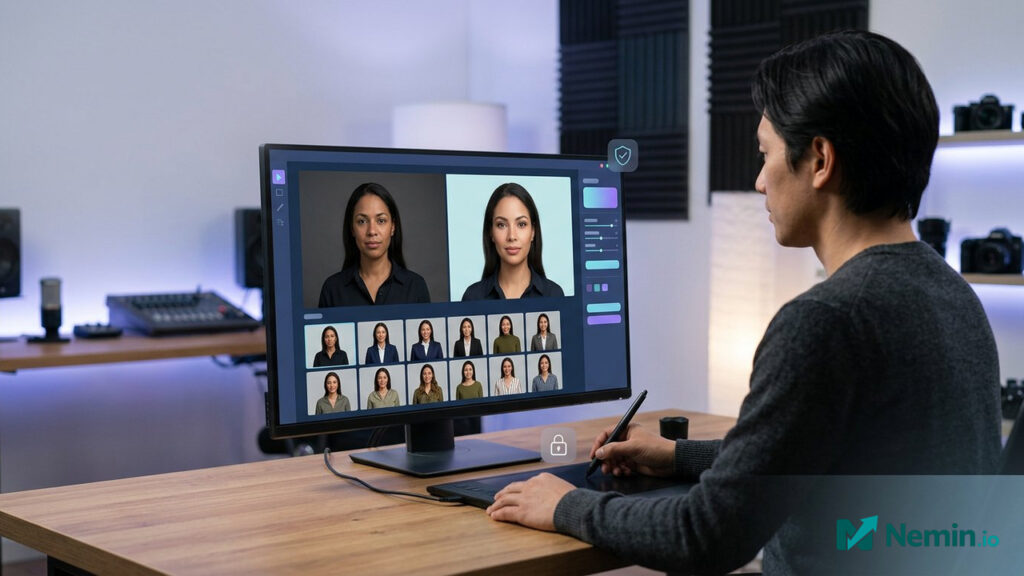
Generative image editing is making visual experimentation possible without the time or technical skills traditionally associated with professional photo manipulation. Instead of manually masking faces, rebuilding clothing, matching shadows, and adjusting textures, users can increasingly ask AI systems to perform much of this work automatically. Face Swap and AI Clothes Changer tools combine two particularly popular capabilities: replacing a face in an existing image and visualizing different clothing on a person. Used appropriately, they can support entertaining social images, outfit concepts, marketing mock-ups, profile-photo experiments, e-commerce workflows, and creative production. Their convenience also comes with responsibilities involving consent, privacy, identity, misleading imagery, intellectual property, and realistic expectations about what an AI-generated picture actually represents.
The strongest results come from treating these tools as visual editing systems rather than assuming every generated output is an accurate photograph of a real event, person, or product.
What Are Face Swap and AI Clothes Changer Tools?
Face-swapping software analyzes facial characteristics in source and target images and attempts to integrate one identity into another photograph while preserving features such as pose, lighting, and perspective.
An AI clothes changer performs a related but different task. It modifies or regenerates a person’s clothing while attempting to preserve the individual, body position, surrounding scene, and other relevant visual details.
Modern generative models can make these edits look substantially more natural than basic image overlays because they can synthesize pixels that were not present in the original photograph.
How Face Swap and AI Clothes Changer Technology Works
The exact architecture varies among products, but tools may combine computer vision, segmentation, facial analysis, diffusion models, generative neural networks, or virtual try-on techniques.
The system first needs to understand which region of the image should change and what should remain consistent.
For clothing changes, this can involve identifying a person’s body, garment boundaries, arms, hair, and surrounding objects. Face-swapping systems need to reconcile identity characteristics with head angle, expression, skin appearance, and lighting.
The more complex the original image, the harder these tasks become.
1. Face Swap and AI Clothes Changer for Creative Portraits
Creative portraits are one of the simplest applications.
Users can experiment with different fashion styles, visual themes, backgrounds, or character-inspired aesthetics without arranging several physical photoshoots.
A creator might test how a formal portrait looks with different wardrobe styles or produce playful fictional scenes using images of consenting participants.
Better Portraits With Face Swap and AI Clothes Changer
High-quality source material usually helps.
Use clear images where the face is visible, reasonably well lit, and not heavily obscured by hair, hands, glasses, or other objects unless the tool specifically handles those conditions well.
For clothing changes, images that clearly show the relevant portion of the body typically provide the model with more usable information.
AI can still make errors, so examine facial details, hands, garment edges, jewellery, and backgrounds before publishing.
2. Explore Outfit Concepts Before a Photoshoot
Professional photography can involve models, wardrobe selection, stylists, studio time, travel, and post-production.
AI clothing visualization can help teams explore concepts before committing to production.
Face Swap and AI Clothes Changer for Pre-Production
A marketing team might compare formal, business-casual, seasonal, or color-specific wardrobe directions during mood-board development.
These images can help stakeholders communicate what they prefer before garments are sourced.
However, concept visualization should not be mistaken for an exact preview of a real garment.
AI may invent seams, textures, buttons, colors, or fit. If the final campaign promotes a particular product, businesses should ensure the published representation accurately reflects what customers can actually buy.
3. Create More Consistent Professional Profile Concepts
Businesses often want employee imagery to follow a consistent visual style.
AI editing can help explore common backgrounds, wardrobe categories, and framing before a final photography process.
A Face Swap and AI Clothes Changer workflow may also help users visualize whether a particular professional style fits the intended context.
For formal identity documents, professional licensing, background checks, or other verification processes, users should follow the relevant authority’s photo rules rather than assuming an AI-edited portrait is acceptable.
Professional-looking imagery and identity-verification photography serve different purposes.
4. Face Swap and AI Clothes Changer for Marketing Concepts
Marketing Uses for Face Swap and AI Clothes Changer
Generative editing can accelerate early creative exploration for advertisements, landing pages, presentations, social campaigns, and storyboards.
Instead of producing a complete photoshoot for every early concept, designers can generate variations and determine which creative direction deserves further investment.
This can be useful for:
- Campaign mock-ups
- Storyboards
- Presentation concepts
- Social creative drafts
- Wardrobe exploration
- Audience testing
- Internal design reviews
Commercial teams still need to consider licensing, model releases, brand rights, and the terms governing the AI service being used.
A technically impressive image is not automatically cleared for commercial use.
5. Use AI Clothes Changer Tools for Virtual Fashion Experiments
Virtual clothing is becoming an important application of generative image technology.
Consumers may want to visualize broad outfit styles, while fashion businesses can use synthetic imagery for design ideation.
Face Swap and AI Clothes Changer for Virtual Try-On
It is important to distinguish a general AI clothing transformation from specialized virtual try-on technology.
A generative clothing tool may create something visually similar to an uploaded garment while changing details. It might also produce unrealistic draping or proportions.
A purpose-built virtual try-on system may be designed to preserve product characteristics more carefully, but even those systems have limitations.
Consumers should not assume that AI can predict exact physical fit from a single photograph.
6. Generate Social Media Content Responsibly
Face swapping is popular for humorous or imaginative social content because it can produce striking images quickly.
The ethical issue is straightforward: changing someone’s identity in a realistic picture can mislead viewers or violate the subject’s expectations if performed without permission.
Responsible Face Swap and AI Clothes Changer Use
Use images of yourself or people who have appropriately agreed to the intended edit.
Do not use realistic face swaps to impersonate people, fabricate endorsements, manufacture evidence, harass individuals, or falsely depict someone engaging in conduct that never occurred.
Public figures and celebrities also present publicity, deception, and platform-policy considerations.
When a synthetic image could reasonably mislead viewers about a material fact, clear contextual disclosure can reduce confusion.
7. Improve E-Commerce Creative Workflows
Online retailers need significant volumes of product imagery.
AI-assisted editing may help create internal concepts, experiment with styling, or streamline selected visual workflows.
E-Commerce Face Swap and AI Clothes Changer Applications
Potential applications include:
- Styling concepts
- Outfit combinations
- Background variations
- Regional campaign concepts
- Creative testing
- Internal merchandise planning
Accuracy becomes particularly important when images are shown to customers.
A generated picture should not materially misrepresent garment color, construction, design, included accessories, or product features.
Consumer trust is more important than producing a perfectly polished synthetic image.
8. Reduce Repetitive Editing Work
Traditional image compositing can involve selections, masks, color correction, perspective adjustments, relighting, and retouching.
Generative tools can automate portions of this work.
For professional creators, this does not necessarily eliminate conventional editing software. Instead, AI can become another stage in the workflow.
A designer may generate a variation using Face Swap and AI Clothes Changer technology, then use standard image-editing tools to correct details, adjust colors, manage layers, or prepare production files.
Human review remains particularly important when images represent a real company, employee, customer, or product.
How to Get Better Face Swap Results
Source-image compatibility matters.
A source face photographed directly from the front may not blend naturally into a target image showing an extreme side angle. Large differences in lighting, image resolution, facial expression, or camera perspective can also reduce realism.
For better results, choose photographs with relatively similar:
- Head angles
- Lighting direction
- Resolution
- Facial visibility
- Expression
- Image sharpness
Inspect the generated result at full size.
Typical errors can appear around hairlines, ears, teeth, glasses, facial boundaries, and shadows.
How to Get Better AI Clothing Results
Clothing generation has its own challenges.
Hands may overlap a shirt, long hair may cover a collar, a handbag may intersect a coat, or crossed arms may hide much of a garment.
Clear source images simplify the model’s task.
Prompts or selections should specify relevant characteristics such as garment category, color, approximate fabric appearance, sleeve length, neckline, and styling.
If the goal is to reproduce a specific real product, compare the generated output closely with authoritative product photography before using it publicly.
Privacy Risks of Face Swap and AI Clothes Changer Platforms
Privacy When Using Face Swap and AI Clothes Changer Tools
Uploading a portrait means providing biometric-like visual information to a third-party service.
Before using a platform, examine how it stores uploaded photographs, generated images, account data, and metadata.
Useful questions include:
- How long are uploads retained?
- Can users delete their data?
- Are images used to improve models?
- Who are the subprocessors?
- Is data shared with third parties?
- Are enterprise privacy controls available?
- What rights does the service claim over uploaded and generated content?
Avoid uploading confidential client photographs or other sensitive material unless the organization’s policies and the service’s contractual terms permit it.
Consent and Deepfake Concerns
Face swaps overlap technically with the broader category of synthetic or deepfake media.
The technology itself has many benign creative applications, but realistic identity manipulation can also be abused.
Consent is especially important for intimate, sexualized, defamatory, deceptive, or exploitative depictions. Such material can cause serious harm and may violate laws or platform rules.
Businesses should create clear internal policies describing whose images can be edited, what authorization is needed, how files are stored, and where synthetic media can be published.
For children and other sensitive contexts, additional privacy, safeguarding, and legal considerations may apply.
Face Swap and AI Clothes Changer vs. Traditional Photoshop Editing
Traditional editing provides detailed control, while generative AI prioritizes speed and automation.
Manual compositing may be preferable when pixel-level accuracy, precise product representation, exact branding, or repeatable commercial output is required.
AI tools are particularly strong during rapid exploration.
A hybrid process often offers the best balance: generative systems create initial options, and skilled editors refine selected images.
Neither workflow guarantees factual or visual accuracy without review.
Choosing the Best Face Swap and AI Clothes Changer
Evaluating a Face Swap and AI Clothes Changer Platform
The best platform depends on the intended use.
Evaluate output quality, identity consistency, clothing realism, processing time, image resolution, editing controls, data retention, commercial-use terms, pricing, watermark policies, and customer support.
For businesses, API availability, team administration, security controls, and processing agreements may also matter.
Free tools can be adequate for casual experiments, but users should not assume that “free” means photographs are handled under terms appropriate for confidential or commercial work.
Read current policies before uploading sensitive material.
How AI Images Should Be Reviewed Before Publishing
Generative AI can create subtle errors that become obvious only after publication.
Check faces, fingers, jewellery, garment edges, patterns, buttons, typography, shadows, reflections, and background objects.
Also perform a factual review.
Ask whether the image falsely implies a real event, endorsement, product feature, professional qualification, or customer experience.
Visual quality and truthfulness are separate standards, and professional content should satisfy both.
Frequently Asked Questions
1. What is Face Swap and AI Clothes Changer technology?
Face Swap and AI Clothes Changer technology uses AI to replace facial identity and digitally modify clothing while attempting to preserve the rest of an image.
2. Can Face Swap and AI Clothes Changer create professional images?
Yes, these tools can create useful professional concepts and marketing visuals, but outputs should be reviewed for visual errors, accuracy, consent, and commercial-use rights.
3. Is Face Swap and AI Clothes Changer safe to use?
Safety depends on the service and use case. Review privacy policies, protect sensitive photos, use consented images, and avoid deceptive or harmful identity manipulation.
4. Can a Face Swap and AI Clothes Changer show exactly how clothes will fit?
Not necessarily. General generative tools can approximate appearance but may alter product details or body proportions and should not be treated as exact fit prediction.
5. Can businesses use Face Swap and AI Clothes Changer images commercially?
Potentially, but businesses should review the platform’s commercial terms as well as model releases, image rights, brand rights, and relevant advertising requirements.
6. How do I get better Face Swap and AI Clothes Changer results?
Use high-quality images with clear faces and bodies, compatible lighting and angles, specific editing instructions, and careful human review of the final output.
Conclusion
Generative image editing is making sophisticated visual experimentation accessible to people who may have little experience with conventional compositing software. Face Swap and AI Clothes Changer technology can help users develop creative portraits, explore wardrobe ideas, prepare marketing concepts, test fashion directions, and accelerate repetitive visual-production tasks. Its usefulness is greatest when speed is combined with careful review. AI can invent clothing details, distort anatomy, change identity characteristics, or produce scenes that look more factual than they really are. Users should therefore obtain appropriate consent, understand how platforms handle uploaded photographs, verify commercial rights, and avoid using realistic synthetic imagery for impersonation or deception. With those safeguards in place, face swapping and virtual clothing tools can serve as practical additions to both casual creativity and professional image-production workflows.