
Gaymetu E appears to be an emerging, niche or context-dependent term rather than a widely documented gaming platform, company or established concept with one authoritative definition....
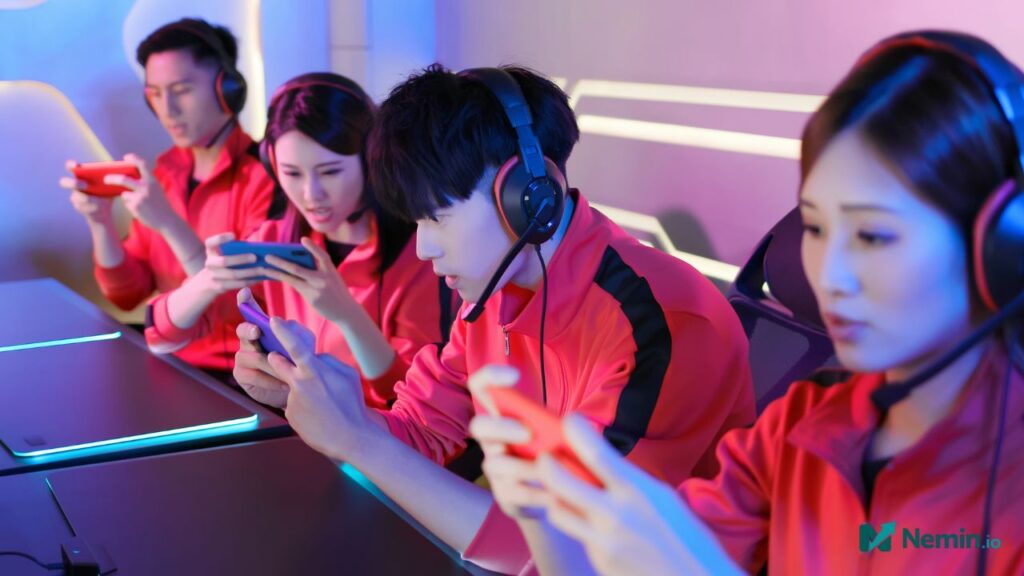
Gaymetu E appears to be an emerging, niche or context-dependent term rather than a widely documented gaming platform, company or established concept with one authoritative definition. In the context of inclusive interactive gaming, it can provide a useful starting point for examining how games are becoming spaces for representation, social connection and community entertainment, but it would be inaccurate to invent a company history, features or user statistics that cannot be independently established.
The conversation around Gaymetu E is especially relevant because modern gaming extends far beyond playing through a story alone. Multiplayer worlds, community servers, livestreaming, character customisation and social platforms now allow people to interact across countries and identities. For LGBTQ+ players in particular, inclusive design can create opportunities for self-expression and belonging, although harassment, privacy risks and inconsistent moderation remain significant challenges.
What Is Gaymetu E
At present, Gaymetu E does not appear to have a broadly established definition comparable with recognised gaming terms such as esports, massively multiplayer online games, role-playing games or cloud gaming.
Its unusual spelling could indicate an emerging online phrase, a stylised name, a niche community reference or a term whose intended meaning exists only within a particular context. Without reliable primary documentation, those possibilities should remain possibilities rather than being presented as facts.
For this article, Gaymetu E is explored through the context provided: the rise of inclusive interactive gaming and community entertainment.
That distinction allows the topic to be examined meaningfully without falsely claiming that Gaymetu E has verified features, founders, launch dates, membership numbers or commercial services.
Why Gaymetu E Needs Context
Search engines encourage us to believe that every phrase has a fixed definition waiting to be found.
Internet culture does not always work that way. Terms can circulate as usernames, hashtags, project names or community expressions long before dictionaries or mainstream publications document them.
Gaymetu E demonstrates why context should come before certainty.
If readers encounter the term on a particular website or social platform, the most reliable explanation should come from that source’s own documentation and corroborating evidence.
Why Inclusive Gaming Matters
Video games are a major form of entertainment, storytelling and social interaction.
Players do not only control characters. They form friendships, join teams, build virtual spaces, participate in fandoms and create their own content.
This social dimension makes inclusion consequential.
When a game provides a broad range of characters, relationships and customisation options, more players may be able to participate without feeling that the game assumes one universal identity or life experience.
Gaymetu E, as framed by the supplied context, belongs within this broader conversation about who gets represented and who feels welcome in digital spaces.
7 Insights Gaymetu E Raises About Inclusive Interactive Gaming
The evolution of inclusive gaming involves game design, storytelling, online communities and platform governance. Seven themes are especially useful for understanding where interactive entertainment is heading.
1. Gaymetu E Highlights the Importance of Representation
Representation involves more than inserting a diverse character into a game.
Players notice whether characters have meaningful personalities, motivations and roles or exist primarily as stereotypes.
LGBTQ+ representation has expanded across parts of the gaming industry, although quality and visibility vary substantially between titles and markets.
A thoughtful game can allow identity to exist naturally within a larger narrative.
Within the Gaymetu E context, representation should therefore be understood as meaningful participation rather than a checklist.
2. Inclusive Games Can Give Players More Freedom
Interactive entertainment differs from film because players frequently make choices.
Character creators can let users select appearance, voice, clothing and other identity-related characteristics. Role-playing games can sometimes provide relationship options or dialogue choices that accommodate different identities.
This flexibility can matter because players are not forced to experience every game through the same predefined protagonist.
Gaymetu E points toward a model of entertainment where personalisation can support wider participation.
Not every game needs unrestricted character creation, however. A tightly authored game may intentionally follow one specific character’s story.
Inclusivity and creative specificity can coexist.
3. Gaymetu E Reflects Gaming’s Social Evolution
Gaming was once commonly portrayed as an isolated activity.
Modern gaming often involves highly social ecosystems.
Players communicate through voice, text, community servers, streaming platforms and social media. Some friendships begin entirely through shared digital experiences.
This makes community behaviour part of the entertainment product.
An inclusive title can still produce an exclusionary experience if its community spaces are poorly moderated.
Any concept associated with Gaymetu E therefore needs to consider social systems alongside game content.
4. Community Entertainment Can Reduce Geographic Isolation
Someone living in an area with a small LGBTQ+ population may have limited access to local community spaces.
Online gaming can provide connections that are not limited by geography.
Shared interests can also make interaction easier because players begin with something to do together rather than needing to initiate conversation solely around identity.
This can make inclusive gaming communities valuable.
Yet Gaymetu E should not be framed as a guaranteed solution to loneliness. Online environments vary in quality, and digital friendships do not automatically replace offline support.
5. Gaymetu E Raises the Importance of Moderation
Inclusion is not achieved through visual representation alone.
Multiplayer spaces can contain harassment, hate speech, targeted abuse and griefing. LGBTQ+ players can become targets when identity is visible through profiles, voice chat or community participation.
Effective moderation requires more than a rule saying harassment is prohibited.
Platforms need usable reporting systems, enforcement mechanisms, appropriate penalties and ways to prevent repeated abuse.
The broader Gaymetu E concept is strongest when safety and inclusion are treated as infrastructure rather than promotional language.
6. Accessibility Expands What Inclusion Means
Inclusive gaming should also consider disability.
Subtitles, remappable controls, scalable text, colour-vision options, difficulty settings and alternative input methods can make games accessible to more people.
Accessibility and LGBTQ+ representation address different needs, but both challenge the assumption that every player experiences a game in the same way.
Gaymetu E can therefore be understood within a broader inclusive-design philosophy.
A diverse player community includes differences in physical, sensory and cognitive ability alongside identity and background.
7. Gaymetu E Shows Why Community Participation Matters
Developers cannot anticipate every player experience internally.
Community feedback can reveal accessibility problems, harmful stereotypes and moderation weaknesses that may not have been obvious during development.
The strongest feedback systems do not mean players control every creative decision.
They allow developers or community operators to understand how design decisions function in practice.
If Gaymetu E develops as an identifiable platform or project, transparent communication with its actual community would be more meaningful than simply describing itself as inclusive.
LGBTQ+ Representation in Video Games
Representation in games has changed substantially over decades.
Earlier LGBTQ+ characters were sometimes coded indirectly, used primarily as jokes or omitted entirely. Contemporary games increasingly include openly LGBTQ+ protagonists, supporting characters and relationship possibilities.
Progress remains uneven.
A character can be technically representative while still being poorly written.
Players generally respond to multidimensional characters more positively than identities treated only as marketing features.
Gaymetu E provides an opportunity to emphasise that inclusion should improve storytelling rather than substitute for it.
Inclusive Characters Need Full Personalities
A compelling LGBTQ+ character needs what any compelling character needs: motivations, strengths, weaknesses, relationships and a meaningful place within the story.
Sexual orientation or gender identity can be relevant without becoming the character’s sole defining characteristic.
This balance helps avoid tokenism.
In an inclusive gaming framework associated with Gaymetu E, diversity should widen the range of human stories available rather than compress characters into labels.
Good writing remains the foundation.
Player Choice and Identity
Character customisation can give players opportunities to create avatars closer to themselves or deliberately unlike themselves.
Both choices are legitimate.
Some people use games to explore identity privately. Others simply enjoy experimenting with aesthetics and role-play.
Gaymetu E can be associated conceptually with this freedom of expression, provided the system does not pressure users to disclose personal information.
An avatar is not necessarily a declaration about the person controlling it.
That distinction is important for both privacy and social interaction.
Pronouns and Character Creation
Some modern games allow players to select pronouns independently of other avatar characteristics.
This can provide greater flexibility and reduce assumptions built into character systems.
Implementation needs to be technically consistent.
If a game offers pronoun selection but dialogue repeatedly uses the wrong language, the feature can feel incomplete.
Within a Gaymetu E style of inclusive design, identity features should work throughout the actual experience rather than appearing only on a creation screen.
Relationship Systems
Role-playing and simulation games often allow players to form fictional romantic relationships.
Inclusive systems can offer choices beyond heterosexual pairings.
Some games allow characters to form relationships regardless of player gender, while others write characters with specific orientations.
Both approaches can support representation when handled thoughtfully.
Gaymetu E does not require every fictional character to be available romantically to every player.
Diverse character identities can themselves contribute to a believable world.
Inclusive Gaming Without Stereotypes
Stereotypes are shortcuts.
They can reduce characters to exaggerated assumptions about gender expression, voice, fashion or behaviour.
Comedy is not inherently incompatible with inclusion, but humour repeatedly directed at an identity rather than a situation can become demeaning.
Gaming communities discussing Gaymetu E should evaluate whether representation gives characters agency.
The question is not simply whether LGBTQ+ people appear, but how the game treats them once they do.
Interactive Gaming as Community Entertainment
The meaning of game has expanded.
Players now attend virtual concerts, participate in user-created worlds, watch streams and spend time in social spaces where traditional gameplay may be secondary.
This makes community entertainment an increasingly useful category.
Gaymetu E can be discussed within this transition from games as discrete products toward games as ongoing social environments.
The shift also increases platform responsibility.
A social environment requires moderation, privacy and community standards in ways that a purely offline single-player game does not.
Multiplayer Communities and Belonging
Team-based games can create strong social bonds because players cooperate toward shared objectives.
Guilds, clans and community servers can become persistent social groups.
Inclusive communities can help players participate without hiding important parts of themselves.
However, groups can also become exclusionary.
Gaymetu E related spaces should therefore be evaluated by actual member experiences and moderation practices rather than mission statements alone.
Community culture is what members repeatedly do, not what a homepage claims.
The Role of Discord and External Communities
Gaming communities often extend beyond the game itself.
Discord servers, forums, Reddit communities and social-media groups can support discussion and event organisation.
These external spaces can be harder for a game developer to control.
If a Gaymetu E community uses third-party platforms, users should understand that each service has its own privacy policies and moderation systems.
Being safe inside a game does not automatically mean every linked community is equally well governed.
Livestreaming and Inclusive Gaming
Streaming has transformed gaming into both participatory and spectator entertainment.
Creators can build communities around gameplay, commentary and personality.
LGBTQ+ streamers can also create spaces where viewers see identities represented outside scripted game characters.
This visibility can strengthen community.
It can also increase exposure to harassment.
Gaymetu E discussions should acknowledge that public visibility is not universally comfortable or safe for every creator.
Privacy remains a personal decision.
Harassment in Online Gaming
Toxic behaviour remains a significant challenge across many gaming communities.
Voice chat can expose players to comments based on gender, accent, sexuality or perceived identity.
Anonymous or pseudonymous environments can reduce social accountability.
Effective platforms provide tools for muting, blocking and reporting abusive players.
Gaymetu E should be associated with meaningful inclusion only where systems address harmful behaviour rather than expecting targeted users to simply tolerate it.
Reporting Systems
A reporting button is only the beginning.
Players need to understand what behaviour violates community rules and how reports are handled.
Automated moderation can help at scale but can make mistakes.
Human review can provide context but requires resources.
A strong Gaymetu E community model would combine clear standards, accessible reporting and proportionate enforcement.
Transparency about moderation policies can help users understand what to expect.
Privacy for LGBTQ+ Gamers
Online privacy can be especially important for players who are not publicly out.
Profiles should not require unnecessary disclosure of sexual orientation, gender identity, legal name or location.
Users should control what information becomes visible.
Someone using an LGBTQ+-themed avatar, community badge or Gaymetu E profile should not have that activity automatically shared elsewhere without clear permission.
Designing for privacy gives users greater control over their own identity.
Protecting Younger Players
Inclusive gaming can benefit young people, but child and teenager safety requires additional safeguards.
Age-appropriate privacy settings, parental controls and moderation are important in social platforms.
Young users should be cautious when strangers request private conversations, personal photographs, school information or physical locations.
Gaymetu E communities involving minors should maintain clear boundaries between inclusive support and unsafe private contact.
Platform operators should follow applicable child-safety and privacy requirements.
Online Friendships and Real-World Meetings
Gaming friendships can become meaningful real-world relationships.
Meeting someone known only online still requires ordinary safety precautions.
Adults should choose public settings, tell a trusted person where they are going and maintain independent transportation where practical.
Minors should involve responsible guardians.
An inclusive Gaymetu E community cannot verify that every individual is who they claim to be.
Trust should develop thoughtfully.
Accessibility as a Community Principle
A community can be welcoming socially while remaining inaccessible technically.
If menus cannot be read by users with low vision or controls cannot be remapped, some players remain excluded regardless of the platform’s diversity messaging.
Accessibility features can include captions, adjustable interfaces, alternative control schemes and options to reduce certain visual effects.
Gaymetu E can represent a stronger inclusive ideal when accessibility is treated as part of core design.
Inclusive Voice and Text Chat
Communication tools need flexibility.
Some players cannot or prefer not to use voice chat. Others may depend heavily on it.
Text alternatives, ping systems and predefined communication options can allow more people to participate.
For Gaymetu E style community entertainment, multiple communication modes reduce pressure on players to reveal their voice or identity simply to cooperate.
This can benefit many users, not only LGBTQ+ players.
Inclusive Gaming and Mental Wellbeing
Games can provide recreation, connection and stress relief.
They should not be presented as substitutes for professional mental healthcare when someone is experiencing serious psychological distress.
Supportive communities can help people feel less isolated.
However, online conflict, compulsive play or harassment can also negatively affect wellbeing.
A balanced Gaymetu E community would encourage healthy participation rather than suggesting that unlimited time online is inherently beneficial because the environment is inclusive.
Healthy Gaming Habits
Long gaming sessions can contribute to physical discomfort and disrupted routines.
Players benefit from breaks, appropriate seating, hydration and maintaining sleep, exercise and offline responsibilities.
There is no single ideal daily gaming limit for every adult.
The useful question is whether gaming interferes with health, work, education or relationships.
Gaymetu E as a community-entertainment concept should support sustainable participation rather than designing social pressure around constant attendance.
Gaymetu E and Esports
Esports provides another dimension of gaming community.
Competitive scenes can create professional opportunities and international audiences, but they can also reproduce exclusion found elsewhere in gaming.
Inclusive tournament policies, anti-harassment measures and accessible participation can broaden who feels welcome to compete.
There is currently insufficient reliable evidence to describe Gaymetu E itself as an esports platform.
Any such future connection should be based on documented activity rather than inference from the keyword.
Community Events
Online and offline events can strengthen gaming communities.
Examples can include tournaments, cooperative challenges, developer question sessions and charity streams.
Inclusive events should make participation requirements clear.
Codes of conduct can help set behavioural expectations before problems occur.
If communities using the Gaymetu E label organise events, users should verify the organiser and safety arrangements, particularly before attending in person.
User-Generated Content
Games increasingly allow players to design maps, clothing, characters and entire interactive experiences.
User-generated content expands creativity but creates moderation challenges.
Players can build inclusive spaces, but they can also upload discriminatory or inappropriate content.
A Gaymetu E style platform based on community creation would need clear content rules and reporting mechanisms.
Creative freedom and community safety need not be treated as complete opposites.
Monetisation and Inclusive Gaming
Free-to-play and live-service games commonly use cosmetic purchases, subscriptions or virtual currencies.
Inclusivity does not make monetisation practices automatically fair.
Players should understand actual costs and avoid spending based on artificial urgency.
Platforms should be particularly careful when monetisation affects younger users.
If Gaymetu E eventually refers to a commercial service, readers should review its actual pricing, refund terms and purchase systems directly rather than relying on speculative descriptions.
Representation Should Not Become a Paywall
Basic identity expression can become controversial when inclusive avatar options are available only through expensive premium purchases.
Not every cosmetic item must be free, but a diverse foundational character creator can avoid implying that certain identities are luxury extras.
Gaymetu E provides a useful framework for discussing this design question.
Who gets represented in default options can communicate as much as additional downloadable content.
Inclusive Gaming and Global Markets
LGBTQ+ rights and cultural attitudes differ substantially between countries.
Game publishers operating globally can face pressure to alter content for particular markets.
This creates difficult questions about representation and commercial compromise.
Players may reasonably criticise companies that celebrate LGBTQ+ inclusion in one market while removing the same content elsewhere.
Gaymetu E discussions should therefore evaluate inclusion beyond promotional campaigns in countries where such messaging is commercially easy.
Pride Events in Games
Some games run Pride-themed events or cosmetics.
These can provide visibility and community recognition.
They can also be criticised as superficial when a company lacks meaningful inclusion in its games, workplace or moderation policies.
The strongest initiatives connect temporary celebration with year-round practices.
Gaymetu E should be understood through the same standard.
A rainbow graphic in June does not by itself establish an inclusive community.
Inclusive Game Development Teams
Representation behind the scenes can influence creative perspectives.
Development teams benefit from varied experiences, although no individual employee should be expected to represent an entire demographic.
Inclusive workplace policies can also help companies attract and retain talent.
Gaymetu E as a concept of inclusive entertainment should therefore extend beyond player-facing content.
How entertainment is made can be as important as what appears on the screen.
Community Feedback Without Tokenism
Developers often seek feedback from LGBTQ+ players or consultants.
This can improve representation when it occurs early enough to influence meaningful decisions.
Consultation becomes less useful when someone is invited at the end simply to approve work already completed.
A strong Gaymetu E approach would treat community knowledge as an input to design rather than a marketing endorsement.
Different LGBTQ+ people can also disagree.
No single consultant speaks for everyone.
Why Inclusive Games Can Appeal to Everyone
Inclusive options do not normally prevent other players from enjoying a game.
Allowing more character choices or relationship paths expands possibilities.
People can select what suits them.
This is one reason inclusive design can serve broad audiences.
Gaymetu E does not need to imply entertainment created exclusively for one identity group.
A well-designed inclusive game can welcome LGBTQ+ players while remaining engaging to anyone interested in its mechanics, story or community.
Gaymetu E and the Difference Between Inclusion and Exclusivity
An LGBTQ+-focused community can provide a valuable dedicated space without necessarily being hostile to others.
Purpose matters.
Marginalised communities sometimes create spaces centred on shared experiences because broader environments have not felt safe or relevant.
If Gaymetu E refers to such a community in a particular context, its actual membership policies should be read directly.
They should not be invented from the term alone.
How to Evaluate an Inclusive Gaming Community
Look beyond visual branding.
A useful evaluation considers community rules, moderation, privacy controls, accessibility and how administrators respond to conflict.
A simplified framework is below.
| Area | Positive signal | Concern |
|---|---|---|
| Representation | Varied, meaningful characters | Stereotypes or tokenism |
| Moderation | Clear rules and reporting | Abuse routinely ignored |
| Privacy | User-controlled disclosure | Unnecessary personal data collection |
| Accessibility | Multiple play and communication options | Major barriers left unaddressed |
| Community | Respectful participation | Harassment normalised as humour |
| Monetisation | Clear pricing | Manipulative spending pressure |
| Transparency | Documented policies | Vague claims with little evidence |
These standards apply to any platform associated with Gaymetu E.
How Parents Can Evaluate Inclusive Games
Parents should focus on age suitability, communication features, privacy and spending systems rather than assuming an LGBTQ+-inclusive game is inappropriate simply because it contains diverse identities.
Representation and sexual explicitness are separate issues.
A game can include a gay or transgender character while remaining entirely age appropriate.
Likewise, a game with no LGBTQ+ representation can still contain violence or mature themes.
Use recognised age ratings and review the actual content and online features.
Gaymetu E and Digital Identity
Online identity can be experimental.
Players may choose avatars with different genders, species, appearances or personalities simply because interactive worlds permit imagination.
This flexibility is part of gaming’s creative appeal.
It would be inappropriate to infer someone’s offline sexual orientation from their Gaymetu E avatar or character choices.
Digital expression can be meaningful without functioning as a literal biography.
Respecting that ambiguity supports privacy.
Why Language Matters in Gaming Communities
Slang changes rapidly in gaming.
Terms can begin as jokes, become community identifiers and later disappear.
Gaymetu E itself appears to illustrate this challenge because a stable definition is difficult to establish from authoritative sources.
Communities should explain terminology where necessary without mocking newcomers.
At the same time, readers should not assume every unfamiliar word represents a formally recognised identity or gaming technology.
Context remains the strongest guide.
Avoiding Misinformation About Gaymetu E
Obscure keywords create an unusual online-information problem.
One site can invent a definition, and dozens of other sites can repeat it until the claim looks established.
Generative AI can accelerate this cycle by producing polished explanations from weak source material.
For Gaymetu E, claims about launch dates, founders, features, millions of users or partnerships should be treated cautiously unless primary evidence exists.
Repetition is not verification.
How to Research Gaymetu E Safely
Start with where you encountered the term.
If it appears on a specific platform, examine that platform’s own About, Terms and Privacy pages. Look for documented ownership and verifiable external coverage.
Check whether reputable independent publications discuss Gaymetu E consistently.
For a downloadable gaming application, verify the developer and use official app stores or distribution channels where possible.
Avoid unknown installation files simply because a website promises exclusive access to an inclusive gaming community.
Cybersecurity and Gaming Communities
Gamers can be targeted through account theft, fake giveaways and malicious downloads.
Community enthusiasm can make these scams convincing.
Use unique passwords and multifactor authentication where available.
Do not provide login codes to other users, even if they claim to be administrators.
If Gaymetu E eventually becomes associated with a specific service, official domains and verified communication channels should be identified before users enter credentials or payment information.
Privacy Questions to Ask
Before joining an unfamiliar gaming community, determine what personal information it requires.
Does the service need your real name? Does it collect location information? Can users control profile visibility? How can an account be deleted?
These questions become especially important when identity-related communities are involved.
Gaymetu E should not require people to compromise privacy simply to demonstrate that they belong.
Inclusivity and data minimisation can support each other.
Pros and Cons of Inclusive Interactive Gaming
The strengths and limitations are best considered together.
| Potential benefits | Potential challenges |
|---|---|
| Greater player representation | Poorly written representation can feel tokenistic |
| Opportunities for community | Online harassment can undermine belonging |
| Flexible character expression | Privacy can become a concern |
| Cross-border social connection | Cultural and legal differences affect access |
| Accessible design can broaden participation | Accessibility implementation varies |
| User-generated creativity | Moderation becomes more complex |
| Diverse storytelling | Marketing may overstate genuine inclusion |
Gaymetu E can be discussed constructively by acknowledging both sides rather than portraying digital communities as automatically safe.
Can Inclusive Gaming Change Wider Culture
Games are part of culture rather than isolated from it.
Repeated exposure to diverse characters and stories can make different experiences more visible to large audiences.
However, games alone cannot solve discrimination.
Social attitudes are influenced by family, education, politics, media and personal experience alongside entertainment.
Gaymetu E represents one potential conversation within that broader cultural landscape.
Its significance should not be exaggerated beyond available evidence.
What the Future of Inclusive Gaming Could Look Like
Future games are likely to offer increasingly flexible personalisation and accessibility.
Advances in procedural systems and AI may also allow characters and narratives to respond more dynamically to player choices.
These technologies create new moderation and representation challenges.
AI-generated dialogue, for example, could produce harmful content if systems are poorly constrained.
A future Gaymetu E style community would need to combine technological innovation with strong governance.
More interactivity creates greater responsibility, not less.
Why Community Entertainment Will Keep Growing
People increasingly use games as places to spend time rather than products to finish.
Persistent online worlds make entertainment social and ongoing.
This creates room for niche communities organised around identity, fandom, creativity or particular play styles.
Gaymetu E may be relevant to this shift if the term develops a documented community meaning.
Until then, it is most useful as a lens through which to examine how inclusive gaming is evolving.
What Gaymetu E Should Represent if It Becomes a Defined Platform
If Gaymetu E ultimately develops into a specific platform or recognised community, credibility would depend on more than its name.
Meaningful inclusion would require clear governance, accessible technology, privacy protections and transparent moderation.
Representation should be visible in ordinary design decisions rather than limited to promotional campaigns.
Users should also be able to understand who operates the service and how their data is handled.
Those standards would make the platform’s inclusive claims measurable.
FAQ’s
What is Gaymetu E?
Gaymetu E does not currently appear to have one widely documented, authoritative definition. In this context, it is being explored in relation to inclusive gaming and community entertainment.
Is Gaymetu E an LGBTQ+ gaming platform?
There is insufficient verified information to state that Gaymetu E is an established LGBTQ+ gaming platform. Any specific platform claims should be confirmed through primary sources.
Why is inclusive gaming important?
Inclusive gaming can broaden representation, provide more character choices and help diverse players participate without being routinely excluded or stereotyped.
How can Gaymetu E communities support safer gaming?
Any community associated with Gaymetu E can support safety through clear moderation, reporting tools, privacy controls, anti-harassment policies and age-appropriate protections.
Does LGBTQ+ representation change a game’s age rating?
Not simply because LGBTQ+ characters exist. Age suitability depends on actual content such as sexual material, violence, language, gambling-like mechanics and other rating criteria.
How can I verify information about Gaymetu E?
Check primary websites, developer information, privacy policies and reputable independent sources. Avoid relying on repeated unsourced claims about founders, users, features or partnerships.
Conclusion
Gaymetu E is best treated as an emerging or ambiguous term rather than a fully documented gaming platform with a history and feature set that can safely be stated as fact. Its supplied context nevertheless points toward an important transformation in entertainment: games are becoming interactive social spaces where representation, accessibility, personal expression and community governance matter alongside graphics and gameplay.
The broader promise behind Gaymetu E is most meaningful when inclusion moves beyond branding. Diverse characters need thoughtful writing, communities need effective moderation, players need control over their privacy and accessible design needs to include more kinds of bodies and abilities. As interactive entertainment continues to evolve, the gaming spaces that truly welcome people will be defined less by what they call themselves and more by how safely, fairly and creatively their communities are able to participate.