
The global transition toward sustainable home heating and carbon neutrality has positioned thermodynamic technology at the forefront of modern residential architecture. Installing a high-efficiency heat pump...
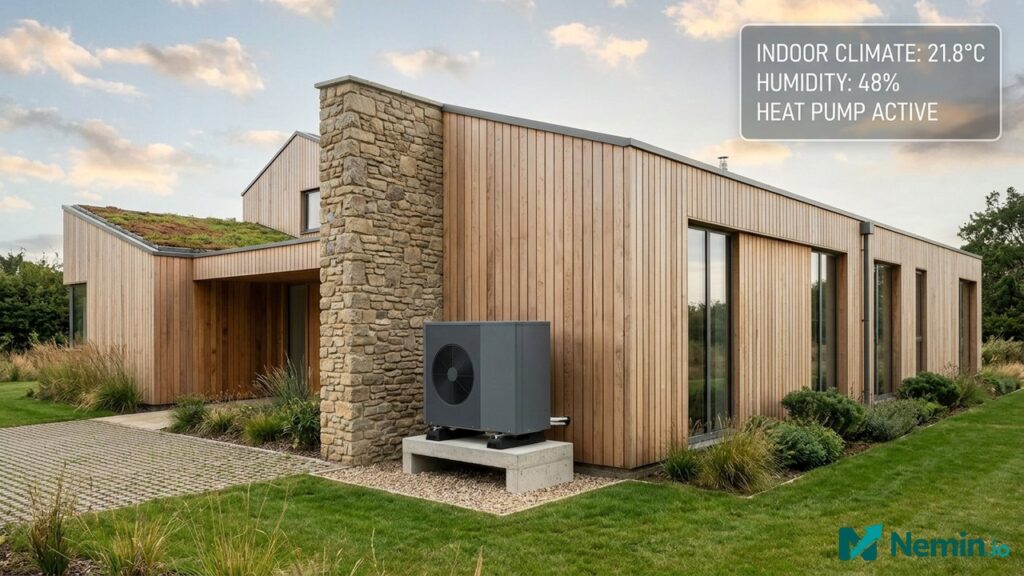
The global transition toward sustainable home heating and carbon neutrality has positioned thermodynamic technology at the forefront of modern residential architecture. Installing a high-efficiency heat pump for a house provides an environmentally responsible, cost-effective alternative to traditional fossil fuel gas, oil, and direct electric heating systems. Rather than burning combustible fuels to create heat from scratch, a heat pump operates by extracting naturally occurring ambient heat energy from outdoor air, ground soil, or water sources and upgrading it to comfortable indoor temperatures.
For homeowners planning a heating upgrade or new-build construction, understanding the core engineering principles, sizing calculations, and system configurations is essential. By evaluating building insulation levels, emitter water flow temperatures, and seasonal performance ratings, property owners can install a heat pump for a house that guarantees reliable warmth throughout sub-zero winters, delivers refreshing summer cooling, and drastically lowers monthly utility expenditures.
What Is a Heat Pump for a House and How Does the Thermodynamic Cycle Work?
A heat pump for a house is a mechanical refrigeration system that transfers thermal energy from an external low-temperature heat source into an interior living space using the continuous vapor compression refrigeration cycle.
| Thermodynamic Stage | Mechanical Component | Phase Change & Heat Transfer Mechanism | Function in Home Heating |
|---|---|---|---|
| 1. Evaporation (Heat Absorption) | Outdoor Evaporator Heat Exchanger | Low-pressure liquid refrigerant absorbs ambient outdoor heat and boils into a cold vapor | Extracts thermal energy from sub-zero outdoor air (-20°C / -4°F) |
| 2. Compression (Pressure Boost) | Scroll / Rotary Inverter Compressor | Compresses vaporized refrigerant, rapidly raising its temperature and pressure | Upgrades low-grade ambient heat into high-temperature gas (65°C+) |
| 3. Condensation (Heat Release) | Indoor Condenser / Plate Exchanger | High-pressure hot vapor releases heat to indoor air or central heating water, condensing into liquid | Delivers radiant warmth to radiators, underfloor piping, and hot water tanks |
| 4. Expansion (Pressure Drop) | Electronic Expansion Valve (EEV) | Expands warm liquid through a precision orifice, dropping its pressure and temperature | Resets the cold liquid refrigerant to repeat the closed-loop cycle |
The defining engineering characteristic of a heat pump for a house is its extraordinary energy multiplication capability. When compared to a heat pump for a house, traditional high-efficiency condensing boilers at a maximum thermal efficiency of 92 to 95 percent because energy is lost through flue exhaust gases.
In contrast, when operating a heat pump for a house, the electricity consumed does not generate heat directly; it merely powers the compressor and circulation pumps that move existing thermal energy from outdoors into your home. This allows a modern heat pump for a house to achieve Seasonal Coefficient of Performance (SCOP) ratings between 3.5 and 5.0, translating into 350% to 500% effective operating efficiency.
What Are the Main Types of Heat Pumps Available for a Residential House?
Selecting the appropriate heat pump for a house depends on your geographical climate, available outdoor land space, existing heating infrastructure, and project budget.
| Heat Pump System Classification | Heat Absorption Source | Heat Distribution Medium | Space Requirement | Typical UK/EU Installed Cost Range |
|---|---|---|---|---|
| Air-to-Water (Hydronic Heat Pump) | Ambient Outdoor Air | Radiators, underfloor heating, hot water cylinder | Minimal (Compact outdoor unit + indoor cylinder) | £8,000 to £16,000 (Before Grants) |
| Air-to-Air (Ductless / Ducted) | Ambient Outdoor Air | Internal blower wall units or central ductwork | Minimal (Outdoor compressor + indoor heads) | £3,500 to £8,500 |
| Ground-Source (Geothermal System) | Subterranean Soil / Bedrock | Hydronic underfloor heating & radiators | High (Requires horizontal trenches or deep boreholes) | £16,000 to £35,000+ |
| Water-Source Heat Pump | Lake, river, well, or aquifer | Hydronic central heating & hot water | Specialized (Requires adjacent open water source) | £12,000 to £22,000 |
| Hybrid Dual-Fuel System | Outdoor Air + Gas Boiler backup | Existing radiator pipework | Moderate (Retains gas combi/system boiler) | £5,000 to £10,000 |
1. Air-to-Water Heat Pump for a House
Air-to-water systems represent the most popular choice when retrofitting a heat pump for a house in the UK and Europe. An outdoor fan unit extracts heat from the surrounding air and transfers it into water that circulates through underfloor heating pipes, low-temperature radiators, and a domestic hot water cylinder.
2. Air-to-Air Heat Pump for a House
Air-to-air systems deliver conditioned warm or cool air directly into rooms via ductless wall-mounted indoor units or concealed ceiling ducting. While they do not provide domestic hot water, an air-to-air heat pump for a house offers rapid thermal response and high-efficiency summer air conditioning.
3. Ground-Source Geothermal Heat Pump for a House
Ground-source systems utilize subterranean closed-loop pipes filled with glycol water buried in horizontal trenches (1.5 to 2 meters deep) or vertical boreholes (100+ meters deep). Because underground temperatures remain stable at 10°C to 12°C year-round regardless of surface blizzards, a ground-source heat pump for a house delivers unmatched operational efficiency during extreme winter freezes.
Efficiency Metrics Explained: COP, SCOP, SEER, and HSPF
Understanding standardized heating and cooling efficiency metrics ensures you select a high-performance heat pump for a house that minimizes monthly operating expenses.
| Performance Metric | Full Name & Definition | Ideal High-Performance Benchmark | Impact on Home Heating Bills |
|---|---|---|---|
| COP (Coefficient of Performance) | Ratio of heat output to electrical input at a single static temperature (e.g., A7/W35) | COP 4.0 to 5.2 | Measures instantaneous efficiency at optimal outdoor temperatures |
| SCOP (Seasonal COP) | Weighted average heating efficiency calculated across an entire winter season | SCOP 3.8 to 4.8 (A+++ Rated) | Directly reflects real-world annual winter electricity consumption |
| SEER (Seasonal Energy Efficiency) | Total cooling output divided by total electrical energy across summer | SEER 18.0 to 24.0+ | Determines electrical efficiency when using the heat pump for summer air conditioning |
| HSPF (Heating Seasonal Factor) | North American seasonal heating measurement (BTU per watt-hour) | HSPF 9.5 to 13.0+ | Standard efficiency rating used in American split-system heat pumps |
The Profound Impact of Low Water Flow Temperatures
The efficiency of an air-to-water heat pump for a house is inversely proportional to the water flow temperature it must generate:
- Low-Temperature Operation (35°C Flow Temp): Typical of underfloor heating; achieves maximum SCOP ratings of 4.5 to 5.0.
- Medium-Temperature Operation (45°C–50°C Flow Temp): Typical of oversized modern radiators; achieves robust SCOP ratings of 3.8 to 4.2.
- High-Temperature Operation (65°C–75°C Flow Temp): Typical of old uninsulated legacy systems; drops SCOP to 2.5 to 3.0, increasing electrical consumption.
Comparison: Heat Pump vs. Gas Boiler vs. Direct Electric Heating
When evaluating the long-term costs of different heating systems, homeowners should also consider their available energy providers and pricing options. Comparing gas and electric suppliers can help households understand available tariffs, contract terms, and energy plans that may influence their heating expenses. Taking these factors into account alongside equipment efficiency can help homeowners make more informed decisions when choosing a heating system for their property.
| System Parameter | Modern Heat Pump for a House | Modern Condensing Gas Boiler | Direct Electric Panel Heaters |
|---|---|---|---|
| Primary Energy Efficiency | 350% to 500% (SCOP 3.5–5.0) | 90% to 94% Efficiency | 100% (1kW in = 1kW heat out) |
| Carbon Emissions at Point of Use | Zero direct on-site emissions | High (Burning fossil natural gas) | Zero direct on-site emissions |
| Operational Lifespan | 15 to 25+ Years (Long mechanical life) | 10 to 15 Years | 10 to 15 Years |
| Summer Cooling Capability | Yes (Active reverse-cycle cooling) | No (Heating only) | No (Heating only) |
| Government Grant Eligibility | High (e.g., UK Boiler Upgrade Scheme £7,500) | Zero (Phasing out in new builds) | Minimal |
| Annual Fuel Price Volatility | Low when paired with rooftop solar PV | High (Subject to global fossil gas spikes) | High (Tied directly to peak electric tariffs) |
Home Preparation: Insulation and Emitters Before Installing a Heat Pump
A successful deployment of a heat pump for a house requires treating the entire building as a holistic thermodynamic envelope rather than merely swapping mechanical boxes.
| Building Fabric Component | Minimum Preparation Standard | Recommended Optimal Upgrade | Impact on Heat Pump Performance |
|---|---|---|---|
| Loft & Roof Insulation | Minimum 270mm mineral wool quilt | 350mm mineral wool or spray foam | Prevents up to 25% of building heat loss through roof |
| Wall Insulation | Cavity wall insulation or solid wall lining | Insulated internal lining or external EPS render | Cuts building heat loss by 35%; reduces required heat pump kW size |
| Glazing & Window Seals | Modern double glazing with low-E glass | Triple glazing (U-value < 0.8 W/m²K) | Eliminates cold drafts and radiative cold-surface discomfort |
| Central Heating Emitters | Standard legacy compact radiators | Low-temp oversized aluminum radiators or UFH | Allows heat pump to run at hyper-efficient 35°C–45°C flow temps |
| Airtightness & Draft Proofing | Draft-proofed external doors and chimneys | Membrane sealed with controlled MEV/MVHR | Prevents continuous infiltration of cold winter drafts |
1. The Necessity of Room-by-Room Heat Loss Calculations
When purchasing a heat pump for a house, never size equipment based on crude “rules of thumb” (such as watts per square meter). Qualified engineers perform detailed room-by-room heat loss calculations under standard BS EN 12831 or Manual J guidelines, evaluating the exact thermal transmittance (U-values) of walls, floors, ceilings, and windows under design winter temperatures (e.g., -3°C in Southern England or -15°C in Northern regions).
2. Underfloor Heating vs. Low-Temperature Radiators
Because a heat pump for a house operates most efficiently when producing water between 35°C and 45°C, expanding heat emitter surface area is crucial. When paired with a heat pump for a house, underfloor heating turns floors into low-temp radiators low-temperature radiator. If retaining traditional wall radiators, installers replace single-panel units with deeper double-panel, double-convector (Type 22) radiators to deliver adequate BTUs without requiring high water temperatures.
Modern Refrigerants and Environmental Innovations in Heat Pumps
The refrigerant chosen for a heat pump for a house dictates its environmental global warming potential (GWP) and high-temperature water delivery capabilities.
| Refrigerant Type | Chemical Classification | Global Warming Potential (GWP) | Maximum Flow Temperature | Environmental & Regulatory Status |
|---|---|---|---|---|
| R290 (Natural Propane) | Pure Hydrocarbon | GWP = 3 (Ultra-Low) | Up to 70°C to 75°C without backup | Future-proof European standard; eco-friendly natural gas |
| R32 (Difluoromethane) | HFC Synthetic Blend | GWP = 675 (Moderate) | Up to 55°C to 60°C | Current industry workhorse; balances cost and efficiency |
| R410A (Legacy HFC) | Hydrofluorocarbon Blend | GWP = 2,088 (High) | Up to 50°C to 55°C | Rapidly phasing out under global F-Gas regulations |
| R744 (Carbon Dioxide CO2) | Natural Inorganic | GWP = 1 (Zero Impact) | Up to 80°C (Specialized DHW) | High pressure; ideal for commercial domestic hot water |
The Revolution of Natural R290 Propane Heat Pumps
Modern heat pump for a house manufacturers are rapidly adopting R290 (pure propane) refrigerant. With a Global Warming Potential of only 3, R290 allows residential heat pumps to achieve scorching 75°C water flow temperatures without engaging expensive electric backup immersion heaters, making whole-house retrofits in older uninsulated properties significantly easier.
Sizing and Buffer Tank Hydraulics: Avoiding Common Engineering Pitfalls
When engineering a heat pump for a house, proper hydraulic design prevents short-cycling, maximizes component lifespan, and ensures continuous hot water delivery when running a heat pump for a house.
| Hydraulic Subsystem | Mechanical Function | Impact on Heat Pump Longevity |
|---|---|---|
| Volumetric Buffer Tank | Stores thermal mass to prevent short-cycling | Ensures compressor runs in long, efficient modulating cycles |
| Low-Loss Header / Decoupler | Separates primary heat pump flow from secondary heating zones | Guarantees minimum flow rates regardless of closed radiator valves |
| Domestic Hot Water (DHW) Cylinder | Dedicated tank with enlarged internal heat exchange coil | Reheats full 250L water tank in under 30 minutes at low flow temps |
| Magnetic In-Line Dirt Filter | Traps magnetite and metallic sludge from radiator pipes | Protects high-precision brazed plate heat exchangers from clogging |
| Anti-Vibration Mounting Feet | Heavy-duty rubber plinths isolating unit from foundation | Eliminates structure-borne acoustic vibration and humming inside walls |
| Hydraulic Distribution Phase | Primary Mechanical Flow | Intermediate Balancing Component | Final Distribution Target |
|---|---|---|---|
| Primary Circuit | Outdoor heat pump unit | Heated glycol water loop | Plate heat exchanger & buffer tank |
| Hydraulic Decoupling | Internal circulation pump | Low-loss header / decoupler manifold | Isolates flow rates from zone valves |
| Secondary Circuit | Thermostatic mixing valve | Modulated low-temp supply water | Underfloor heating manifolds & radiators |
| Sanitary Hot Water | Diverter 3-way motorized valve | High-flow primary heating loop | Indirect domestic hot water cylinder coil |
The Critical Role of Enlarged Coil Hot Water Cylinders
Standard hot water cylinders designed for gas boilers feature small 1.0 m² internal heating coils. Because a heat pump for a house operates at lower water temperatures, it requires an unvented cylinder with an enlarged 2.5 to 3.5 m² high-surface-area heat exchanger coil to transfer energy rapidly into domestic bathing water.
Financial Incentives, Payback Periods, and Solar PV Pairing
When analyzing the economics of a heat pump for a house, evaluating the return on investment involves factoring in government subsidies and renewable electricity synergy.
| Financial / Energy Strategy | Operational Mechanism | Financial Impact for Homeowners |
|---|---|---|
| UK Boiler Upgrade Scheme (BUS) | Direct government grant voucher applied at quotation | £7,500 upfront capital grant towards installation costs |
| US Inflation Reduction Act (25C) | Federal tax credits and state-level HOMES rebates | Up to $2,000 to $8,000 in direct tax credits and equipment rebates |
| 0% VAT on Clean Energy Installs | UK statutory tax exemption on renewable heating labor/parts | Saves 20% on overall project procurement and commissioning costs |
| Rooftop Solar PV Integration | Solar panels power the heat pump during daytime heating | Reduces net grid electricity heating costs by 40% to 60% |
| Smart Time-of-Use Tariffs | Heat pump charges thermal buffer tank during cheap night rates | Runs heating on ultra-low off-peak electricity tariffs |
The Power of Pairing with Rooftop Solar and Home Batteries
Because a heat pump for a house runs entirely on electricity. When integrated with a rooftop solar photovoltaic (PV) array and a home battery storage system, homeowners can generate their own clean electricity to power daytime heating and hot water cycles, insulating their household permanently from international fossil fuel price shocks.
Step-by-Step Homeowner Installation Workflow for a Heat Pump
Follow this roadmap when installing a heat pump for a house when planning the installation of a heat pump for a house.
| Project Stage | Primary Action Item | Deliverable from HVAC Contractor |
|---|---|---|
| Phase 1: Thermal Feasibility | Room-by-room heat loss survey and EPC audit | Detailed Heat Loss Calculation Report & sizing recommendation |
| Phase 2: System Specification | Select heat pump model, cylinder size, and emitter upgrades | Comprehensive quotation with equipment performance modeling |
| Phase 3: Grant Application | Submit paperwork for government clean heat vouchers | Approved grant voucher confirmation (e.g., BUS £7,500) |
| Phase 4: Physical Installation | Mount outdoor unit, install cylinder, run insulated refrigerant/water lines | Complete mechanical and electrical installation (2–4 days) |
| Phase 5: Commissioning & Handover | Hydraulic balancing, glycol fill, weather compensation setup | Benchmark commissioning certificate & homeowner handover tutorial |
- Step 1: Obtain a Certified Heat Loss Calculation: When installing a heat pump for a house, commission an accredited MCS installer to complete room-by-room heat loss calculations.
- Step 2: Upgrade Identified Emitter Deficiencies: Replace undersized radiators in key living zones and install thermostatic radiator valves (TRVs) on all non-bypass circuits.
- Step 3: Pour a Solid Foundation Plinth: Prepare a flat, level concrete pad equipped with rubber anti-vibration feet positioned at least 300mm away from external walls with adequate drainage for defrost condensation.
- Step 4: Execute Electrical Supply Upgrades: Ensure your electrical panel can support a heat pump for a house to support the heat pump’s compressor load, installing a dedicated rotary isolator switch.
- Step 5: Master Weather Compensation Settings: When setting up a heat pump for a house, configure the weather compensation curve, ensuring the heat pump automatically adjusts water flow temperatures based on fluctuating outdoor weather.
Frequently Asked Questions
Can a heat pump for a house operate reliably in sub-zero winter temperatures?
Yes, modern cold-climate heat pumps operate efficiently in freezing temperatures down to -20°C (-4°F) and below by extracting latent thermal energy from outdoor air using advanced inverter compressors.
How much does a heat pump for a house cost to run compared to a gas boiler?
When operating with a Seasonal COP of 3.8 or higher, a heat pump for a house delivers competitive running costs to gas boilers, and achieves substantially lower operating costs when paired with solar panels or off-peak electricity tariffs.
Does my house need to be insulated before installing a heat pump for a house?
While insulation improves efficiency in a heat pump for a house and allows smaller equipment sizing, modern high-temperature heat pumps can be installed successfully in older homes as long as heat emitters are properly sized.
How quiet is a modern heat pump for a house when running?
Modern outdoor heat pump units operate at sound pressure levels between 40 and 48 decibels (dB) at one meter—comparable to the quiet hum of a modern domestic refrigerator or gentle rainfall.
How long does a heat pump for a house last?
A well-maintained heat pump for a house typically lasts between 15 and 25 years, significantly outlasting conventional gas boilers due to fewer moving combustion parts.
Can a heat pump for a house provide cooling during hot summers?
Yes, reversible air-to-air and air-to-water heat pumps can reverse their thermodynamic cycle in summer, extracting heat from indoor rooms and expelling it outdoors to deliver whole-home air conditioning.
Conclusion
Installing a modern heat pump for a house is one of the most impactful, forward-thinking investments a homeowner can make in long-term energy independence, home comfort, and environmental sustainability. By replacing outdated fossil fuel boilers with advanced thermodynamic technology, households achieve exceptional heating efficiencies exceeding 400 percent while eliminating carbon emissions at the point of use.
Ensuring your heating transformation is a flawless success requires a holistic engineering approach: conducting accurate room-by-room heat loss surveys, sizing heat emitters appropriately for low water flow temperatures, and selecting certified equipment that meets your family’s lifestyle needs. Take the first step toward a warmer, greener home today, leverage available clean energy government grants, and experience the transformative comfort and efficiency that an engineered heat pump for a house delivers across every season.
Pingback: Water Heater Brand: 8 Best DIY Steps for Hot Water Dispensers
Pingback: Industrial Valves Manufacturers 7 Smart Powerful Automation