
Hybrid and multi-fuel generators are advanced power systems that offer exceptional versatility by running on multiple fuel types and, in many cases, integrating battery storage...
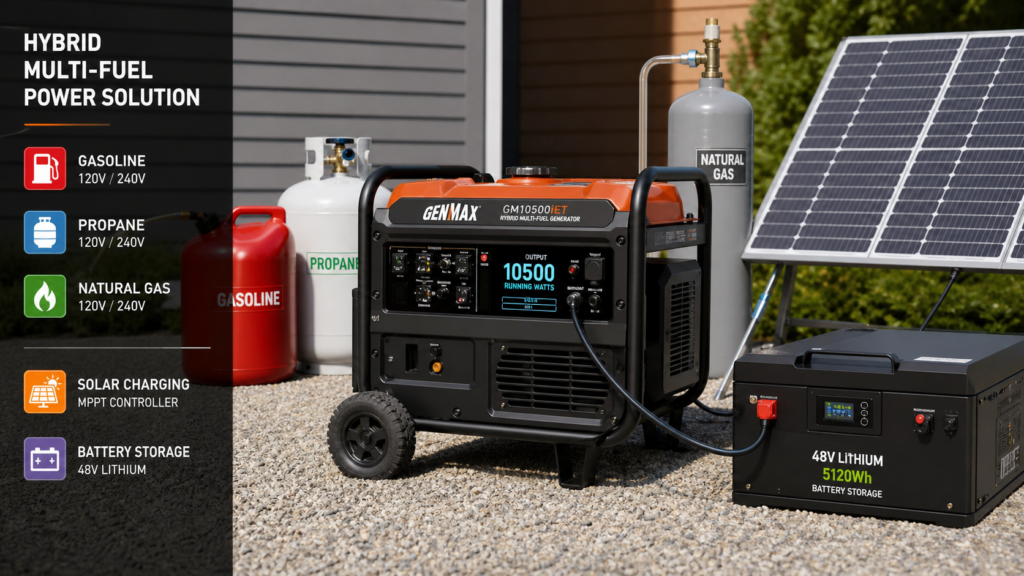
Hybrid and multi-fuel generators are advanced power systems that offer exceptional versatility by running on multiple fuel types and, in many cases, integrating battery storage and solar input. These generators are rapidly gaining popularity among homeowners, off-grid enthusiasts, RV owners, and businesses looking for reliable backup power that adapts to changing fuel availability, costs, and environmental priorities.
What Are Hybrid and Multi-Fuel Generators?
A multi-fuel generator can operate on two or more fuels — typically gasoline, propane, and natural gas. A hybrid generator combines a traditional combustion engine with a battery bank and often solar charging capability. Many of today’s top models combine both technologies, giving users the ability to switch fuels easily while also running silently on battery power during low-demand periods.
7 Key Advantages of Hybrid and Multi-Fuel Generators
- Fuel Flexibility — Switch between gasoline, propane, or natural gas depending on availability and price.
- Extended Runtime — Use the most efficient fuel for the situation or combine with battery/solar for even longer operation.
- Lower Operating Costs — Choose the cheapest or most accessible fuel at any given time.
- Quiet Operation — Hybrid systems can run on battery power alone for silent nighttime use.
- Reduced Emissions — Propane and natural gas burn cleaner than gasoline.
- Solar Integration — Many hybrid models accept solar input to recharge batteries and reduce fuel consumption.
- Improved Reliability — Multiple fuel options act as a built-in backup if one fuel source is unavailable.
Popular Applications
Hybrid and multi-fuel generators are ideal for:
- Whole-home backup power
- Off-grid cabins and homesteads
- RV and overlanding adventures
- Construction and job sites
- Emergency preparedness kits
- Remote work locations
- Farming and agricultural operations
Technical Features Worth Considering
When evaluating hybrid and multi-fuel generators, look for:
- True dual-fuel or tri-fuel capability with easy switching
- Pure sine wave inverter technology
- Built-in battery charging system
- Remote monitoring via smartphone app
- Automatic transfer switch compatibility
- High-efficiency ECO mode
- Strong warranty coverage
Cost Comparison
Hybrid and multi-fuel generators typically cost more upfront than single-fuel models but often deliver better long-term value through flexibility and efficiency.
| Generator Type | Price Range | Best For | Key Advantage |
|---|---|---|---|
| Standard Gas Only | $500 – $2,500 | Basic backup | Lowest upfront cost |
| Dual-Fuel (Gas + Propane) | $900 – $4,500 | Home backup & versatility | Fuel flexibility |
| Tri-Fuel (Gas, Propane, NG) | $1,400 – $6,000 | Maximum flexibility | Uses natural gas line |
| Hybrid (Fuel + Battery + Solar) | $3,000 – $15,000+ | Quiet operation & renewable energy | Silent battery mode + solar |
Maintenance and Best Practices
Hybrid and multi-fuel generators require regular maintenance similar to traditional models. Keep fuel stabilized, change oil as recommended, test monthly, and inspect battery connections in hybrid systems. Proper care ensures years of reliable service.
Frequently Asked Questions
What is the difference between hybrid and multi-fuel generators?
Multi-fuel generators run on different fuels (gasoline, propane, natural gas). Hybrid generators combine a fuel engine with battery storage and usually support solar charging for greater efficiency and quiet operation.
Are hybrid generators worth the higher price?
For most users seeking flexibility, quiet operation, and future solar compatibility, yes. The added features often justify the cost through convenience and lower long-term fuel expenses.
Can these generators run on natural gas from a home line?
Many tri-fuel and hybrid models can be connected directly to a natural gas line for unlimited runtime during outages.
How quiet are hybrid generators on battery power?
Extremely quiet. Most hybrid systems run completely silently when operating in battery-only mode.
Do hybrid generators require special batteries?
Many are designed to work with standard deep-cycle or lithium batteries, though some come with integrated battery systems.
What fuel is best for long-term storage?
Propane is generally considered the best for long-term storage because it doesn’t degrade like gasoline and has an almost unlimited shelf life.
Conclusion
Hybrid and multi-fuel generators represent a significant advancement in backup power technology. By offering multiple fuel options, battery integration, and solar compatibility, they provide unmatched flexibility, efficiency, and peace of mind. Whether you need reliable emergency power, quiet operation at night, or the ability to adapt to changing fuel prices and availability, these generators deliver practical solutions for modern power needs. As energy independence becomes more important, hybrid and multi-fuel systems are quickly becoming the preferred choice for both homeowners and professionals.