
An independent locksmith is a locksmith who operates independently rather than as part of a large national chain, franchise, or call centre network. Depending on their training...
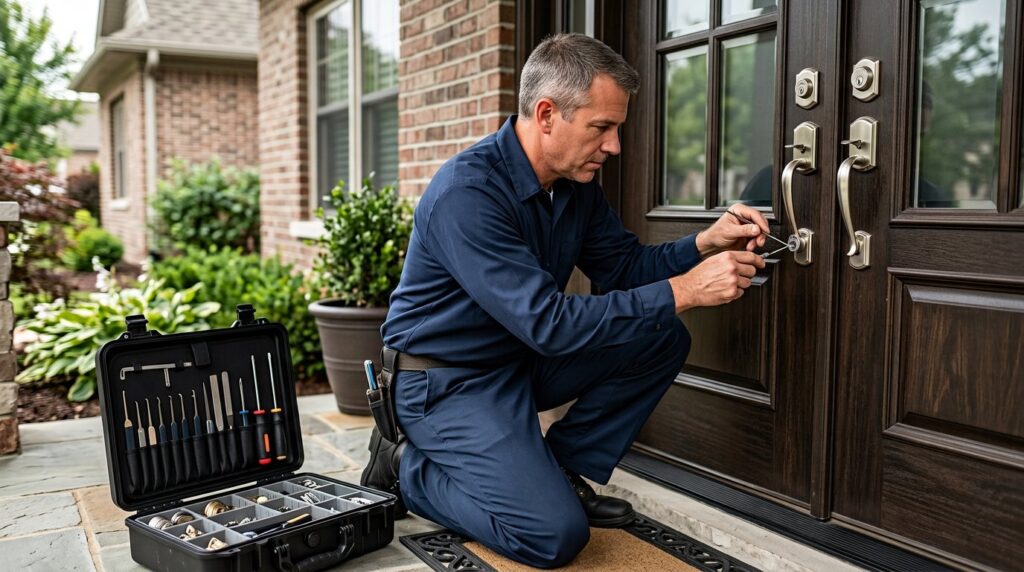
An independent locksmith is a locksmith who operates independently rather than as part of a large national chain, franchise, or call centre network. Depending on their training and business model, independent locksmiths can provide residential, commercial, emergency, automotive, and security related services. Choosing one should involve more than selecting the first search result: credentials, identification, insurance, pricing, reputation, technical competence, and local legal requirements should all be considered before allowing someone to work on locks or security systems.
Locks protect homes, businesses, vehicles, valuables, and private spaces. Incorrect installation or unnecessarily destructive work can create additional costs and potentially weaken security.
A competent locksmith should therefore explain the work being proposed, provide meaningful pricing information, and verify authorization where appropriate before gaining entry or modifying security equipment.
What Is an Independent Locksmith?
An independent locksmith is a self employed locksmith or locally operated locksmith business that provides services without necessarily belonging to a national franchise or large corporate network.
Some operate alone, while others employ a small team of technicians.
The term independent describes the business structure rather than a guaranteed level of skill. A local independent provider can be highly experienced, but customers should still verify competence and reputation.
Typical services can include:
• Emergency lockout assistance
• Lock repair
• Lock replacement
• Lock installation
• Key cutting
• Broken key extraction
• Door security upgrades
• Window lock services
• Commercial lock work
• Master key systems
• Safe services where qualified
• Automotive locksmith services where offered
• Security assessments
Not every locksmith provides every service, so specialist work should be confirmed before booking.
9 Benefits of Choosing an Independent Locksmith
Independent providers can offer several practical advantages, particularly when they genuinely operate within the local area.
1. Local Knowledge
A local locksmith may be familiar with housing types, common door hardware, commercial properties, and security problems found in the surrounding area.
Local knowledge can also help with travel planning during emergency calls.
It should complement technical competence rather than substitute for it.
2. Direct Communication
With a smaller business, customers may speak directly with the locksmith who will perform the work.
This can make it easier to describe the lock, send photographs where appropriate, discuss possible solutions, and understand the expected price before a visit.
Ask Who Will Actually Attend
Some websites that appear to represent local locksmiths are actually lead generation or dispatch businesses.
Ask for the business name and whether the person you are speaking with is the locksmith who will attend or a third party booking service.
3. Potentially Faster Local Response
A genuinely nearby independent locksmith may be able to respond quickly to emergencies.
Response times still depend on distance, traffic, current workload, weather, and technician availability.
Be wary of guaranteed arrival times that appear unrealistic.
4. Personalized Service
Independent businesses often rely substantially on repeat customers and local recommendations.
Customers may deal with the same locksmith for future lock maintenance or security upgrades.
5. Flexible Appointment Scheduling
Smaller businesses can sometimes offer flexible scheduling for residential or commercial work.
Emergency availability varies, and not every independent locksmith operates 24 hours a day.
6. Clearer Accountability
When the business owner is also performing the work, responsibility for quotations, workmanship, and follow up can be easier to establish.
Written invoices and warranty terms remain important regardless of business size.
7. Support for Local Businesses
Hiring a locally owned locksmith keeps spending within the surrounding business community.
This may be a consideration for customers who prefer independent local services.
8. Familiarity With Existing Work
A locksmith who has previously fitted or serviced your property’s locks may already understand the hardware and security setup.
Keep invoices and product information to make future service easier.
9. Direct Security Advice
A qualified locksmith can assess existing locks and explain potential upgrades.
Advice should be based on the property’s actual risk, door construction, relevant standards, and customer needs rather than automatically recommending replacement of every lock.
Services an Independent Locksmith Can Provide
Service ranges vary considerably.
Before hiring someone, confirm that they have experience with the specific lock or security system involved.
Residential Locksmith Services
Residential locksmiths work on doors, windows, gates, garages, and other household security points.
Lock Repairs
A lock may sometimes be repairable rather than requiring complete replacement.
The appropriate solution depends on which component has failed and whether repair would restore secure, reliable operation.
A locksmith should explain why repair or replacement is recommended.
Lock Replacement
Replacement may be appropriate when locks are damaged, unreliable, outdated for the intended security need, or when authorized occupants need a different key arrangement.
Changing a lock may involve replacing an entire mechanism or only particular components.
Moving Into a New Home
New homeowners may consider changing or rekeying locks because they cannot always know who retains previous keys.
The appropriate approach depends on the installed hardware. Some lock types can be rekeyed, while others may require different procedures.
Emergency Independent Locksmith Services
Emergency locksmiths help with urgent situations such as lockouts, failed locks, broken keys, or doors that cannot be secured.
Locked Out of Your Home
A qualified locksmith should assess the lock before deciding how to gain entry.
Depending on the lock and circumstances, nondestructive techniques may be possible.
No locksmith should promise that every lock can always be opened without damage, because hardware and failure conditions vary.
Broken Keys
A key can break inside a lock due to wear, damage, alignment problems, or force.
Specialized extraction tools may allow removal without replacing the entire lock, but the cause of the breakage should also be considered.
Burglary Related Repairs
After a burglary or attempted break in, damaged doors, frames, locks, and glazing can require urgent attention.
If a crime may have occurred, follow local police guidance before disturbing potential evidence when it is safe to do so.
Emergency Door Security
A locksmith can help restore the ability to secure a damaged entrance.
More substantial damage to frames, doors, walls, or glazing may require a carpenter, builder, glazing professional, or other specialist.
Commercial Independent Locksmith Services
Businesses can have more complex access requirements than individual homes.
A commercial locksmith may work with offices, retail spaces, warehouses, landlords, and other organizations.
Master Key Systems
A master key system can give selected keys access to multiple locks while restricting other keys to designated doors.
Design requires careful planning because access permissions should correspond to actual organizational responsibilities.
Keep accurate key issuance records.
Restricted Key Systems
Some key systems provide controlled duplication through contractual or technical mechanisms.
Exact protections vary according to manufacturer, patent status, supplier policies, and jurisdiction.
Ask the locksmith to explain what makes a proposed key system restricted and how replacement keys are authorized.
Access Control
Some locksmith businesses install or maintain electronic access control.
Systems can include cards, fobs, keypads, mobile credentials, or biometric components.
Electronic security requires competence in both physical and digital aspects of access management.
Independent Locksmith for Automotive Services
Some independent locksmiths specialize in vehicle entry, keys, transponders, or immobilizer related services.
Automotive work requires different equipment and knowledge from ordinary residential lock work.
Vehicle Lockouts
An automotive locksmith may be able to access a locked vehicle without damaging it, depending on vehicle type and circumstances.
The locksmith should verify that the person requesting access is authorized to use the vehicle.
Replacement Car Keys
Modern vehicle keys can include electronic transponders and remote functions.
Compatibility, programming requirements, and pricing vary by manufacturer, model, year, and key type.
Confirm Automotive Capability First
Do not assume every local locksmith can program modern vehicle keys.
Provide the vehicle make, model, year, and key information when requesting a quotation.
Independent Locksmith vs National Locksmith Company
Neither business model is automatically superior.
National companies may offer large dispatch networks and standardized processes, while independent providers can offer direct communication and local continuity.
Compare the Actual Service
Evaluate:
• Qualifications
• Relevant experience
• Identification
• Insurance
• Pricing transparency
• Reviews
• Response time
• Warranty
• Business address
• Written documentation
These factors are more useful than choosing solely according to company size.
Watch for Locksmith Call Centres
Some online advertisements route customers to centralized dispatch services.
That arrangement is not inherently improper, but customers should know who is providing the service and how pricing is determined.
Ask for the attending company’s details before agreeing to work.
How to Find a Reliable Independent Locksmith
A genuine local presence is one useful indicator, but it should not be the only one.
Verify the Business
Look for consistent business details across reputable directories, the company’s website, invoices, and review profiles.
Where your jurisdiction requires locksmith licensing or registration, check the official relevant database.
Check Professional Credentials
Locksmith regulation differs widely by country and region.
In some jurisdictions, specific licenses or background checks are required. In others, the trade is less formally regulated.
Professional association membership can provide additional information but is not identical to government licensing.
Verify Insurance
Ask whether the locksmith carries appropriate business and liability insurance.
Commercial customers may require evidence of specific coverage before work begins.
How to Avoid Locksmith Scams
Emergency customers can be particularly vulnerable because they need immediate assistance.
Be cautious when a provider advertises an exceptionally low starting price but refuses to explain potential additional charges.
Warning Signs to Watch For
Potential concerns include:
• Refusal to provide a business name
• No identifiable local presence
• Prices that change dramatically without explanation
• Immediate insistence on destructive entry without assessment
• Unmarked personnel who cannot identify their business
• Pressure to authorize unnecessary replacement work
• Refusal to provide an invoice
• Demands for unusual payment methods
• Claims that almost every lock must be drilled
No single sign proves misconduct, but several together warrant caution.
Get the Price Structure Before Work Starts
Ask about:
• Callout charge
• Labour cost
• Emergency or after hours premium
• Parts
• Taxes
• Parking or travel charges where applicable
• Potential cost if destructive entry becomes necessary
The exact final price may not always be possible before inspection, but the pricing structure should be understandable.
How Much Does an Independent Locksmith Cost?
There is no reliable universal price.
Costs depend on region, time, lock type, complexity, parts, travel, urgency, and the work required.
Factors Affecting Locksmith Prices
Common factors include:
• Day and time
• Emergency response
• Travel distance
• Type of lock
• Required replacement parts
• Door construction
• Complexity of entry
• Key programming for vehicles
• Number of locks
• Security hardware standard
Request an itemized quotation where practical.
Emergency Locksmith Costs
Late night, weekend, and holiday work may cost more than scheduled daytime appointments.
Ask about emergency pricing before authorizing attendance.
Beware of Unrealistically Cheap Advertisements
A very low advertised figure may represent only a callout or starting price.
Confirm what is actually included and under what circumstances additional charges apply.
Should a Locksmith Drill a Lock?
Drilling is a destructive technique that can require replacement of the affected lock or cylinder.
It may sometimes be necessary, but it should not automatically be the first approach.
Nondestructive Entry
Depending on the hardware, failure, and legal circumstances, trained locksmiths may have methods that can open a door without permanently damaging the lock.
The appropriate technique depends on the specific situation.
For security reasons, customers do not need detailed bypass instructions to evaluate competence. Asking whether nondestructive options have been assessed is generally sufficient.
When Destructive Entry May Be Necessary
A damaged, failed, high security, or otherwise inaccessible lock may require destructive intervention.
The locksmith should explain the likely consequences and replacement cost before proceeding when circumstances permit.
Independent Locksmith Security Upgrades
Security improvement should consider the complete entrance rather than the lock alone.
A high quality lock fitted to a severely weak door or frame may not provide the intended level of protection.
Door and Frame Condition
Check whether the frame, hinges, strike area, glazing, and door material are suitable for the proposed hardware.
Additional reinforcement may be appropriate in some circumstances.
Lock Standards
Relevant lock and door security standards vary by country.
Insurance policies can also specify minimum lock requirements.
A locksmith should identify the standard being recommended rather than using vague terms such as insurance approved without explanation.
Smart Locks and Independent Locksmith Services
Some locksmiths install smart locks and connected access systems.
These products can provide keyless entry, temporary credentials, activity records, and remote management depending on the model.
Smart Lock Compatibility
Before purchasing, check:
• Door type
• Existing lock mechanism
• Dimensions
• Connectivity requirements
• Power source
• Emergency access method
• Software support
• Update policy
• Privacy features
• Insurance considerations
Not every smart lock fits every door.
Digital Security Matters
Connected locks should receive software and firmware updates where provided.
Use strong account credentials and multifactor authentication when supported.
A mechanically strong device can still depend on appropriate account and network security.
What to Ask an Independent Locksmith
A brief conversation before booking can reveal useful information.
Ask:
• Are you genuinely based locally?
• Will you perform the work yourself?
• Do you have experience with this lock type?
• What is your callout charge?
• How is labour priced?
• Are emergency rates different?
• What might parts cost?
• Are you appropriately insured?
• What identification will the technician provide?
• Do you provide a written invoice?
• What warranty applies to parts and labour?
For specialist work, ask about relevant qualifications or manufacturer training.
What Should a Locksmith Ask You?
Responsible access work involves security on both sides of the transaction.
A locksmith may ask for identification and evidence that you have authority to enter or alter the property.
Proof of Authorization
Appropriate evidence depends on circumstances and jurisdiction.
It might include identification, tenancy documentation, property information, vehicle registration, business authorization, or confirmation from an authorized person.
Verification Protects Property Owners
Customers should not view reasonable ownership checks as an inconvenience.
A locksmith who is willing to open any property without considering authorization creates an obvious security risk.
Independent Locksmith for Landlords and Property Managers
Landlords often need reliable locksmith support for tenancy changes, maintenance, communal areas, and emergency access.
Legal rights of access must still be respected.
Tenancy Changes
Rekeying or replacing appropriate locks may be considered between occupants according to property policy and local law.
Landlords should maintain records showing which keys are issued and returned.
Emergency Access
Landlord ownership does not necessarily create unlimited authority to enter an occupied property at any time.
Applicable tenancy law, lease terms, notice requirements, and genuine emergencies determine access rights.
Independent Locksmith for Businesses
Businesses should treat keys and locks as part of their broader access control policy.
Maintain an inventory of important keys and identify who is authorized to hold them.
When Employees Leave
Review access permissions promptly when personnel leave or change roles.
For electronic systems, credentials can often be revoked. Mechanical systems may require key recovery, rekeying, or other measures depending on risk.
Schedule Security Reviews
A security review can be useful after renovations, staff changes, break ins, lost keys, or changes in how a property is used.
Recommendations should be proportional to realistic risks.
Emergency Situations and Locksmith Safety
Some lockouts involve more than inconvenience.
If a child, vulnerable person, or animal is locked in dangerous conditions, or if there is an immediate threat to life, contact the appropriate emergency services rather than waiting solely for a routine locksmith response.
Likewise, suspected burglary or immediate danger may require police assistance.
A locksmith’s role is physical access and security work, not replacing emergency responders.
Frequently Asked Questions
What is an independent locksmith?
An independent locksmith is a self employed or locally operated security professional who provides locksmith services without necessarily belonging to a large national chain or franchise.
Are independent locksmiths cheaper?
They can be competitively priced, but costs vary by location, time, parts, and job complexity. Compare the complete quoted price rather than assuming a business model determines cost.
How do I know if an independent locksmith is legitimate?
Verify business details, relevant licensing where required, identification, insurance, reputation, pricing, and professional credentials before authorizing work.
Can an independent locksmith open a door without damage?
Sometimes. Nondestructive entry may be possible depending on the lock and fault, but no responsible locksmith can guarantee damage free entry in every situation.
Do independent locksmiths provide emergency services?
Many do, but operating hours vary. Confirm availability, expected response time, callout charges, and emergency pricing before booking.
Should a locksmith ask for proof that I own the property?
A responsible locksmith should take reasonable steps to verify that the person requesting entry or security work has appropriate authority.
Conclusion
An independent locksmith can provide local support for lockouts, repairs, replacements, key services, commercial security, and other access needs. Choosing a provider should involve checking technical competence, credentials, insurance, pricing, reputation, and identification rather than relying solely on the nearest advertisement. Ask for a clear explanation before destructive work or expensive replacement is authorized, and expect reasonable verification of your right to access the property. A reputable independent professional should combine effective locksmith work with transparent business practices and responsible security procedures.