
Scaling a profitable plastic recovery operation requires industrial processing equipment capable of turning contaminated post-consumer waste into uniform, virgin-grade resin pellets with minimal energy loss....
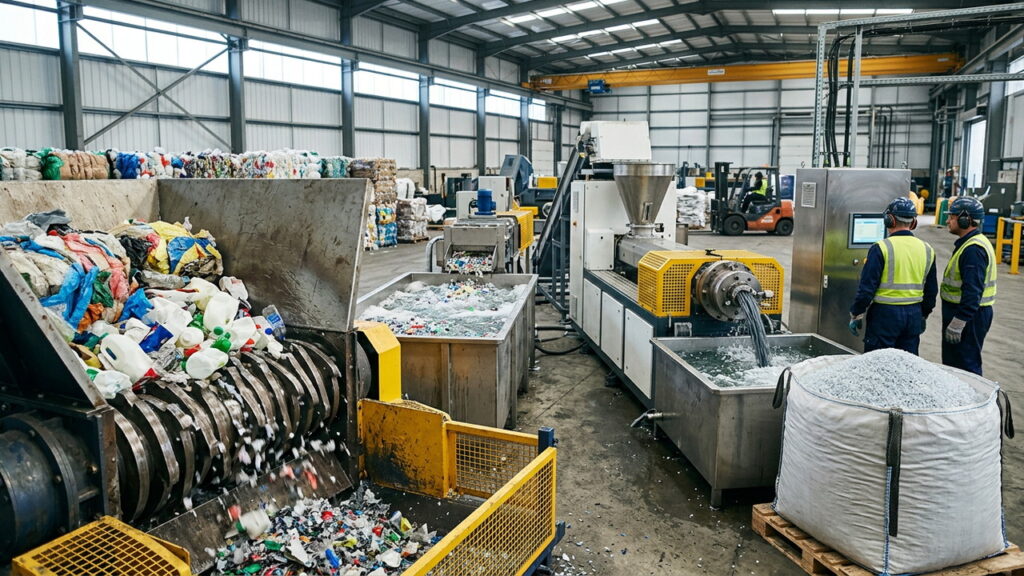
Scaling a profitable plastic recovery operation requires industrial processing equipment capable of turning contaminated post-consumer waste into uniform, virgin-grade resin pellets with minimal energy loss. Investing in Kitech machinery for recyclers enables material recovery facilities, film converters, and bottle reprocessors to integrate size reduction, high-friction washing, thermal compaction, and continuous melt filtration into one seamless production line.
When recycling plants rely on mismatched, outdated extruders or manual screen changers, operators suffer from frequent bridging delays, high melt pressure spikes, and inconsistent pellet density that downstream injection and blown-film buyers reject. Understanding how modern cutter-compactor physics, self-cleaning laser filters, and double-stage vacuum degassing operate together empowers plant managers to maximize hourly kilogram throughput and shorten capital payback timelines.
What Is Kitech machinery for recyclers and Why Modern Recovery Plants Rely on It?
In the industrial plastics engineering sector, Kitech machinery for recyclers is a comprehensive suite of heavy-duty mechanical recycling equipment—spanning shredders, wet granulators, high-speed washing and squeezing lines, cutter-compactor extruders, and continuous laser filtration pelletizers—designed to reprocess post-consumer and post-industrial thermoplastics into reusable resin granules. These turnkey systems process polyethylene (LDPE, LLDPE, HDPE), polypropylene (PP, BOPP), polyester (PET), and engineering plastics at industrial scale.
Plant owners and plastics engineers rely on Kitech machinery for recyclers because modern circular economy mandates require recycled pellets to match strict Melt Flow Index (MFI) and purity tolerances without skyrocketing electricity or labor costs. By combining mechanical pre-conditioning with automated programmable logic controller (PLC) load management, these integrated lines stabilize throughput even when feedstock moisture or bulk density fluctuates.
Processing Post-Consumer and Post-Industrial Scrap With Kitech machinery for recyclers
Plastic recycling facilities generally divide incoming raw materials into two distinct operational streams: Post-Industrial Recycled (PIR) scrap and Post-Consumer Recycled (PCR) waste. When processing clean PIR materials such as blown-film edge trims, thermoforming skeletons, non-woven meltblown fabrics, and startup purges, Kitech machinery for recyclers utilizes direct conveyor and nip-roll feeding into integrated cutter-compactors. This closed-loop setup preserves polymer molecular weight and allows manufacturers to feed 100 percent of their in-house scrap directly back into primary production extruders.
Post-consumer waste presents a far harsher engineering challenge due to embedded sand, paper labels, residual organics, and heavy printing inks found on agricultural mulch films, municipal LDPE packaging, and curbside HDPE containers. Deploying Kitech machinery for recyclers across PCR streams pairs multi-stage friction washing and mechanical squeezing dryers with double-stage degassing extruders. This heavy-duty configuration strips away surface contaminants and vents volatile ink gases before the molten polymer ever reaches the pelletizing die face.
How Integrated Automation in Kitech machinery for recyclers Lowers Energy Per Ton
Electricity consumption and operator labor represent the two largest recurring variable expenses inside any plastic reprocessing facility. Traditional multi-step setups that require shredding film in one bay, moving gaylord boxes by forklift to a standalone agglomerator, and manually hand-feeding a single-screw extruder waste immense thermal and mechanical energy. Upgrading to Kitech machinery for recyclers eliminates intermediate cooling and reheating cycles by coupling the shredder-compactor drum directly to the extruder feed throat.
Smart automation further optimizes kilowatt-hour consumption per kilogram of finished resin. Inside Kitech machinery for recyclers, Siemens or Schneider PLC control cabinets continuously monitor main extruder motor amperage, melt pressure transducers, and compactor drum temperatures via infrared sensors. When extruder torque climbs, the automated inverter adjusts belt conveyor speed and dosing dampers automatically, keeping the screw barrel running at ninety-five percent capacity without risking motor overload or thermal degradation.
Core Equipment Lines Available in Kitech machinery for recyclers
Designing a balanced recycling plant requires matching the mechanical geometry of each machine to the physical form factor, thickness, and contamination level of the target polymer. Lightweight packaging film behaves completely differently inside a feed hopper than rigid automotive bumpers or baled PET beverage bottles. The core engineering portfolio within Kitech machinery for recyclers covers every stage of the material transformation loop from raw bale breaking to final pellet homogenization.
3-in-1 Cutter-Compactor Pelletizing Systems in Kitech machinery for recyclers
The flagship workhorse for flexible packaging, raffia woven bags, and stretch film is the 3-in-1 integrated cutter-compactor pelletizer, often designated as the KCP series within Kitech machinery for recyclers. Fluffy, low-bulk-density materials like 15-micron LLDPE film typically bridge and starve conventional hopper-fed extruders because trapped air prevents the flakes from dropping into the screw flights. The cutter-compactor solves this bottleneck by using high-speed rotating rotor knives at the bottom of a vertical conditioning drum to cut, warm, and densify the film via frictional heat.
Kept just below its melting point inside the compactor drum, the pre-shrunk, semi-plasticized material is driven tangentially straight into the extruder screw by centrifugal force. Because Kitech machinery for recyclers feeds the extruder with pre-heated, high-density material, screw length-to-diameter (L/D) ratios work far more efficiently, boosting hourly output by twenty to thirty-five percent compared to cold-fed extruders while preventing polymer scorching.
High-Efficiency Plastic Washing, Friction Cleaning, and Drying Lines From Kitech machinery for recyclers
Before dirty post-consumer plastics can be extruded into high-value pellets, abrasive grit, water-soluble glues, and organic residues must be thoroughly removed. The washing division of Kitech machinery for recyclers engineers modular sorting, crushing, floating-sinking separation, and high-speed friction washing lines tailored to either polyolefin films (PE/PP) or rigid polyester bottles (PET). For PET bottle-to-bottle and fiber-grade recycling, hot caustic wash reactors operating at eighty-five degrees Celsius dissolve stubborn alkali-soluble adhesives and loosen PVC or polyolefin label remnants.
Drying washed plastic film down to extrusion-ready moisture levels without burning excessive natural gas or electrical heating power requires mechanical dewatering. Rather than relying solely on long, power-hungry thermal hot-air pipes, Kitech machinery for recyclers integrates heavy-duty screw squeezing presses and centrifugal mechanical dryers. A heavy screw press squeezes washed LDPE or PP film flakes down to under three percent residual moisture mechanically, slashing downstream thermal drying energy requirements in half.
Continuous Self-Cleaning Laser Filtration Inside Kitech machinery for recyclers
Screen changer downtime is the single biggest productivity killer when pelletizing post-consumer waste containing paper fibers, aluminum foil specks, wood splinters, or unmelted cross-linked gels. On a conventional hydraulic piston screen changer, high contamination forces operators to replace wire mesh packs every fifteen to thirty minutes, causing wild melt pressure fluctuations and significant polymer waste. Integrating a continuous self-cleaning laser filter into Kitech machinery for recyclers replaces disposable wire mesh with a hardened, wear-resistant steel disc perforated by thousands of micron-precision laser-drilled holes.
As molten plastic flows through the laser disc inside Kitech machinery for recyclers, a rotating high-torque scraper blade continuously sweeps contaminants off the disc surface and channels them toward a discharge auger. Because the filter surface stays clean every second, melt pressure remains completely flat, operator screen-change labor drops by eighty percent, and raw material loss is minimized through automated contaminant concentration adjustment.
Double-Stage Vacuum Degassing and Melt Homogenization in Kitech machinery for recyclers
Heavily printed supermarket bags, laminated packaging films, and damp agricultural plastics release steam and volatile organic ink gases as soon as they melt inside an extruder barrel. If those trapped gases are not evacuated completely, the resulting pellets emerge porous, foamy, and brittle, causing blowouts when downstream customers attempt to blow thin film. To prevent gas porosity, Kitech machinery for recyclers utilizes a cascaded mother-baby double-stage extrusion architecture equipped with dual-zone venting and high-capacity vacuum degassing pumps.
In the first extruder stage of Kitech machinery for recyclers, the polymer is fully melted, homogenized, and pushed through the continuous laser filter to trap solid impurities. The purified melt then enters the second extruder barrel, where specialized decompression screw zones expose a wide surface area of the melt stream to deep vacuum extraction, pulling out all moisture vapor and ink volatiles before final die-face water-ring or underwater pelletizing.
Heavy-Duty Single-Shaft Shredders and Wet Granulators in Kitech machinery for recyclers
Processing thick-walled HDPE pipes, large injection-molded automotive purges, and tightly compressed plastic bales starts with controlled mechanical size reduction. The primary size-reduction line in Kitech machinery for recyclers pairs high-torque, low-speed single-shaft or double-shaft shredders with high-speed wet granulators. Hydraulic swing-ram pushers inside the shredder chamber press bulky purges against reversible, four-edge alloy tool steel rotor knives with automatic amperage-sensing retraction to prevent rotor stalling.
Once bulky items are shredded down to forty-millimeter chunks, wet granulators within Kitech machinery for recyclers cut the material into uniform twelve-to-fourteen-millimeter flakes while injecting a continuous stream of wash water directly into the cutting chamber. Wet granulation serves two critical engineering functions simultaneously: the water pre-washes abrasive dirt off the plastic and cools the rotating V-cut blades, doubling knife sharpness longevity and reducing fine dust generation.
Comparing Pelletizing and Washing Specifications in Kitech machinery for recyclers
Selecting the right machine configuration depends on matching polymer rheology, bulk density, and target throughput in kilograms per hour (kg/h). While a small in-house film converter may only need a compact single-stage line producing 200 kg/h, a regional municipal recovery plant often requires a tandem double-stage system rated at 1,000 kg/h or higher. The comparison table below details the core equipment series and technical benchmarks across Kitech machinery for recyclers.
| Equipment Series & Configuration | Target Plastic Feedstock | Typical Throughput Capacity | Filtration & Degassing Standard | Optimal Pelletizing Cut Method |
|---|---|---|---|---|
| KCP 3-in-1 Cutter-Compactor Single Stage | Clean PIR LDPE, LLDPE, HDPE, PP film, raffia, non-woven | 150 to 1,200 kg/h | Piston Hydraulic or Non-Stop Double Pillar Filter + Single Vacuum | Water-Ring Die-Face or Air-Cooled Pelletizer |
| KCP Plus Double-Stage Tandem Pelletizer | Heavily printed PCR film, washed agri-film, high-moisture PE/PP | 300 to 1,200+ kg/h | Continuous Self-Cleaning Laser Filter + Dual-Stage Vacuum Degassing | Automatic Water-Ring or Underwater Pelletizer |
| KSP Heavy-Duty Rigid Flake Pelletizer | Crushed HDPE milk jugs, PP injection regrind, ABS, PS, PC | 250 to 1,000 kg/h | Force-Feeder Hopper + Laser or Backflush Filter + High-Vacuum Zone | Strand Pelletizing, Water-Ring, or Underwater Cut |
| Twin-Screw PET / Engineering Extruder | Washed PET bottle flakes, PA, PETG, masterbatch compounding | 300 to 800 kg/h | Multi-Stage Roots Vacuum Pump + Precision Melt Gear Pump | Underwater Strand or Automatic Strand Pelletizer |
| Modular PE/PP Film Washing & Squeezing Line | Baled dirty municipal film, greenhouse film, woven PP sacks | 500 to 2,000 kg/h | Trommel, Wet Granulator, Friction Washer, Sink-Float, Screw Press | Outputs <3% moisture densified flakes for KCP line |
Reviewing these engineering pairings prevents the common mistake of buying a single-stage extruder for heavily printed, damp post-consumer film. Application engineers specifying Kitech machinery for recyclers audit your exact feedstock sample to match screw geometry, bimetallic barrel metallurgy, and cutting head style to your polymer’s Melt Flow Index.
10 Best Proven Steps to Maximize Plant Output With Kitech machinery for recyclers
Installing world-class extrusion and washing hardware only achieves peak profitability when paired with disciplined upstream sorting, thermal calibration, and preventative blade maintenance. Small operational adjustments on the factory floor can add hundreds of tons of sellable pellet output over a twelve-month production cycle. Follow these ten proven engineering steps to maximize throughput and resin quality with Kitech machinery for recyclers.
- Enforce Strict Upstream Metal and Stone Removal Before Size Reduction: Install over-band neodymium magnets, eddy-current separators, and inductive metal detectors on the infeed conveyor of Kitech machinery for recyclers to prevent tramp bolts or stones from chipping rotor knives and extruder screws.
- Maintain Washed Film Moisture Below Three to Five Percent Prior to Extrusion: Calibrate your mechanical screw squeezing press and thermal heaters in Kitech machinery for recyclers so incoming flakes enter the cutter-compactor with minimal surface water, preserving extruder thermal capacity for melting rather than boiling water.
- Synchronize Compactor Drum Temperature Using Automated Water-Mist Cooling: Set the infrared temperature controller on the compactor drum of Kitech machinery for recyclers to inject micro-bursts of atomized cooling water or air if frictional heat approaches the polymer’s agglomeration threshold, preventing drum ring buildup.
- Match Extruder Screw Compression Ratios and Metallurgy to Abrasive Fillers: Specify bimetallicHVOF tungsten-carbide coated screws and barrels in Kitech machinery for recyclers when processing calcium-carbonate-filled raffia or abrasive agricultural film to triple barrel service life.
- Equip Post-Consumer Lines With Continuous Self-Cleaning Laser Filters: Replace manual wire mesh packs on PCR lines with a laser filter unit in Kitech machinery for recyclers to maintain steady head pressure and eliminate fifteen-minute screen-change stoppages.
- Calibrate Vacuum Degassing Negative Pressure to Minus 0.08 to 0.095 MPa: Inspect water-ring vacuum pump seals and condenser traps daily on Kitech machinery for recyclers to guarantee full evacuation of volatile ink gases and steam, ensuring solid, non-porous pellets.
- Automate Pelletizer Die-Face Blade Pressure and Rotational Speed via Melt Pressure: Link the water-ring pelletizer inverter on Kitech machinery for recyclers directly to the die-head pressure transducer so blade RPM adjusts automatically as throughput rises or falls, keeping pellet geometry uniform.
- Standardize Wet Granulator and Compactor Knife Gap Clearances Weekly: Use a feeler gauge during scheduled weekly maintenance on Kitech machinery for recyclers to set stationary-to-rotating blade gaps to exact tenths of a millimeter, ensuring crisp scissor cutting instead of high-amperage tearing.
- Install Closed-Loop Water Recycling and Flocculation Filtration on Wash Lines: Connect your washing system in Kitech machinery for recyclers to a dissolved air flotation (DAF) and filter-press water treatment loop to recirculate up to eighty-five percent of process water and slash municipal utility bills.
- Blend Finished Pellets in Homogenization Silos Before Bagging: Route finished granules from Kitech machinery for recyclers into vertical screw-mixing silos so multiple hours of production blend into a single uniform batch with consistent MFI and color values for commercial buyers.
Implementing these ten operational standards transforms a recycling line from a high-maintenance workshop into a continuous, industrial chemical plant. Facilities that standardize knife gaps, vacuum seals, and automated load feeding across Kitech machinery for recyclers routinely achieve ninety-plus percent overall equipment effectiveness (OEE).
Operational Bottlenecks Solved by Upgrading to Kitech machinery for recyclers
Many established plastic processors continue running aging single-screw extruders or makeshift washing tanks long after maintenance costs and scrap rates have eroded their profit margins. Recognizing the mechanical symptoms of obsolete equipment helps leadership justify capital upgrades before customer quality claims arise. Watch for these seven operational bottlenecks that indicate your plant is ready to upgrade to Kitech machinery for recyclers.
- Frequent Hopper Bridging and Starve-Feeding on Thin Film: Operators have to stand on platforms poking fluffy LDPE film into the extruder throat with wooden sticks because the plant lacks a tangential cutter-compactor feed system.
- Melt Pressure Spikes Every Twenty Minutes From Paper and Foil: Extruder head pressure climbs above 30 MPa multiple times per hour, forcing constant manual mesh screen changes and dumping hundreds of kilograms of wasted polymer purge onto the floor.
- Porous “Sponge” Pellets With Trapped Gas Bubbles: Finished granules float in water or exhibit rough, cratered surfaces with strong burnt-ink odors because single-stage venting cannot evacuate high moisture and heavy solvent inks.
- Excessive Thermal Dryer Electricity Bills on Washed Flakes: Your plant spends a fortune heating wet film in three consecutive hot-air cyclone pipes because old centrifugal dryers leave twelve to fifteen percent residual water in the flakes.
- Premature Screw and Barrel Wear Within Six Months: Standard nitrided steel screws lose flight diameter rapidly when processing post-consumer agricultural film or mineral-filled PP, causing output kg/h to drop by thirty percent.
- Uneven Pellet Tails, Chains, and Fines in Big-Bag Shipments: Manual spring-tensioned die-face cutters smear molten plastic across the die plate, creating long stringers and irregular chunks that jam your customers’ injection molding throats.
- High Labor Headcount Per Shift to Run a Single Line: Your current setup requires four or five workers per shift just to move material between disconnected shredders, washers, agglomerators, and extruders.
Replacing these fragmented bottlenecks with an integrated, PLC-synchronized workflow built around Kitech machinery for recyclers consolidates supervision down to one or two skilled operators per shift while restoring resin quality to premium market tiers.
How Kitech machinery for recyclers Compares to Traditional Recycling Equipment
Evaluating capital equipment proposals requires comparing engineering architecture rather than looking only at base machine price. A low-cost conventional extruder without thermal compaction, laser filtration, or bimetallic metallurgy quickly costs twice its purchase price in lost production hours and replacement parts within eighteen months. The comparison table below contrasts legacy recycling setups against modern Kitech machinery for recyclers.
| Engineering Dimension | Legacy Conventional Recycling Lines | Modern Kitech machinery for recyclers |
|---|---|---|
| Film Feeding & Pre-Conditioning | Separate batch agglomerator or manual cram-feeder prone to bridging | Integrated 3-in-1 Cutter-Compactor with tangential centrifugal screw feeding |
| Melt Filtration Technology | Manual or standard hydraulic mesh screen changer (frequent stops) | Continuous self-cleaning laser disc filter with automated scraper discharge |
| Moisture & Ink Degassing | Single natural atmospheric vent port (leaves micro-bubbles) | Double-stage mother-baby cascade extrusion with deep dual vacuum pumps |
| Washed Film Dewatering | Multi-stage electric thermal hot-air pipes (high kWh consumption) | Mechanical heavy-duty screw squeezing press (<3% moisture) + low-kWh drying |
| Screw & Barrel Metallurgy | Standard 38CrMoAlA gas-nitrided steel only | Optional bimetallic tungsten-carbide alloy barrels and HVOF coated screws |
| Line Control & Feeding Logic | Manual potentiometer dials requiring constant operator watching | Centralized Siemens PLC touchscreen with auto-amperage closed-loop feeding |
Eliminating Screen-Change Downtime on Heavily Contaminated Scrap With Kitech machinery for recyclers
When processing post-consumer curbside LDPE film or washed agricultural mulch, non-melting contaminants typically account for one to five percent of the incoming feedstock weight. On a standard hydraulic screen changer, a five-hundred-kilogram-per-hour line will clog a sixty-mesh wire screen in less than fifteen minutes. Every screen change causes melt pressure to spike, alters back-pressure mixing in the screw, and consumes thousands of dollars a month in stainless-steel wire mesh discs.
By equipping the first extruder stage in Kitech machinery for recyclers with a continuous laser filter, six high-alloy scraper blades rotate slowly across a 100-to-200-micron laser-drilled steel plate to shave away paper, wood, aluminum, and elastomeric rubbers before they can plug the holes. A single laser disc inside Kitech machinery for recyclers runs continuously for hundreds of hours between inspections, turning low-cost, heavily contaminated scrap bales into high-margin pellet revenue.
Achieving Virgin-Grade Pellet Density and MFI Stability Using Kitech machinery for recyclers
Downstream packaging converters and pipe manufacturers demand recycled resin pellets (rPE and rPP) that flow smoothly through gravimetric blenders and exhibit predictable melt viscosity. If an extruder over-shears the polymer at excessive barrel temperatures or leaves micro-voids inside the granule, the bulk density drops and the Melt Flow Index drifts unpredictably. Kitech machinery for recyclers prevents thermal shear degradation through low-shear barrier screw geometries and multi-zone PID ceramic heater/blower cooling loops.
At the die face, automated water-ring and underwater pelletizing heads on Kitech machinery for recyclers utilize pneumatic or servo-controlled blade positioning to slice molten strands into uniform, spherical lentils. Immediate quenching in temperature-controlled circulating water followed by vertical centrifugal drying and vibrating classification guarantees zero pellet clumping and consistent bulk density ready for high-speed blown-film extrusion.
Pros and Cons of Investing in Turnkey Kitech machinery for recyclers
Before signing an engineering procurement contract for a new washing or pelletizing line, plant directors and financial stakeholders should weigh both the operational advantages and the infrastructure commitments required for industrial deployment. Objective evaluation ensures your facility prepares adequate electrical transformer capacity, floor footprint, and operator training. Below are the primary pros and cons of investing in turnkey Kitech machinery for recyclers.
Pros of Deploying Kitech machinery for recyclers:
- Combines shredding, thermal compaction, extrusion, filtration, and pelletizing into a single synchronized footprint that reduces material handling labor by up to sixty percent.
- Maintains continuous, non-stop throughput on dirty post-consumer feedstocks through self-cleaning laser filtration and double-stage vacuum degassing.
- Lowers specific energy consumption (kWh/kg) by transferring frictional heat from the cutter-compactor directly into the extruder barrel and using mechanical screw squeezing presses on wash lines.
- Incorporates Tier-1 global electrical and drive components—including Siemens PLC controllers, ABB or Schneider inverters, WEG or Siemens motors, and Omron temperature modules—for easy local servicing anywhere in the world.
- Offers customizable modular layouts (L-shape, U-shape, or straight-line) engineered to fit existing factory column grids and crane heights.
Cons and Infrastructure Considerations:
- High-capacity turnkey washing and double-stage pelletizing lines require substantial three-phase electrical transformer capacity (often 300 kW to 800+ kW depending on line size) and industrial chilled-water infrastructure.
- Custom-engineered configurations with specialized bimetallic metallurgy require manufacturing and ocean-freight lead times of roughly sixty to ninety days plus on-site commissioning.
- Achieving maximum laser filter disc life still requires disciplined upstream sorting and metal detection so hardened steel bolts or rocks do not enter the melt stream.
- Operators transitioning from basic manual extruders require structured initial training to manage PLC recipe parameters and preventive blade-gap maintenance properly.
Planning facility utility upgrades—such as closed-loop cooling towers and transformer sizing—during the machine fabrication window neutralizes these setup hurdles and ensures rapid commissioning once Kitech machinery for recyclers arrives at your loading dock.
Plant Layout, Commissioning Timelines, and ROI Benchmarks for Kitech machinery for recyclers
Structuring a capital expansion project requires clear visibility into hourly throughput tiers, factory space requirements, utility consumption, and expected return on investment horizons. Whether launching a compact internal film recovery cell or a multi-line commercial washing and granulation plant, aligning capacity with secured feedstock supply is essential. The table below outlines four standard plant deployment scales and operational benchmarks for Kitech machinery for recyclers.
| Plant Deployment Scale | Recommended Kitech Configuration | Hourly Output Capacity | Installed Power & Floor Footprint | Typical Capital Payback Window |
|---|---|---|---|---|
| In-House PIR Film Recovery Cell | KCP85 or KCP100 Single-Stage 3-in-1 Line | 200 to 400 kg/h | 110–180 kW installed (~65% actual draw); 18m x 5m footprint | 8 to 14 months (via internal virgin resin savings) |
| Commercial Mid-Scale PCR Pelletizer | KCP120/130 Plus Double-Stage + Laser Filter | 500 to 700 kg/h | 220–310 kW installed; 24m x 6m L-shape or straight layout | 12 to 18 months |
| High-Output Industrial Pelletizing Line | KCP160/180 Plus Tandem Line + Silo Mixing | 800 to 1,200+ kg/h | 350–500 kW installed; 30m x 8m industrial bay | 10 to 16 months at high 24/6 shift utilization |
| Complete Wash + Squeeze + Pelletize Plant | 1000 kg/h PE/PP Wash Line + KCP130/160 Plus | 600 to 1,000 kg/h finished pellets | 600–900 kW total plant; 50m x 15m with water treatment | 14 to 24 months (captures full bale-to-pellet margin) |
Factory Acceptance Testing and PLC Integration for Kitech machinery for recyclers
Risk-free equipment procurement relies on rigorous Factory Acceptance Testing (FAT) before any machinery is packed into shipping containers. When ordering Kitech machinery for recyclers, engineering teams conduct live wet and hot-melt trial runs at the manufacturing facility using the customer’s exact target feedstock grade—such as printed LDPE supermarket sacks, agricultural drip tape, or crushed HDPE detergent bottles. Buyers can attend in person or via live multi-camera video inspection to verify hourly kilogram output, amperage draw, vacuum pressure, and pellet moisture.
During this pre-shipment stage, software engineers also pre-program custom polymer recipes directly into the touchscreen HMI of Kitech machinery for recyclers. Operators at your plant can switch between LLDPE stretch film, HDPE regrind, and PP raffia presets with a single screen tap, automatically adjusting barrel temperature zones, compactor cooling thresholds, and pelletizer startup sequences.
Preventative Maintenance Schedules and Wear-Part Longevity on Kitech machinery for recyclers
Long-term plant profitability depends on keeping unplanned mechanical downtime near zero across twenty-four-hour production schedules. Kitech machinery for recyclers is designed with quick-access maintenance doors, hydraulic hinged pelletizer hoods, and standardized bearing housings so routine service tasks happen quickly during planned shift handovers. Keeping a dedicated spare-parts kit on the shelf—including stationary and rotor D2/SKD-11 compactor blades, laser filter scraper elements, die-face cutting knives, heater bands, and melt pressure transducers—prevents supply-chain wait times.
By adhering to a structured preventative maintenance calendar—greasing high-temperature rotor bearings daily, sharpening or rotating compactor knives every 150 to 300 operating hours depending on feedstock abrasiveness, and inspecting gearbox oil viscosity quarterly—plants extend the structural life of Kitech machinery for recyclers across a decade or more of heavy industrial service.
FAQ’s
What types of plastics can be processed using Kitech machinery for recyclers?
Kitech machinery for recyclers is engineered to process a wide range of flexible and rigid thermoplastics, including LDPE, LLDPE, HDPE, PP, BOPP, PET, ABS, PS, PC, PA, and non-woven fabrics across both clean post-industrial scrap and heavily contaminated post-consumer waste streams.
How does the 3-in-1 cutter-compactor in Kitech machinery for recyclers improve film pelletizing?
The 3-in-1 cutter-compactor in Kitech machinery for recyclers cuts, pre-heats, dries, and densifies fluffy plastic film using high-speed rotor friction before feeding it tangentially into the extruder screw, eliminating hopper bridging and increasing hourly output by 20% to 35%.
Why is a continuous self-cleaning laser filter recommended on Kitech machinery for recyclers?
A continuous self-cleaning laser filter uses a rotating scraper blade against a micron-drilled hardened steel disc to remove paper, wood, aluminum, and unmelted contaminants automatically without stopping the line, reducing screen-change labor and melt waste by up to 80% compared to manual mesh filters.
When should a recycling plant choose a double-stage extruder in Kitech machinery for recyclers?
A recycling plant should choose a double-stage mother-baby extruder in Kitech machinery for recyclers when reprocessing heavily printed, laminated, or washed post-consumer plastics with high moisture and volatile inks, as the cascaded dual-barrel setup provides superior filtration and deep vacuum degassing.
What throughput capacities are available for washing and pelletizing lines in Kitech machinery for recyclers?
Pelletizing systems in Kitech machinery for recyclers range from compact 150 kg/h in-house lines up to heavy-duty 1,200+ kg/h industrial systems, while modular PE/PP film and PET bottle washing lines scale from 500 kg/h to over 2,000 kg/h.
How is equipment tested and supported globally when ordering Kitech machinery for recyclers?
Every system from Kitech machinery for recyclers undergoes live Factory Acceptance Testing (FAT) with actual plastic scrap prior to shipment, utilizes globally serviceable Siemens, Schneider, and ABB electrical components, and includes on-site engineer commissioning and operator training.
Conclusion
Building a resilient, high-margin plastic recycling operation demands machinery engineered to handle real-world contamination, fluctuating moisture, and continuous twenty-four-hour duty cycles without constant manual intervention. By integrating high-speed washing and mechanical squeezing dryers with 3-in-1 cutter-compactor extruders, continuous self-cleaning laser filters, and double-stage vacuum degassing, Kitech machinery for recyclers empowers processors to turn challenging plastic waste into premium, market-ready resin pellets.
Take the time to audit your incoming feedstock contamination levels, specify wear-resistant bimetallic screw metallurgy for abrasive streams, and enforce disciplined preventative knife and filter maintenance on the plant floor. With the right turnkey configuration of Kitech machinery for recyclers, your facility can lower energy consumption per ton, eliminate screen-change bottlenecks, and achieve rapid, sustainable return on capital investment.