
Los Angeles motorcycle accident attorneys help injured riders understand their legal options after crashes involving cars, trucks, road hazards, or other causes of serious collisions....
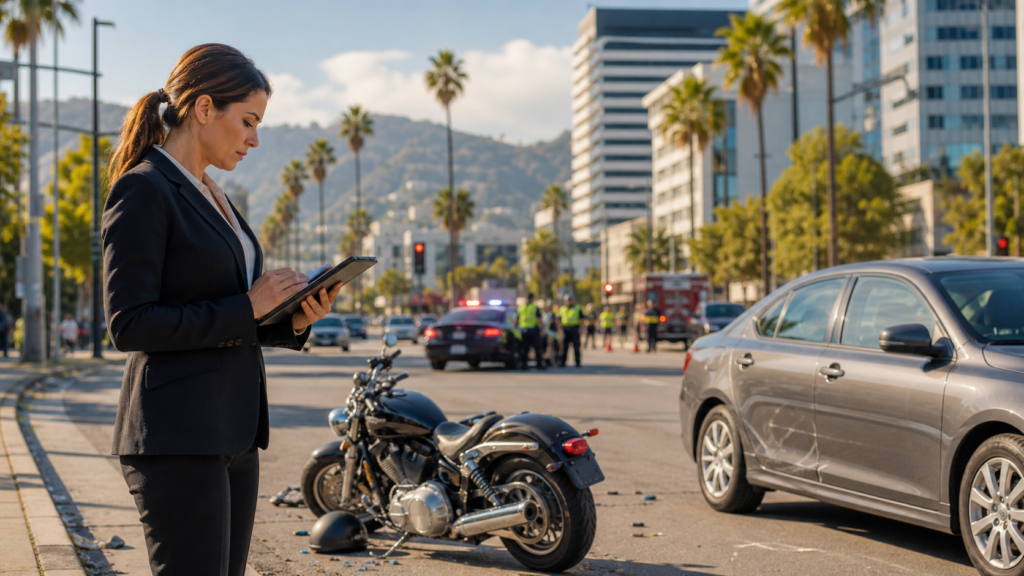
Los Angeles motorcycle accident attorneys help injured riders understand their legal options after crashes involving cars, trucks, road hazards, or other causes of serious collisions. Motorcycle accidents can create complicated insurance and liability issues because riders are more exposed to injury and may face unfair assumptions about how the crash happened. An attorney can help investigate the incident, preserve important evidence, communicate with insurers, evaluate damages, and determine whether a personal injury claim may be appropriate under the circumstances.
Los Angeles presents unique challenges for motorcyclists. Heavy traffic, complex freeway systems, congested intersections, rideshare vehicles, delivery drivers, construction zones, and frequent lane changes can all increase the risk of collisions.
When a motorcycle crash happens, the physical consequences can be serious even at relatively low speeds. Unlike drivers in passenger vehicles, motorcyclists do not have the protection of a vehicle frame, airbags, or large impact-absorbing structures around them.
The financial effects can also extend beyond immediate medical bills. An injured person may miss work, require rehabilitation, need future treatment, experience long-term pain, or face changes in daily life.
Understanding the legal process can help injured riders make informed decisions during a difficult period.
What Do Los Angeles Motorcycle Accident Attorneys Do?
Motorcycle accident attorneys generally represent injured riders and, in some circumstances, families affected by fatal crashes.
Their role is to identify potential legal claims and help clients navigate the personal injury process.
A lawyer may assist with tasks such as:
- Investigating how the crash occurred
- Reviewing police and incident reports
- Gathering photographs and video evidence
- Identifying witnesses
- Obtaining medical documentation
- Reviewing insurance coverage
- Communicating with insurance adjusters
- Evaluating financial losses
- Identifying potentially responsible parties
- Negotiating a settlement
- Preparing a lawsuit when necessary
The exact work depends on the facts of each case.
Some claims involve a straightforward collision with one driver, while others may involve multiple vehicles, commercial businesses, road conditions, defective components, or disputed liability.
Why Motorcycle Accident Cases Can Be Complicated
Motorcycle claims can be more complicated than ordinary property-damage disputes.
One reason is the severity of injuries.
More serious injuries usually mean higher medical expenses and potentially larger claims for future losses. When more money is involved, insurance companies may investigate liability and damages more aggressively.
Another issue is bias.
Some people assume that motorcyclists are always speeding or taking unnecessary risks. These assumptions should not replace evidence.
A motorcycle accident case should be evaluated based on facts such as vehicle positions, traffic signals, witness statements, video footage, physical damage, road conditions, and applicable traffic rules.
Attorneys can help keep the focus on evidence rather than stereotypes.
Common Causes of Motorcycle Accidents in Los Angeles
Motorcycle crashes can happen for many reasons.
Understanding common causes can help explain why liability is not always immediately obvious.
Drivers Turning Left
A common collision scenario occurs when a vehicle turns left across the path of an approaching motorcycle.
The driver may fail to notice the rider or may misjudge the motorcycle’s speed and distance.
These crashes can happen at intersections, driveways, parking lot exits, and business entrances.
Unsafe Lane Changes
Motorcycles are smaller and less visible than passenger vehicles.
Drivers who change lanes without carefully checking mirrors and blind spots may move directly into a rider’s path.
Heavy freeway traffic can increase this risk.
Rear-End Collisions
A rear-end crash that causes minor damage to a car can seriously injure a motorcyclist.
These accidents may occur at traffic lights, stop signs, freeway congestion points, or construction zones.
Distracted Driving
Drivers using phones, navigation systems, entertainment controls, or other distractions may fail to notice motorcycles around them.
Even a few seconds of inattention can be dangerous in dense traffic.
Speeding
Excessive speed reduces reaction time and increases stopping distance.
When a speeding driver enters an intersection or approaches traffic unexpectedly, a motorcyclist may have little time to avoid a collision.
Following Too Closely
Motorcycles may need to slow suddenly for road hazards that are less serious for cars.
A driver who follows too closely may not have enough time to stop.
Opening Vehicle Doors
In urban areas, parked vehicle occupants may open doors into the path of a motorcycle.
Dooring incidents can cause riders to collide with the door, another vehicle, or the road surface.
Road Hazards
Potholes, loose gravel, construction debris, uneven pavement, poor drainage, or dangerous surface conditions can be particularly hazardous for motorcycles.
A road condition that is only uncomfortable for a car can cause a rider to lose control.
Common Motorcycle Accident Injuries
Because riders have limited physical protection, motorcycle accidents can cause significant injuries.
The severity varies depending on speed, angle of impact, protective equipment, roadway conditions, and other factors.
Common injuries may include:
- Broken bones
- Shoulder injuries
- Leg and knee injuries
- Hand and wrist injuries
- Spinal injuries
- Head injuries
- Traumatic brain injuries
- Facial injuries
- Internal injuries
- Soft-tissue injuries
- Road rash
- Nerve damage
Some injuries are immediately obvious.
Others may develop or worsen hours or days after the crash.
For this reason, injured riders should take symptoms seriously and seek appropriate medical evaluation.
Medical records can also become important evidence if a legal claim is later pursued.
What to Do After a Motorcycle Accident
The actions taken after a crash can affect both health and any future insurance or legal claim.
Safety should come first.
Seek Medical Attention
Emergency care may be necessary for serious injuries.
Even when a rider feels able to walk away, medical assessment may still be important.
Adrenaline can temporarily mask pain.
A medical professional can evaluate potential injuries and recommend treatment.
Report the Accident
Depending on the circumstances, law enforcement may respond and prepare an accident report.
The report may include driver information, witness details, statements, and observations about the scene.
Document the Scene
If it is safe and physically possible, photographs or videos can preserve important evidence.
Useful images may show:
- Vehicle positions
- Motorcycle damage
- Road markings
- Traffic signals
- Skid marks
- Debris
- Weather conditions
- Road hazards
- Visible injuries
The scene can change quickly after vehicles are moved.
Exchange Information
Collect names, contact information, driver’s license details, vehicle information, and insurance information from involved drivers.
Identify Witnesses
Independent witnesses can become valuable when drivers disagree about what happened.
Obtain contact details if possible.
Avoid Speculating About Fault
People sometimes apologize automatically after an accident even when they did nothing wrong.
It is generally better to stick to basic facts rather than speculate about blame at the scene.
How Liability Is Determined
Determining liability involves examining the conduct of everyone involved.
The key question is often whether a person or entity failed to act with reasonable care and whether that failure contributed to the accident and resulting injuries.
Evidence may include:
- Police reports
- Witness accounts
- Traffic-camera footage
- Dashcam video
- Nearby security footage
- Photographs
- Vehicle damage
- Roadway evidence
- Medical records
- Phone or electronic records where legally obtainable
- Expert analysis in complex cases
Liability is not always limited to one person.
Multiple parties may share responsibility.
For example, two drivers may each contribute to a multi-vehicle crash.
Comparative Fault and Motorcycle Claims
Some motorcycle cases involve allegations that the rider also contributed to the crash.
A driver may argue that the rider was traveling too quickly, was difficult to see, or reacted improperly.
These allegations should be evaluated based on evidence.
In cases where responsibility is shared, the legal effect can depend on the rules applicable to the claim.
This is one reason detailed accident investigation matters.
A rider should not assume that a claim is impossible merely because another party alleges partial fault.
What Damages May Be Included in a Motorcycle Accident Claim?
Damages refer to losses caused by an accident.
The types of damages available depend on the circumstances of the case.
Medical Expenses
A claim may include reasonable medical costs related to accident injuries.
These can involve:
- Emergency treatment
- Hospital care
- Surgery
- Diagnostic testing
- Specialist visits
- Physical therapy
- Prescription medication
- Medical equipment
Future Medical Care
Some injuries require ongoing treatment.
Future care may include rehabilitation, additional surgery, pain management, therapy, or long-term medical support.
Lost Income
A rider who cannot work during recovery may lose wages.
Documentation such as payroll information, employer records, and medical work restrictions may help establish these losses.
Reduced Earning Capacity
A serious injury may permanently affect the person’s ability to perform the same work.
In appropriate cases, future earning limitations may become part of the damages analysis.
Property Damage
The motorcycle, riding gear, helmet, electronics, and other personal property may be damaged.
Property damage is often handled separately from bodily injury issues, depending on insurance and claim structure.
Pain and Suffering
Injury claims may also involve non-economic harm, such as physical pain and the impact injuries have on everyday life.
The value of these damages depends heavily on the individual circumstances.
Why Medical Documentation Matters
Medical records can become one of the most important parts of a motorcycle injury claim.
They help establish:
- The injuries diagnosed
- Treatment received
- Symptoms reported
- Medical recommendations
- Physical restrictions
- Recovery progress
Gaps in treatment can sometimes create disputes.
An insurer may argue that an injury was not serious if a person did not seek care or stopped recommended treatment without explanation.
Of course, there can be legitimate reasons for treatment gaps, including financial concerns, scheduling problems, or other circumstances.
Accurate documentation helps provide context.
How Insurance Companies Handle Motorcycle Claims
Insurance companies investigate claims to determine coverage, liability, and damages.
An adjuster may request statements, medical records, photographs, repair estimates, or other information.
The insurer may also examine whether the policy provides coverage for the particular accident.
Insurance companies have their own financial interests, so injured riders should understand that an adjuster’s role is not the same as having an independent advocate.
Disputes can arise over:
- Who caused the accident
- Whether injuries were accident-related
- Whether treatment was necessary
- The value of lost income
- Future medical needs
- Insurance limits
- Policy exclusions
- Comparative fault
An attorney can help manage these communications and evaluate settlement proposals.
Recorded Statements After a Motorcycle Accident
An insurance adjuster may ask an injured rider to provide a recorded statement.
Before agreeing, it can be useful to understand why the statement is being requested and whether there are legal implications.
Statements made soon after an accident can be difficult because the injured person may still be in pain, taking medication, or unaware of the full extent of injuries.
A person may also unintentionally give an incomplete answer.
Because insurance situations differ, getting legal advice before providing detailed recorded statements can help avoid unnecessary complications.
The Importance of Preserving Evidence
Evidence can disappear quickly after a motorcycle crash.
Vehicles are repaired.
Road debris is removed.
Surveillance footage may be overwritten.
Witnesses may become difficult to locate.
For this reason, early evidence preservation can be valuable.
Los Angeles motorcycle accident attorneys may send preservation requests, inspect vehicles, locate video footage, and document the accident scene when appropriate.
The sooner this process begins, the greater the chance that useful evidence remains available.
Traffic Camera and Surveillance Footage
Los Angeles has many businesses, residential buildings, intersections, and vehicles equipped with cameras.
A crash may be captured by:
- Business security cameras
- Residential cameras
- Dashcams
- Traffic monitoring systems
- Parking facility cameras
Video can be particularly valuable when drivers provide conflicting accounts.
However, recordings may not be retained for long periods.
Prompt investigation may improve the chance of locating relevant footage.
Motorcycle Accident Claims Involving Commercial Vehicles
A crash involving a commercial vehicle can introduce additional legal and insurance issues.
Examples include accidents with:
- Delivery vans
- Rideshare vehicles
- Company trucks
- Construction vehicles
- Service vehicles
- Commercial buses
Depending on the circumstances, responsibility may extend beyond the individual driver.
An employer or business may also become relevant if the driver was acting within the scope of work.
Commercial insurance policies and company records may need to be reviewed.
Motorcycle Accidents Involving Rideshare Vehicles
Los Angeles has significant rideshare traffic.
Motorcycle accidents involving rideshare drivers may involve questions about the driver’s activity at the time of the crash.
Insurance coverage can depend on whether the driver was offline, waiting for a ride request, traveling to pick up a passenger, or actively transporting someone.
These cases can become more complicated than ordinary two-driver collisions.
Documentation from the rideshare platform and available insurance policies may be important.
Motorcycle Accidents Caused by Road Conditions
Not every motorcycle crash is caused by another driver.
Dangerous road conditions may contribute to an accident.
Potential hazards include:
- Potholes
- Broken pavement
- Loose materials
- Unmarked construction
- Dangerous roadway transitions
- Poorly maintained surfaces
- Debris
Claims involving public roads or government entities can involve special legal procedures and shorter notice requirements.
These situations should be evaluated promptly because missing a required deadline can affect a claim.
Defective Motorcycle Parts
In some cases, a mechanical defect may contribute to a crash or make injuries worse.
Potential issues could involve brakes, tires, steering systems, or other components.
Product-related cases can require technical investigation.
The motorcycle and damaged parts should generally be preserved until the cause of the failure is properly evaluated.
Repairing or disposing of important evidence too quickly can make later investigation more difficult.
Lane Splitting and Motorcycle Accident Claims
Motorcycle riding rules can create additional questions after a crash.
When a collision happens while a rider is traveling between lanes, both the rider’s actions and the surrounding drivers’ conduct may be examined.
The existence of lane splitting does not automatically determine fault.
Investigators may consider speed, traffic conditions, lane changes, signaling, visibility, and the actions of other vehicles.
Each case should be reviewed based on its specific facts.
How Attorneys Investigate Motorcycle Accidents
A detailed legal investigation may begin with reviewing the client’s account and available documents.
The attorney may then gather additional evidence.
This can include:
- Reviewing accident reports.
- Obtaining photographs and video.
- Interviewing witnesses.
- Examining vehicle damage.
- Reviewing medical records.
- Investigating insurance coverage.
- Identifying additional responsible parties.
- Consulting experts when necessary.
Complex cases may involve accident reconstruction professionals, medical experts, vocational specialists, or economists.
Not every case needs expert testimony, but technical assistance can be useful when major issues are disputed.
Settlement Negotiations
Many motorcycle accident claims are resolved through settlement rather than trial.
Settlement negotiations generally involve presenting evidence of liability and damages to the insurance company.
The insurer may respond with an offer.
The first offer is not necessarily the final value of the case.
An attorney may evaluate whether the offer reasonably reflects medical expenses, income loss, future needs, and other damages.
Negotiations can continue until the parties reach an agreement or decide that litigation is necessary.
Filing a Motorcycle Accident Lawsuit
If settlement negotiations do not resolve a claim, filing a lawsuit may be an option.
Litigation involves a more formal process.
The parties may exchange information through discovery, take depositions, retain experts, file motions, and prepare for trial.
A lawsuit does not necessarily mean the case will reach a courtroom.
Many cases settle during litigation.
However, being prepared to proceed can be important when liability or damages remain disputed.
How Long Does a Motorcycle Accident Case Take?
There is no standard timeline.
A relatively straightforward claim involving clear liability and completed medical treatment may resolve sooner than a case involving major injuries or disputed fault.
Factors that can affect timing include:
- Severity of injuries
- Length of medical treatment
- Number of parties
- Insurance disputes
- Availability of evidence
- Expert investigation
- Court schedules
- Settlement negotiations
Rushing a claim before the medical situation is understood can make it difficult to evaluate future losses accurately.
At the same time, legal deadlines still need to be monitored.
Legal Deadlines After a Motorcycle Accident
Personal injury claims are subject to filing deadlines.
The exact deadline can depend on the circumstances, the parties involved, and the type of claim.
Claims involving government entities may have special procedural requirements that arise earlier than ordinary personal injury deadlines.
Because these time limits can affect legal rights, injured riders should avoid assuming that they have unlimited time to decide what to do.
Speaking with a qualified attorney promptly can help identify the deadlines that apply to a specific case.
How to Choose Los Angeles Motorcycle Accident Attorneys
Selecting an attorney is an important decision.
A rider should feel comfortable asking questions and understanding how the case will be handled.
Consider factors such as:
- Experience with motorcycle accident claims
- Personal injury litigation experience
- Communication style
- Case-management approach
- Familiarity with serious injury cases
- Ability to investigate complex liability
- Availability to answer questions
A consultation can help a potential client understand whether the attorney’s approach fits their needs.
Questions to Ask a Motorcycle Accident Attorney
Useful questions may include:
- Have you handled motorcycle accident cases before?
- Who will manage my case?
- How will you communicate updates?
- What evidence should I preserve?
- What insurance policies may apply?
- What costs could be involved?
- How are legal fees structured?
- What deadlines should I know about?
- What should I avoid doing while the claim is pending?
Clear answers can help a client understand the process before moving forward.
Common Mistakes After a Motorcycle Accident
Some actions can unintentionally make a claim more difficult.
Delaying Medical Care
Waiting too long to seek treatment can create health concerns and disputes over whether an injury came from the crash.
Posting Too Much on Social Media
Photos, comments, or activity updates may be taken out of context during an insurance dispute.
Repairing the Motorcycle Immediately
In serious or disputed cases, vehicle damage may contain useful evidence.
Accepting a Quick Settlement Without Understanding the Claim
An early offer may arrive before the full extent of injuries or future treatment is known.
Ignoring Deadlines
Legal and insurance deadlines should be taken seriously.
Making Assumptions About Fault
Accident responsibility may be more complicated than it initially appears.
Why Motorcycle Cases Require Careful Damage Evaluation
A motorcycle injury can affect more than medical bills.
A rider may be unable to perform normal work duties, household tasks, hobbies, or family responsibilities.
Long-term limitations may not become clear immediately.
This is why claim evaluation should consider both current and future consequences.
For severe injuries, medical opinions may be needed to estimate future treatment.
Employment records or vocational analysis may also become relevant when earning ability is affected.
Wrongful Death Motorcycle Accident Claims
Some motorcycle accidents result in fatal injuries.
In those circumstances, certain surviving family members may have potential legal rights depending on the situation.
Wrongful death cases can involve damages connected to financial support, loss of companionship, funeral costs, and other legally recognized losses.
These cases are emotionally difficult and legally complex.
Families should focus first on personal needs while obtaining reliable legal guidance about deadlines and available options.
The Role of Evidence in a Strong Motorcycle Accident Claim
Strong claims are generally built on documentation rather than assumptions.
Useful evidence may include:
- Medical records
- Treatment bills
- Accident reports
- Photographs
- Witness information
- Repair documentation
- Employment records
- Video footage
- Insurance policies
Keeping organized records can make the claims process easier.
It also helps an attorney understand the full financial and personal impact of the accident.
Why Early Legal Advice Can Be Helpful
Not every motorcycle accident requires a lawsuit.
However, early legal advice can help a rider understand what options exist and what steps may protect important evidence.
A consultation can also identify insurance coverage, filing deadlines, and potential complications before they become harder to address.
This can be particularly important when injuries are serious, fault is disputed, multiple vehicles are involved, or a commercial or government entity may share responsibility.
Conclusion
Los Angeles motorcycle accident attorneys can help injured riders navigate the legal, medical, and insurance issues that often follow a serious crash. Motorcycle accident claims may involve disputed liability, significant injuries, lost income, future medical needs, multiple insurance policies, and evidence that can disappear quickly. Riders should prioritize medical care, document the accident when possible, preserve important records, avoid making unsupported assumptions about fault, and pay close attention to legal deadlines. Every motorcycle collision is different, so the value and legal strength of a claim depend on the specific facts, available evidence, injuries, insurance coverage, and responsible parties involved.
Frequently Asked Questions
What do Los Angeles motorcycle accident attorneys do?
Los Angeles motorcycle accident attorneys investigate crashes, gather evidence, review insurance coverage, evaluate damages, negotiate with insurers, and pursue legal claims when appropriate.
When should I contact a motorcycle accident attorney?
It may be helpful to seek legal advice soon after a crash, especially when injuries are serious, liability is disputed, multiple vehicles are involved, or important evidence may disappear.
What compensation may be available after a motorcycle accident?
Depending on the case, damages may include medical expenses, future medical care, lost income, reduced earning capacity, property damage, and certain non-economic losses.
Can I still have a claim if I was partly responsible for the accident?
Potentially. Cases involving shared responsibility depend on the facts and applicable legal rules. Partial fault does not always eliminate the possibility of recovering damages.
Should I talk to the other driver’s insurance company?
You may be contacted by an insurance adjuster, but it is important to understand your rights before providing detailed or recorded statements. Legal advice can help clarify how to respond.
How long does a motorcycle accident claim take?
The timeline varies based on injury severity, medical treatment, liability disputes, insurance issues, the number of parties, and whether litigation becomes necessary.
What evidence is important in a motorcycle accident case?
Important evidence may include accident reports, photographs, videos, witness statements, medical records, vehicle damage, employment records, and insurance documents.
Do all motorcycle accident cases go to court?
No. Many claims are resolved through settlement negotiations. Litigation may become necessary when the parties cannot agree on liability, damages, or other important issues.