
Luxury jewelry is the most enduring form of personal adornment humankind has produced, and also the most misunderstood, because the word luxury is used so...
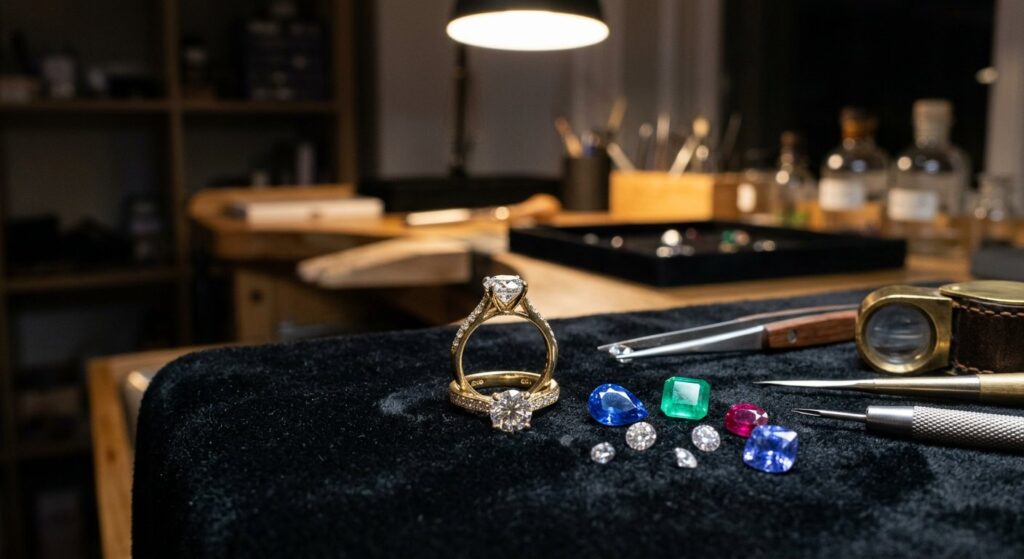
Luxury jewelry is the most enduring form of personal adornment humankind has produced, and also the most misunderstood, because the word luxury is used so loosely that a mass-produced piece and a hand-finished maison creation can wear the same label at wildly different levels of quality. True luxury jewelry is not defined by price alone but by intent and execution: precious metals honestly alloyed, gemstones individually selected rather than bought in bulk, settings engineered to survive decades of wear, and design with the discipline to age gracefully rather than chase a season. Those standards have been refined over centuries by the great houses of Europe, and they remain the same today, which is genuinely good news for any buyer: quality leaves evidence, and evidence can be learned. This guide sets out the nine markers that separate exceptional pieces from merely expensive ones, from materials and craftsmanship through provenance, service, and care, with a comparison table and the questions serious buyers ask before committing to a piece that may outlive them.
Key Takeaways
- Luxury jewelry is defined by craftsmanship, material integrity, and design longevity rather than price alone.
- The nine markers span materials, hand-finishing, stone selection, design discipline, heritage, rarity, provenance, service, and care.
- Hallmarked precious metals and independently certified gemstones are the paper evidence of quality; construction quality is the physical evidence.
- High jewelry sits above standard fine jewelry in stone rarity, setting complexity, and hours of specialist handwork, often as one-of-a-kind creations.
- A piece from a heritage house carries provenance and design continuity that support both emotional and long-term value.
What Is Luxury Jewelry?
Luxury jewelry is adornment made from precious metals and carefully selected gemstones, elevated above the ordinary by exceptional craftsmanship, design coherence, and longevity. The distinction matters because fine jewelry, properly so called, already means solid gold and genuine stones; what lifts a piece into the luxury tier is everything beyond the bill of materials, the hours of specialist handwork, the individual matching of stones, the engineering hidden inside a setting, and a design language with a point of view refined over generations. At the summit sits high jewelry, the haute joaillerie tier where houses place their rarest stones and most ambitious work, pieces that can take months of hand-finishing and may exist as a single example in the world. Luxury, in this sense, is measurable: in tolerances, in hours, in the rarity of what the earth supplied and the skill that made the most of it. Those units do not photograph well in an advertisement, which is why the language of luxury drifts towards mood and lifestyle, and why a buyer armed with concrete markers holds such an advantage.
Fine Jewelry and High Jewelry, Briefly
The two tiers are worth keeping separate in your mind when you buy. Fine jewelry is production craftsmanship at a high standard, solid precious metal, genuine graded stones, made in quantities that allow consistent quality at a workable price. High jewelry is atelier work: exceptional stones, complex settings such as invisible or pavé work, and construction decisions made around each individual gem, produced in tiny numbers or as true one-offs. Neither tier is illegitimate; they serve different intentions. The failure mode is paying high-jewelry prices for production pieces, which is precisely what the nine markers below are designed to prevent. Learn the difference once and it serves every purchase afterwards, from a first gold chain to a collector’s commission.
The 9 Timeless Markers of Exceptional Craftsmanship
1. Honest, Hallmarked Materials
Everything begins with the metal. Genuine luxury pieces are wrought in solid 18ct gold or platinum, never plated or filled, and the purity is declared and stamped: hallmarks in Europe, quality marks elsewhere, backed by consumer protection law in most jurisdictions. Alloy choices themselves reveal intent, 18ct yellow, white, or rose gold balances richness of colour with durability, while platinum’s density and strength make it the traditional setting metal for the most valuable stones. The evidence is verifiable rather than rhetorical: ask for the hallmark, the metal specification, and, for significant stones, an independent laboratory report. A house confident in its materials puts its stamp on them, literally. In Britain and across much of Europe, independent assay offices apply those hallmarks themselves, testing the metal at arm’s length from the maker, which is why the tiny stamps inside a ring band are worth more than any certificate of charm a seller could type on letterhead.
2. Hand-Finishing You Can Feel
Machine production can achieve acceptable surfaces; only hand-finishing achieves the light behaviour that makes precious metal come alive. Run a finger along a well-made gallery and you feel softened edges, seamless joins, and surfaces polished through successive grades rather than buffed in a hurry. Under magnification the evidence is plainer still: symmetrical prongs, evenly spaced milgrain, pavework where every bead sits deliberately. Finishing is among the most time-consuming stages of making, which is exactly why it is the first place volume production cuts corners, and why it is the honest tell when you compare pieces side by side. Hours matter here: hand-finishing a single complex piece can take longer than machining a dozen, and that arithmetic is precisely the premium a true atelier spends and a workshop skimps.
3. Stones Selected Individually
In exceptional pieces, gemstones are chosen the way a chef chooses produce, one by one, for colour, clarity, cut, and how they sit beside their neighbours. Matching a parcel of sapphires for a single bracelet, for instance, means rejecting dozens of stones that would pass unremarked in lesser work, and large center stones are evaluated on origin, saturation, and treatment history rather than carat weight alone. Independent certification from respected gemmological laboratories accompanies the significant stones, describing what you are buying in standardised language. The difference is visible in the piece itself: stones that read as one colour in every light, graduated in size so the eye travels naturally along the design. Ask how many stones were rejected to build the piece in front of you; ateliers answer that question with pride, and production houses answer it with silence.
4. Settings Engineered for a Century of Wear
A luxury setting is jewellery engineering as much as jewellery art: prongs shaped and positioned for the specific stone, galleries reinforced where decades of knocks will land, bezels calculated to protect fragile edges, and sufficent metal where thinness would save weight at the cost of the piece’s life. This is where longevity is decided, because the loveliest stone in a poorly engineered setting will eventually rattle, chip, or depart entirely. Ask how the setting protects the stone during daily wear and how the piece can be serviced; a well-designed piece anticipates its own maintenance, with stones set to be re-tightened and shanks able to be rebuilt. White gold deserves a specific mention, since its colour comes from rhodium plating that wears and is renewed; a well-made piece is designed around that servicing cycle rather than pretending it away, and platinum, which weathers to a soft grey patina many connoisseurs prefer, sidesteps it altogether.
5. Design Discipline That Ages Well
Trend pieces shout; luxury design converses. The houses whose work is collected decades later share a discipline of proportion, symmetry, and wearability, motifs developed and refined across collections rather than invented and abandoned each season. This is where heritage becomes tangible: a design language carried forward, the famous cluster ring silhouettes and wing-like sculptural forms of English high jewelry, the garland styles of the great Parisian ateliers, earns its place by having proved it endures. When you evaluate a piece, imagine it in twenty years; disciplined design will still look composed when novelty has faded, and that quality is a large part of what you are actually paying a great house for. There is a practical test as well: look at a house’s current collection beside pieces it made thirty years ago, and the design language should be recognisably the same family, evolved rather than replaced.
6. Heritage You Can Verify
Provenance of the maker matters as much as provenance of the stone. The oldest European houses carry centuries of continuous craft: London’s Garrard, founded in 1735, holds the distinction of being the world’s oldest luxury jewelry house and served generations of the British royal family as Crown Jeweller, history that remains visible in its present collections, from the Wings pieces in 18ct gold with sapphires and diamonds to the cluster rings descended from the design it made iconic in 1840 with the engagement ring created for Queen Victoria. Browsing Luxury jewelry from a house with that lineage is an education in itself, because the motifs, setting standards, and hand-finishing recorded in its archives are the same ones shaping the pieces made this year, a continuity no young brand can manufacture. Heritage of this kind is not nostalgia; it is institutional knowledge, setting techniques, and design memory that no newly founded brand can compress into a decade. It is also checkable: real houses have archives, records, and continuous documentation, which brings the next marker into play.
7. Rarity and Provenance That Hold Value
Exceptional pieces are made in limited numbers, and the best carry documented histories, original certificates, maker’s marks, archive references, and records of previous ownership for historic pieces. This paper trail does double duty: it authenticates the piece today and it underpins value tomorrow, because the collector market pays for documented originals in a way it never will for anonymous lookalikes. One-of-a-kind commissions and numbered limited editions sit at the summit of this logic, their uniqueness inseparable from their value. When buying, ask what documentation accompanies the piece and whether the maker’s archive can confirm it; the answer tells you a great deal about what you are actually acquiring. Auction results make the same argument in public: documented pieces with known histories consistently outperform anonymous equivalents of similar metal and stone weight, because collectors pay for certainty as much as beauty.
8. Service That Matches the Object
The purchase is the beginning of a luxury piece’s life, not the transaction’s end, and the houses that make exceptional objects stand behind them with commensurate service: cleaning and inspection, re-polishing, stone re-tightening, resizing, restoration by the same hands that built the piece, and bespoke design for clients whose vision does not stop at the catalogue. This service layer is quietly material to value, a piece serviced by its original maison retains provenance continuity that third-party repairs interrupt. It is also a test you can apply before buying: ask what aftercare is included, how restoration is handled, and whether the workshop that made the piece services it. The confidence of the answer is diagnostic. Bespoke clients should expect the same philosophy in reverse, sketches, stone selections, and fitting sessions that turn a commission into a collaboration rather than a transaction.
9. Care Culture Built Around Longevity
The final marker is a mindset shared by maker and owner alike: the assumption that the piece will outlast its purchaser. Luxury jewelry is designed to be worn, loved, and maintained, inspected annually, cleaned gently, stored separately so stones do not scratch one another, removed for the gym and the garden, with gem-specific care since emeralds, pearls, and diamonds each ask different things of their owner. Houses reinforce this with guidance, servicing, and often lifetime checks. Treat the first inspection visit as part of the purchase itself: it introduces you to the workshop, surfaces small issues before they grow, and sets the rhythm of care the piece will follow for decades. The deeper point is that care is part of the value proposition: a piece built to be restored and a maker equipped to restore it together make ownership measured in generations rather than seasons, which is the quiet definition of true luxury. Owners of significant pieces would be wise to add two more habits: an up-to-date insurance valuation, renewed every few years, and sensible care when travelling, because a piece built for a century still deserves protection on holiday.
Luxury Jewelry at a Glance
| Marker | What to Check | Red Flag |
|---|---|---|
| Materials | Solid 18ct gold or platinum, hallmarks stamped | Plating, unstamped metal, vague specifications |
| Hand-finishing | Smooth galleries, even prongs, refined edges | Casting seams, rough interiors, hurried polish |
| Stones | Individually selected, certified where significant | Bulk-matched parcels, no laboratory reports |
| Settings | Engineered for wear, serviceable construction | Thin shanks, off-the-shelf mounts |
| Design | Proportioned, coherent, ageing gracefully | Seasonal novelty with no design language |
| Heritage | Verifiable history, archives, Royal and celebrity commissions | Invented heritage, unverifiable claims |
| Provenance | Documentation, certificates, numbered editions | No records, no accountability |
| Service | In-house servicing, restoration, bespoke | No aftercare beyond the sale |
| Care | Guidance provided, maintenance culture | Wear-and-replace mentality |
No single marker disqualifies a piece on its own, but the table reads honestly in one direction: pieces that pass all nine rows are rare, and pieces that fail several are not luxury at any price. Take the table shopping, literally or on your phone, and it will keep the conversation focused on evidence rather than adjectives, which is exactly where a significant purchase belongs.
Frequently Asked Questions
What defines luxury jewelry?
Exceptional craftsmanship, honest precious materials, individually selected gemstones, and design built to last for decades, quality measured in execution and provenance rather than price alone.
How is high jewelry different from fine jewelry?
High jewelry sits a tier above: rarer stones, more complex hand-executed settings, months of atelier work, and production in tiny numbers or as one-of-a-kind pieces, while fine jewelry offers solid precious materials at production scale.
Does luxury jewelry hold its value?
Documented pieces from verifiable houses tend to hold value best, because provenance, rarity, and design continuity are what the collector market rewards; anonymous pieces trade mainly on their metal and stones.
What documentation should accompany a significant piece?
Hallmarks or quality marks on the metal, independent gemmological certificates for significant stones, and wherever possible the maker’s own certificate, archive reference, or numbered edition paperwork.
Can luxury jewelry be worn every day?
Yes, and it is made to be: settings are engineered for wear, which is precisely why annual inspection, gentle cleaning, and sensible habits like removing rings for heavy work matter.
How do I choose between heritage houses and contemporary designers?
Buy the piece, not the label: heritage houses offer verified provenance and design languages proved over generations, while strong contemporary ateliers offer modern interpretations, and both deserve scrutiny against the nine markers above.
Conclusion
Luxury jewelry rewards the person who looks closely, because unlike most purchases in life, its quality is genuinely legible: in the hallmark stamped inside the band, the prong finished by a steady hand, the certificate that follows the stone, the archive that stands behind the maker’s name. The nine markers in this guide are old rules, refined over centuries by the houses that invented them, and they apply just as firmly to a first significant purchase as to a collector’s commission, learn them once and they serve every decision afterwards. Buy honestly made pieces from makers with verifiable history, insist on documentation, wear what you acquire, and care for it as the maker intended, and the piece that leaves the atelier this year will still be composing light across a room long after fashions now current have been forgotten. That endurance, more than any carat or price tag, is what luxury jewelry has always meant.