
The Manaslu Circuit Trek is a high altitude journey around the Manaslu massif in Nepal, combining dramatic Himalayan landscapes, traditional settlements, Buddhist cultural influences and a demanding...
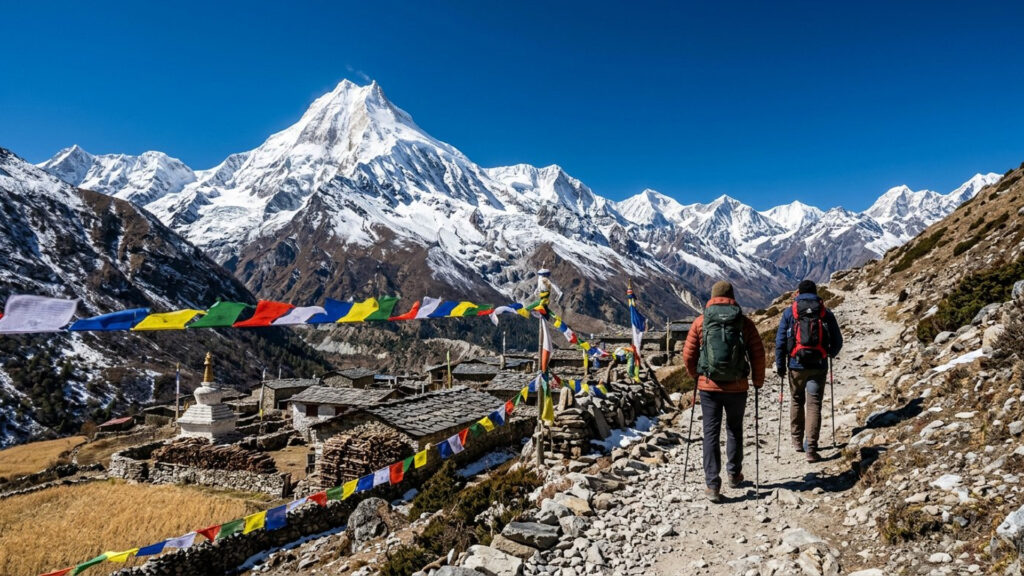
The Manaslu Circuit Trek is a high altitude journey around the Manaslu massif in Nepal, combining dramatic Himalayan landscapes, traditional settlements, Buddhist cultural influences and a demanding crossing of Larkya La. Located in the Gorkha region, the route is often considered an alternative to Nepal’s busier trekking corridors, but its relative remoteness also demands careful preparation. Restricted area rules, permits, guide requirements, changing road access, weather and altitude all affect how the trek should be planned. For trekkers considering this Himalayan circuit, understanding the route and its risks before arriving in Nepal is essential.
What Is the Manaslu Circuit Trek?
The Manaslu Circuit is a multi day trekking route through Nepal’s Manaslu region. The journey generally follows the Budhi Gandaki valley before climbing through increasingly high altitude settlements toward Larkya La Pass and descending toward the Annapurna region.
Mount Manaslu, at 8,163 metres, is the world’s eighth highest mountain according to generally accepted Himalayan elevation records. The mountain provides a spectacular backdrop to significant portions of the route.
The trek passes through environments ranging from lower river valleys and forests to alpine terrain and high mountain landscapes.
Its character changes dramatically with elevation. Lower sections can feel comparatively lush, while the upper route is defined by thinner air, colder conditions and expansive views of Himalayan peaks.
Because roads and infrastructure continue to develop in Nepal, exact trekking distances, starting points and transport arrangements can change. Current local information should always take priority over an old published itinerary.
9 Powerful Tips for a Successful Manaslu Circuit Trek
Completing the circuit is less about moving quickly and more about preparation, acclimatization and making sensible decisions as conditions change.
1. Allow Enough Time for the Manaslu Circuit Trek
Avoid compressing a high altitude trek simply to fit a tight holiday schedule.
A typical itinerary often requires roughly two weeks of trekking, with additional time needed for ground transportation, preparation and contingencies. Exact duration varies according to starting and finishing points, acclimatization strategy and trail conditions.
Building spare time into an itinerary can be valuable because weather, road conditions, illness and other circumstances may cause delays.
Rushing also creates problems at altitude, where the human body needs time to adapt to reduced oxygen availability.
2. Take Acclimatization Seriously
Altitude is one of the most significant health considerations on the Manaslu route.
As elevation increases, atmospheric pressure decreases, reducing the amount of oxygen available with each breath. The body requires time to acclimatize.
Acute mountain sickness, commonly abbreviated AMS, can affect healthy and physically fit people. Fitness does not provide immunity.
Gradual ascent and appropriately planned acclimatization days are therefore important.
3. Understand the Manaslu Trek Permit Rules
The Manaslu region includes areas subject to specific trekking and conservation regulations.
Foreign visitors generally need multiple permits, which can include a restricted area permit and conservation area permits depending on the route.
Requirements, fees and administrative procedures can change.
Trekkers should verify current rules through Nepal’s Department of Immigration, relevant conservation authorities, and a properly registered trekking agency before departure.
4. Prepare for Larkya La Pass
Larkya La is the highest and most demanding section of the standard circuit.
Published sources commonly place the pass at approximately 5,100 metres, although precise figures differ slightly between maps and GPS records.
The crossing usually involves a very early start and a long day of walking in cold, exposed mountain terrain.
Manaslu Circuit Trek Larkya La Preparation
Preparation should include suitable layering, sun protection, gloves, reliable footwear, adequate hydration and awareness of changing weather.
Why Larkya La Requires Extra Caution
Snow, ice, wind, poor visibility and low temperatures can transform trail conditions. A schedule should never take priority over safety when weather or health conditions make proceeding unreasonable.
5. Choose the Trekking Season Carefully
Spring and autumn are generally regarded as the main trekking periods in Nepal.
Spring can provide pleasant trekking conditions and seasonal vegetation, while autumn is often valued for relatively stable weather and clear mountain views.
Conditions are never guaranteed.
Winter can bring severe cold and snow at high elevations, while Nepal’s summer monsoon can result in heavy rainfall, landslides, difficult trails and transport disruption in affected areas.
6. Train Before the Manaslu Circuit Trek
The circuit requires repeated days of walking, significant elevation changes and extended time at altitude.
Training should therefore focus on cardiovascular endurance, leg strength and sustained hiking ability.
Walking uphill while carrying the pack you intend to use can provide useful preparation.
The objective is not competitive athletic performance. It is developing enough endurance that ordinary trekking effort does not consume all your physical reserves.
7. Bring Appropriate Trekking Equipment
High elevation conditions require more preparation than an ordinary day hike.
Equipment should suit the expected season and current conditions.
Layered clothing is particularly useful because temperatures can change significantly between daytime trekking, shaded valleys, evenings and high passes.
Reliable equipment is more important than simply bringing more equipment.
8. Budget Beyond the Advertised Trek Price
A package price may not represent every expense associated with the journey.
Trekkers may need to budget for permits, guide services, transportation, accommodation, meals, drinking water treatment, charging, connectivity, equipment rental, insurance, tips and personal spending.
Emergency expenses should also be considered.
Understanding what is included in a quotation makes different trekking packages easier to compare.
9. Use Experienced Local Trekking Support
Because the route passes through restricted areas and remote high altitude terrain, professional local support is important and may be required under current rules.
A capable guide can assist with route decisions, accommodation, communication, changing trail conditions and emergency coordination.
Guide selection should not be based solely on the lowest price.
Verify that the trekking operator is appropriately registered and that required staff arrangements comply with current Nepalese regulations.
Manaslu Circuit Trek Itinerary
There is no single mandatory itinerary. Road development, acclimatization, trail conditions and agency planning can change the beginning, end and number of trekking days.
A representative journey may progress through the Budhi Gandaki valley toward settlements such as Jagat, Deng, Namrung, Lho and Samagaun before continuing toward Samdo and the Larkya La approach.
After crossing the pass, trekkers generally descend toward Bhimtang and eventually connect with road access or trails in the Annapurna region.
Early Stages of the Manaslu Circuit Trek
The lower section follows river valleys, suspension bridges, forested slopes and settlements.
Daily elevation gains are initially more moderate than those encountered later, although the trail itself can still involve substantial climbing and descending.
Warm conditions are possible at lower elevations, especially when the sun is strong.
Trekking Toward Namrung and Lho
As trekkers gain elevation, the scenery becomes increasingly Himalayan.
Views of Manaslu
Around the upper villages, weather permitting, dramatic views of Manaslu and surrounding peaks become a major feature of the journey.
Cloud cover can obscure mountain views at any time, so no particular viewpoint should be treated as guaranteed.
Samagaun on the Manaslu Circuit Trek
Samagaun is an important settlement and commonly serves as an acclimatization location on Manaslu itineraries.
Spending additional time at elevation can help support acclimatization before moving higher.
The village also provides insight into the cultural landscape of the region, where Tibetan Buddhist influences are reflected in monasteries, mani walls, prayer wheels and local traditions.
Visitors should approach religious and community sites respectfully.
Manaslu Base Camp Side Trip
Some trekkers consider a day excursion toward Manaslu Base Camp while staying in Samagaun.
The hike involves significant elevation gain and should not be viewed as an obligatory acclimatization activity.
Is Manaslu Base Camp Suitable for Everyone?
No. Conditions, fitness, altitude symptoms and available time should determine whether the excursion is appropriate.
Acclimatization Is More Important Than Checklists
A side trip is worthwhile only when it supports a safe itinerary. Trekkers experiencing symptoms potentially associated with altitude illness should communicate them to their guide instead of attempting a demanding excursion simply to complete a landmark.
Samdo and the Upper Manaslu Region
Samdo is another important high altitude settlement before the approach to Larkya La.
At this stage, trekkers are well above the elevations at which altitude illness can become a concern.
Movement may feel slower even for well conditioned hikers.
The upper landscape is comparatively exposed and remote, reinforcing the importance of appropriate clothing and conservative decision making.
Dharmasala Before Larkya La Pass
Many itineraries include an overnight stop near the final approach to the pass, often referred to by trekkers as Dharmasala or Larkya Phedi.
Facilities in this area can be basic.
Preparing for the Larkya La Crossing
Equipment should be organized before sleeping because departure may occur early.
Weather on the High Pass
Conditions can change rapidly. Snow or ice can increase difficulty, and seasonal conditions may make additional traction equipment appropriate. Current advice from experienced local guides is more valuable than a generic packing list created months in advance.
Larkya La Pass on the Manaslu Circuit Trek
Crossing Larkya La is widely regarded as the physical high point of the circuit.
The day can involve many hours of walking at elevations where oxygen availability is considerably lower than at sea level.
Progress should be steady rather than rushed.
From the pass and its approaches, clear conditions can reveal an extensive landscape of glaciers, ridges and surrounding Himalayan peaks.
The descent also demands attention. Fatigue after reaching the pass can increase the risk of slips and poor decisions.
Descending Toward Bhimtang
After the crossing, trekkers typically descend toward Bhimtang.
Descending to a lower sleeping elevation may feel physically easier from an altitude perspective, but steep trail sections can remain demanding on knees and legs.
Trekking poles can be useful for some hikers.
Manaslu Circuit Trek Difficulty
The Manaslu Circuit should generally be considered a demanding high altitude trek.
Its difficulty comes from several factors rather than technical climbing alone.
Trekkers face consecutive walking days, steep ascents and descents, remote terrain, limited facilities at higher elevations, unpredictable mountain weather and a pass above approximately 5,000 metres.
Do You Need Mountaineering Experience?
The standard trekking route does not ordinarily require the same technical climbing skills as a mountaineering expedition.
However, snow and ice can alter conditions substantially.
A lack of technical climbing requirements should not be confused with an easy trek.
Fitness Needed for the Manaslu Circuit Trek
Trekkers should be comfortable walking for several hours on consecutive days across uneven terrain.
Training Before Travelling to Nepal
A preparation program can include hiking, stair climbing, moderate cardiovascular exercise and lower body strengthening. People with medical concerns should discuss high altitude travel and strenuous exercise with an appropriate healthcare professional.
Altitude Sickness on the Manaslu Circuit
Altitude illness deserves particular attention because early symptoms can become serious if ignored.
Acute mountain sickness can involve headache alongside symptoms such as nausea, dizziness, fatigue or sleep disturbance after gaining elevation.
Severe altitude illness can become life threatening.
Trekkers should promptly report symptoms and follow qualified medical and guide advice.
Reducing Altitude Risk
Gradual ascent is important. Adequate acclimatization days and conservative pacing help the body adapt.
Hydration and adequate nutrition support general wellbeing but do not guarantee protection against altitude illness.
Alcohol and sedating substances can complicate high altitude travel and should be approached cautiously.
Medication for Altitude
Acetazolamide is sometimes used for altitude illness prevention or treatment in appropriate circumstances.
Seek Medical Advice Before Your Trek
Medication decisions should be discussed with a qualified healthcare professional who can assess medical history, contraindications and potential adverse effects. Medication should not be used as a reason to ignore a sensible ascent profile.
Manaslu Circuit Trek Permits
Permit requirements are an essential planning consideration.
The standard circuit typically involves the Manaslu Restricted Area and conservation areas. Depending on the current route and official rules, trekkers may require a Restricted Area Permit and permits associated with the Manaslu and Annapurna conservation areas.
Restricted area fees can vary according to season and length of stay.
Do You Need a Guide for the Manaslu Circuit Trek?
Manaslu restricted area regulations have historically required trekking through authorized arrangements with a licensed guide and specific group conditions for foreign trekkers.
Rules can change, so current requirements should be confirmed before booking travel.
Where to Verify Manaslu Circuit Trek Rules
Consult Nepal’s Department of Immigration, the Nepal Tourism Board, relevant conservation authorities and a registered Nepalese trekking agency.
Why Current Permit Information Matters
Travel blogs can become outdated quickly. Government rules, permit prices, road access and trekking regulations can change after an article is published.
Best Time for the Manaslu Circuit Trek
The most popular seasons are generally spring and autumn.
Spring Trekking
March through May is commonly associated with the spring trekking season.
Temperatures generally become warmer as the season progresses, while vegetation at suitable elevations can add color to the landscape.
Mountain weather remains variable, especially at high elevations.
Autumn Trekking
October and November are widely popular for Himalayan trekking following the main monsoon period.
Clearer skies and relatively stable conditions often make autumn attractive to trekkers.
Popularity can also mean greater demand for accommodation.
Winter and Monsoon Trekking
Winter presents much colder conditions and potential snow disruption at Larkya La.
Seasonal Flexibility Matters
Monsoon rain can create difficult trail and transport conditions, while winter storms can affect high passes. Obtain up to date local information before committing to travel outside the main seasons.
Accommodation and Food on the Manaslu Circuit Trek
The Manaslu Circuit is generally undertaken as a teahouse trek.
Teahouses provide relatively simple rooms and meals along established sections of the route. Standards vary between villages and should not be compared with urban hotels.
At higher elevations, facilities can be particularly basic.
Common meals may include dal bhat, noodles, soups, rice dishes, potatoes and other locally available foods.
Menu variety and availability can decrease in remote locations because supplies must travel considerable distances.
Drinking Water During the Trek
Safe hydration is essential.
Trekkers can use appropriately treated water rather than relying automatically on untreated natural sources.
Reducing Plastic Waste
Reusable bottles combined with a suitable treatment method can reduce dependence on disposable plastic bottles.
Water Treatment Options
Boiling, filtration and chemical or ultraviolet treatment can be useful when correctly applied. The appropriate method depends on water quality, equipment and manufacturer instructions.
Packing for the Manaslu Circuit Trek
Packing should account for both warm lower elevations and freezing conditions higher in the mountains.
Important categories include:
• Broken in trekking footwear
• Moisture managing base layers
• Insulating mid layers
• Warm outer insulation
• Waterproof and wind resistant shell layers
• Warm hat and gloves
• Sun hat and high protection sunscreen
• Sunglasses offering appropriate UV protection
• Sleeping bag suitable for expected conditions
• Trekking poles if preferred
• Personal medications
• Basic hygiene supplies
• Water treatment equipment
• Headlamp with spare power
• Portable charging equipment where useful
Pack weight should remain manageable. Your agency can explain porter arrangements and baggage limits where applicable.
Manaslu Circuit Trek Cost
There is no universal Manaslu Circuit price.
Costs depend on itinerary length, season, permits, guide and porter services, accommodation arrangements, meals, transportation, equipment and operator inclusions.
International flights and travel insurance may not be included in trekking package prices.
Travel Insurance for the Manaslu Circuit Trek
Insurance deserves careful attention because ordinary travel policies may exclude trekking above specified elevations.
Check whether a policy covers the maximum planned altitude and relevant trekking activities.
Emergency Evacuation Coverage
Remote mountain emergencies may require costly evacuation.
Read the Insurance Policy Carefully
Confirm exclusions, altitude limits, medical coverage, rescue arrangements and requirements for authorization directly with the insurer. Do not assume that a policy mentioning adventure travel automatically covers the Manaslu route.
Cultural Responsibility on the Manaslu Circuit
The Manaslu region is home to established communities rather than simply being an adventure destination.
Trekkers should respect monasteries, religious monuments, local customs and requests regarding photography.
Ask before photographing individuals and follow local guidance around sacred sites.
Using locally provided accommodation, food and guiding services can also help direct tourism spending toward communities along the route.
Frequently Asked Questions
How difficult is the Manaslu Circuit Trek?
The Manaslu Circuit Trek is demanding because of long walking days, remote terrain and elevations above 5,000 metres, although the standard route is primarily a trek rather than a technical climb.
How long does the Manaslu Circuit Trek take?
Many itineraries allocate roughly two weeks for trekking, but total duration varies with road access, acclimatization, route choices and weather conditions.
What is the highest point of the Manaslu Circuit Trek?
Larkya La is the route’s highest point, generally reported at approximately 5,100 metres, with exact mapped elevations varying slightly between sources.
Do I need a permit for the Manaslu Circuit Trek?
Yes. Foreign trekkers generally require restricted area and conservation permits. Verify current permit types, fees and conditions with Nepalese authorities before travelling.
What is the best season for the Manaslu Circuit Trek?
Spring and autumn are generally the preferred trekking seasons because conditions are often more favorable, although Himalayan weather is never guaranteed.
Can beginners complete the Manaslu Circuit Trek?
A well prepared trekker without previous mountaineering experience may be able to complete it, but good fitness, acclimatization, suitable equipment and responsible high altitude planning are essential.
Conclusion
The Manaslu Circuit Trek offers a remarkable combination of Himalayan scenery, high altitude adventure, traditional settlements and the challenging Larkya La crossing. Its remote character also makes preparation, acclimatization, permits, equipment and experienced local support particularly important. Trekkers who build flexibility into their itinerary and treat altitude and weather conservatively are better positioned for a safe and rewarding journey. Always verify current Nepalese trekking regulations and trail conditions before departure.