
The maritime industry is under growing pressure to reduce greenhouse-gas emissions while continuing to operate long-lived vessels on difficult routes. Onboard carbon capture and storage,...
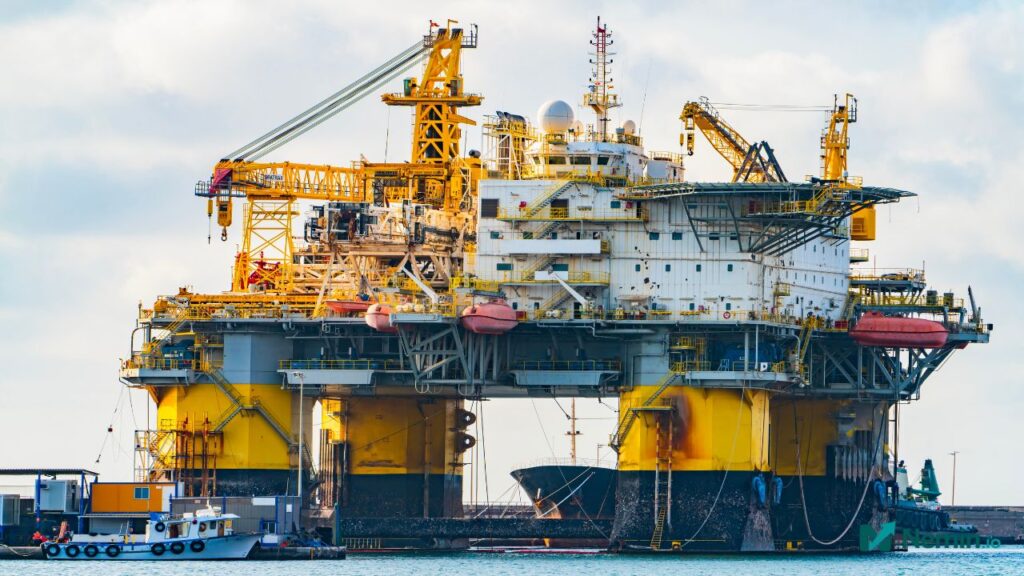
The maritime industry is under growing pressure to reduce greenhouse-gas emissions while continuing to operate long-lived vessels on difficult routes. Onboard carbon capture and storage, or OCCS, can offer a potential investment case for selected ships by reducing exhaust emissions, limiting exposure to carbon costs, extending the usefulness of existing assets, and creating a bridge while lower-emission fuels and port infrastructure scale. The case is not universal: capture equipment adds capital cost, energy demand, weight, space requirements, operational work, and dependence on a verified downstream CO2 logistics chain.
For investors, shipowners, charterers, ports, equipment providers, and financiers across the maritime industry, the question is not whether carbon capture replaces clean fuels. The useful question is where it can deliver verified reductions at an acceptable total cost and with a credible path for unloading and permanent storage or utilization.
As of August 2026, the regulatory picture is developing rather than settled. The International Maritime Organization has adopted ambitious emissions goals and approved a work plan for an OCCS regulatory framework, while the proposed IMO Net-Zero Framework remains subject to further consideration after discussions were adjourned. In the European Union, maritime emissions are already covered by the EU Emissions Trading System, and FuelEU Maritime applies greenhouse-gas-intensity requirements to covered ships.
Why the maritime industry is examining carbon capture
The maritime industry is capital-intensive, with vessels operating for decades. Fleet replacement takes time, and new fuels require production capacity, bunkering, compatible engines, safety procedures, and reliable supply chains. Carbon capture is one option alongside efficiency, alternative fuels, shore power, and new propulsion.
OCCS captures part of the carbon dioxide in engine or boiler exhaust before it leaves the ship. The captured gas is then conditioned, compressed or liquefied, stored temporarily onboard, and transferred at a port or through ship-to-ship operations. It must ultimately reach an approved permanent-storage site or a utilization pathway that keeps the carbon chemically bound for the required period.
That last point is central to the business case. A capture unit without a reliable offloading, transport, storage, utilization, measurement, and verification chain is not a complete decarbonization solution. It is only an onboard process waiting for a destination.
The regulatory signal
The IMO’s 2023 GHG Strategy sets a goal of net-zero GHG emissions from international shipping by or around 2050. It includes indicative checkpoints of at least 20 percent by 2030, striving for 30 percent, and at least 70 percent by 2040, striving for 80 percent, compared with 2008. It also calls for zero- or near-zero-emission fuels and technologies to reach at least 5 percent of energy by 2030, striving for 10 percent.
These goals do not make OCCS mandatory or guarantee credit, but they give the maritime industry a reason to evaluate reduction pathways and future pricing impacts.
The IMO approved an OCCS regulatory work plan covering safeguards, traceability, reception facilities, reporting, and accounting. Investors need clear rules to prove what happened after offloading.
The regional cost signal
For the maritime industry, the EU ETS has covered ships of 5,000 gross tonnage and above calling at European Economic Area ports since 2024, regardless of flag. It covers 100 percent of emissions on voyages between EEA ports and in EEA ports, and 50 percent from voyages beginning or ending outside the EEA.
The surrender obligation was phased in: 40 percent of verified 2024 emissions in 2025, 70 percent of verified 2025 emissions in 2026, and 100 percent from 2027 onward. Methane and nitrous oxide enter the scope from 2026, increasing the importance of accurate accounting and methane-slip analysis.
FuelEU Maritime adds another signal by setting maximum limits on the yearly average greenhouse-gas intensity of energy used onboard covered ships. The regulation starts with a 2 percent reduction in GHG intensity in 2025 and becomes progressively stricter toward 2050. The outcome depends on fuel, pooling, compliance balances, penalties, route, and future rule interpretation.
EU rules can allow captured CO2 to avoid allowances when transferred to storage or permanently chemically bound in eligible products. An engineering estimate alone is not enough; measurement and end-use requirements apply.
The maritime industry must evaluate capture as a full onboard and shoreside system, not isolated equipment.
How onboard carbon capture works
Exhaust-gas preparation
Marine exhaust contains carbon dioxide along with nitrogen, water vapor, oxygen, particulates, sulfur compounds, and nitrogen oxides. A capture plant may require filtration, cooling, desulfurization, and other pretreatment to protect the solvent or separation equipment.
Fuel composition and engine load affect the gas stream. A system designed for one maritime industry operating profile may perform differently at low load, during maneuvering, on auxiliary engines, or when the vessel changes fuel. Engineering studies must examine the full operating envelope rather than relying on a single test condition.
Capture and regeneration
Chemical absorption using amine-based solvents is one of the leading post-combustion approaches being tested for ships. The solvent binds with CO2 in an absorber and is then heated in a regenerator to release a concentrated CO2 stream for conditioning.
Other approaches include membranes, adsorption, cryogenic separation, mineralization, and alternative process designs. Each maritime industry application has different requirements for heat, electricity, footprint, solvent or material management, purity, maintenance, and scale-up. Technology selection should be based on vessel-specific data, not on a headline capture percentage.
Compression, liquefaction, and storage
Captured CO2 may be compressed, dehydrated, liquefied, or converted into a solid or mineral form. Liquefied CO2 storage requires tanks, pumps, pressure and temperature controls, sensors, safety systems, and enough deck or internal space.
The storage arrangement competes with cargo, fuel, ballast, machinery, and access space. A larger tank can support longer voyages between offloads but adds weight and capital cost. A smaller tank may reduce the footprint but require more frequent port calls or coordinated ship-to-ship transfer.
Offloading and final disposition
The captured carbon must be transferred safely. Possible arrangements include ship-to-terminal, ship-to-ship, ISO tank containers, or intermediate receiving vessels. It may then move by pipeline, truck, rail, or another vessel to geological storage or a utilization facility.
The final pathway must be permanent or otherwise eligible under the relevant accounting rules. Converting CO2 into construction materials through mineralization may create a durable product, but the eligibility, quality, custody, and measurement requirements must be confirmed for the jurisdiction and compliance scheme involved.
Investment logic varies across the maritime industry because vessel size, cargo, routes, fuels, and customer contracts differ.
Where the investment case is strongest
OCCS is more likely to make commercial sense when several favorable conditions appear together.
Large vessels with high emissions volume
Within the maritime industry, large, high-utilization vessels may have better economics because more captured CO2 spreads fixed costs and larger ships may offer more space.
This is not a guarantee across the maritime industry. Cargo layout, engine arrangement, route, dry-dock timing, and fuel type can change the result. A large ship with an irregular route and no compatible receiving port may be a weaker candidate than a smaller ship operating a predictable corridor.
Predictable routes and port access
For the maritime industry, a vessel that repeatedly calls at ports with CO2 reception, storage, transfer, and verification infrastructure can operate a more reliable value chain. Predictability helps determine tank size, offloading time, terminal agreements, and annual system utilization.
A global tramp vessel may need a wider network of compatible ports, raising uncertainty. Map actual maritime industry routes rather than assuming a nearby storage project is accessible.
Continued use of carbon-based fuels
Capture can be attractive when a vessel is likely to keep using a carbon-containing fuel for a meaningful part of its remaining life and when alternative fuels are expensive, unavailable, or operationally unsuitable on that route.
This is a transition argument, not a reason to postpone fuel diversification. Test performance across fuel options and include lifecycle emissions and methane slip where relevant.
Valuable compliance or commercial credit
The maritime industry business case improves when verified capture reduces a carbon liability, meets a customer requirement, supports a contractual premium, or protects access to a low-emission trade lane. The value needs recognized accounting and a willing buyer.
A voluntary marketing claim is weaker than a compliance mechanism, a long-term charter requirement, or a documented customer contract. Model those values separately and apply conservative assumptions.
Newbuild readiness or planned dry-dock
Installing OCCS during new construction or a scheduled major conversion can reduce disruption compared with an unplanned retrofit. Newbuild design can reserve space, power, heat integration, piping routes, storage, and safety zones.
A retrofit may still work in the maritime industry, especially where a vessel has years of useful life remaining and a major dry-dock is already planned. The investment model must include lost operating days, yard availability, class approval, commissioning, and the cost of modifying existing systems.
For the maritime industry, the total-cost view is more useful than a simple equipment price.
The main costs investors must model
Capital expenditure
CAPEX can include the capture plant, pretreatment, separation, heat exchangers, compression, liquefaction, storage, pumps, controls, safety systems, structural work, engineering, class approval, shipyard work, commissioning, and contingency.
Assess total installed cost, not only the capture skid. Port modifications, transfer equipment, CO2 tanks, monitoring instruments, and integration engineering may determine viability.
Operating expenditure
OPEX includes energy for pumps, fans, compression, refrigeration, solvent replacement or treatment, maintenance, consumables, crew training, inspections, monitoring, certification, storage, transport, offloading, and final disposition.
Capture can impose a fuel penalty for electricity or heat. Include extra emissions and cost; demonstrate waste-heat integration at sea.
Space, weight, and cargo impact
Deck equipment and CO2 tanks can reduce cargo flexibility, affect stability, increase draft, or create access and maintenance constraints. Lost cargo capacity or changes in charter-party terms are real economic costs even when they do not appear in the equipment quotation.
For maritime industry cargo vessels, calculate the effect on deadweight, container slots, tank capacity, loading plans, and port operations. For passenger or offshore vessels, consider public space, safety zoning, and service reliability.
Downstream infrastructure
A shipowner may pay for receiving facilities, transfer services, storage, transport, geological injection, mineralization, or product certification. A low capture cost does not guarantee a low end-to-end abatement cost for the maritime industry.
The contract should clarify ownership of captured CO2, custody-transfer points, quality specifications, rejected loads, delays, measurement, liability, insurance, and the allocation of regulatory credit.
A maritime industry investment committee should treat OCCS as a staged infrastructure decision.
A disciplined investment framework
Step 1: Establish the baseline
Measure fuel consumption, engine load, route, cargo carried, CO2 emissions, methane and nitrous oxide where relevant, CII performance, EU ETS exposure, FuelEU position, remaining vessel life, and dry-dock schedule.
Use measured operational data whenever possible. A theoretical maximum capture rate is not the same as annual tonnes captured during real voyages.
Step 2: Screen technical fit
Assess funnel arrangement, available heat and power, exhaust composition, engine and fuel compatibility, space, structural loading, tank location, stability, safety zones, maintenance access, and crew workload.
Evaluate partial capture as well as higher capture targets. A smaller system with high utilization may produce better economics than a larger system that causes excessive fuel penalty or is rarely operated.
Step 3: Secure the carbon value chain
Identify where captured CO2 will be stored or used, how it will be transported, which ports can receive it, who verifies the quantity and permanence, and which regulatory system recognizes the result. Obtain letters of intent or binding commercial terms where possible.
Do not approve a ship retrofit before the downstream pathway is more than a concept diagram.
Step 4: Build scenarios
Model conservative, central, and upside cases for carbon prices, fuel prices, capture rate, system availability, energy penalty, storage cost, offloading cost, EU or IMO recognition, financing, downtime, and vessel utilization.
Calculate NPV, IRR, payback, abatement cost per tonne, cargo-unit cost, and sensitivity to major variables. Include no-investment, alternative-fuel, efficiency, and staged-pilot cases.
Step 5: Use stage gates
Release capital in stages: feasibility, engineering, pilot, design, installation, commissioning, and rollout. Each gate should require evidence on performance, safety, accounting, downstream access, and demand.
In the maritime industry, a pilot is an investment in information as well as emissions reduction. Define in advance what result would justify scaling, redesign, or stopping.
Evidence from emerging maritime projects
The technology is moving beyond laboratory discussion, but projects remain an important source of learning rather than proof that every vessel has a positive return.
Project CAPTURED, coordinated by the Global Centre for Maritime Decarbonisation, demonstrated an end-to-end pathway in China involving onboard CO2 capture, ship-to-ship transfer, transport, and mineralization. In July 2026, GCMD reported that the captured CO2 from the project had been recognized for deduction under the EU ETS when permanently bound in eligible products, and that the IMO had given in-principle support to recognizing carbon mineralization as permanent storage. GCMD also reported a 10.7 percent gross capture rate and a 7.9 percent net GHG reduction for the first-of-a-kind pilot value chain.
Those results matter because they connect onboard equipment with custody transfer and an end use. They do not establish a universal capture rate, cost, regulatory treatment, or return on investment. Project-specific conditions, capture percentage, energy use, route, downstream pathway, and accounting method remain decisive.
Every maritime industry investment case should present these risks beside its upside scenario.
Risks and objections to address
Regulatory uncertainty
The IMO OCCS framework and global accounting treatment are developing. Do not assign compliance revenue before rules, verification, and chain of custody are clear.
Operational complexity
Capture adds equipment, maintenance, alarms, consumables, safety procedures, training, and failure modes. Crews need clear operating limits and emergency plans. Equipment downtime or poor performance can affect voyage economics and emissions reporting.
Safety and environmental risk
CO2 is an asphyxiant at high concentrations, and liquefied CO2 systems involve pressure, temperature, and transfer hazards. Solvents and other process chemicals require safe handling. The capture process must also control harmful discharges and prevent environmental impacts from waste streams.
Carbon lock-in
A capture retrofit can extend a carbon-fueled asset’s life, creating transition risk if fuel rules tighten or customers demand zero-emission transport. Include residual-value and stranding analysis.
False precision
Capture percentages, payback periods, and cost-per-tonne figures can look precise while depending on assumptions that are not yet proven at sea. Ask whether a number is measured at the capture unit, across the vessel, or across the full well-to-wake value chain.
For the maritime industry, the answer depends on vessel-specific evidence rather than a sector-wide promise.
Is maritime carbon capture a good investment?
There is no single answer for the entire maritime industry. OCCS can be a credible investment for a defined vessel, route, fuel strategy, and downstream carbon chain. It is less compelling when the ship is small, near retirement, space-constrained, irregularly routed, or unable to access verified CO2 reception and storage.
The strongest investment thesis is usually portfolio-based. A shipowner can use a pilot to reduce uncertainty, negotiate infrastructure, learn operating impacts, and preserve options while comparing alternative fuels. Judge it against the best alternatives.
Investors should also ask who captures the value. Is it the owner through lower EU ETS exposure? The charterer through a lower-emission service? The cargo owner through supply-chain targets? The port through new CO2 logistics? The technology provider through equipment sales and service? A bankable project aligns those incentives contractually.
Frequently asked questions about the maritime industry and carbon capture
1. What is onboard carbon capture in the maritime industry?
Onboard carbon capture removes part of a ship’s CO2 from exhaust, conditions it, stores it onboard, and transfers it for permanent storage or an eligible utilization pathway.
2. Why might shipowners invest in carbon capture?
Potential reasons include lower exposure to carbon pricing, compliance flexibility, preservation of existing assets, customer demand for lower-emission transport, and learning before wider fleet deployment.
3. Which ships are best suited to OCCS?
Large, high-utilization vessels with available space, predictable routes, suitable fuel and engine profiles, planned dry-docks, and access to verified CO2 offloading and storage infrastructure are often stronger candidates.
4. Does carbon capture replace zero-emission fuels?
No. OCCS is better viewed as one option in a transition portfolio. It does not remove the need to evaluate efficiency, renewable or low-carbon fuels, shore power, electrification, and other long-term solutions.
5. Can captured CO2 reduce EU ETS obligations?
Potentially, but only when the captured CO2 meets applicable rules for measurement, transfer, permanent storage, or permanent chemical binding. An estimated capture volume alone is not enough.
6. What is the biggest investment risk?
The biggest risk is treating onboard equipment as a complete solution without securing the downstream carbon value chain, regulatory recognition, realistic operating data, and a contract that allocates costs and benefits.
Conclusion
The business case for investing in maritime carbon capture is real but conditional. Onboard carbon capture and storage can help selected vessels reduce exhaust emissions and manage carbon costs while the maritime industry develops cleaner fuels and supporting infrastructure. Its commercial value depends on more than capture efficiency: investors must model energy penalty, storage space, cargo impact, installation downtime, maintenance, crew requirements, port access, CO2 transport, permanent disposition, verification, and regulatory credit.
The most defensible strategy is to start with a vessel-specific feasibility study, compare OCCS with alternative decarbonization pathways, secure the downstream chain, and use stage-gated pilots before committing to a fleet-wide rollout. Carbon capture should be treated as a measurable, governed investment option—not as a shortcut around fuel transition or a guarantee of compliance.