
A message security agent has become an indispensable component of enterprise communication infrastructure. As organizations increasingly rely on instant messaging platforms, email, and collaboration tools,...
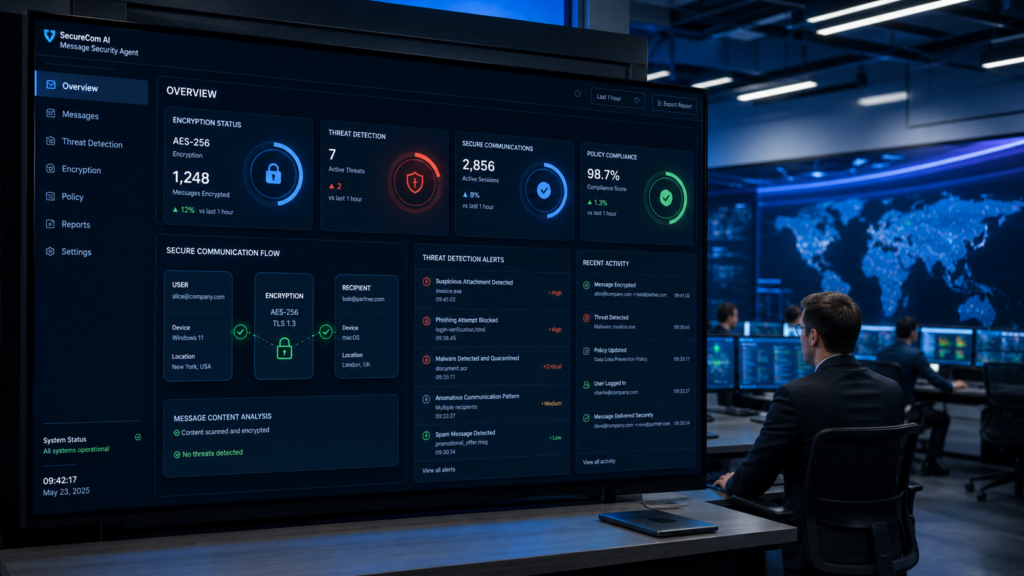
A message security agent has become an indispensable component of enterprise communication infrastructure. As organizations increasingly rely on instant messaging platforms, email, and collaboration tools, the volume of sensitive information exchanged daily continues to grow. A robust message security agent provides real-time protection through encryption, threat detection, data loss prevention, and compliance monitoring, allowing businesses to communicate confidently while mitigating security risks.
The Growing Need for Message Security Agents
The digital workplace has expanded the attack surface for cybercriminals. Traditional perimeter security is no longer sufficient when employees share critical data across Slack, Microsoft Teams, WhatsApp, and email. A message security agent acts as an intelligent guardian that scans, encrypts, and protects every message before it reaches its destination or while it is in transit.
Industry reports indicate that messaging-related security incidents increased by over 40 percent in the past year. Organizations that implement dedicated message security agents report significantly fewer breaches and improved regulatory compliance.
Core Functions of an Effective Message Security Agent
Modern message security agents perform multiple critical tasks simultaneously. They provide end-to-end encryption that ensures only intended recipients can read messages. Advanced AI models detect malware, phishing attempts, and anomalous behavior in real time.
Data loss prevention features block unauthorized sharing of sensitive information such as financial records, customer data, or intellectual property. Comprehensive audit logging supports regulatory requirements including GDPR, HIPAA, and ISO 27001 compliance.
Key Benefits of Deploying a Message Security Agent
Organizations gain numerous advantages when they implement a professional message security agent.
Enhanced Threat Protection
A message security agent identifies and neutralizes threats before they reach users. By analyzing content, attachments, and sender behavior, these systems prevent ransomware, credential theft, and sophisticated social engineering attacks.
Regulatory Compliance and Audit Readiness
Built-in policy enforcement ensures messages containing regulated data are automatically encrypted or blocked. Detailed reporting capabilities simplify audits and demonstrate due diligence to regulators and stakeholders.
Improved Operational Efficiency
Automated policy application reduces the burden on IT and security teams. Employees can communicate freely within established guardrails without constant manual oversight or security training interruptions.
Protection Across Multiple Platforms
Leading message security agents provide unified protection across diverse communication tools. Whether messages travel through enterprise platforms or personal devices, consistent security policies are maintained.
How Message Security Agents Work in Practice
The technology combines several layers of protection. Upon sending a message, the agent evaluates content against organizational policies. Suspicious elements trigger additional authentication or encryption. Machine learning models continuously improve detection accuracy by learning from new threat patterns.
Integration with existing identity management systems ensures seamless user experience while maintaining strict access controls. Most solutions operate in the background with minimal impact on communication speed or user productivity.
Implementation Best Practices
Successful deployment begins with a thorough assessment of current communication risks and compliance requirements. Organizations should select a message security agent that scales with their needs and integrates with their primary collaboration platforms.
Employee training remains important even with advanced tools. Clear policies explaining when and how the message security agent operates help foster a security-conscious culture. Regular testing and policy updates ensure continued effectiveness as threats evolve.
The table below compares essential features across different deployment models:
| Feature | Cloud-Based Agent | On-Premises Agent | Hybrid Solution |
|---|---|---|---|
| Deployment Speed | Very Fast | Moderate | Fast |
| Scalability | Excellent | Limited | Very Good |
| Customization Options | High | Very High | High |
| Maintenance Responsibility | Provider | Internal Team | Shared |
| Real-time Threat Intelligence | Continuous | Periodic Updates | Continuous |
Advanced Capabilities in 2026 Solutions
Current message security agents incorporate generative AI for contextual understanding of messages. They can distinguish between legitimate business discussions and potential policy violations with remarkable accuracy. Some solutions now offer automated incident response that isolates compromised accounts before damage occurs.
Zero-trust architecture principles are increasingly embedded in these agents, requiring continuous verification of both users and devices. This approach significantly reduces insider threat risks while maintaining productivity.
Common Challenges and How to Overcome Them
Some organizations worry about potential performance impact or privacy concerns. Modern message security agents are designed to operate efficiently with negligible latency. Transparent policies and independent audits help address privacy considerations while demonstrating commitment to responsible data handling.
Choosing the right solution partner is essential. Organizations benefit from providers with proven experience across their specific industry and clear support for ongoing threat intelligence updates.
Frequently Asked Questions
What exactly is a message security agent?
A message security agent is specialized software that monitors, encrypts, and protects messages across communication platforms to prevent data breaches and ensure compliance.
How does a message security agent differ from standard antivirus software?
While antivirus focuses on devices, a message security agent specifically protects the content and flow of messages with deep content inspection and policy enforcement.
Can a message security agent work with Microsoft Teams and Slack?
Yes. Leading solutions integrate natively with major collaboration platforms to provide consistent protection across all business communication channels.
Does implementing a message security agent slow down messaging?
Modern agents are engineered for minimal latency. Most users notice no difference in communication speed while gaining significant security benefits.
Is a message security agent suitable for small businesses?
Absolutely. Scalable cloud-based options make enterprise-grade message protection accessible and affordable for organizations of all sizes.
How often should message security agent policies be updated?
Policies should be reviewed quarterly or after any significant change in communication tools, regulations, or identified threat patterns.
Conclusion
A well-implemented message security agent delivers essential protection for today’s digital-first organizations. By combining advanced encryption, intelligent threat detection, and seamless compliance management, these solutions enable secure communication without compromising productivity. Businesses that invest in robust message security agents not only reduce their risk profile but also build greater trust with customers and partners. As messaging continues to replace traditional email in many workplaces, having a reliable message security agent is no longer optional but a fundamental requirement for sustainable success.