
Every trip to a fuel station costs time, and for a fleet that time adds up across drivers, vehicles, and shifts. Mobile fueling removes that...
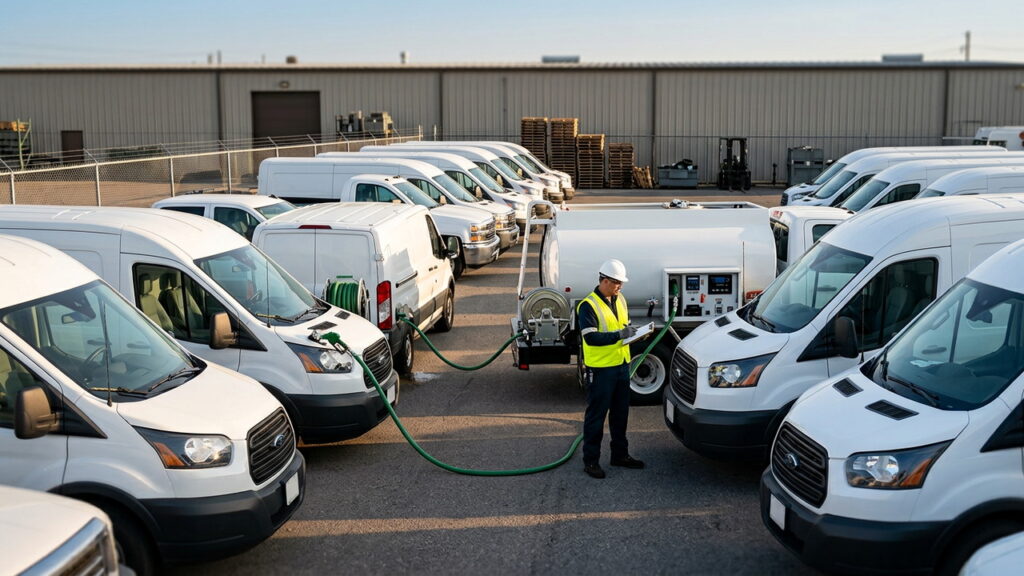
Every trip to a fuel station costs time, and for a fleet that time adds up across drivers, vehicles, and shifts. Mobile fueling removes that detour by sending a fuel truck to your lot, jobsite, or yard so vehicles and equipment fill up where they already sit.
This guide explains how mobile fueling works, what it costs, and which safety rules apply. It also shows how to choose a provider and prepare your site. The article offers general information, so confirm local rules and current pricing with each supplier.
Key Takeaways About Mobile Fueling
- Mobile fueling brings fuel to your vehicles and equipment, which reduces trips to retail stations.
- Fleets, construction crews, farms, and sites with backup generators often gain the most from mobile fuel delivery.
- Compare the full cost of mobile fueling, including delivery fees and minimum orders, not only the price per gallon.
- Confirm licenses, insurance, and spill procedures before you hire a provider.
- Never put dyed off-road diesel into an on-road vehicle.
- Ask for itemized delivery tickets so you can track usage and support tax reporting.
What Is Mobile Fueling?
Mobile fueling is a service in which a specially equipped truck delivers fuel directly to vehicles, machinery, or storage tanks at the customer’s location. It is also called mobile fuel delivery, on-site fueling, or fleet fueling, and it replaces trips to a retail station.
Providers typically carry gasoline, diesel, and sometimes diesel exhaust fluid in trucks fitted with approved tanks, pumps, and meters. A driver arrives at a scheduled time, fills each vehicle or tank, and records the amount delivered. A delivery can be a one-time emergency visit or a recurring route built around your operating hours.
Quick Answer About Mobile Fueling
- It is fuel delivered by truck to your location instead of you driving to a station.
- It suits fleets, job sites, and equipment that is costly or slow to move.
- Cost depends on volume, fuel type, distance, and delivery frequency.
- Safety, licensing, and tax rules apply, so pick a provider that can show compliance.
- It does not suit every operation, so compare it with station fueling and bulk tanks.
Who Uses Mobile Fueling
Many operations choose this model because the savings come from less travel and less idle time. Common users include:
- Delivery and logistics fleets that park overnight at a depot
- School bus contractors and transit operators
- Construction, landscaping, and utility crews with heavy equipment
- Farms and agricultural contractors
- Municipal fleets and public works departments
- Facilities with diesel generators for backup power
- Event, film, and festival productions that need temporary power
How Mobile Fueling Works
The process is simple once an account is set up. The supplier reviews your location, vehicles, and schedule, then proposes a delivery plan that fits your hours.
- Share your vehicle count, fuel types, and site address with the provider.
- Agree on a delivery window, frequency, and estimated volume.
- The truck arrives, and the driver sets out cones, spill kits, and fire extinguishers.
- The driver bonds or grounds the equipment, then fills each vehicle or tank.
- You receive a delivery ticket showing the product, gallons, and time.
- The supplier invoices you according to the agreed terms.
Most mobile fueling companies offer overnight deliveries so vehicles are full before the next shift begins. Daytime service is also common for job sites and equipment that stays in use around the clock.
Ordering Mobile Fueling Service
Some providers use scheduled routes, while others offer on-demand service through an app or phone line. Scheduled service gives predictable pricing and fewer surprises. On-demand service helps with emergencies, one-off events, and unplanned demand, though it may carry a premium. Ask which model your provider uses before you sign, and find out how far ahead you must book during busy periods.
Trucks and Equipment Used in Mobile Fueling
A properly equipped fuel truck is built to carry flammable liquids safely. The table lists common features and why they matter.
| Equipment | Purpose |
|---|---|
| Compartmented cargo tank | Carries more than one product, such as diesel and gasoline, without mixing |
| Calibrated meter | Measures the exact volume delivered |
| Pump and hose reel | Moves fuel to the vehicle at a controlled rate |
| Bonding and grounding cables | Reduce static electricity risk |
| Emergency shutoff | Stops flow quickly if something goes wrong |
| Spill kit and absorbent pads | Contains small leaks |
| Fire extinguishers | Provide first response to ignition |
| Filtration | Helps keep dirt and water out of your tank |
Metering and Records in Mobile Fueling
Accurate meters and clear tickets are the backbone of trustworthy service. Meters should be inspected and certified under local weights and measures rules. Tickets should list the date, location, product, gallons, and price so you can match them to your invoice and your vehicle logs.
Fuel Types Offered Through Mobile Fueling
Product range differs by supplier. The table shows what fleets commonly request and what to confirm.
| Fuel or product | Common use | Note |
|---|---|---|
| Gasoline | Light vehicles and small equipment | Confirm octane and ethanol content |
| On-road diesel | Trucks, buses, and vans | Ultra low sulfur diesel is the standard for on-road use |
| Dyed off-road diesel | Farm and construction machinery | Not allowed in on-road vehicles |
| Biodiesel blends | Fleets with sustainability goals | Check engine maker approval first |
| Diesel exhaust fluid | Modern diesel engines with exhaust treatment | A urea solution, not a fuel |
| Propane | Forklifts and heaters | Often handled by specialist suppliers |
Availability varies, so ask each mobile fueling provider which products it carries and in what quantities.
Mobile Fueling by Industry
Needs change with the setting, and so does the delivery plan. The table matches typical operations with the way fuel delivery supports them.
| Industry | Typical need | Why mobile fueling helps |
|---|---|---|
| Logistics and delivery | Overnight fills at depots | Vehicles start each shift full |
| Construction | Excavators and generators on site | Machines stay in the work area |
| Agriculture | Tractors and harvesters in the field | Fuel arrives during busy seasons |
| Public works | Snow plows and street sweepers | Fast fills during storms |
| Healthcare and data centers | Backup generator fuel | Planned top-ups and emergency supply |
| Events and film | Temporary power | Fuel delivered to the venue |
Benefits of Mobile Fueling for Fleets and Sites
The strongest advantages are saved time, better records, and fewer interruptions. Real results depend on your routes, vehicle count, and the distance to your nearest station.
Time and Productivity Gains From Mobile Fueling
Drivers who skip station trips can spend that time on deliveries or work. For a large fleet, even a short detour per vehicle each day adds up to many labor hours over a month. Equipment on a job site avoids being hauled away, and staff avoid carrying fuel cans in pickup trucks. Measure your current fueling time before you compare options, since the savings depend on your own numbers.
Control and Visibility With Mobile Fueling
Many providers supply digital tickets, which makes tracking fuel by vehicle easier. Better records help you spot unusual usage, plan budgets, and prepare for audits. Some suppliers also connect with fleet management software, so ask what reporting your mobile fueling provider offers and how you can export the data.
Pros and Cons of Mobile Fueling
Pros
- Saves driver and equipment time
- Reduces trips to retail stations
- Supports overnight and off-hours refueling
- Produces detailed delivery records
- Serves equipment that is hard to move
Cons
- Delivery fees or minimums may apply
- Needs site access and space for the truck
- Rules differ by city and county
- Creates dependence on one provider’s schedule
- May not be the cheapest option for small volumes
Mobile Fueling Cost and Pricing
No honest guide can quote a single price, because mobile fueling costs depend on fuel markets, location, and contract terms. Instead of chasing the lowest rate per gallon, compare the pricing structure and the total delivered cost.
| Pricing model | How it works | Watch for |
|---|---|---|
| Benchmark plus margin | Fuel priced from a market benchmark plus a fixed margin | Which benchmark is used and when it updates |
| Fixed price contract | Price locked for a set period | May cost more if market prices fall |
| Delivery fee per stop | Flat charge per visit | Adds up with small drops |
| Minimum volume | Fees apply if you order below a threshold | Plan orders to meet it |
| Route or subscription pricing | Regular schedule at an agreed rate | Cancellation terms |
What Affects Mobile Fueling Cost
- Fuel type and market price on delivery day
- Delivery volume per stop
- Distance from the supplier’s terminal
- Number of vehicles and stops
- Delivery time, since overnight or emergency service can be priced higher
- Taxes and environmental fees, which vary by location
- Contract length and payment terms
Comparing Mobile Fueling Cost With Station Fueling
A fair comparison counts labor and downtime as well as the pump price. Add the value of driver time spent traveling and waiting, the fuel burned driving to the station, and the wear on vehicles. As an illustration, if a driver spends 15 minutes per fill and a fleet makes 20 fills a day, that is 5 hours of labor daily before any fuel is pumped. Use your own wage and route figures, since results differ for every business. In many cases, mobile fueling pays off when volume is steady and stations are far away or crowded.
Mobile Fueling Compared With Other Fueling Options
Each method fits a different operation. The table gives a general comparison.
| Option | Strengths | Limits |
|---|---|---|
| Mobile fueling | No station trips and a flexible schedule | Delivery fees and site rules |
| Retail station | Available almost everywhere with no setup | Travel time and queues |
| Fuel card at stations | Spending controls and reporting | Still requires driver trips |
| On-site bulk tank | Often the lowest cost per gallon at high volume | Installation, permits, and maintenance |
| Cardlock network | Round-the-clock access to commercial pumps | Limited locations |
Many businesses combine methods, using mobile fueling at the depot and fuel cards for vehicles on the road.
Safety and Compliance in Mobile Fueling
Fuel is flammable, and a mistake can cause fires, spills, or injuries. Safe operation depends on trained drivers, maintained equipment, and sites that follow local rules. A reliable mobile fueling company will explain its safety program without hesitation.
Licenses, Permits, and Local Rules for Mobile Fueling
Requirements differ by country, state, and city. In the United States, fuel delivery trucks fall under federal hazardous materials transport rules, and drivers often need a commercial license with tank and hazardous materials endorsements. Fire codes, such as the International Fire Code and NFPA standards, also address mobile fueling, and local fire officials decide how they apply. Some cities limit where and when deliveries can happen, or require permits. Ask the provider for its documents and check with your local fire authority.
Dyed Diesel and Tax Rules in Mobile Fueling
In the United States, red dyed diesel is meant for off-highway use and is taxed differently from clear on-road diesel. Using dyed fuel in an on-road vehicle can lead to fines. Make sure your mobile fueling provider labels each delivery clearly and delivers the right product to each tank. Check current federal and state tax rules, since they change.
Spill Prevention and Response in Mobile Fueling
- Trucks should carry spill kits, and drivers should know how to use them.
- Fueling should happen on surfaces that allow containment, away from storm drains.
- Drivers should stay with the nozzle during delivery and never leave it unattended.
- Spills should be reported to the provider and to authorities where local rules require it.
- Ask whether the provider carries pollution liability insurance.
Safe Practices at Your Site During Mobile Fueling
- Turn engines off and keep ignition sources away from the fueling area.
- Ban smoking and open flames near trucks and tanks.
- Keep bystanders and unauthorized vehicles clear.
- Park vehicles so the truck has safe access and room to leave.
- Provide adequate lighting for overnight service.
- Keep an emergency contact list where the driver can see it.
How to Choose a Mobile Fueling Provider
Price matters, but reliability and safety matter more. A missed delivery can stall an entire fleet, and a poorly run delivery can create legal and environmental problems.
7 Tips for Choosing Mobile Fueling Services
| Tip | What to do |
|---|---|
| 1. Verify licenses | Ask for permits and driver credentials |
| 2. Check insurance | Request proof of liability and pollution coverage |
| 3. Review the safety record | Ask about training, audits, and incident history |
| 4. Confirm coverage | Make sure your site is inside the service area |
| 5. Compare pricing structure | Look at fees, minimums, and the fuel pricing method |
| 6. Test reliability | Ask for references and on-time delivery practices |
| 7. Review reporting | Confirm tickets, invoices, and data export options |
Questions to Ask a Mobile Fueling Company
- Which fuels and additives do you deliver?
- What are your delivery windows and emergency response times?
- How are meters calibrated, and how often?
- What happens if a delivery is late or the wrong fuel is delivered?
- How do you test fuel quality?
- What are your cancellation and contract terms?
- Can your tickets connect with our fleet software?
Red Flags When Hiring a Mobile Fueling Provider
- No proof of insurance or permits
- Refusal to share a sample ticket or meter certification
- Pricing far below competitors with no explanation
- Pressure to sign a long contract quickly
- Vague answers about spill response
- No clear process for correcting a wrong fuel delivery
Contract Terms to Review Before You Sign
A written agreement protects both sides. Read it closely and ask for changes before you commit.
- Contract length and renewal rules
- How fuel prices are set and how often they change
- Minimum volumes and delivery fees
- Service level commitments, including late delivery remedies
- Liability for spills, wrong fuel, and equipment damage
- Cancellation terms and notice periods
- Access to delivery data and invoices
Preparing Your Site for Mobile Fueling
A little preparation makes every delivery faster and safer. Walk the site with the provider before the first visit so both sides understand access, space, and hazards.
- Identify a flat, well lit fueling area with room for the truck.
- Label tanks and fill points by fuel type.
- Check that caps and fill necks are clean and accessible.
- Provide gate codes and a named contact person.
- Park vehicles in a consistent order each night.
- Protect or cover nearby drains where required.
- Share your emergency plan with the driver.
Planning Delivery Schedules
A good schedule matches usage patterns. Track gallons per vehicle each week, then use that history to forecast demand. Add a buffer for holidays, storms, and seasonal peaks, since suppliers get busy at the same times as everyone else.
| Operation | Typical schedule approach |
|---|---|
| Overnight depot fleet | Nightly or several nights a week, after vehicles return |
| Construction site | Daily or weekly top-ups matched to machine hours |
| Farm in busy season | Field deliveries timed around planting and harvest |
| Backup generator | Periodic top-ups and a storm priority agreement |
| Events | A one-time delivery before and during the event |
Fuel Quality and Tank Care
Delivered fuel is only useful if it is clean. Water and dirt in a tank can clog filters and damage engines, and diesel left in storage can develop microbial growth. Ask your supplier how it filters and tests fuel, and inspect your own tanks regularly.
- Keep tanks reasonably full to reduce condensation.
- Drain water from tank sumps as the maker recommends.
- Replace fuel filters on schedule.
- Use additives only if your engine or tank maker approves them.
- Record any fuel quality problems and report them to the supplier quickly.
Technology and Tracking Tools
Digital tools reduce paperwork and help you control usage. Not every supplier offers each one, so confirm what is available.
| Tool | What it does |
|---|---|
| Digital delivery tickets | Send volume, product, and time records to your email or portal |
| Vehicle identification tags | Match each fill to a specific vehicle |
| Tank level sensors | Alert you before a generator or bulk tank runs low |
| Fleet software integration | Combines fuel data with mileage and maintenance |
| Online ordering | Lets you schedule or change deliveries quickly |
Mobile Fueling for Generators and Backup Power
Hospitals, data centers, and businesses with diesel generators depend on steady fuel during outages. Mobile fueling can top up a generator tank on a schedule or during an emergency. Fuel can degrade in storage, so ask about testing and treatment. Arrange an emergency supply agreement before a storm, because demand rises quickly when many sites need fuel at once. Always follow the generator maker’s fuel specifications.
Mobile Fueling for Individuals and Small Businesses
Fuel delivery is not limited to large fleets. Some companies serve homes, apartment lots, small shops, and roadside breakdowns. Convenience is the main draw, and the price per gallon is often higher on small orders. Check that the provider is licensed, because unlicensed fuel deliveries can break local fire rules and create safety risks. Compare the delivered cost with the value of your own time before you decide.
Environmental Points About Mobile Fueling
Delivering fuel to many vehicles in one stop can reduce separate trips to stations, which may lower total driving. The benefit depends on routes and truck efficiency, so do not assume it. Spill prevention, vapor control, and proper disposal of used absorbent materials matter just as much. Some providers offer biodiesel blends or renewable diesel, so request fuel specifications and confirm engine compatibility. Be careful with providers that make sweeping green claims without data.
Fleet Data, Records, and Taxes for Fuel Deliveries
Keep every delivery ticket and match it to your invoice and vehicle logs. Good records help with budgeting, audits, and fuel tax reporting, such as the International Fuel Tax Agreement for interstate carriers in North America. Ask your accountant which documents you need and how long to keep them.
Common Mistakes With Mobile Fueling
- Choosing a provider on price per gallon alone
- Skipping insurance and permit checks
- Ignoring local fire code rules
- Mixing up dyed and clear diesel
- Failing to prepare the site
- Not matching tickets to invoices
- Ordering too late during peak demand
- Assuming mobile fueling is cheaper at every volume
Trust and Transparency When Using Mobile Fueling
Ask for documents, not promises. Reputable suppliers share licenses, insurance certificates, safety procedures, and sample tickets. Check independent reviews, speak with current customers, and compare at least three quotes that cover the same scope.
This article gives general information and cannot confirm prices, regulations, or the standards of any particular company. Verify details with local authorities, your insurer, and the provider, and consult a qualified professional for legal or tax advice.
FAQ’s
What is mobile fueling?
It is a service in which a fuel truck delivers fuel to your vehicles, equipment, or tanks at your location.
How does mobile fueling work?
You schedule a delivery, the truck arrives, the driver fills your vehicles or tanks, and you receive a ticket showing volume and price.
Is mobile fueling cheaper than using a gas station?
Not always. Delivery fees can offset savings, but saved labor time often makes it worthwhile for fleets.
Is mobile fueling safe?
It can be when the provider uses trained drivers and certified equipment and follows local fire and environmental rules.
What fuels does mobile fueling cover?
Gasoline and diesel are common, and many providers also offer diesel exhaust fluid and biodiesel blends. Availability varies by supplier.
Who benefits most from mobile fueling?
Fleets, construction firms, farms, and facilities with generators usually benefit most because they refuel often or cannot move equipment easily.
Conclusion
Mobile fueling can save time, improve records, and keep vehicles and equipment working. The best results come from comparing total cost, checking licenses and insurance, and preparing your site before the first delivery.
Choose a provider that is open about safety, pricing, and reporting, and review your contract carefully. When the fit is right, mobile fueling turns a daily chore into a predictable part of your operation.