
Modern aluminum pergolas are outdoor shade structures built around an aluminum frame, often paired with fixed slats, adjustable louvers, retractable fabric, or solid roof panels....
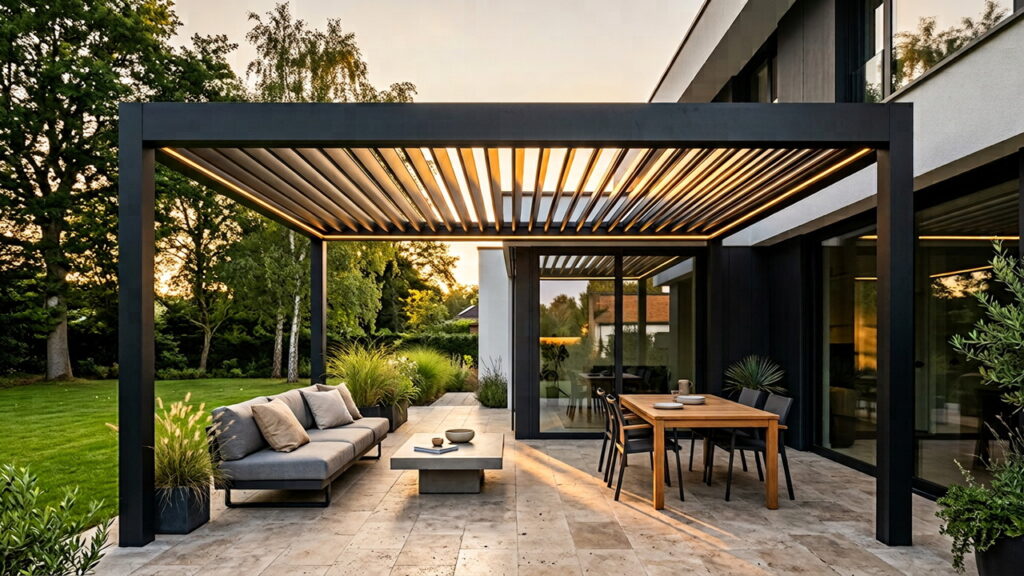
Modern aluminum pergolas are outdoor shade structures built around an aluminum frame, often paired with fixed slats, adjustable louvers, retractable fabric, or solid roof panels. Their appeal is a clean profile and a frame that generally needs less routine upkeep than timber, although performance depends on the product and installation.
The right choice depends on how you use the patio, your local weather, drainage, budget, and the home’s architecture. This guide explains roof styles, planning, installation, care, and the questions to ask before buying, so you can compare products without assuming every system performs the same way.
What Defines a Modern Aluminum Pergolas?
“Modern” describes a design approach, not a standard technical specification. It often means simple lines, uncluttered framing, a restrained color palette, and features that adapt the space to changing sun or weather. A modern aluminum pergolas may be freestanding or connected to a house, and its roof can range from open slats to a more complete covering.
Many Modern Aluminum Pergolas systems use aluminum profiles for the posts and beams, with a finish selected for outdoor use. Materials, profile thickness, connectors, coating, and engineering vary by model, so the product description alone is not enough to confirm how a structure will perform.
Ask for the relevant technical information and installation instructions.
Modern aluminum pergolas are not automatically a waterproof room. An open-slat roof provides partial shade, while adjustable louvers or roof panels may offer more coverage when positioned as intended. The degree of protection depends on the roof design, drainage, installation, and conditions around the structure. That distinction matters when comparing modern aluminum pergolas with a patio cover, gazebo, or shade sail.
Why Homeowners Consider Aluminum
A clean, adaptable appearance
Aluminum framing suits both contemporary homes and many traditional settings because its profile and finish can be selected to complement the building. Modern aluminum pergolas are available in different shapes and colors, although the range depends on the manufacturer. A slim frame can make an outdoor area feel more defined without the heavy appearance of a solid extension.
The structure can also help organize a patio. It creates a visual boundary for dining or seating and gives lights, screens, or other approved accessories a defined place to attach. A well-proportioned aluminum pergola can connect the home to the yard, but its size and position should fit the architecture rather than overwhelm it.
Less routine upkeep than many wood structures
An aluminum frame does not need the regular staining or sealing associated with many timber structures. That can make an aluminum pergola appealing to owners who want to limit surface-maintenance tasks. It still needs cleaning and inspection, and its finish can be scratched or weathered depending on exposure and care.
Finish quality and hardware matter. Ask what coating is used, how to clean it, and whether the manufacturer specifies different care for coastal or industrial environments. Modern Aluminum Pergolas are not maintenance-free, and their moving parts, fasteners, drains, and accessories may need attention even when the frame itself is in good condition.
Options for managing shade
A fixed open roof provides steady shade patterns, while an adjustable roof can change how much sun reaches the patio. Some modern aluminum pergolas systems also offer screens, lighting, or motorized controls. Availability and compatibility vary, so confirm which features are included and which are optional.
Think about the conditions you want to manage. You might prioritize shade during a particular time of day, shelter for outdoor dining, or airflow through the space. No single Modern aluminum pergolas configuration solves every problem. Consider how the roof operates in the weather where you live and follow the product’s instructions.
Choose the Roof Style Before You Pick a Finish
Adjustable louvers
A louvered aluminum pergola has blades that tilt to control sunlight and airflow. Some models are operated manually and others use a motor. When closed, certain products are designed to direct rain into built-in channels, but that does not mean every louvered roof is fully waterproof in every situation.
Ask how the louvers drain, whether there are limits on operating them in wind or snow, and what the manufacturer’s performance documents cover. For a motorized louvered aluminum pergola, confirm what happens during a power interruption and whether the system has a manual override.
Fixed open slats
Fixed slats offer a simpler form of shade. They can filter direct sunlight while leaving gaps for light and air, but they do not adjust as the sun moves. Rain may pass through, so this style is generally a better fit when the goal is filtered shade rather than complete weather protection.
A fixed aluminum pergola roof can suit a seating or garden area where changing shade levels are not important. Review slat spacing and orientation with the site in mind. A layout that works for one patio may produce an unwanted pattern of sun or shade on another.
Retractable fabric
Some aluminum pergola frames are paired with a fabric canopy that can be extended or retracted. This option changes the amount of shade while retaining an open-air feel when the fabric is withdrawn. Fabric type, cleaning needs, wind limits, and replacement options differ between products.
Follow the manufacturer’s guidance on when to retract the canopy. Do not assume a retractable roof is intended to remain extended during strong wind or heavy weather. If you are comparing a fabric-topped aluminum pergola with fixed or louvered systems, check the maintenance requirements as well as the initial price.
Solid or insulated panels
A solid roof can provide more consistent coverage than open slats, but it also changes the look and light below the pergola. Some products use insulated aluminum panels, while others use different roof materials. The roof needs a suitable drainage plan, and the complete assembly must be appropriate for the site’s structural loads.
Ask what the system is rated to handle and what that rating assumes about dimensions, supports, and installation. A solid roof may suit a patio where reliable shade is important, but its extra coverage can affect daylight through nearby windows. Check the impact at home before choosing.
Design Details That Make a Pergola Feel Finished
Match the frame to the house
Consider the home’s window frames, trim, exterior materials, and roofline before choosing a color. Charcoal, black, white, and neutral tones are common options, but available finishes vary. A modern aluminum pergolas design usually looks more intentional when its frame relates to existing features rather than competing with them.
Proportion matters as much as color. Measure the patio and consider how wide the posts and beams will look from inside the house and from the garden. A large structure can feel imposing beside a small home, while an undersized aluminum pergola may not cover the seating or dining area you planned to use.
Keep the structure in scale
Sketch the footprint with the posts, furniture, doors, and paths marked. This simple step helps reveal whether chairs can move comfortably and whether the structure will block a window or access route. Confirm the final dimensions with the supplier before ordering.
Plan accessories and drainage early
Lighting, screens, fans, and heaters can make an outdoor area more useful, but not every accessory works with every aluminum pergola system. Confirm the product’s approved attachments, electrical requirements, clearances, and installation details. Have electrical work completed according to local requirements by a qualified professional.
Drainage also deserves early attention. Some roof systems channel water through beams or posts, while others direct it toward gutters or a specific edge. Ask where the water will discharge and whether it could run toward the house, a walkway, a neighboring property, or an area where it will cause pooling.
Think about the full patio
The frame is one part of the setting. Flooring, outdoor furniture, planting, privacy screens, and lighting all affect how the completed space feels. Plan them together where possible, especially if paving or landscaping could interfere with post locations or water flow.
Advantages and Trade-Offs
Modern aluminum pergolas can be a practical fit, but the right choice depends on the project. Consider the strengths alongside the limitations before requesting a quote.
Potential advantages include
- Aluminum framing does not rot like timber, and it generally avoids routine staining or sealing.
- The clean profile and range of available finishes can suit many home styles.
- Roof options may include fixed slats, adjustable louvers, fabric, or solid panels.
- An attached or freestanding design can help define a patio without enclosing it.
- Some aluminum pergola systems support compatible screens, lighting, or other accessories.
Potential trade-offs include - Installed cost can rise with larger dimensions, motors, footings, electrical work, or custom options.
- A coating can be scratched or weathered, and moving parts need inspection.
- Performance depends on the model and installation, not simply on the use of aluminum.
- Replacement parts or accessories may be specific to the manufacturer, so check support availability.
- An open roof may not provide the rain protection some buyers expect.
Compare the complete project rather than judging by frame material alone. A simpler pergola may meet your needs better than a feature-heavy system, while a higher-spec design may be justified if you will use its controls and coverage regularly.
Plan the Size, Sun, and Location
Start with the activities the patio needs to support. A dining area requires room to move chairs, while a lounge area may need space for sofas and a clear walking route. Mark the furniture footprint, entrances, and paths before deciding on the size of a modern aluminum pergolas.
Check the sun at the times you expect to use the space. The position and angle of sunlight change throughout the day and across seasons. A roof that provides useful afternoon shade in one location may leave another seating area exposed. If possible, observe the patio at different times before choosing fixed slats, louvers, or a solid cover.
Then consider the relationship between the pergola and the home. A wall-attached aluminum pergola needs a suitable connection to the building’s structure. Siding alone should not be assumed to provide adequate support. A freestanding design avoids a wall connection but still needs correctly designed supports and footings for the site.
Before finalizing a layout, check the following
- Clearance around doors, windows, outdoor furniture, and paths.
- Nearby trees, branches, fences, overhead services, and underground utilities.
- Whether the roof or posts could affect daylight inside the house.
- How rainwater will drain and where it will go.
- Property boundaries, local restrictions, and any shared access routes.
- The condition and capacity of any existing deck, patio, or paved area.
A patio slab is not automatically a suitable foundation for a new structure. Post loads, attachment details, and site conditions all matter. Have the proposed installation reviewed by an appropriate professional when the supporting surface or building connection is uncertain.
What Affects the Cost of Modern Aluminum Pergolas
There is no reliable single price for every project. Cost depends on location, dimensions, roof style, materials, finish, accessories, site access, and installation requirements. A basic open-roof structure is not directly comparable with a motorized louvered aluminum pergola that includes lighting, screens, drainage, and electrical work.
The installed price may also include more than the frame. Footings, engineering, delivery, permits, demolition, wiring, surface preparation, and cleanup can all affect the quote.
A larger modern aluminum pergolas generally requires more material, but total cost is not determined by area alone. Difficult access or a complex connection to a house can change the work involved.
Ask for an itemized estimate that identifies the exact model, dimensions, roof configuration, finish, included accessories, and installation scope. Check whether the price includes permits, foundation work, drainage, electrical work, and disposal of any existing structure.
Compare like with like rather than selecting a system on its base price.
It can also help to ask about likely maintenance tasks, available replacement parts, and what the warranty covers. A warranty is not a guarantee against every type of weather damage or installation issue. Read its conditions and confirm who handles service after the project is complete.
Installation, Local Rules, and Weather Safety
Local requirements vary. The modern aluminum pergolas may need a permit or review depending on its size, location, attachment, roof, and local rules. Contact the relevant building department before ordering, especially if the property is in a regulated area or the proposed structure will connect to the house.
Structural design should reflect conditions at the specific site. Wind, uplift, snow, soil, and the strength of the existing building or foundation can all affect the installation. A manufacturer’s ratings apply to the configurations described in its documents, so ask whether the proposed modern aluminum pergolas matches those conditions.
Do not assume an existing deck or patio can support new posts. Confirm the footing and anchoring plan with the installer or a qualified design professional. For a wall-mounted pergola, ask how the connection will be made and how the installation will manage water at the building envelope.
For a motorized roof or lighting, confirm electrical requirements before work begins. Local rules may require a licensed professional.
Locate underground utilities before excavation, and make sure water from the roof will not create a hazard on stairs, paths, or neighboring property.
Before signing, ask for the installation manual, product ratings, warranty, and a written description of the work. A qualified installer should be able to explain the support plan, drainage route, electrical scope, and how the finished system is intended to operate. If any claim about wind, rain, or snow protection is unclear, request the relevant documentation.
Care and Long-Term Use
Routine care for an modern aluminum pergolas is usually straightforward, but it should follow the product manual. Many surfaces can be cleaned with water and a mild soap, but the approved method depends on the finish. Avoid abrasive pads, harsh chemicals, or pressure washing unless the manufacturer specifically permits them.
Inspect the frame and accessories periodically. Look for scratches, loose hardware, blocked drainage channels, worn seals, damaged fabric, and problems with moving louvers or motors. Address small issues according to the product instructions and ask the supplier about repairs that could affect the finish or structure.
The setting can change maintenance needs. Leaves and pollen can collect on roofs and gutters, while coastal or industrial exposure may affect some finishes and metal components. Ask whether the manufacturer recommends more frequent rinsing or particular hardware for your environment.
Expected service life varies with material specifications, finish, installation, weather exposure, and care. No responsible estimate should rely on the word aluminum alone. Keep the product documents and warranty information, and follow any instructions about wind, snow, cleaning, and operating the roof.
Design Ideas for Different Outdoor Spaces
For a compact patio, consider a restrained frame and a roof style that meets the main need without crowding the space. A wall-mounted design may free up floor area, but only if the house can support the connection. Measure paths and door clearances before settling on a modern aluminum pergolas footprint.
For outdoor dining, plan shade around the table and allow room to pull chairs back. A louvered roof can adjust light on some models, while approved lighting can support evening use. Ask about safe electrical installation and how roof drainage behaves over the dining area.
For a garden seating zone, a freestanding aluminum patio pergola can define a destination away from the house. Position it with the view, shade, and planting in mind. If adding privacy screens, confirm they are compatible with the frame and do not change the product’s permitted operating conditions.
For a poolside or coastal setting, pay close attention to finish and hardware specifications. Ask the supplier what care is recommended for exposure to salt, chlorine, or frequent moisture. A modern aluminum pergolas may be suitable for the setting, but material and coating details still need to match the environment.
Questions to Ask Before You Buy
Use these questions to compare suppliers and products
- What are the exact dimensions, roof type, materials, and finish of the proposed system?
- Which wind, snow, and water performance documents apply to this configuration?
- What anchoring, footing, or house-attachment details are included?
- How will the roof drain, and where will the water discharge?
- Which permits, inspections, electrical work, and accessories are included in the quote?
- What maintenance does the manufacturer recommend for the frame, roof, and moving parts?
- How can replacement parts be ordered, and who provides service after installation?
- What does the warranty cover, and what conditions or exclusions apply?
Clear answers make it easier to compare modern aluminum pergolas on the full value of the project, not just appearance or advertised features. If a supplier cannot explain a performance claim or installation detail, ask for documentation before proceeding.
FAQ’s
What is a modern aluminum pergolas?
It is an outdoor structure with an aluminum frame and a contemporary design, typically used to provide partial or adjustable shade. Roof styles and features vary by product.
Are modern aluminum pergolas waterproof?
Not all of them. Coverage depends on the roof design, drainage, installation, and manufacturer’s specifications, so verify the documentation for the exact model.
Do modern aluminum pergolas need maintenance?
Yes. They generally need periodic cleaning and checks of the finish, fasteners, drainage, and any moving parts. Follow the product manual for approved care.
Can an aluminum pergola be attached to a house?
Some are designed for attachment, but the connection must be suitable for the building’s structure. Have the proposed detail reviewed and installed appropriately.
What size modern aluminum pergolas should I choose?
Base the size on furniture, walking routes, door clearances, sun exposure, and local requirements. Measure the space and confirm the final layout before ordering.
How much do modern aluminum pergolas cost?
There is no universal price. Dimensions, roof type, accessories, site conditions, permits, and installation scope all affect the total, so request an itemized local quote.
Conclusion
Modern aluminum pergolas can bring shade, structure, and a clean architectural feature to an outdoor space. The best design is not necessarily the one with the most options; it is the one that suits your patio, climate, budget, and intended use.
Before buying, compare roof performance, drainage, installation details, maintenance, and warranty terms. Confirm local requirements and ask for documentation that applies to your exact configuration, then choose a system that fits the home as well as the outdoor space.