
Choosing the right Modern lighting can change how a room looks, feels, and functions throughout the day. Lighting is no longer treated as a purely...
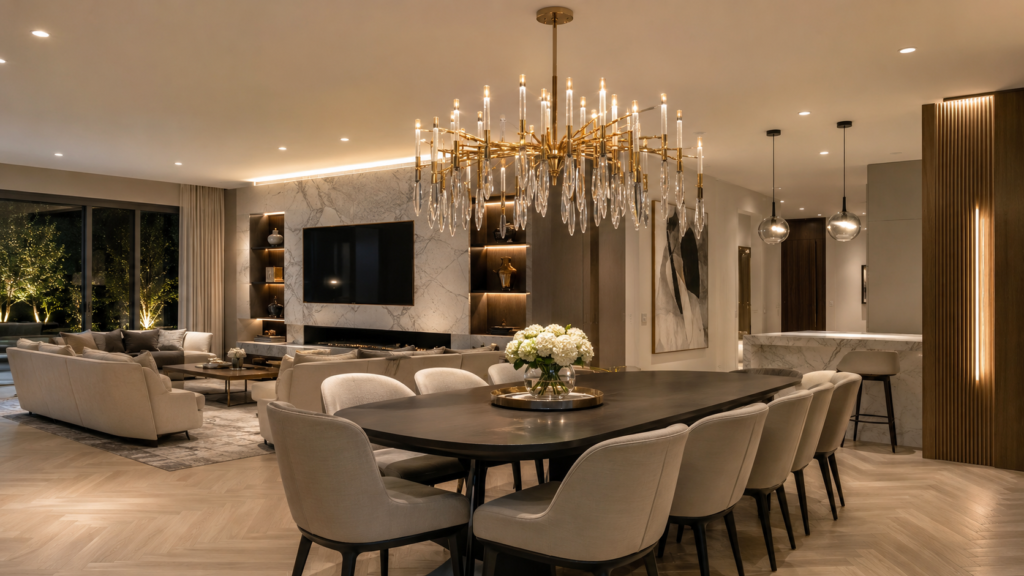
Choosing the right Modern lighting can change how a room looks, feels, and functions throughout the day. Lighting is no longer treated as a purely practical feature placed in the centre of a ceiling. Contemporary interiors use chandeliers, pendants, recessed fittings, wall lights, table lamps, and floor lamps together to support specific activities while creating a balanced atmosphere.
A beautiful fitting can become a room’s focal point, but appearance alone should not determine the final choice. Ceiling height, room dimensions, natural daylight, bulb type, colour temperature, brightness, dimming, positioning, and installation requirements all affect performance. A light that looks impressive in a large showroom may appear oversized in a compact dining room or provide insufficient illumination in a busy kitchen.
This guide explains the principal types of modern lights, how layered lighting works, which materials and finishes suit current interiors, and what to consider before buying a new fitting.
What Is Modern Lighting?
Modern lighting describes fixtures and lighting arrangements that combine current design with practical illumination. The category includes minimalist ceiling lights, sculptural chandeliers, geometric pendants, integrated LED fittings, contemporary wall lights, and updated versions of traditional designs.
Not every modern fitting is plain or minimal. Some designs use crystal, layered glass, branching metalwork, or multiple suspended elements to create a dramatic effect. What makes them contemporary is often the way familiar materials are presented through cleaner shapes, unusual proportions, or innovative arrangements.
Common characteristics include:
- Clean lines
- Geometric forms
- Sculptural shapes
- Integrated LED technology
- Adjustable suspension
- Matte or polished metal finishes
- Clear, smoked, or textured glass
- Mixed materials
- Reduced visual clutter
- Flexible brightness and colour options
Modern lighting can suit newly built homes, renovated period properties, apartments, hotels, restaurants, offices, and retail interiors. The key is selecting a fitting that respects the scale and purpose of its environment.
Why Lighting Matters in Interior Design
Lighting affects more than visibility. It influences colour, proportion, texture, atmosphere, and how people move through a space.
A poorly illuminated room can feel flat even when it contains attractive furniture. By contrast, a considered lighting plan can highlight artwork, improve task areas, soften empty corners, and create a clearer visual connection between different parts of an open-plan interior.
Lighting also changes how materials appear. Polished stone, glass, wood grain, metal, fabric, and crystal respond differently to direct and indirect light. Therefore, the same room may feel bright and energetic during the day but calm and intimate in the evening.
A successful scheme should address three basic needs:
- Enough light for safe movement
- Suitable illumination for specific activities
- An atmosphere that supports the room’s purpose
When these needs are considered together, modern lighting becomes both a design feature and a practical system.
Understanding Layered Lighting
Most rooms benefit from several light sources instead of relying on one powerful ceiling fitting. This approach is known as layered lighting.
Ambient Lighting
Ambient lighting provides the general illumination needed to move around comfortably. It may come from chandeliers, ceiling pendants, flush fittings, recessed lights, or indirect illumination.
The goal is not always maximum brightness. Instead, ambient lighting should create an even foundation that prevents large areas from appearing unnecessarily dark.
Task Lighting
Task lighting supports activities that require clearer visibility. Examples include:
- Pendant lights above a kitchen island
- A desk lamp in a home office
- Bedside reading lights
- Mirror lighting in a dressing area
- Countertop lighting in a kitchen
- A floor lamp beside a reading chair
Task lighting should be positioned to limit glare and avoid casting shadows across the work area.
Accent Lighting
Accent lighting draws attention to architectural features, artwork, decorative objects, or textured walls. Spotlights, picture lights, wall washers, and discreet LED strips are commonly used for this purpose.
Accent lights are generally more directional than ambient fittings. They create contrast and visual depth rather than illuminating the entire room.
Decorative Lighting
Decorative lighting includes fittings selected partly for their appearance. A sculptural chandelier or distinctive pendant may remain visually important even when it is switched off.
The strongest interiors combine these layers without making every fitting compete for attention. Usually, one principal statement light is supported by quieter secondary sources.
Popular Types of Modern Lighting
The correct fixture depends on the room, ceiling height, required brightness, and desired atmosphere.
Contemporary Chandeliers
Modern chandeliers reinterpret the traditional multi-arm light through simplified frames, geometric arrangements, crystal clusters, glass shades, rings, or branching structures.
They work particularly well in:
- Living rooms
- Dining rooms
- Entrance halls
- Stairwells
- Double-height spaces
- Hotel receptions
- Formal bedrooms
A chandelier should relate to the scale of the room and any furniture beneath it. A wide dining table can support a broader fitting, while a compact room may need a restrained design with less visual weight.
Pendant Lights
Pendant lights are suspended from the ceiling by a cord, rod, wire, or chain. They may contain one light source or several elements arranged as a cluster.
Modern pendant lighting is commonly positioned above kitchen islands, dining tables, staircases, bedside tables, and reception desks. Adjustable suspension can be useful where the precise hanging height needs to be established during installation.
Flush and Semi-Flush Ceiling Lights
Flush fittings sit close to the ceiling, while semi-flush lights hang slightly lower. They are practical for rooms where a long pendant would restrict movement or make the space feel crowded.
A low-profile fitting does not need to look basic. Contemporary versions may include crystal details, layered glass, polished metal, geometric frames, or integrated LEDs.
Recessed Ceiling Lights
Recessed lights create a discreet appearance because much of the fitting is installed within the ceiling. They can provide general illumination or highlight selected areas.
Spacing should be planned rather than decided by placing identical lights in a simple grid. Furniture, work surfaces, artwork, cabinets, and architectural features should influence their position.
Wall Lights
Wall lights can provide ambient, task, or accent illumination. Upward-facing designs create soft reflected light, while directional fittings can support reading or highlight specific features.
They are particularly useful in corridors, bedrooms, living rooms, staircases, and hospitality interiors.
Floor and Table Lamps
Portable lamps add flexibility because they can be moved and changed more easily than fixed lighting. They also introduce light at different heights, preventing the room from depending entirely on overhead illumination.
A table lamp can soften a sideboard or bedside area, while a floor lamp can brighten a reading corner or balance a large sofa.
Modern Lighting Materials and Finishes
Materials influence both the appearance of a light and the way it distributes illumination.
Brass and Warm Metallic Finishes
Brass, bronze, and soft gold finishes add warmth to neutral interiors. They can complement wood, stone, cream fabrics, and deeper colours.
Contemporary brass lighting often uses simple forms rather than ornate decoration, allowing the material to provide the visual richness.
Chrome and Polished Metal
Chrome and polished nickel create a bright, reflective appearance. They work well with glass, crystal, mirrors, and cooler colour palettes.
Highly reflective finishes show fingerprints and dust more readily, so accessibility for cleaning should be considered.
Matte Black
Black lighting creates strong contrast and clear outlines. It suits industrial, minimalist, monochrome, and Scandinavian-inspired interiors.
A black fitting can frame a room effectively, but several heavy black elements may make a compact space feel visually crowded.
Glass
Clear glass preserves an open appearance, while smoked, frosted, ribbed, or coloured glass changes the character and diffusion of the light.
Transparent shades reveal the bulb, making bulb shape and colour important. Frosted glass reduces visible glare and can produce a softer effect.
Crystal
Crystal remains relevant in modern lighting when it is arranged in contemporary shapes. Rings, droplets, panels, spheres, and layered clusters can combine traditional sparkle with cleaner modern forms.
Crystal requires occasional cleaning to maintain its reflective quality. The fitting’s position and accessibility should therefore be considered before purchase.
Mixed Materials
Many current designs combine metal, glass, crystal, stone, wood, fabric, or acrylic. Mixed-material fittings can connect several elements already present in the room.
However, too many competing finishes can weaken the overall scheme. Repeating one or two materials elsewhere usually creates better visual continuity.
Choosing Modern Lighting for Each Room
Every room requires a different balance of visibility, comfort, and decorative impact.
Living Room Lighting
Living rooms support conversation, television, reading, entertaining, and relaxation. A single overhead light rarely meets all these needs.
A balanced scheme may include:
- A chandelier or central pendant
- Wall lights
- Floor lamps
- Table lamps
- Directional accent lights
- Dimmable controls
If the room has a strong central feature, such as a fireplace or large artwork, the lighting plan should support rather than compete with it.
Dining Room Lighting
The principal dining light is usually positioned above the table. This creates a visual centre and helps define the dining area in an open-plan room.
The fitting should relate to the table’s shape. A long table may suit a linear pendant or several lights, while a round table often works well with a circular chandelier.
The light should hang low enough to feel connected to the table but high enough to preserve clear sightlines and prevent accidental contact.
Kitchen Lighting
Kitchens need strong task lighting for food preparation, cleaning, and safe movement. Decorative pendants can add character, but worktops still require effective illumination.
Useful kitchen sources include:
- Ceiling lights
- Recessed fittings
- Island pendants
- Under-cabinet lighting
- Interior cabinet lights
- Plinth or low-level accent lighting
The placement should reduce shadows where people chop, prepare, and wash food.
Bedroom Lighting
Bedroom lighting should support dressing, reading, relaxation, and movement at night. A central light can provide general illumination, while bedside fittings offer more focused control.
Wall-mounted reading lights can save bedside-table space. Dimmers and warm-toned lamps may help create a calmer evening atmosphere.
Bathroom Lighting
Bathrooms require careful product selection because water and electricity create additional safety considerations. Fixtures must be suitable for their exact position and comply with the relevant bathroom-zone and electrical requirements.
Mirror lighting should illuminate the face evenly rather than casting strong shadows from above. A qualified electrician can confirm whether a fitting is appropriate for the intended location.
Hallway and Staircase Lighting
Hallways and staircases must be illuminated clearly for safe movement. These spaces also provide opportunities for statement lighting because they often connect several areas of the property.
A tall staircase may accommodate a cascading chandelier or multi-drop pendant. However, installation access, maintenance, and cleaning should be considered before selecting a large fitting.
Home Office Lighting
A home office needs balanced illumination that supports screen work, reading, writing, and video calls.
Avoid placing a bright light directly behind a screen or where it reflects strongly on the display. A desk lamp can provide targeted illumination, while a ceiling light and softer background source prevent excessive contrast.
How to Select the Right Light Size
Scale is one of the most important considerations in modern lighting. A fitting that is too small may look insignificant, while one that is too large can dominate the room and restrict movement.
Consider:
- Room length and width
- Ceiling height
- Furniture dimensions
- Position of doors
- Walking routes
- Architectural details
- Distance from walls
- Total fitting height
- Visual weight
- Number of light sources
Physical size and visual weight are not identical. A large open-frame chandelier may feel lighter than a smaller solid shade.
When choosing a light above a table or island, relate its width to the furniture beneath it. This creates a clear visual connection and reduces the risk of the fitting appearing misplaced.
Ceiling Height and Hanging Position
Ceiling height determines whether a flush fitting, semi-flush light, pendant, or chandelier is appropriate.
Low ceilings generally require compact fittings in areas where people walk beneath them. Pendants can still work above fixed furniture, such as dining tables, kitchen islands, and bedside cabinets, because people do not normally pass directly underneath.
Higher ceilings allow longer suspensions and larger statement pieces. Nevertheless, a light should not be positioned so high that it loses its relationship with the room.
Adjustable fittings provide greater flexibility, especially when the final position needs to account for furniture and sightlines.
Understanding Brightness and Lumens
Brightness is commonly measured in lumens. Higher lumen output generally means more visible light, although shades, beam direction, room colours, ceiling height, and fixture design affect the final result.
A dark room with deep wall colours may require more illumination than a similarly sized room with pale reflective surfaces. Likewise, a shaded fitting may distribute less direct light than an exposed multi-bulb design.
Instead of choosing bulbs only by wattage, consider:
- Total lumens
- Number of bulbs
- Light distribution
- Room size
- Surface colours
- Task requirements
- Additional light sources
Layering several controlled sources often produces a more comfortable result than relying on one extremely bright fitting.
Colour Temperature and Atmosphere
Colour temperature is measured in kelvins and describes whether white light appears warm, neutral, or cool.
Warm white light creates a softer, more relaxed atmosphere and is often used in bedrooms, dining rooms, and living spaces. Neutral white light can provide greater visual clarity in kitchens, bathrooms, work areas, and utility rooms.
Very cool light may appear clinical in residential spaces, particularly when combined with warm woods and fabrics. However, personal preferences and interior finishes vary.
Using significantly different colour temperatures in one open area can make the lighting feel inconsistent. Coordinating connected spaces usually produces a calmer result.
LED Lighting and Energy Use
LED technology is widely used in modern lighting because it offers efficient performance and long operating life when compared with many older lamp types.
Some fittings accept replaceable LED bulbs, while others contain integrated LED modules. Each option has practical implications.
Replaceable bulbs are easy to change and provide flexibility over brightness and colour temperature. Integrated fittings can support slimmer, more sculptural designs, but customers should understand whether the light source or driver can be replaced if a component eventually fails.
Before buying, check:
- Light output
- Colour temperature
- Colour-rendering quality
- Dimming compatibility
- Expected service life
- Replacement options
- Warranty terms
- Driver accessibility
Energy efficiency is important, but it should be considered alongside repairability, performance, and suitability for the room.
Dimmers and Lighting Control
Dimming allows one fitting to support different activities and times of day. A dining room may need brighter illumination during cleaning and softer light during an evening meal.
However, the fitting, bulb, driver, and dimmer must be compatible. An unsuitable combination can cause flickering, buzzing, limited dimming range, or premature component failure.
Modern lighting controls may include:
- Wall dimmers
- Separate lighting circuits
- Smart controls
- Timers
- Motion sensors
- Scene settings
- App-based control
- Voice-compatible systems
A complicated control system is not automatically better. It should be intuitive for everyone who regularly uses the room.
Creating a Coordinated Lighting Scheme
A coordinated interior does not require every fitting to come from the same collection. Instead, lights can be connected through repeated finishes, shapes, materials, or proportions.
For example, a brass dining chandelier may be supported by smaller brass wall lights and simple glass lamps. Alternatively, matte-black pendants can connect with black window frames and furniture details.
To maintain balance:
- Choose one dominant statement fitting
- Repeat selected materials
- Avoid too many competing shapes
- Coordinate connected rooms
- Keep colour temperatures consistent
- Use quieter fittings around strong focal points
- Consider the appearance when lights are switched off
Modern lighting should feel related without appearing overly matched.
Common Modern Lighting Mistakes
One frequent mistake is choosing a fitting from photographs without checking its dimensions. Product images can make a pendant or chandelier appear larger or smaller than it is.
Other avoidable mistakes include:
- Using one ceiling light for the entire room
- Ignoring ceiling height
- Selecting insufficient brightness
- Creating excessive glare
- Mixing unrelated colour temperatures
- Hanging dining lights too high or low
- Blocking sightlines
- Forgetting cleaning access
- Overusing recessed lights
- Choosing incompatible dimmers
- Ignoring bathroom suitability
- Installing fittings without considering furniture
- Selecting appearance over practical performance
Planning the entire room before purchasing individual fittings reduces these risks.
Installation and Electrical Safety
Fixed lighting should be installed according to the applicable electrical and building requirements. A qualified electrician can assess ceiling construction, wiring, load, earthing, dimmer compatibility, bathroom suitability, and support requirements.
Heavy chandeliers may require specialist ceiling reinforcement or an appropriate fixing system. The existing electrical box alone may not be designed to support a substantial decorative fitting.
Before installation, confirm:
- Product weight
- Ceiling structure
- Fixing requirements
- Electrical supply
- Assembly needs
- Suspension length
- Access equipment
- Replacement-bulb access
- Cleaning method
- Installation responsibility
Complex or high-level installations may require scaffolding, lifting equipment, or multiple installers.
Cleaning and Maintaining Modern Light Fixtures
Regular cleaning helps preserve light output and appearance. Dust on glass, crystal, shades, and bulbs can reduce clarity and sparkle.
Before cleaning:
- Switch off the light
- Allow bulbs and fittings to cool
- Follow the manufacturer’s instructions
- Use stable access equipment
- Avoid spraying liquid directly onto electrical components
- Support delicate parts carefully
Crystal elements may require gentle individual cleaning, while metal finishes should be treated with products suitable for their surface. Abrasive cleaners can scratch glass, damage coatings, or alter polished finishes.
For chandeliers installed above staircases or in double-height rooms, professional cleaning may be safer than attempting to reach the fitting with domestic equipment.
Choosing Modern Lighting for Commercial Interiors
Commercial properties need lighting that supports customers, employees, branding, safety, and ongoing maintenance.
Hotels may use sculptural chandeliers in reception areas, while restaurants often combine decorative pendants with discreet task and accent lighting. Retail stores require sufficient brightness for products without creating uncomfortable glare.
Commercial planning should consider:
- Daily operating hours
- Energy use
- Maintenance access
- Replacement availability
- Emergency lighting
- Customer movement
- Staff tasks
- Brand colours
- Ceiling structure
- Relevant safety standards
A visually impressive fitting must still be practical to maintain in a busy environment.
Frequently Asked Questions
What is modern lighting?
Modern lighting includes contemporary chandeliers, pendant lights, flush fittings, wall lights, recessed lighting, lamps, and LED designs that combine current styling with practical illumination.
What makes a chandelier modern?
A modern chandelier often uses clean lines, geometric forms, sculptural arrangements, updated crystal patterns, or finishes such as black, brass, and chrome. It may also include integrated LEDs or adjustable suspension.
Can modern chandeliers work in small rooms?
Yes. Compact chandeliers and semi-flush designs can add character without overwhelming a smaller room. Check the diameter, total height, and visual weight before choosing.
Which modern lighting is best for low ceilings?
Flush and semi-flush ceiling lights are usually practical for low ceilings. Pendants may still be suitable above fixed furniture where people will not walk underneath.
Is warm or cool lighting better for a home?
Warm white light often suits bedrooms, living rooms, and dining areas, while neutral light can support kitchens, bathrooms, and workspaces. The best choice depends on activities, finishes, and personal preference.
Can LED bulbs be used in modern chandeliers?
Many modern chandeliers accept LED bulbs, but the bulb base, dimensions, output, and dimming compatibility must match the fitting’s specifications.
How large should a light be above a dining table?
The fitting should be proportionate to the table and room without extending awkwardly beyond the furniture. Ceiling height, hanging distance, shape, and sightlines should also be considered.
Do all modern lights work with dimmer switches?
No. The bulb, fitting, driver, and dimmer must all be compatible. Product specifications should be checked before installation.
Can modern lighting suit a traditional home?
Yes. A contemporary fitting can create an attractive contrast in a period property, especially when its material or proportion connects with existing architectural features.
Should a chandelier be installed by an electrician?
Fixed electrical fittings should generally be installed by a suitably qualified professional. Heavy chandeliers may also require specialist structural support and installation planning.
Conclusion
Modern lighting combines design, technology, and practical illumination to shape how an interior functions and feels. Contemporary chandeliers, pendants, flush ceiling lights, wall fittings, and portable lamps can create a complete scheme when they are selected according to room size, ceiling height, furniture placement, brightness, and colour temperature.
The best results come from layered lighting rather than dependence on one central fixture. Ambient, task, accent, and decorative sources should work together, while coordinated materials and finishes create visual consistency. Dimming, LED compatibility, installation access, cleaning, and long-term maintenance also deserve attention before a purchase is made.
Whether the goal is to introduce a dramatic chandelier, improve a kitchen, soften a bedroom, or coordinate an entire property, modern lighting offers extensive creative flexibility. Careful planning ensures that each fitting looks proportionate, supports everyday activities, and contributes to a comfortable atmosphere for years to come.