
Wooden pallets play an essential role in transporting, storing, and handling products across commercial supply chains. Businesses that manage frequent shipments need reliable pallets to...
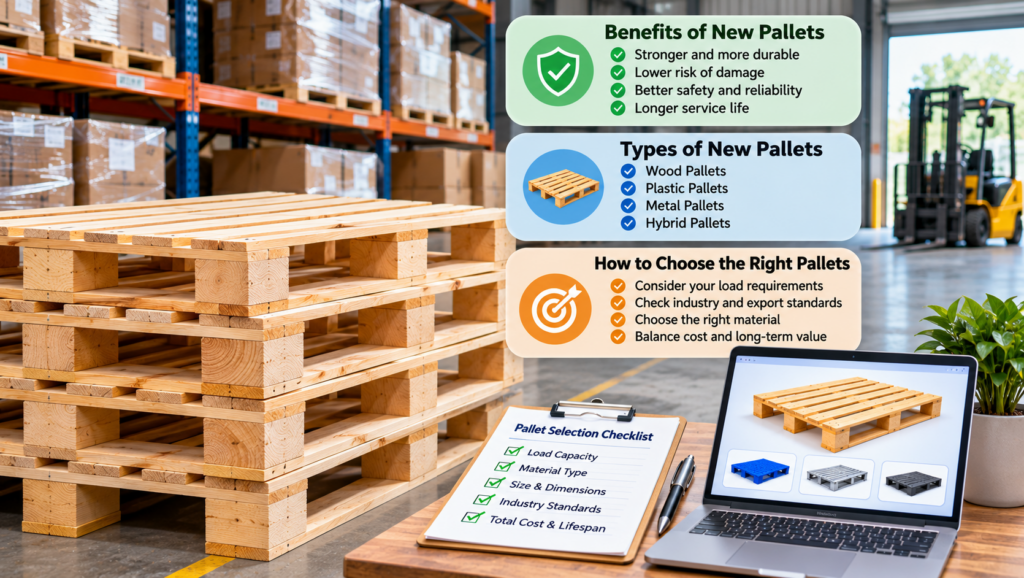
Wooden pallets play an essential role in transporting, storing, and handling products across commercial supply chains. Businesses that manage frequent shipments need reliable pallets to support safe and efficient operations. Choosing new pallets can help companies maintain consistent quality, meet specific load requirements, and reduce disruptions caused by damaged shipping materials.
New wooden pallets are available in different sizes, designs, and construction types. Understanding their features and applications helps businesses select suitable pallets for warehouse storage, manufacturing, and distribution.
What Are New Pallets?
New pallets are shipping platforms manufactured using unused wooden or other suitable materials. They are designed to support products during storage, handling, and transportation.
Unlike recycled or remanufactured pallets, new pallets have not previously been used in commercial shipping operations. They typically offer consistent construction and can be manufactured according to specific dimensions and load requirements.
Businesses often purchase new pallets when they need uniform quality, specialized designs, or reliable supply for recurring shipments.
Types of New Pallets for Commercial Use
New pallets are available in different configurations to accommodate various storage and shipping requirements.
Stringer Pallets
Stringer pallets use parallel wooden support boards that connect the upper and lower deck boards. This construction is commonly used in warehouses and distribution facilities.
Depending on their design, stringer pallets may provide two-way or partial four-way forklift entry.
Block Pallets
Block pallets use wooden blocks positioned between the upper and lower decks to provide structural support.
Many block pallet designs allow four-way entry, making them suitable for facilities requiring flexible forklift and pallet jack access.
Custom Wooden Pallets
Custom pallets are manufactured to meet specific product dimensions, weight requirements, or transportation conditions.
Businesses shipping oversized machinery, industrial components, or specialized products may require custom pallet designs.
Heat-Treated Wooden Pallets
Heat-treated pallets undergo a controlled treatment process to meet applicable wood packaging requirements.
For many international shipments, wooden pallets must comply with ISPM 15 regulations. Properly treated and marked pallets help businesses meet these shipping requirements.
Key Benefits of Using New Pallets
Purchasing new pallets can provide several advantages for businesses that prioritize consistent quality and reliable handling.
Consistent Construction Quality
New pallets are manufactured using selected materials and defined construction specifications. This helps businesses maintain consistency across their pallet inventory.
Uniform pallet dimensions and construction can be particularly important in facilities using automated handling equipment.
Suitable Load Capacity
New pallets can be designed to support specific product weights and loading conditions.
Businesses transporting heavy or specialized products can select pallet designs appropriate for their handling and storage requirements.
Reduced Initial Wear
Unlike previously used pallets, new pallets do not have damage caused by earlier shipping cycles.
This can reduce the need for initial repairs or replacement components, although pallets should still be inspected before use.
Customization Options
Manufacturers can produce new pallets in different dimensions, deck configurations, and construction types.
This flexibility allows businesses to select pallets that match product requirements rather than adjusting shipping operations to accommodate standard sizes.
New Pallets vs. Used Wooden Pallets
Both new and used wooden pallets can support commercial shipping and storage activities. Their suitability depends on operational requirements, pallet condition, and purchasing budgets.
| New Pallets | Used Wooden Pallets |
| Manufactured using unused materials | Previously used and recovered for reuse |
| Typically have consistent construction | May show wear or previous repairs |
| Can be manufactured to custom specifications | Commonly available in standard sizes |
| Generally have higher initial purchasing costs | Often cost less upfront |
| Suitable for specialized shipping requirements | Suitable for many routine shipping applications |
Businesses should compare pallet quality, expected service life, load capacity, and overall cost before selecting an option.
Common Sizes of New Wooden Pallets
New wooden pallets are manufactured in different dimensions to support various industries and shipping requirements.
48 x 40-Inch Pallets
The 48 x 40-inch pallet is widely used in North American warehouses and distribution networks.
Its standardized dimensions make it suitable for many general merchandise, retail, and logistics applications.
48 x 48-Inch Pallets
These pallets provide a larger platform for products requiring additional surface area.
They are often used for industrial materials, drums, and specialized shipping loads.
42 x 42-Inch Pallets
The 42 x 42-inch configuration supports applications requiring a square pallet footprint.
These pallets may be used for selected industrial products, equipment, and distribution requirements.
Custom-Sized Pallets
Some businesses require pallets that do not match standard commercial dimensions.
Custom manufacturing allows companies to select appropriate pallet sizes based on product specifications and warehouse equipment.
Industries That Benefit From New Pallets
New pallets serve businesses across industries that rely on consistent material handling and shipping processes.
Manufacturing Facilities
Manufacturers use pallets to move raw materials, components, and finished products between production and distribution facilities.
New pallets can be designed to accommodate different product weights and specialized handling conditions.
Warehousing and Distribution
Warehouses depend on pallets for organizing inventory, loading shipments, and transporting goods.
Consistent pallet construction helps facilities maintain compatibility with forklifts, pallet jacks, and storage equipment.
Food and Beverage Distribution
Food and beverage companies require pallets suitable for their products and handling environments.
New pallets can provide consistent construction and clean, unused surfaces. Businesses should still verify sanitation and product-specific requirements.
Retail and E-Commerce Fulfillment
Retailers and e-commerce businesses use pallets to move packaged merchandise through distribution networks.
Standardized new pallets help support routine inventory movement and outbound shipments.
How to Choose the Right New Pallets
Selecting new pallets requires evaluating several technical and operational factors.
Determine Load Requirements
Businesses should consider product weight, load distribution, stacking arrangements, and transportation conditions.
Selecting pallets with suitable load capacity helps reduce structural failures during handling.
Verify Pallet Dimensions
Pallet dimensions should match product sizes, storage systems, and warehouse equipment.
Standard dimensions may be suitable for general distribution, while specialized products may require custom configurations.
Evaluate Construction Materials
Wood species, board thickness, fastener types, and pallet design influence strength and durability.
Businesses should select construction specifications appropriate for their intended applications.
Consider Shipping Requirements
Pallets used for international shipments may require heat treatment and appropriate ISPM 15 markings.
Businesses should confirm the applicable regulations before selecting pallets for export.
Compare Total Purchasing Costs
The lowest unit price does not always represent the most economical option.
Transportation expenses, expected service life, replacement frequency, and handling compatibility should also be considered.
How to Maintain New Pallets for Longer Service Life
Proper handling and storage help businesses preserve pallet quality and reduce unnecessary replacements.
New wooden pallets should be stored in organized, dry areas to minimize moisture exposure and physical damage. Employees should avoid dragging pallets, overloading them, or using unsuitable forklift handling techniques.
Regular inspections help identify damaged boards, loose fasteners, and structural problems before pallets are reused.
Businesses can also introduce pallet repair and recycling procedures to extend the service life of damaged but recoverable pallets. Tracking damage rates and replacement frequency helps purchasing teams improve inventory planning.
Conclusion
New pallets provide businesses with reliable shipping platforms for storage, transportation, and material handling operations. Their consistent construction, available customization options, and suitability for different load requirements make them valuable across manufacturing, warehousing, and distribution.
Choosing the appropriate pallet size, construction type, and load capacity helps businesses maintain efficient operations and reduce avoidable handling problems. With proper storage, inspection, and maintenance, new wooden pallets can provide dependable service across multiple shipping cycles.