
A two-wheeler can be exposed to collisions, theft, fire, flooding, storms, vandalism, and damage during transportation. Although third-party insurance addresses specified liabilities involving other people...
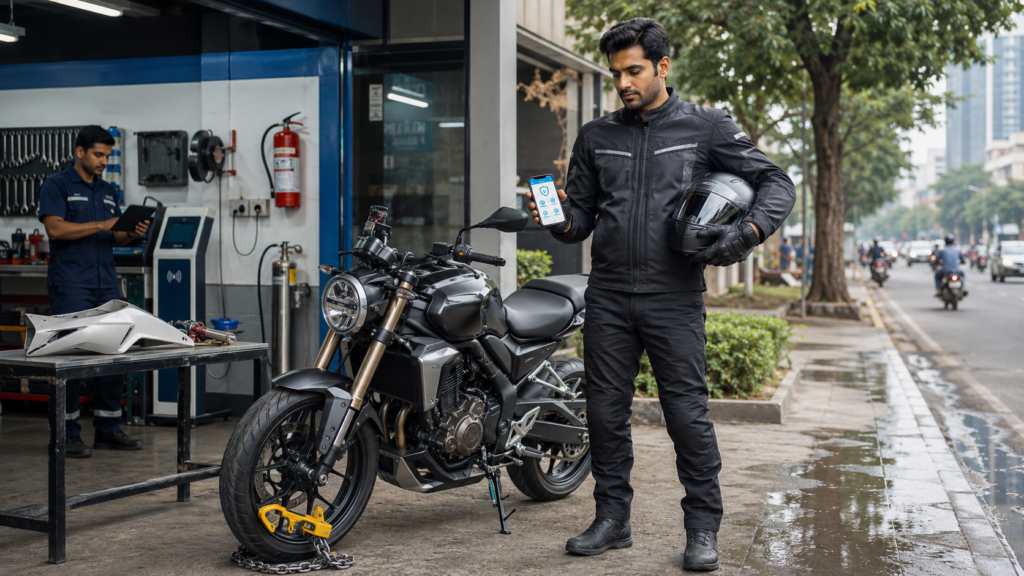
A two-wheeler can be exposed to collisions, theft, fire, flooding, storms, vandalism, and damage during transportation. Although third-party insurance addresses specified liabilities involving other people or their property, it does not pay to repair the policyholder’s own vehicle. This is where own damage insurance for two wheelers becomes important. It is designed to cover eligible loss or damage affecting the insured motorcycle or scooter, subject to the policy’s terms, deductibles, exclusions, and declared value.
For many riders, repair costs after even a moderate accident can be difficult to manage. Modern two-wheelers may contain expensive body panels, electronic components, lighting systems, sensors, alloy wheels, and engine parts. Furthermore, a stolen or severely damaged vehicle can create a significant financial loss.
Own damage cover provides a financial safety net for the insured vehicle, but it should not be confused with legally required third-party liability insurance. A rider generally needs active third-party cover even when purchasing a standalone own damage policy. Therefore, understanding the difference between these policy components is essential before comparing premiums.
This guide explains how own damage insurance for two wheelers works, what it may cover, which exclusions matter, how premiums are calculated, and what riders should review before buying or renewing a policy. Coverage differs among insurers, so the final policy wording and schedule should always be examined carefully.
What Is Own Damage Insurance for Two Wheelers?
Own damage insurance for two wheelers is a motor insurance component that covers eligible accidental loss or physical damage to the insured bike or scooter. It is often abbreviated as OD insurance.
The cover may be purchased as part of a comprehensive or package policy that combines own damage protection with third-party liability. It may also be purchased as a standalone own damage policy when the vehicle already has valid third-party insurance.
A standard OD policy generally responds to insured events such as:
- Road accidents
- Collisions
- Fire
- Theft
- Flooding
- Storms
- Earthquakes
- Riots
- Malicious acts
- Damage during specified types of transportation
Every claim remains subject to the policy’s conditions. For example, an insurer may deduct depreciation, a compulsory deductible, a voluntary deductible, or the value of items not covered by the policy.
Own damage cover protects the insured vehicle. It does not automatically replace third-party liability insurance, health insurance, life insurance, or personal accident protection.
Why Third-Party Insurance Is Not Enough
Third-party insurance is the minimum legally required motor cover for vehicles used on public roads in India. Its purpose is to address the insured rider’s legal liability for covered injury, death, or property damage involving another party.
However, third-party cover does not normally pay to repair the policyholder’s own motorcycle or scooter. If the rider’s bike is damaged in a collision, stolen, affected by a flood, or destroyed by fire, a third-party-only policy generally provides no compensation for the bike itself.
The main differences are:
Third-Party Insurance
- Addresses specified liabilities involving other people
- Helps meet the legal insurance requirement
- Does not cover accidental damage to the insured bike
- Does not generally cover theft of the insured bike
- Does not provide standard own damage add-ons
Own Damage Insurance
- Covers eligible damage to the insured bike
- May cover theft and total loss
- Is not a replacement for mandatory third-party cover
- Can often be enhanced through optional add-ons
- May provide a No Claim Bonus on the own damage premium
A rider seeking broader protection can purchase a comprehensive policy containing both sections or maintain separate third-party and standalone OD policies.
Standalone Own Damage Versus Comprehensive Insurance
Both policy structures can protect the rider’s own two-wheeler, but they organize the coverage differently.
Standalone Own Damage Policy
A standalone policy covers eligible loss or damage to the insured vehicle. It is suitable for an owner who already has active third-party cover and wants to purchase or renew own damage protection separately.
This structure may allow the policyholder to select a different insurer for the OD component. However, managing policies from separate insurers requires careful recordkeeping, especially when an accident involves both damage to the insured bike and a third-party claim.
Comprehensive or Package Policy
A comprehensive policy generally combines third-party liability and own damage cover in one insurance arrangement. It may be easier to manage because both sections appear within the same policy structure.
The word “comprehensive” does not mean that every possible loss is covered. Depreciation, deductibles, mechanical breakdown, consequential damage, and policy-specific exclusions may still apply.
When comparing standalone and comprehensive options, consider:
- Existing third-party policy validity
- Premium
- Insured Declared Value
- Deductibles
- Add-on availability
- Cashless garage network
- Claim support
- Exclusions
- Renewal dates
- Policy administration
The right structure depends on the rider’s existing insurance, vehicle value, usage, and preference for managing one or multiple policies.
What Does Own Damage Insurance Cover?
The exact scope depends on the insurer and policy wording. Nevertheless, own damage insurance for two wheelers commonly covers several categories of unforeseen loss.
Accidental Damage
The policy may pay for eligible repairs after a road accident, collision, skid, or impact. Settlement depends on the assessed damage, repair method, applicable depreciation, deductibles, and covered parts.
The insurer should be informed promptly. Unless emergency action is necessary to prevent further damage or protect safety, major repairs should not begin before the required survey or authorization.
Theft
If the insured two-wheeler is stolen and cannot be recovered, the claim may be settled according to the applicable policy terms and Insured Declared Value. The policyholder will normally need to report the theft to the police and cooperate with the insurer’s documentation process.
Theft claims can require additional records, such as the police report, registration certificate, keys, claim form, and documents confirming that the vehicle has not been recovered.
Fire and Explosion
Eligible damage caused by fire, explosion, lightning, or self-ignition may be covered. The insurer may investigate the cause, particularly when the incident involves unauthorized modifications, poor maintenance, or suspicious circumstances.
Natural Events
Coverage may extend to floods, storms, cyclones, earthquakes, landslides, and other specified natural events. This protection can be valuable in areas exposed to severe rainfall or waterlogging.
However, subsequent engine damage caused by attempting to start a waterlogged two-wheeler may be treated differently from the initial flood damage. An engine protection add-on may be needed for certain water-ingress or consequential engine losses.
Malicious Acts and Civil Disturbance
Damage arising from riots, strikes, vandalism, or malicious acts may be included when the circumstances fall within the insured events.
Police reporting may be required depending on the nature and severity of the incident.
Damage During Transit
Some policies cover damage while the insured vehicle is transported by specified methods such as road, rail, inland waterway, lift, elevator, or air. Policyholders should confirm the precise transit conditions before shipping a two-wheeler.
Common Exclusions
Understanding exclusions is just as important as reviewing benefits. A claim may be reduced or rejected when the cause of damage falls outside the policy.
Common exclusions include:
Normal Wear and Tear
Insurance is intended for uncertain insured events, not routine deterioration. Worn tyres, faded paint, rust, ageing components, brake wear, and ordinary maintenance are generally not covered.
Mechanical or Electrical Breakdown
A standard OD policy generally does not pay for a mechanical or electrical failure that occurs without an insured accident. Manufacturer warranties, service plans, and maintenance responsibilities are separate from motor insurance.
Depreciation
Standard claim settlements may include depreciation deductions on replaced parts. The applicable deduction can depend on the part material, vehicle age, and policy terms.
A zero-depreciation add-on may reduce certain depreciation deductions, but it can contain limits and exclusions.
Consequential Loss
Consequential damage occurs after the original event rather than directly because of it. For example, repeatedly attempting to start a waterlogged engine may cause additional internal damage.
Such losses may not be covered under a standard policy unless an appropriate add-on applies.
Invalid Driving Licence
A claim may be affected if the rider did not hold a valid licence for the vehicle at the time of the incident. Licence validity and vehicle class should be checked regularly.
Riding Under the Influence
Losses arising while the rider is under the influence of alcohol or prohibited substances may be excluded.
Unauthorized Use
Damage during racing, speed testing, criminal activity, or use outside the policy’s permitted purpose may not be covered.
Geographical Limitations
Motor insurance generally applies within the geographical area stated in the policy. Riders planning cross-border travel should confirm whether an extension is required.
Undeclared Modifications
Performance changes, custom accessories, electrical modifications, or structural alterations may affect risk and claim assessment. Insurers should be informed about material modifications as required.
Understanding Insured Declared Value
The Insured Declared Value, commonly called IDV, represents the insured value of the vehicle for the policy period. It is particularly important for theft and total-loss claims.
IDV is not necessarily the same as:
- The original purchase price
- The current replacement cost
- The amount financed
- The owner’s preferred resale price
- The cost of aftermarket accessories
The value generally reflects the vehicle’s current market-related value after considering age and depreciation, subject to the insurer’s process.
A higher IDV may increase the premium but can provide a higher settlement base for an accepted total-loss or theft claim. A very low IDV may reduce the premium while creating inadequate protection.
Policyholders should compare quotations using similar IDVs. Comparing one low-IDV quote with another high-IDV quote can create a misleading impression about which policy provides better value.
How Is the Premium Calculated?
The premium for own damage insurance for two wheelers is not identical for every rider or vehicle. Insurers may consider multiple underwriting factors.
These can include:
- Insured Declared Value
- Vehicle age
- Make and model
- Engine capacity
- Registration location
- Previous claim history
- No Claim Bonus
- Selected deductibles
- Add-on covers
- Anti-theft devices
- Policy lapse
- Inspection results
- Insurer pricing
Third-party premiums follow a regulated structure, whereas the own damage component can vary among insurers. Therefore, comparison should focus on both price and protection.
A cheap policy may contain a lower IDV, higher voluntary deductible, limited add-ons, or a less convenient garage network. Riders should compare like-for-like coverage before making a decision.
What Is No Claim Bonus?
No Claim Bonus, or NCB, is a discount earned for completing a policy period without making an eligible own damage claim. It applies to the OD premium rather than the third-party premium.
The discount can increase over consecutive claim-free years, subject to applicable rules and the insurer’s verification. Under commonly used motor insurance norms, it can begin at 20 percent and progressively reach a maximum of 50 percent.
Important points include:
- NCB belongs to the policyholder rather than the vehicle.
- It may be transferred when the owner replaces the vehicle.
- It does not transfer to the buyer when the insured vehicle is sold.
- An own damage claim can reduce or remove the benefit at renewal.
- A long break in coverage can result in loss of accumulated NCB.
- Incorrectly declaring NCB may cause complications during a claim.
Some insurers offer an NCB protection add-on that preserves part of the benefit after specified claims. The exact conditions should be reviewed before purchase.
Useful Add-Ons for Two-Wheeler Insurance
Add-ons expand selected areas of coverage in exchange for an additional premium. Their usefulness depends on the vehicle’s age, value, usage, location, and risk exposure.
Zero Depreciation Cover
This add-on can reduce depreciation deductions on eligible replaced parts. It may lower the policyholder’s contribution after an approved partial-damage claim.
However, claim limits, vehicle-age eligibility, excluded parts, and compulsory deductibles may still apply.
Engine Protection
Engine protection may cover specified losses involving water ingress, lubricant leakage, or consequential engine damage. It can be relevant in flood-prone or heavily waterlogged areas.
It does not replace proper maintenance or cover every type of engine failure.
Roadside Assistance
Roadside assistance may provide towing, battery support, flat-tyre assistance, emergency fuel delivery, or other services after a breakdown or accident.
Service limits, distance restrictions, availability, and charges can vary.
Return to Invoice
Return-to-invoice cover may reduce the gap between the standard insured value and specified invoice-related value when the vehicle is stolen or declared a total loss.
It is usually subject to vehicle-age limits and policy-specific conditions.
Consumables Cover
A standard claim may exclude consumable items such as lubricants, nuts, bolts, washers, clips, and certain fluids. Consumables cover may reimburse eligible items used during an approved repair.
Personal Belongings or Accessory Cover
Electrical and non-electrical accessories may require specific declaration and additional premium. Personal belongings are not automatically included unless the policy or an add-on expressly provides coverage.
Tyre Protection
Standard policies may limit payment for isolated tyre damage or apply depreciation. A tyre protection add-on may cover selected accidental tyre and tube losses, subject to wear, age, and claim conditions.
Who Should Consider Own Damage Cover?
Although OD insurance is optional, it may be valuable for riders who would find repair or replacement costs difficult to absorb.
It can be particularly relevant for:
- New two-wheelers
- Premium motorcycles
- Electric scooters and motorcycles
- Daily commuters
- Vehicles parked in open or theft-prone areas
- Riders in flood-prone regions
- Financed vehicles
- Two-wheelers with expensive body panels
- Owners who depend on the vehicle for work
- Riders who travel frequently
Owners of older, low-value vehicles may compare the annual premium, deductible, expected repair cost, IDV, and claim value before renewing extensive coverage. However, third-party insurance remains a separate legal requirement.
The decision should reflect the owner’s ability to manage a major repair, theft, or total loss without insurance support.
Own Damage Insurance for Electric Two Wheelers
Electric two-wheelers contain batteries, controllers, motors, chargers, sensors, and specialized wiring. These components can make claim assessment different from that of a conventional motorcycle.
Owners should verify:
- Whether the battery is included in the insured value
- Coverage for accidental battery damage
- Water-ingress exclusions
- Battery depreciation
- Charger coverage
- Electrical breakdown exclusions
- Manufacturer warranty interaction
- Availability of authorized repair centers
- Add-ons designed for electric vehicles
A standard policy may cover accidental damage to insured components but exclude gradual battery degradation, manufacturing defects, or standalone electrical failure. The exact wording should be checked before purchase.
How to Compare Policies
A useful comparison examines more than the headline premium.
Review the following:
Coverage
Confirm the insured events, exclusions, limitations, and available extensions.
IDV
Compare quotes with similar declared values. A low premium supported by an unusually low IDV may not offer suitable total-loss protection.
Deductibles
A compulsory deductible is the amount the policyholder must contribute to an approved claim. Selecting an additional voluntary deductible can reduce the premium but increase out-of-pocket costs.
Cashless Garage Network
Check whether suitable network garages are available near the rider’s home, workplace, or regular travel routes. Also confirm whether the preferred authorized service center participates.
Claim Process
Review available claim-notification channels, inspection procedures, document requirements, and customer assistance.
Add-Ons
Select add-ons based on realistic risks rather than buying every available option. Eligibility and coverage may differ among insurers.
Policy Terms
Read the complete wording, schedule, endorsements, and exclusions. Promotional summaries do not replace the actual contract.
How to File an Own Damage Claim
The exact claim process varies, but a typical sequence includes:
- Protect people from immediate danger.
- Move the vehicle only when necessary or directed.
- Notify the insurer promptly.
- Record photographs or video of the damage and location.
- Provide the policy and vehicle details.
- File a police report when required.
- Take the vehicle to an approved or chosen garage.
- Allow the insurer’s inspection or survey.
- Obtain repair authorization.
- Keep invoices, estimates, and payment records.
- Pay applicable deductibles and non-covered costs.
- Review the settlement documentation.
Do not admit liability, negotiate an unrecorded settlement, or authorize major repairs before understanding the insurer’s requirements.
For theft, serious accidents, injuries, or significant third-party damage, police reporting may be necessary. The policyholder should follow both legal requirements and the insurer’s claim instructions.
Cashless and Reimbursement Claims
Cashless Claim
In a cashless claim, an eligible network garage coordinates with the insurer. After assessment and approval, the insurer pays its authorized share directly to the garage.
The rider remains responsible for deductibles, depreciation, exclusions, unauthorized repairs, and other non-covered amounts.
Reimbursement Claim
In a reimbursement claim, the policyholder generally pays the garage and later submits the required documents to the insurer.
This route may provide greater freedom in choosing a repairer, but it requires the owner to arrange payment and maintain complete documentation. Reimbursement remains subject to survey, authorization, policy conditions, and the insurer’s assessment.
Documents Commonly Required
Requirements depend on the claim, but insurers may request:
- Claim form
- Policy copy
- Registration certificate
- Valid driving licence
- Repair estimate
- Photographs
- Repair invoice
- Payment receipt
- Police report where required
- Theft-related records
- Vehicle keys
- Bank details
- KYC documents
- No-trace or final police documents for theft claims
Policyholders should submit accurate information. Missing, altered, or inconsistent documents can delay assessment.
Common Reasons for Claim Problems
Claim difficulties may arise when:
- The policy was inactive on the accident date.
- The rider lacked a valid licence.
- The vehicle was used outside the permitted purpose.
- The insurer was informed too late without reasonable explanation.
- Repairs began before inspection.
- The damage resulted from wear or mechanical breakdown.
- Consequential damage was not covered.
- Material modifications were not disclosed.
- The declared NCB was incorrect.
- Required documents were unavailable.
- The rider provided inconsistent information.
An exclusion does not apply identically to every situation. The insurer should assess the facts and policy wording before reaching a claim decision.
Renewal and Policy Continuity
Own damage insurance for two wheelers should be renewed before expiry if the owner wants continuous protection. Even a short gap can leave the vehicle uninsured against theft, fire, floods, and accidental damage.
A lapsed OD policy may require vehicle inspection before fresh coverage is issued. A longer break can also affect accumulated NCB.
Before renewal:
- Verify the registration details.
- Review the IDV.
- Confirm NCB eligibility.
- Update the address and contact information.
- Declare modifications or accessories.
- Compare deductibles.
- Reassess add-ons.
- Check the garage network.
- Read updated terms.
- Save the new policy document.
Do not assume automatic payment means the policy has been issued. Confirm the policy number, coverage period, vehicle details, and premium receipt.
Mistakes to Avoid When Buying OD Insurance
Choosing Only by Price
The lowest premium may be linked to a lower IDV, higher deductible, or narrower benefits.
Ignoring Exclusions
Coverage summaries explain what may be included, but exclusions determine when protection does not apply.
Selecting an Unrealistic IDV
An undervalued bike may produce a lower premium but also reduce the settlement base for theft or total loss.
Buying Unnecessary Add-Ons
Add-ons should correspond to the vehicle’s risks. A rider should understand each extension rather than selecting every option automatically.
Forgetting the Third-Party Policy
Standalone OD insurance does not replace valid third-party liability cover.
Providing Incorrect Information
Errors involving registration details, previous claims, NCB, modifications, or ownership can create serious claim and renewal problems.
Frequently Asked Questions
Is own damage insurance for two wheelers mandatory?
No. Own damage cover is optional. However, third-party liability insurance is legally required for vehicles used on public roads in India.
Can I buy standalone OD cover without third-party insurance?
A standalone OD policy generally requires an active third-party policy for the insured vehicle. The third-party cover may be with the same insurer or another insurer, subject to the applicable requirements.
Does own damage insurance cover theft?
Theft is generally covered under standard own damage protection, subject to the policy terms, IDV, police reporting, documentation, and claim assessment.
Does OD insurance cover flood damage?
Direct physical damage caused by an insured flood event may be covered. However, consequential engine damage from attempting to start a waterlogged vehicle may require engine protection coverage.
What is IDV in bike insurance?
IDV is the declared insured value of the two-wheeler for the policy period. It forms an important basis for theft and total-loss settlement, subject to policy terms.
Does OD insurance pay the entire repair bill?
Not always. Deductibles, depreciation, excluded parts, consumables, betterment, unauthorized repairs, or uncovered damage may reduce the insurer’s payment.
Can I use any garage?
A policyholder may be able to use a non-network garage through reimbursement, but the process and authorization requirements should be confirmed. Cashless repairs are generally available only through eligible network garages.
Will one claim remove my No Claim Bonus?
An own damage claim can reduce or eliminate the NCB at the next renewal unless an applicable NCB protection feature preserves it under specified conditions.
Is zero depreciation included automatically?
No. Zero depreciation is generally an optional add-on and may be subject to vehicle-age limits, claim limits, and exclusions.
Does own damage insurance cover engine failure?
Standard OD cover generally excludes ordinary mechanical or electrical breakdown. Engine damage caused by an insured accident may be assessed differently, while certain consequential losses may require an engine protection add-on.
Conclusion
Own damage insurance for two wheelers protects the insured motorcycle or scooter against eligible financial losses arising from accidents, theft, fire, natural events, and other specified risks. It complements rather than replaces mandatory third-party liability insurance. When comparing policies, riders should examine the IDV, deductibles, exclusions, garage network, add-ons, NCB rules, claim procedures, and total premium. A lower quotation does not always represent better value if it provides a reduced insured value or requires a larger contribution during a claim. Riders should disclose vehicle information accurately, renew coverage before expiry, and retain all relevant records. Most importantly, they should read the policy wording and schedule carefully because the final coverage depends on the insurer’s terms, conditions, limitations, and endorsements.
Pingback: Life Insurance 7 Powerful Benefits Families Should Know