
When manufacturers invest in beverage processing and packaging equipment, the largest machine-speed number on a quotation can easily dominate the discussion. Yet reliable Plant output is not...
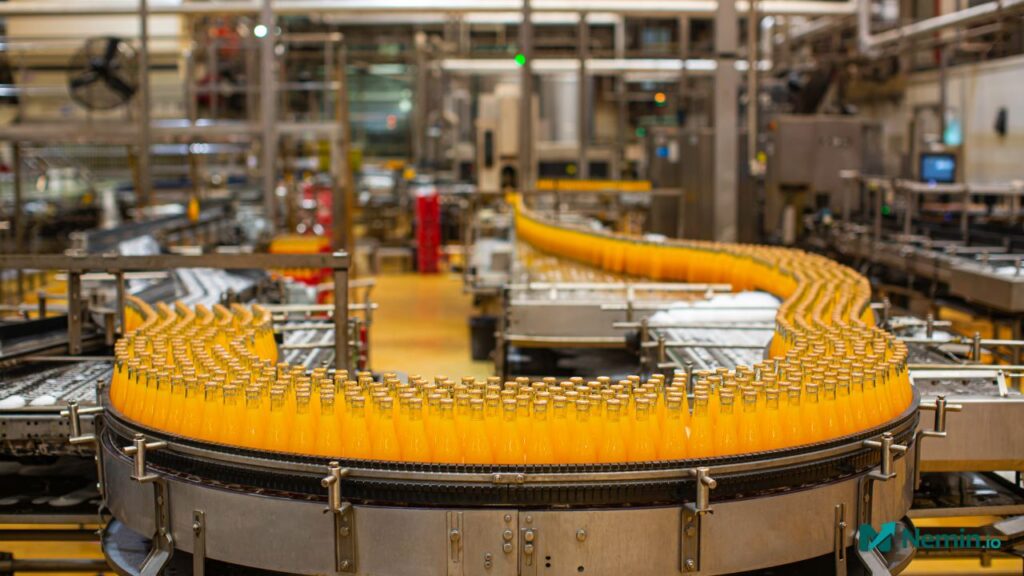
When manufacturers invest in beverage processing and packaging equipment, the largest machine-speed number on a quotation can easily dominate the discussion. Yet reliable Plant output is not determined by the fastest filler, labeler, packer, or conveyor considered individually. It depends on how effectively the complete production system operates as a coordinated line under real products, containers, staffing patterns, cleaning cycles, changeovers, and operating conditions.
That distinction makes capacity mismatch an important purchasing risk. A filler rated for one speed and downstream equipment designed around substantially different operating conditions can create bottlenecks, starvation, blocked conveyors, unnecessary stops, and underused equipment. For a new line or expansion project, defining required output before selecting individual machines can prevent expensive capacity from being installed in the wrong places.
What Does Plant Output Mean in Beverage Manufacturing?
Plant output is the quantity of acceptable product a production facility actually produces over a defined period. Depending on the operation, it may be expressed as bottles per hour, cans per minute, cases per shift, liters per day, pallets per week, or another meaningful production unit.
The time basis and measurement boundary matter. A machine’s rated speed is not automatically equivalent to sustained line production, and sustained production is not necessarily equivalent to saleable output.
A useful output definition should therefore state the unit, period, product, package format, quality criteria, and whether planned or unplanned time losses are included.
Rated Capacity Versus Actual Plant Output
Rated capacity generally describes a stated machine or system capability under specified conditions. Those conditions may differ from everyday factory operation.
Actual production is influenced by factors including:
- Product characteristics
- Container size and geometry
- Filling requirements
- Changeover frequency
- Cleaning and sanitation
- Maintenance
- Equipment faults
- Material availability
- Operator interventions
- Quality holds and rejects
- Upstream and downstream constraints
Consequently, a line containing a nominally fast filler can still deliver disappointing Plant output if another process consistently restricts flow.
Why Nameplate Speed Can Be Misleading
A nameplate or quoted maximum speed is useful when comparing equipment, but only when the operating assumptions are understood.
Ask what product, container, closure, temperature, fill conditions, and test criteria support the quoted speed. Determine whether it represents a mechanical maximum, demonstrated operating rate, guaranteed performance condition, or another supplier-defined measure.
Two machines advertised with the same nominal throughput may behave differently when integrated into a complete beverage line.
How Capacity Mismatch Reduces Plant Output
Capacity mismatch occurs when interacting production stages are not sized or operated in a way that supports the required overall flow.
Perfectly identical nominal speeds are not always desirable. In fact, line design can intentionally include speed differentials, accumulation, and strategic capacity margins. The problem is unmanaged mismatch rather than any difference in equipment ratings.
The Slowest Constraint Shapes Plant Output
Consider a simplified packaging line containing a rinser, filler, capper, labeler, case packer, and palletizer. If one essential stage can sustainably process fewer units than the rest, that stage can constrain throughput.
Buying an extremely fast filler does not eliminate a slower case-packing constraint.
This is closely related to bottleneck theory. Production improvement should focus on the active system constraint rather than automatically increasing the speed of equipment that already has excess capacity.
Upstream Starvation
A downstream machine cannot maintain its intended rate if upstream processes do not supply containers or product consistently.
For example, a filler may be capable of operating at the required speed but repeatedly slow or stop because empty containers are not arriving reliably.
This means poor Plant output can originate before the machine that appears to be underperforming.
Downstream Blocking
The reverse condition occurs when downstream equipment cannot accept product quickly enough. Conveyors begin accumulating containers and an upstream machine may slow or stop.
In a poorly balanced line, these interruptions can cascade across several machines.
Adequate accumulation can absorb some short disturbances, but accumulation is not a substitute for properly sized core equipment.
Why Plant Output Must Be Defined Before Equipment Purchasing
Equipment selection should follow a production requirement rather than create one.
Before requesting quotations, manufacturers should determine what the facility must produce under realistic demand scenarios. The calculation should include product portfolio, package sizes, shift structure, expected operating days, seasonal demand, and reasonable allowances for production losses.
Start With Demand Rather Than Maximum Machine Speed
Forecast demand should be translated into an operational production requirement.
Suppose annual demand is known. The project team still needs to determine how many days and shifts will actually be available for production after accounting for sanitation, maintenance, holidays, product changes, and other planned activities.
Peak demand also matters. An average annual requirement can conceal seasonal periods when the line needs considerably more throughput.
Translate Sales Volume Into Plant Output Requirements
Commercial forecasts may use cases, liters, barrels, pallets, or revenue, whereas equipment suppliers may quote containers per hour.
Convert these units carefully.
For a beverage sold in multiple package formats, calculate container counts independently rather than assuming one average package size represents the entire portfolio.
A small-format package can require many more filling cycles for the same liquid volume than a large-format package.
Calculating Required Plant Output
A basic production requirement can be expressed conceptually as:
Required production rate = required saleable units divided by available productive time
The difficult part is defining genuinely available productive time.
If a factory nominally operates an eight-hour shift, all eight hours will rarely represent uninterrupted production. Planned breaks, changeovers, cleaning, inspections, maintenance, and operational losses can reduce the time available for saleable production.
Account for Real Operating Time
Manufacturers should distinguish calendar time, scheduled production time, operating time, and productive time according to the measurement framework they use.
Do not simply apply an arbitrary efficiency percentage copied from another plant.
Historical data from comparable equipment can provide stronger planning assumptions. For a greenfield plant without historical performance, supplier guarantees, engineering studies, pilot results, and conservative scenarios can help build a defensible model.
Plant Output Scenario Planning
A single forecast creates false precision. A better purchasing model examines multiple scenarios.
| Planning Scenario | Purpose | Key Question |
|---|---|---|
| Base demand | Normal operating requirement | Can the line meet expected volume? |
| Peak demand | Seasonal or campaign demand | Can production handle high-volume periods? |
| Product-mix change | More difficult formats | Does throughput fall materially? |
| Reduced shifts | Labor or scheduling constraint | Can commitments still be met? |
| Maintenance event | Equipment unavailable | Is recovery capacity adequate? |
| Growth case | Future volume increase | Where will the first bottleneck appear? |
Scenario planning reveals whether a proposed system has useful flexibility or merely works under ideal assumptions.
Plant Output Is a Whole-Line Metric
One of the most common purchasing mistakes is evaluating each machine independently.
A beverage line is an interconnected system. Its practical performance depends on interfaces between machines just as much as individual machine specifications.
Processing Equipment and Plant Output
Before packaging begins, the beverage may require water treatment, blending, mixing, carbonation, pasteurization, filtration, storage, or other product-specific processes.
If processing cannot consistently supply the filler, packaging speed becomes irrelevant.
Tank capacity deserves particular attention. Insufficient storage or poorly timed batch production can leave an otherwise capable line waiting for product.
Filling and Closing Capacity
Filling is often treated as the center of a beverage line because it directly handles the product and container. Its required capacity depends on fill volume, product behavior, container type, filling technology, and required accuracy.
Closing performance is equally important. Caps, crowns, lids, or other closures must be supplied and applied reliably at the required production rate.
A quoted filler rate should therefore be evaluated together with closure handling and the upstream product supply.
Labeling and Coding Constraints
Labeling speed depends on label type, container geometry, application requirements, and machine design.
Date coding, traceability marking, and inspection can also become constraints if they cannot operate reliably at line rate.
A line designed around high Plant output should test these functions under realistic production conditions rather than assuming ancillary equipment will automatically keep pace.
Secondary Packaging and Palletizing
Case packing, tray packing, shrink wrapping, carton handling, and palletizing are sometimes treated as downstream additions rather than core capacity elements.
That can be an expensive mistake.
If the secondary packaging system cannot absorb the filler output, finished containers accumulate upstream. Eventually the entire line can slow or stop.
Balancing Equipment for Better Plant Output
Line balancing does not mean purchasing every machine with precisely the same stated speed. Different stages have different reliability characteristics and response times.
The objective is to design a coordinated system that can meet the required production rate without creating unnecessary capital cost or fragile dependencies.
Design Around a Sustainable Line Rate
Define a target sustained production rate and ask each equipment supplier how its machine supports that target under specified products and formats.
A supplier should be able to explain assumptions behind performance figures.
The project team should then model how expected stops, speed losses, rejects, and changeovers affect total Plant output.
Use Capacity Margins Intentionally
Some equipment may appropriately be designed with additional capacity so that it does not become the bottleneck or can recover after short interruptions.
The amount of margin should be engineered rather than guessed.
Excessive oversizing can increase purchase price, footprint, energy demand, maintenance requirements, and spare-parts complexity without meaningfully increasing saleable production.
Identify the Designed Constraint
Every production system eventually has a limiting resource. Good engineering makes that constraint understood and manageable.
A plant should know which process is expected to constrain maximum throughput and why.
When the constraint moves unexpectedly to a less suitable machine, actual performance can depart sharply from the business case.
Accumulation Can Protect Plant Output
Conveyors do more than move containers from one machine to another. Properly designed accumulation provides temporary buffering between processes.
A brief labeler interruption, for example, does not necessarily need to stop the filler immediately if sufficient downstream capacity exists to absorb the disturbance.
Why More Conveyor Is Not Always Better
Accumulation requires floor space and investment. Some products or containers may also have handling constraints that limit how they should accumulate.
The correct buffer depends on stop frequency, stop duration, line speed, container stability, control logic, and process sensitivity.
Simulation can be useful for complex high-speed projects because dynamic interactions are difficult to understand from nominal speed figures alone.
Conveyor Control Strategy Matters
Good mechanical capacity can still perform poorly when control logic is badly tuned.
Machines need coordinated start, stop, slowdown, accumulation, and release behavior. Sensors and line controls should prevent unnecessary cycling while maintaining safe product flow.
Control integration should therefore be included in the Plant output discussion during equipment procurement.
Product Mix Has a Major Effect on Plant Output
A line rarely runs one beverage in one container forever.
Different products can require different fill conditions, cleaning procedures, inspection settings, labels, closures, and processing steps.
Package formats also influence practical speed.
Container Size Changes Throughput
A line may produce a high number of small containers per hour but fewer larger containers because filling time, handling characteristics, or equipment configuration changes.
Alternatively, another process can become limiting on smaller high-count formats.
Request performance information for all strategically important formats rather than only the easiest reference container.
Beverage Characteristics Matter
Still water, carbonated beverages, juices, dairy products, alcoholic drinks, syrups, and other liquid products can have different processing and filling requirements.
Temperature, viscosity, foaming tendency, carbonation, hygiene requirements, and particulate content can influence equipment selection and production speed.
Plant output guarantees should therefore specify the relevant product.
Changeovers Are a Hidden Plant Output Cost
A flexible line can run many SKUs but lose substantial production time if switching between them takes too long.
Changeover time includes more than mechanically replacing format parts. It can involve cleaning, product transitions, label changes, code changes, inspection setup, line clearance, and quality approval.
Measure Changeover From Good Product to Good Product
A meaningful changeover metric should capture the complete interruption between acceptable production of the previous SKU and acceptable production of the next one.
Measuring only mechanical adjustment can underestimate the business impact.
If a plant performs several changes per shift, even modest reductions in changeover duration can release useful capacity.
SKU Proliferation Can Reduce Plant Output
Adding more flavors, package sizes, labels, and promotional formats can increase commercial flexibility while making manufacturing more complex.
Scheduling becomes important.
Campaigning similar products together may reduce changeover frequency where quality, inventory, shelf-life, and customer requirements allow it.
Cleaning and Sanitation Affect Plant Output
Beverage production requires appropriate hygiene and cleaning practices. Depending on the product and system, cleaning may consume significant scheduled time.
Cleaning-in-place systems can automate parts of the process, but they still require correctly designed circuits, validated procedures where applicable, chemicals, water, energy, and time.
Include CIP in Capacity Calculations
A line that theoretically produces the required weekly volume may still be undersized if the model excludes sanitation time.
Capacity planning should incorporate required cleaning frequency and realistic cycle duration.
Food-safety requirements must not be shortened simply to increase production numbers.
Utilities Can Limit Plant Output
Cleaning also illustrates a broader infrastructure issue.
Water, electricity, steam, compressed air, refrigeration, carbon dioxide, drainage, wastewater treatment, and other utilities can constrain production even when individual machines are adequately sized.
A complete capacity study should verify utility demand under realistic peak operating conditions.
OEE and Plant Output
Overall Equipment Effectiveness is commonly used to examine manufacturing performance through availability, performance, and quality components.
It can provide valuable insight when definitions are consistently applied.
OEE should not, however, become a substitute for understanding the physical system. A single percentage can conceal different combinations of downtime, speed losses, and quality rejects.
Availability Losses
Availability can be reduced by equipment failures, extended adjustments, and other stops included under the facility’s chosen OEE methodology.
Analyzing stop reasons helps teams identify which machines or processes deserve improvement effort.
Performance Losses
A line can be running while producing below its intended rate.
Minor stops, slow cycles, supply instability, or intentionally reduced speeds can all contribute to performance losses.
Understanding why the line runs slowly is more useful than simply reporting lower Plant output.
Quality Losses
Rejected or reworked units consume capacity without creating equivalent saleable production.
Fill-level problems, closure defects, label errors, coding issues, damaged containers, and other quality failures can all reduce good output.
Capacity models should focus on acceptable product rather than gross container movement.
Plant Output During Equipment Procurement
Procurement documents should describe required performance precisely enough that supplier proposals can be compared meaningfully.
Instead of requesting a generic high-speed beverage line, specify products, package formats, target rates, operating assumptions, utilities, quality requirements, and expected changeovers.
Questions to Ask Beverage Line Suppliers
Useful questions include:
- What is the demonstrated or guaranteed rate for each required SKU?
- Which product and container assumptions support that rate?
- What upstream and downstream conditions are required?
- How does performance change between formats?
- What changeover duration should be expected?
- Which utilities are required at target capacity?
- What accumulation is recommended?
- Where is the proposed line constraint?
- How are rejects and downtime handled?
- What acceptance test will demonstrate performance?
Clear questions make Plant output expectations easier to translate into contractual specifications.
Factory Acceptance Testing
A Factory Acceptance Test can verify aspects of equipment before shipment, although the scope depends on the project and practical availability of products, containers, and supporting equipment.
Define the test protocol in advance.
The agreement should identify materials, run duration, speeds, acceptable stops, quality criteria, and data collection methods where applicable.
Site Acceptance and Ramp-Up
Successful factory testing does not guarantee immediate full-site production after installation.
Site utilities, operator experience, upstream equipment, downstream systems, controls integration, raw materials, and environmental conditions can affect performance.
Plan a realistic commissioning and ramp-up period rather than assuming maximum Plant output from the first production shift.
Improving Plant Output on an Existing Beverage Line
A facility with insufficient production should not immediately conclude that it needs a faster filler.
First identify the true constraint.
Collect reliable production data and categorize downtime, speed loss, changeovers, starvation, blocking, quality losses, and scheduled non-production time.
Improve the Bottleneck First
If the case packer consistently constrains the line, increasing labeler speed may produce little economic value.
Focus improvement resources on the bottleneck and then reassess the system because the constraint can move after an improvement.
This iterative approach helps prevent spending capital on equipment that does not increase total Plant output.
Maintenance Supports Consistent Plant Output
Preventive and condition-based maintenance strategies can support reliable operation when appropriately designed for the equipment.
Critical spare parts, technician skills, supplier support, lubrication, inspection routines, and planned service windows all affect availability.
A machine capable of exceptional peak speed but prone to extended interruptions may contribute less useful capacity than a slower, more stable alternative.
Financial Impact of Capacity Mismatch
Capacity mismatch is not merely an engineering issue. It affects the economics of the entire investment.
Oversized equipment ties up capital that may produce little incremental revenue if another stage constrains production.
Undersized equipment can lead to overtime, missed orders, additional shifts, outsourcing, premature expansion, or lost growth opportunities.
Evaluate Cost per Saleable Unit
Purchase price alone provides an incomplete view.
Consider energy, labor, maintenance, consumables, format parts, cleaning, floor space, downtime, scrap, technical support, and expected production volume.
A well-balanced system may provide better economics than a collection of machines selected primarily for impressive individual specifications.
Plant Output Best Practices
Reliable beverage capacity planning combines commercial demand with detailed process engineering.
- Define required saleable production by SKU and package.
- Model base, peak, and future demand scenarios.
- Use realistic scheduled and productive time.
- Include cleaning, maintenance, and changeovers.
- Evaluate every major processing and packaging stage.
- Verify utility capacity.
- Specify performance conditions in procurement documents.
- Engineer accumulation and line controls intentionally.
- Validate critical formats during testing where practical.
- Track starvation, blocking, downtime, speed, and rejects after commissioning.
- Improve the actual bottleneck before buying additional speed.
These practices help ensure Plant output is treated as a system result rather than a number copied from an equipment brochure.
FAQ’s
What does Plant output mean in beverage manufacturing?
Plant output is the quantity of acceptable beverage product produced over a defined period. It should specify the product, package, time basis, and measurement conditions.
Why is Plant output lower than machine rated capacity?
Actual production includes effects from bottlenecks, stops, changeovers, cleaning, product characteristics, quality losses, material supply, and other real operating conditions.
What is capacity mismatch in a beverage line?
Capacity mismatch occurs when interacting equipment or processes are sized or operated in ways that prevent the complete line from achieving the required sustainable production rate.
Can a faster filler increase Plant output?
It can if filling is the genuine system constraint. If downstream packaging, upstream processing, utilities, or another process is limiting production, a faster filler may provide little improvement.
How should Plant output be calculated before buying equipment?
Start with required saleable volume, package mix, demand peaks, and available production time. Then include realistic losses from cleaning, changeovers, maintenance, downtime, and quality.
How can a beverage plant improve Plant output?
Measure actual losses, identify the current bottleneck, improve that constraint, optimize line balance and accumulation, strengthen maintenance, and reassess performance after each major change.
Conclusion
Plant output is the result of an entire beverage production system working together, not the advertised speed of its most prominent machine. Processing capacity, filling, closure handling, labeling, inspection, secondary packaging, palletizing, conveyors, utilities, sanitation, product mix, changeovers, maintenance, and quality all contribute to the number of saleable units a facility can reliably produce. A capacity mismatch anywhere in that chain can prevent expensive equipment from delivering its intended value.
The best purchasing strategy begins with required Plant output and works backward into equipment specifications. Define demand carefully, model real operating time, test multiple products and package formats, identify the intended bottleneck, and require suppliers to state the assumptions behind performance claims. When capacity is evaluated as a coordinated system rather than a collection of maximum speeds, beverage manufacturers can build lines that are more predictable, adaptable, and economically aligned with actual production needs.