
A pop-up trailer camper is one of the easiest ways to start camping with real beds and weather protection—without towing a large travel trailer or...
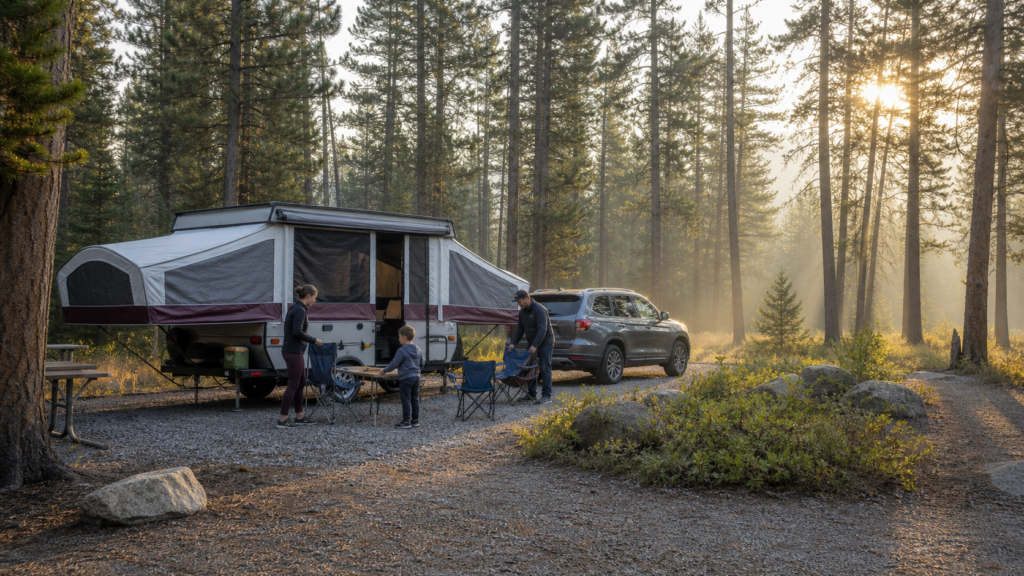
A pop-up trailer camper is one of the easiest ways to start camping with real beds and weather protection—without towing a large travel trailer or driving a motorhome. It folds down low for travel, then expands at the campsite to create sleeping space, a small galley, and sometimes a dinette. For many families and weekend travelers, it’s the best balance of comfort, price, and towability.
Still, pop-ups have their own learning curve. Setup takes time. Canvas needs care. Towing is simpler than big RVs, but you still need the right hitch, proper loading, and a plan for bad weather. This guide covers the key decisions and real-world tips that make pop-up ownership smoother.
What a Pop-Up Trailer Camper Is (and How It Works)
A pop-up trailer camper (also called a folding camper) is a towable RV that collapses into a low-profile box for travel. At camp, you raise the roof and extend bunk ends (usually two), creating a surprisingly roomy interior.
Most units include:
- Two pull-out bunk beds (often queen and full)
- Dinette that converts to a bed (on some models)
- Small galley with sink and stove
- Basic electrical hookups (shore power)
- Storage compartments for gear
Some higher-end pop-ups may add:
- Slide-outs for extra floor space
- Cassette toilet or wet bath (less common but available)
- Furnace, air conditioning, and water heater
- Hard-sided walls (hybrid folding designs)
Why People Choose a Pop-Up Trailer Camper
Pop-ups stay popular for practical reasons, not hype.
Lower towing stress
Because the trailer sits low when folded, it catches less wind. This makes towing feel more stable compared to tall, boxy travel trailers.
More affordable entry into RV camping
In many markets, pop-ups cost less than hard-sided trailers with similar sleeping capacity. You can often camp with hookups and real beds for a smaller initial spend.
Fits in more driveways and garages
Many owners can store a folded pop-up at home, avoiding monthly storage costs (as long as local rules allow it).
Better “camping feel”
Canvas sides let you hear nature, feel breezes, and sleep closer to the outdoors—while still being off the ground.
Pop-Up Trailer Camper vs Travel Trailer vs Tent
Choosing the right style depends on how you camp.
Pop-up vs tent
Pop-up wins for:
- Comfortable mattresses and elevation off the ground
- Faster “real sleep” for families
- More shelter in rain and cold (especially with a furnace)
Tent wins for:
- Lowest cost
- No towing requirements
- Simplest storage
Pop-up vs hard-sided travel trailer
Pop-up wins for:
- Easier towing for smaller vehicles
- Lower purchase price (often)
- Smaller storage footprint
Hard-sided trailer wins for:
- Faster setup (often)
- Better insulation and noise control
- Better security and weather protection
- Bathroom options are more common
If you camp in very cold or very hot conditions often, a hard-sided trailer may be more comfortable. If you want towability and value, a pop-up is hard to beat.
Types of Pop-Up Trailer Campers
Not all pop-ups are the same. Knowing the category helps you shop smarter.
Basic folding pop-up
Classic design with canvas walls, two bunks, and a simple galley.
Best for:
- Weekend camping
- Families who want maximum beds for the size
- Buyers who value simplicity
High-wall pop-up
Taller interior walls and often more residential-style amenities.
Best for:
- People who want more counter height and storage
- Longer trips where comfort matters more
Tradeoff:
- Heavier and more expensive than basic models
A-frame folding camper (hard-sided)
Hard panels fold into an “A” shape. Faster setup, less canvas.
Best for:
- Campers who dislike canvas maintenance
- Shoulder-season camping in cooler weather
Tradeoff:
- Interior layout and headroom differ from traditional pop-ups
Pop-up with slide-out
Adds floor space when parked.
Best for:
- Families who want extra living space during rainy days
Tradeoff:
- More complexity and weight
How Much Does a Pop-Up Trailer Camper Weigh (and Can You Tow It)?
Towing is where many first-time buyers get stuck. Don’t guess—confirm.
Key weight terms (simple definitions)
- Dry weight: trailer weight without gear, water, propane, or batteries
- GVWR: maximum allowed trailer weight when fully loaded
- Tongue weight: downward force on your hitch (important for stability)
What you should check on your tow vehicle
- Maximum tow rating
- Maximum tongue weight rating
- Payload capacity (people + cargo inside the vehicle)
- Hitch receiver class and rating
- Transmission cooling and braking capacity (especially in hills)
A common mistake is focusing only on tow rating and ignoring payload. A vehicle can “tow” a number on paper but still struggle once you load passengers, coolers, bikes, and camping gear.
Brake controller and trailer brakes
Many pop-ups (especially heavier ones) have electric brakes. If your trailer has brakes, you’ll typically need:
- A brake controller in the tow vehicle
- A proper 7-pin wiring connection (if required)
This is a major safety upgrade, not an optional luxury.
What to Look for When Buying a Pop-Up Trailer Camper
Your “must-haves” should match how you camp.
Layout and sleeping capacity
Ask:
- How many people will sleep in it regularly?
- Do you need a dinette bed, or are the bunk ends enough?
- Is the seating comfortable for indoor rainy days?
Kitchen basics
Many people love a simple galley, but check:
- Counter space (often limited)
- Stove location and ventilation
- Fridge or cooler storage options
- Exterior cooktop (some models offer one)
Furnace, air conditioning, and insulation reality
Canvas is not a wall. Even with a furnace:
- Cold-weather camping is possible, but you’ll work harder to stay warm
- Hot-weather camping may require AC and shade planning
If you camp in shoulder seasons, a furnace and good bunk-end covers can make a big difference.
Water system and plumbing
Confirm:
- Freshwater tank size (if included)
- Water pump function
- City water hookup
- Hot water heater presence (not all units have one)
If you mostly camp with full hookups, the system matters less. If you boondock, tank capacity and battery setup matter a lot.
Electrical setup
Look for:
- Shore power connection condition
- Battery tray and battery age
- Interior lights (LED upgrades are helpful)
- Number of outlets and where they are located
Storage and gear management
Pop-ups can feel tight if storage is poorly planned. Check:
- Under-seat storage
- Exterior compartments
- Space for leveling blocks, hoses, cords, and chocks
New vs Used Pop-Up Trailer Camper: Which Is Better?
Both can be good. The best value depends on condition and how handy you are.
Buying new
Pros:
- Warranty coverage (varies)
- Less hidden damage
- Modern materials and features
- Easier financing (if needed)
Cons:
- Higher price
- Depreciation in early years
Buying used
Pros:
- Better value if well maintained
- Many upgrades already installed
- Lower upfront cost
Cons:
- Higher risk of leaks, rot, and neglected canvas
- Appliances may be near end-of-life
- You need a careful inspection
If you buy used, inspection matters more than the brand name.
Used Pop-Up Trailer Camper Inspection Checklist (Don’t Skip This)
A pop-up can look fine folded down while hiding serious issues. Plan to inspect it fully opened.
Canvas and soft walls
Check for:
- Rips, pinholes, brittle vinyl windows
- Mold/mildew smell (a strong warning sign)
- Stained seams and delamination
- Zippers that snag or separate
- Proper fit around corners and bunk ends
Roof condition
Look closely for:
- Cracks, soft spots, water stains
- Sagging or bubbling materials
- Signs of previous patching
- Roof lift posts and seals condition
Roof leaks are one of the biggest problems in older units.
Floor and corners (rot detection)
Walk every inch inside:
- Soft spots near the door, corners, and around the galley
- Spongy floor often suggests water damage
- Check underneath for staining or repaired sections
Lift system and setup operation
Operate the lift fully:
- Roof should raise smoothly without loud grinding
- No excessive wobble when raised
- Stabilizers should work correctly
- Bunk slides should move in and lock firmly
Appliances and utilities
Test:
- Lights on shore power and on battery (if possible)
- Water pump and faucets
- Stove burners (if safe to test)
- Furnace ignition (if equipped)
- Fridge function (if equipped)
Tires, bearings, and frame
Check:
- Tire age (not just tread)
- Cracks in sidewalls
- Rust on frame and coupler
- Bearing service history (ask directly)
Old tires are a common cause of roadside problems.
Setting Up at the Campsite: Step-by-Step Basics
Setup gets easier with repetition. The goal is a stable, level trailer with weather-tight canvas.
1) Position and level the trailer
- Park where the site pad is flattest
- Level side-to-side first (blocks under tires)
- Chock wheels before unhooking
2) Unhitch and level front-to-back
- Use the tongue jack to level front-to-back
- Stabilize with corner stabilizers (they reduce movement; they don’t lift)
3) Raise the roof
- Open latches
- Crank up smoothly and evenly
- Stop at full height as instructed by your model
4) Pull out bunk ends and support poles
- Slide bunks out fully
- Install support poles/struts correctly
5) Tuck and tension the canvas
- Pull canvas out of the way of moving parts
- Close and secure door panels
- Zip windows and install any shepherd’s poles
6) Hook up utilities (if using them)
- Shore power
- Water hookup
- Propane (if needed)
- Check for safe airflow and proper venting when using propane appliances
After a few trips, you’ll develop a routine that cuts setup time significantly.
Camping Comfort Tips That Make a Big Difference
Small upgrades and habits improve pop-up life a lot.
Control moisture and condensation
Canvas breathes, but moisture still builds up.
Do this:
- Vent slightly at night
- Use a small fan if you have power
- Wipe down damp vinyl windows in the morning
- Never store the trailer wet (dry it fully as soon as possible)
Sleep warmer (and quieter)
Try:
- Insulated bunk-end covers (if compatible)
- Good sleeping bags or quality blankets
- Foam mattress toppers for comfort
Keep it organized
Pop-ups feel cluttered fast. Use:
- Packing bins for cooking gear
- A “setup bag” with leveling blocks, chocks, gloves, and tools
- Hooks or small organizers for keys, flashlights, and chargers
Maintenance: How to Keep a Pop-Up Trailer Camper in Good Shape
Most pop-up problems come from water, neglect, or storage mistakes.
After each trip
- Fully dry canvas and vinyl windows
- Sweep out sand and dirt (it damages moving parts)
- Empty and rinse water containers (if used)
- Check for new tears or loose stitching
Monthly or seasonally
- Inspect roof seals and corner seams
- Lubricate lift system points as recommended
- Check battery condition and charge
- Test lights and brakes
- Sanitize water lines if you use the water system
Annual basics
- Repack wheel bearings (or service them)
- Inspect tires for age and cracking
- Check propane lines and connections (if applicable)
- Inspect frame rust and touch up as needed
Preventive maintenance is cheaper than a ruined camping season.
Storage Tips (So It’s Ready Next Season)
Storage is where many pop-ups get damaged.
Dry is everything
If you remember only one rule: never store the camper wet. Mold and rot can develop quickly and are difficult to remove.
Covering and airflow
A breathable cover can help, but avoid trapping moisture. If storing outdoors:
- Use a cover designed for trailers
- Ensure water can’t pool on the roof
- Keep vents managed per manufacturer guidance
Battery and rodents
- Disconnect or maintain the battery properly
- Use basic rodent prevention steps (clean crumbs, seal obvious gaps, consider deterrents)
Common Problems (and What They Usually Mean)
Roof won’t lift smoothly
Often related to:
- Worn lift components
- Lack of lubrication
- Cable issues
If it binds or feels unsafe, stop and service it before forcing the crank.
Musty smell or stains
Usually from storing damp canvas. Clean promptly and focus on prevention by drying thoroughly.
Leaks at corners or around roof seams
Often caused by:
- Failed sealant
- Cracked roof material
- Aged gaskets
Address leaks quickly. Water damage spreads.
Towing sway
Common causes:
- Too much weight behind the axle
- Too little tongue weight
- Underinflated tires
- Speed too high for conditions
Repack cargo forward, verify tongue weight, and slow down.
Must-Have Accessories for New Owners
You don’t need everything at once, but these items help immediately:
- Wheel chocks
- Leveling blocks
- Torque wrench (for lug nuts)
- Tire pressure gauge and inflator
- Hitch lock (optional for peace of mind)
- Water pressure regulator (for hookups)
- Extension cord rated for RV use
- Basic tool kit and work gloves
- Portable fan (helps with airflow and comfort)
Buy accessories based on your camping style—hookups vs off-grid, hot climate vs cool climate.
Conclusion
A pop-up trailer camper is one of the most practical ways to upgrade from tent camping without taking on the cost, towing stress, and storage challenges of a larger RV. The best results come from choosing a layout that matches your family, confirming towing capacity and brake requirements, and staying disciplined about drying and sealing to prevent water damage. If you shop carefully—especially when buying used—and build a simple setup and maintenance routine, a pop-up can deliver years of comfortable, flexible camping with relatively low overhead.
6. FAQs
What is a pop-up trailer camper best used for?
A pop-up trailer camper is ideal for weekend trips and family camping where you want real beds, basic cooking space, and easier towing than a full travel trailer.
Can an SUV tow a pop-up trailer camper?
Many SUVs can tow a pop-up trailer camper, but it depends on the trailer’s GVWR, tongue weight, and your SUV’s payload capacity. Always verify ratings and consider trailer brakes.
How long does it take to set up a pop-up trailer camper?
After you learn the routine, many people set up in 15–30 minutes. First-time setup can take longer, especially if you’re leveling carefully and organizing gear.
Is a pop-up trailer camper safe in heavy rain?
Yes, if the canvas and seals are in good condition and the unit is properly set up and tensioned. The biggest risk is storing it wet afterward, which can cause mold and damage.
What should I check when buying a used pop-up trailer camper?
Check the roof for leaks, inspect the floor for soft spots, examine canvas for mold and tears, test the lift system, and verify tire age and bearing maintenance.
Do pop-up trailer campers have bathrooms?
Many basic pop-ups do not. Some higher-end models may include a cassette toilet or small wet bath, but bathrooms are more common in hard-sided trailers.
How do I prevent mold in a pop-up trailer camper?
Dry the camper completely before storage, ventilate during trips, wipe condensation from vinyl windows, and store in a dry, well-ventilated environment when possible.