
A pressure washer uses a pump to deliver water at substantially higher pressure than an ordinary garden hose, helping remove dirt, mud, algae, loose grime and other...
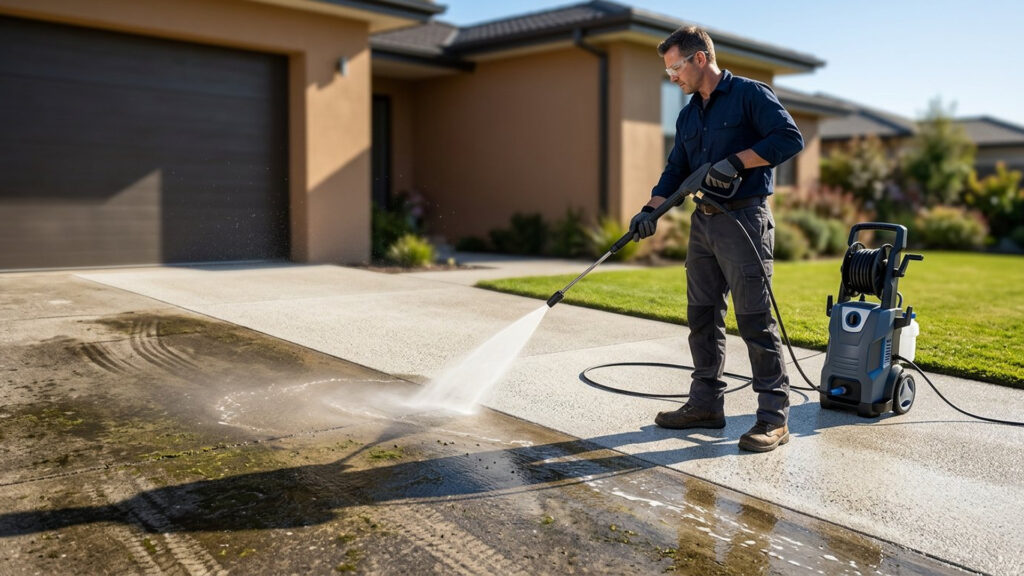
A pressure washer uses a pump to deliver water at substantially higher pressure than an ordinary garden hose, helping remove dirt, mud, algae, loose grime and other contaminants from suitable outdoor surfaces. Depending on the model and accessories, pressure washers can be useful for driveways, patios, vehicles, outdoor furniture, walls, equipment and other cleaning jobs. More pressure is not automatically better because concentrated water can damage paint, timber, seals, masonry and even cause serious injuries. Choosing the right machine requires understanding pressure, water flow, power source, nozzles, surface compatibility, maintenance requirements and safe operating practices.
What Is a Pressure Washer?
A pressure washer is a powered cleaning machine that increases the pressure of an incoming water supply and directs the resulting flow through a high pressure hose, wand and nozzle.
The pump is typically driven by an electric motor or an internal combustion engine.
Water pressure provides concentrated cleaning force, while water flow helps move loosened contamination away from the surface.
This distinction becomes important when comparing machines.
A unit with extremely high pressure but limited flow is not automatically faster at large scale cleaning than a well balanced machine with suitable pressure and greater water output.
How Does a Pressure Washer Work?
Water enters the machine through an inlet.
The pump pressurizes it before sending it through a pressure rated hose toward the spray gun and nozzle.
The nozzle shapes and concentrates the spray.
Pressure Washer Pump
The pump is a critical component and needs an adequate water supply while operating.
Never Run the Pump Dry
Operating without sufficient water can damage many pressure washer pumps. Follow the manufacturer’s startup and water supply requirements for the exact machine.
9 Powerful Benefits of a Pressure Washer
A properly selected machine can make outdoor cleaning substantially more efficient.
1. A Pressure Washer Removes Stubborn Surface Dirt
Ordinary hose pressure may be insufficient for embedded dirt on hard exterior surfaces.
Pressurized water can provide more concentrated mechanical cleaning.
This can be useful on suitable concrete, paving and other durable materials.
The surface still needs to tolerate the selected pressure and nozzle.
2. Driveway Cleaning Can Become Faster
Large hard surfaces accumulate tire marks, soil, organic growth and general grime.
A pressure washer can cover these areas more efficiently than manual scrubbing alone in many situations.
Pressure Washer for Concrete
Concrete can tolerate substantial cleaning force compared with more delicate materials.
Concrete Can Still Be Damaged
Weak, deteriorated or improperly cured concrete can be etched by aggressive pressure. Begin conservatively and test an inconspicuous section.
3. Multiple Nozzles Provide Cleaning Flexibility
Interchangeable nozzles create different spray patterns.
Wide fan sprays distribute pressure over a larger surface, while narrower sprays concentrate force.
Pressure Washer Nozzle Selection
Manufacturers commonly identify nozzle angles through degrees or color coding.
Never Assume Colors Are Universal
Always check the machine’s manual because nozzle systems and recommended applications can vary.
4. Pressure Washers Can Reduce Manual Scrubbing
Suitable detergents combined with controlled pressure can loosen contamination before rinsing.
This reduces physical effort on some jobs.
Cleaning chemicals must be compatible with the machine and surface.
Never place an unapproved chemical into a detergent system.
5. Outdoor Furniture Can Be Cleaned More Efficiently
Some durable outdoor furniture can be pressure washed carefully.
Material determines the appropriate technique.
Plastic, metal and timber surfaces respond differently to concentrated water.
Start with lower pressure and more distance when surface durability is uncertain.
6. Vehicle Cleaning Is Possible With Appropriate Settings
Some pressure washers are suitable for cleaning vehicles when used with an appropriate nozzle, distance and pressure.
Pressure Washer for Cars
A broad fan pattern is generally more appropriate than a concentrated jet.
Protect Paint, Seals and Tires
Excessive pressure or holding the nozzle too close can damage finishes, trim, seals and other components. Follow vehicle and washer manufacturer guidance.
7. Specialized Accessories Can Improve Productivity
Surface cleaners, extension wands and other accessories can make specific jobs easier.
A rotating surface cleaner is particularly useful on suitable flat areas.
Pressure Washer Surface Cleaner
The accessory contains rotating spray jets inside a housing.
Match Accessories to the Machine
Pressure and flow ratings need to be compatible. An incorrectly specified accessory may perform poorly or create safety concerns.
8. Different Power Sources Suit Different Users
Electric machines provide convenient operation around homes.
Gas or petrol models provide mobility and potentially greater output for demanding work.
The right power source depends on cleaning requirements, access to electricity and operating environment.
9. Regular Exterior Cleaning Can Support Property Maintenance
Cleaning can remove accumulated grime and make it easier to inspect surfaces.
It does not repair deterioration.
Cracked masonry, damaged coatings and failing joints require appropriate repair rather than progressively higher water pressure.
Pressure Washer PSI Explained
PSI means pounds per square inch and is commonly used to describe pressure in North American specifications.
Other markets may use bar or megapascals.
Higher PSI
Higher pressure provides greater concentrated cleaning force.
Surface Compatibility
Delicate materials require lower effective pressure.
More PSI Is Not Always Better
Excessive force can strip paint, damage timber fibers and erode mortar.
Pressure Washer GPM Explained
GPM means gallons per minute and measures water flow.
Litres per minute are commonly used in metric markets.
Why Flow Matters
Water helps carry dirt away after pressure loosens it.
Professional Cleaning
Higher flow can improve productivity on large surfaces when the water supply and equipment support it.
Verify Water Availability
A machine cannot perform properly if the incoming supply delivers less water than required.
PSI Versus GPM
Pressure and flow work together.
PSI describes cleaning force, while GPM describes water volume.
Cleaning Units
Some marketers multiply PSI and GPM to create a comparison figure sometimes called cleaning units.
Use This Carefully
It can provide rough context.
Complete Specifications Matter More
Pump quality, nozzle selection, duty cycle and surface compatibility should also influence the purchase.
Electric Pressure Washer
Electric machines are popular for residential cleaning.
They are generally quieter and require less engine maintenance than gas powered models.
Corded Electric Pressure Washers
These need access to a suitable electrical outlet.
Electrical Safety
Water and electricity require particular caution.
Use Appropriate Ground Fault Protection
Follow local electrical requirements and the manufacturer’s instructions regarding extension cords, outlets and ground fault protection.
Cordless Pressure Washer
Battery powered portable washers provide mobility.
They often operate at substantially lower pressure and flow than full sized corded or engine driven units.
Best Uses
Light washing and remote cleaning can be suitable.
Battery Runtime
Runtime depends on battery capacity and operating mode.
Compare Real Output
Do not assume a cordless device marketed as a pressure washer provides performance comparable with a mains powered machine.
Gas Pressure Washer
Gas or petrol pressure washers are commonly selected for larger properties and demanding cleaning.
Advantages
They do not require an electrical connection during operation.
Higher Output
Many provide greater pressure and flow than typical residential electric machines.
Engine Exhaust
Combustion engines produce carbon monoxide.
Never Operate a Gas Pressure Washer Indoors
Carbon monoxide can kill without warning. Operate combustion equipment only in locations and conditions permitted by manufacturer and public safety guidance.
Commercial Pressure Washer
Professional cleaners need durable equipment capable of repeated use.
Duty Cycle
A commercial machine should tolerate longer and more frequent operation.
Pump Design
Serviceable pumps can be valuable.
Spare Parts
Professional downtime has a financial cost.
Local Service Matters
A machine with readily available seals, valves, hoses and pump components can provide better long term value.
Hot Water Pressure Washer
Hot water machines combine high pressure with heated water.
They can be useful for oily or greasy industrial contamination.
Commercial Cleaning
Workshops and equipment fleets may benefit.
Increased Complexity
Burner systems add maintenance requirements.
Fuel and Ventilation Requirements Apply
Follow the manufacturer’s safety procedures for both the pressure system and heating equipment.
Cold Water Pressure Washer
Cold water models are widely used for ordinary exterior cleaning.
They are generally simpler and less expensive than comparable hot water machines.
Suitable Applications
Concrete, patios, equipment and many household tasks can be handled with appropriate pressure and cleaning products.
Grease
Cold water may be less efficient against heavy oils.
Use Approved Detergents Where Appropriate
Avoid using greater pressure as a substitute for the correct cleaning chemistry.
Pressure Washer Nozzles
Nozzle selection can substantially alter the effect of the same machine.
Wide Fan Nozzle
Provides broader coverage.
Narrow Fan Nozzle
Produces greater localized intensity.
Soap Nozzle
Low pressure detergent application may use a specialized nozzle.
Zero Degree Nozzle
This produces a highly concentrated stream.
Extreme Caution Is Required
A zero degree stream can damage many surfaces and cause severe injection type injuries. It should never be directed toward people or animals.
Turbo Nozzle
A turbo or rotary nozzle rotates a concentrated jet to increase cleaning action over an area.
It can be effective on suitable hard surfaces.
Concrete Applications
It may help remove stubborn grime.
Delicate Surfaces
It can be too aggressive.
Test First
Start on an inconspicuous area and maintain appropriate distance.
Pressure Washer for Driveways
Concrete driveways are among the most common pressure washing applications.
Prepare the Area
Remove loose objects before starting.
Pre Treatment
Appropriate detergents can loosen certain stains.
Even Technique
Keep the wand moving.
Avoid Permanent Cleaning Stripes
Inconsistent distance and overlapping can create visibly uneven cleaning.
Pressure Washer for Patios
Patio materials can include concrete, stone, pavers and tile.
Each material behaves differently.
Paving Joints
Strong jets can remove joint sand.
Natural Stone
Some stone is relatively soft or porous.
Identify the Material First
Do not use aggressive pressure simply because the patio appears solid.
Pressure Washer for Decking
Wood requires substantially more caution than concrete.
Lower Effective Pressure
A wide spray and greater distance can reduce damage risk.
Wood Grain Damage
Aggressive pressure can raise fibers and leave visible marks.
Consider Alternative Cleaning Methods
Chemical cleaning and gentle rinsing may be more appropriate for some decks.
Pressure Washer for Cars
Vehicle cleaning requires controlled technique.
Pre Rinse
Remove loose dirt.
Foam Application
Compatible foam cannons can apply automotive cleaning products.
Rinse
Use a suitable spray pattern.
Do Not Target Sensitive Components at Close Range
Electrical connections, damaged paint and seals can be vulnerable.
Pressure Washer for Motorcycles
Motorcycles expose components that may be sensitive to high pressure water.
Bearings, seals, electrical areas and chains deserve particular caution.
Manufacturer Guidance
Consult the motorcycle manual.
Lower Pressure
A garden hose or hand washing method may be safer around certain components.
High Pressure Is Not Necessary Everywhere
Precision machinery should not be treated like a concrete driveway.
Pressure Washer for House Siding
Siding materials include vinyl, timber, fibre cement, metal and other products.
Water Intrusion
Spraying upward behind overlapping siding can force water into the building assembly.
Painted Surfaces
Old paint can detach.
Check the Material and Coating
Manufacturer cleaning instructions should take priority.
Pressure Washer for Roof Cleaning
Roof pressure washing deserves significant caution.
High pressure can damage roofing products and create fall hazards.
Asphalt Shingles
Aggressive pressure can remove surface granules.
Tile Roofs
Tiles can break under foot or inappropriate cleaning.
Consider a Qualified Professional
Roof work combines surface damage risk with serious fall hazards. Many roofs are better treated through material appropriate low pressure methods.
Pressure Washer for Solar Panels
Solar panels generally should not be cleaned with aggressive high pressure unless the manufacturer explicitly permits it.
Seals and Glass
High pressure can damage components.
Warranty
Incorrect cleaning can potentially affect coverage.
Follow Panel Manufacturer Instructions
Low pressure water and approved methods are generally safer starting points.
Detergents for Pressure Washers
Pressure washer detergents are formulated for particular cleaning tasks and equipment.
Machine Compatibility
Some chemicals pass through dedicated detergent systems.
Surface Compatibility
A cleaner safe for concrete may be inappropriate for painted surfaces.
Never Mix Cleaning Chemicals Randomly
Combining products such as bleach and acids or ammonia containing cleaners can produce dangerous gases.
Bleach and Pressure Washers
Sodium hypochlorite solutions are used professionally for certain exterior cleaning applications.
However, bleach can damage pumps, seals, vegetation, surfaces and clothing if mishandled.
Manufacturer Approval
Only introduce chemicals through the machine when explicitly permitted.
Chemical PPE
Appropriate protection can be necessary.
Never Mix Bleach With Ammonia or Acids
Such combinations can release toxic gases.
Pressure Washer Hose
High pressure hoses are engineered to withstand specified working pressure.
Hose Rating
Replacement hoses must meet the machine’s requirements.
Visible Damage
Bulges, exposed reinforcement or cuts can indicate unsafe deterioration.
Never Repair High Pressure Hose With Ordinary Tape
Replace damaged components with appropriately rated equipment.
Spray Gun and Wand
The trigger gun controls flow toward the nozzle.
Trigger Lock
Some products provide a lock intended to reduce unintended operation.
Recoil
Pressure creates reaction force at the wand.
Maintain Stable Footing
Do not operate from an unstable position or ladder when recoil could cause a fall.
Pressure Washer Safety
High pressure water can penetrate skin and cause severe injury.
An apparently small wound can involve deep tissue damage.
Never Aim at People
Do not use a pressure washer to clean boots or clothing while someone is wearing them.
Eye Protection
Debris can become airborne.
Footwear
Closed protective footwear can reduce risk.
Injection Injury
A high pressure injection injury needs urgent medical assessment.
Do Not Delay Because the Wound Looks Small
Internal damage can be more extensive than the surface appearance suggests.
Pressure Washer Electrical Safety
Electric models need appropriate protection from water exposure.
Connections
Keep plugs and connections dry according to manufacturer instructions.
Extension Cords
Use only types and ratings approved for the equipment and environment.
Follow the Manual
Improvised electrical connections can create electrocution and fire hazards.
Pressure Washer Carbon Monoxide Safety
Engine powered units generate carbon monoxide.
This odorless gas can accumulate rapidly.
Open Garages Are Not Automatically Safe
Exhaust can migrate indoors.
Keep Away From Buildings as Directed
Follow current public health and manufacturer guidance.
Carbon Monoxide Alarms Are Not a Substitute for Safe Operation
Combustion equipment should never be knowingly operated in prohibited enclosed spaces.
Starting a Pressure Washer Safely
Connect an adequate water supply.
Check hoses and fittings.
Purge air where required.
Then start the machine according to its manual.
Check the Work Area
Keep children and pets away.
Choose a Conservative Nozzle
Begin with a wider spray.
Increase Cleaning Force Only When Needed
Distance and nozzle choice can often be adjusted before selecting a more aggressive setup.
Correct Pressure Washing Technique
Hold the nozzle far enough from the surface to avoid damage.
Test an Inconspicuous Area
This is especially important for painted or delicate surfaces.
Keep Moving
Holding the jet stationary can etch surfaces.
Work Methodically
Consistent passes can create more uniform cleaning.
Pressure Washer Maintenance
Maintenance depends on power source and pump design.
Electric Models
Inspect hoses, power cables, filters and connections.
Gas Models
Engine oil, air filters and fuel systems require additional attention.
Pump Maintenance
Some pumps require specific service procedures.
Follow Manufacturer Intervals
Generic maintenance advice should not override the machine manual.
Winterizing a Pressure Washer
Freezing water can damage pumps, hoses and fittings.
Drain the System
Follow manufacturer storage procedures.
Pump Protectant
Some products specify approved storage solutions.
Prevent Freezing
Do not assume simply disconnecting the garden hose removes all internal water.
Pressure Washer Storage
Store the machine in a dry and secure location.
Hose Storage
Avoid sharp kinks.
Fuel Storage
Engine powered units require appropriate fuel management.
Keep Away From Ignition Sources
Follow applicable fuel safety requirements.
Common Pressure Washer Problems
A machine that loses pressure can have several causes.
Restricted Water Supply
Check the inlet.
Blocked Nozzle
Inspect safely after shutting down and relieving pressure.
Air Leaks
Loose fittings can interfere with operation.
Pump Wear
Professional service may be necessary.
Never Disassemble a Pressurized System
Switch off and safely relieve stored pressure first.
Pressure Washer Pulsing
Pressure cycling can occur when water supply is inadequate or components are restricted.
Check Inlet Flow
Ensure the supply can meet machine requirements.
Inspect Filters and Nozzle
Blockages can affect performance.
Avoid Running With Known Supply Problems
Cavitation or insufficient water can damage pumps.
Pressure Washer Price
Pressure washer prices vary substantially.
Compact electric units generally cost less than high output gas or commercial machines.
Price Drivers
These include:
• PSI
• Water flow
• Motor or engine
• Pump type
• Duty cycle
• Hose length
• Accessories
• Brand
• Warranty
• Service support
The lowest purchase price may not provide the best long term value.
Pressure Washer Pump Types
Pump designs vary.
Residential machines often use pumps optimized for occasional use, while commercial models may incorporate serviceable designs intended for heavier workloads.
Serviceability
Replaceable seals and valves can extend useful life.
Pump Speed
Design affects wear and performance.
Professional Users Should Consider Repairability
Replacing an entire low cost machine may be acceptable for occasional household use but disruptive for a cleaning business.
How to Choose the Best Pressure Washer
Start with the surfaces you actually intend to clean.
Residential Cleaning
Moderate output can handle many household tasks.
Vehicle Cleaning
Control and appropriate nozzles matter more than maximum pressure.
Commercial Cleaning
Higher flow and durable pumps become more important.
Pressure Washer Buying Checklist
Compare:
• Rated pressure
• Water flow
• Power source
• Pump design
• Duty cycle
• Hose length
• Included nozzles
• Accessory compatibility
• Machine weight
• Noise
• Warranty
• Spare parts
• Service availability
• Electrical requirements
• Fuel requirements
• Total cost
A well matched machine is more useful than one chosen solely for maximum PSI.
Frequently Asked Questions
What is a pressure washer?
A pressure washer uses a powered pump to increase water pressure and direct it through a hose, wand and nozzle for cleaning suitable surfaces.
How much PSI do I need from a pressure washer?
Required pressure depends on the surface and contamination. Delicate surfaces need significantly less force than durable concrete, so more PSI is not automatically better.
Is an electric or gas pressure washer better?
Electric models suit many household tasks and require less engine maintenance, while gas models can provide greater mobility and output for demanding work.
Can I use a pressure washer on my car?
Yes, with a suitable machine, broad nozzle, appropriate distance and vehicle safe technique. Excessive pressure can damage paint, seals and components.
Can a pressure washer damage concrete?
Yes. Excessive pressure, a narrow nozzle or unsuitable technique can etch weak or deteriorated concrete, so begin conservatively and test first.
Is a pressure washer dangerous?
Yes. High pressure water can cause severe injection injuries, and gas models create carbon monoxide hazards. Follow manufacturer instructions and use appropriate protective equipment.
Conclusion
A pressure washer can make cleaning driveways, patios, vehicles and other suitable outdoor surfaces faster and less labor intensive when pressure and water flow are matched to the job. Electric models are practical for many homes, while higher output gas and commercial machines suit more demanding workloads. Nozzle selection, distance and technique are just as important as headline PSI because excessive force can damage surfaces and seriously injure people. Choosing a serviceable machine with appropriate safety features, available parts and a realistic duty cycle provides stronger long term value than simply purchasing the highest pressure rating.