
Choosing among private schools in Singapore involves much more than comparing campuses, examination results, or tuition fees. Singapore's education landscape includes government schools, government aided schools, independent...
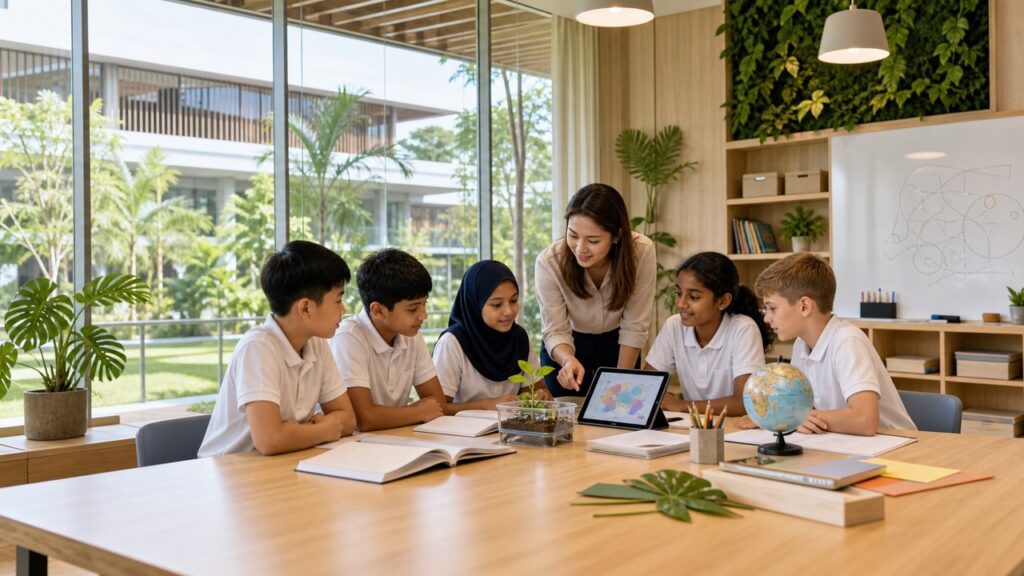
Choosing among private schools in Singapore involves much more than comparing campuses, examination results, or tuition fees. Singapore’s education landscape includes government schools, government aided schools, independent schools, international schools, and private education providers, and these categories are not interchangeable. Families considering private options need to examine the curriculum, legal status, admissions criteria, total costs, teacher experience, student support, class environment, qualifications offered, and how well a school fits a child’s longer term educational plans. Understanding these factors before submitting applications can make a complicated decision considerably more manageable.
Singapore attracts families from many countries, so schools may serve students with very different educational backgrounds and future destinations. Internationally oriented institutions can offer curricula associated with the International Baccalaureate, Britain, the United States, and other national or international systems.
Availability and admissions rules can change from year to year. Parents should therefore verify current information directly with individual schools and relevant Singapore authorities rather than relying entirely on rankings or older comparison articles.
What Are Private Schools in Singapore?
The term private school can be used broadly in everyday conversation, but Singapore has specific regulatory and institutional categories.
Some families use the phrase to describe international schools, while others may mean privately operated education institutions more generally. Certain independent schools, meanwhile, remain part of Singapore’s national education system and should not automatically be classified in the same way as private international schools.
This distinction matters because admission policies, curricula, fees, student eligibility, and regulation can differ.
Before comparing schools, identify the exact category to which each institution belongs.
How Private Schools in Singapore Differ From Government Schools
Singapore government schools primarily follow the national curriculum and operate within the Ministry of Education system.
International and other privately run schools may follow different curricula and establish distinct admissions processes within applicable regulation.
Citizenship can also influence school access.
Singapore has rules governing admission of Singapore citizens to foreign system schools, with limited circumstances in which approval may be possible. Families involving a Singapore citizen child should check current Ministry of Education requirements directly.
International families should similarly verify immigration, student pass, and eligibility requirements relevant to their circumstances.
Private Schools in Singapore and International Schools
International schools represent an important part of Singapore’s non government education landscape.
They may offer the IB, English National Curriculum, American style programs, national curricula from countries such as France or Germany, or combinations of educational frameworks.
However, the word “international” does not guarantee identical standards, student demographics, teacher qualifications, or university outcomes.
Each school needs to be assessed individually.
9 Essential Tips for Choosing Private Schools in Singapore
The right school depends on the individual child and family rather than a universal league table. These nine factors provide a structured way to compare realistic options.
1. Compare Private Schools in Singapore by Curriculum
Curriculum should be one of the first filters.
Families expecting to relocate again may value continuity with a child’s previous or future education system. Others may prioritize a framework that provides broadly recognized qualifications for university applications.
Common pathways in Singapore’s international education sector can include the International Baccalaureate, English curricula leading toward qualifications such as IGCSE and A Levels, American style education, and other national systems.
Do not judge a school solely by the curriculum name.
Ask how the curriculum is delivered, which qualifications are actually offered, and what options students have during secondary years.
2. Research Private Schools in Singapore Admissions Requirements
Admissions processes vary considerably.
A school may request previous academic records, teacher recommendations, interviews, language assessments, entrance testing, or other documentation. Age placement rules can also differ between curriculum systems.
Popular year groups may operate waiting pools.
Parents moving internationally should contact admissions departments early, but they should also ask how waitlists function rather than assuming an application guarantees a future place.
Keep school reports and identification documents readily available during the application process.
3. Calculate the Full Cost of Private Schools in Singapore
Published tuition is rarely the only expense families need to consider.
Potential additional costs can include application fees, registration or enrollment charges, capital or development levies, technology fees, transportation, meals, uniforms, examination charges, extracurricular activities, learning materials, trips, and additional support services.
Fee structures vary by institution and year.
Some charges may be refundable while others are not.
Obtain the latest written fee schedule directly from each school and calculate the annual total rather than comparing only headline tuition figures.
4. Check Private Schools in Singapore Credentials and Regulatory Status
Parents should understand how an institution is legally established and which authorities or organizations oversee relevant aspects of its operations.
Singapore’s regulatory arrangements differ depending on the type of education provider.
Do not rely on the school using terms such as “accredited,” “registered,” or “recognized” without identifying exactly what organization those terms refer to.
Accreditation can apply to a curriculum, qualification, institution, or particular program.
Verify important claims with the accrediting or regulatory body itself when possible.
5. Visit Private Schools in Singapore Before Deciding
Websites are useful, but a campus visit can reveal details that marketing photography cannot.
Observe classrooms and common areas where permitted. Ask about library resources, laboratories, arts facilities, sports provision, technology, security, health services, and spaces available for younger children.
Facilities should be evaluated according to how they support learning.
A visually impressive campus is not evidence by itself of strong teaching.
If an in person visit is impossible, request a live virtual tour and an opportunity to speak with admissions staff.
6. Evaluate Student Support at Private Schools in Singapore
Children may need academic, language, social, emotional, or learning support at different stages of education.
Ask how the school identifies and responds to those needs.
International students can face additional transitions, including adapting to a new country, curriculum, language environment, and friendship group.
Schools may offer counselling, English language support, learning support, university guidance, pastoral systems, or other services.
If your child has a diagnosed learning need, disability, health condition, or individualized support requirement, discuss this transparently with prospective schools to determine whether appropriate provision is available.
7. Examine Teaching at Private Schools in Singapore
Teacher quality is difficult to reduce to a single statistic.
Parents can ask about professional qualifications, experience, ongoing development, recruitment practices, safeguarding training, and teacher turnover.
Class size can provide context but should not be treated as a direct measure of educational quality.
A smaller class does not automatically produce stronger learning if teaching is ineffective.
Ask how students are assessed, how progress is communicated to parents, and what happens when a child needs additional challenge or support.
8. Consider Location of Private Schools in Singapore
Singapore is geographically compact, but school commuting times can still affect daily family life.
A campus across the island may require an early departure, particularly during busy travel periods.
Check school bus routes, public transport access, pickup arrangements, and realistic journey times from home.
Families choosing housing after securing a school place may wish to consider commute alongside rent, workplace access, and neighborhood preferences.
A school that looks ideal academically may be less sustainable if daily transportation creates significant strain for the child.
9. Match Private Schools in Singapore to Long Term Plans
Think beyond the next academic year.
A family expecting to return to the UK, United States, Australia, Europe, or another country may prioritize curriculum compatibility. Families staying in Singapore through graduation may focus more heavily on secondary qualifications and university preparation.
Ask what happens at transition points.
Understand available subjects, diploma pathways, careers guidance, university counselling, and qualification recognition for destinations your child might realistically pursue.
Long term fit can be more important than short term convenience.
Private Schools in Singapore by Curriculum Type
Curriculum shapes subject structure, assessment, teaching style, and qualifications, but schools implementing the same framework can still differ considerably.
Families should therefore compare both the curriculum and the institution delivering it.
The child’s age is particularly important because changing systems can become more complicated around examination years.
IB Private Schools in Singapore
The International Baccalaureate offers several programs covering different educational stages, including the Primary Years Programme, Middle Years Programme, Diploma Programme, and Career related Programme.
Not every IB school offers every program.
The Diploma Programme is widely recognized by universities internationally, but admissions requirements depend on the institution, program, country, and student’s actual results.
Parents should confirm a school’s current IB authorization directly through official IB sources where relevant.
British Curriculum Private Schools in Singapore
Schools following English educational frameworks may use the National Curriculum for England or related structures before students progress toward qualifications such as IGCSE, GCSE, or A Levels.
Terminology varies between schools.
Families planning a future move into or out of the British system should compare year group placement, examination boards, subject availability, and qualification timing.
Do not assume two schools described as “British” follow identical programs.
American Curriculum Private Schools in Singapore
American oriented schools may provide a US style educational pathway with course structures, credits, grade point averages, Advanced Placement options, or other programs.
The exact approach differs by school.
University planning should consider the requirements of intended destinations rather than assuming one diploma provides automatic admission.
Ask prospective schools which external programs or qualifications they offer and how university counselling supports students applying internationally.
Fees at Private Schools in Singapore
Private and international education can represent a substantial household expense.
Fees change over time, and they often increase as children progress into older year groups.
For this reason, families should budget across several years rather than looking only at current entry level tuition.
Additional Costs at Private Schools in Singapore
Ask for a comprehensive schedule covering both mandatory and optional charges.
Transport can become significant if the school is far from home. Extracurricular activities and trips can also vary widely in cost.
Families with several children should ask whether sibling discounts currently exist and understand their conditions.
Employer education allowances may cover certain charges for expatriate employees, but families should confirm coverage with their employer rather than assuming every school expense qualifies.
Budgeting Long Term for Private Schools in Singapore
Consider potential annual fee increases and currency exposure if income or savings are held outside Singapore.
Also account for one time enrollment charges when comparing a school change with remaining at an existing institution.
Do not choose solely by cost.
A less expensive school may provide an excellent fit, while a higher fee does not automatically guarantee superior outcomes. Compare educational provision and total value in relation to the child’s needs.
Admissions to Private Schools in Singapore
An organized application process can reduce unnecessary delays.
Start by identifying appropriate year groups and checking age requirements for the desired enrollment date.
International school calendars may differ, so compare academic years carefully when relocating from another country.
Documents Private Schools in Singapore May Request
Schools can request passports or identification, visa information where applicable, previous school reports, vaccination or health information, photographs, recommendations, assessment records, and other documents.
Requirements differ.
Provide accurate records and certified translations when requested.
Families should also disclose relevant learning support information so the school can properly assess whether it can meet the student’s needs.
Assessments at Private Schools in Singapore
Some schools use admissions assessments to understand academic level, language proficiency, or readiness for a particular year group.
Assessment practices are school specific.
Ask what will be evaluated and whether preparation is expected.
Avoid placing excessive pressure on children to prepare for an assessment without understanding its purpose. In some cases, the school may be trying to establish appropriate placement rather than conduct a competitive entrance examination.
Private Schools in Singapore for Expatriate Families
International mobility creates educational challenges beyond academic content.
Children may arrive during the school year, leave friends behind, or transition between curricula.
School culture and pastoral support therefore deserve attention alongside academics.
How Private Schools in Singapore Support Transitions
Ask how new students are introduced to classmates and routines.
Some schools use orientation programs, buddy systems, parent networks, counselling, or language support.
Families should also investigate withdrawal procedures early if international relocation is likely.
Notice periods and deposit conditions can affect costs when leaving a school.
Clear communication about both arrival and departure helps avoid surprises.
Private Schools in Singapore and Language Support
A child learning primarily in English may need additional language support depending on previous schooling and proficiency.
Ask how language needs are assessed, whether English as an additional language support carries extra fees, and how students access mainstream lessons.
Families interested in multilingual education should also examine second language offerings.
The number of languages listed on a school website does not necessarily indicate that every language is available at every proficiency level.
Facilities at Private Schools in Singapore
Modern schools may offer laboratories, libraries, swimming pools, theaters, sports fields, maker spaces, music rooms, design studios, and extensive technology.
Facilities can enrich education when they are meaningfully integrated into teaching.
They should not dominate the decision.
Evaluating Private Schools in Singapore Beyond the Campus
During a school visit, ask students or staff how facilities are actually used.
A large theater is valuable for a strong performing arts program, while sophisticated laboratories matter when students regularly undertake practical science.
Also investigate class culture, student support, teaching, safeguarding, leadership, and communication with families.
Educational quality is a system, not a building.
Extracurricular Life at Private Schools in Singapore
Activities outside formal lessons can help students explore interests and develop skills.
Schools may offer sport, music, drama, coding, debating, art, community projects, clubs, and competitive teams.
Availability often changes by age and term.
Choosing Private Schools in Singapore for Activities
If a child has a serious interest, verify the depth of provision.
A school listing football or orchestra does not indicate frequency, coaching level, facilities, competitive opportunities, or eligibility.
Ask which activities are included in tuition and which require additional payment.
Also consider scheduling. Extensive extracurricular options provide limited value if transport arrangements make participation impractical.
Academic Outcomes at Private Schools in Singapore
Examination results can provide useful information but should be interpreted carefully.
Schools differ in admissions selectivity, cohort size, curriculum, student population, and reporting practices.
A headline average cannot capture all those factors.
Comparing Results From Private Schools in Singapore
Request context around published results.
Determine which student cohort they cover, which qualification was taken, and whether the statistic reflects all candidates.
University destination lists also require context.
Acceptance at prestigious universities demonstrates individual student outcomes but does not guarantee the same result for future students.
Evaluate how the school supports a range of learners, not only its highest achievers.
Safeguarding at Private Schools in Singapore
Parents should feel able to ask clear questions about student safety.
Schools should have policies covering safeguarding, staff conduct, reporting concerns, supervision, visitors, trips, digital environments, and emergency procedures as appropriate.
Ask where policies can be reviewed.
Health and Wellbeing at Private Schools in Singapore
Find out how the school handles illness, medication, allergies, emergencies, counselling, and health information.
Families of children with medical needs should discuss individual requirements before enrollment.
Mental wellbeing should also be considered.
Ask how pastoral staff respond when a student is struggling socially or emotionally and what referral pathways exist when specialized support is needed.
How to Compare Private Schools in Singapore Objectively
Create a shortlist based on requirements rather than reputation alone.
Separate necessities from preferences.
Curriculum compatibility, adequate support, affordability, and reasonable commuting time may be nonnegotiable, while facilities or particular activities may carry lower priority.
Questions to Ask Private Schools in Singapore
Useful questions include:
• Which curriculum and qualifications are currently offered?
• What is the complete annual cost?
• How does the admissions and waitlist process work?
• What student support services are available?
• What are typical class arrangements?
• How are teachers recruited and developed?
• What transport options exist?
• How does the school communicate student progress?
• What safeguarding procedures are in place?
• What happens if the family needs to withdraw?
Document answers so schools can be compared consistently.
Making the Final Private Schools in Singapore Decision
After researching, consider the child’s temperament and preferences as well as measurable features.
An academically ambitious environment can suit one student and create a poor fit for another. A large campus may offer extensive opportunities while a smaller community may provide an atmosphere another child prefers.
Where age appropriate, involve the child in visits and conversations.
The goal is not to find a school that wins every category but one that aligns well with educational needs, family circumstances, and longer term plans.
Frequently Asked Questions
What are private schools in Singapore?
Private schools in Singapore include various privately operated education providers, while international schools form a significant separate category. Regulatory status and curricula vary by institution.
How much do private schools in Singapore cost?
Fees vary substantially by school, curriculum and year group. Families should check current tuition plus enrollment, transport, activities, meals and other compulsory charges.
Can foreigners attend private schools in Singapore?
Many international and private institutions serve foreign students, subject to school admissions and applicable immigration requirements. Eligibility should be confirmed with the school and relevant authorities.
Which curricula do private schools in Singapore offer?
Depending on the institution, options can include IB, British, American and other national or international curricula. Individual schools may offer several pathways.
How should parents compare private schools in Singapore?
Compare curriculum, total fees, teaching, student support, admissions, regulatory status, facilities, location, safeguarding and compatibility with the child’s future education plans.
Are private schools in Singapore regulated?
Yes, but the applicable regulatory framework depends on the type of institution. Families should verify each school’s current legal and accreditation status through relevant official sources.
Conclusion
Private schools in Singapore provide families with a diverse range of curricula, educational environments, facilities, and pathways, but selecting one requires careful comparison rather than reliance on reputation alone. Curriculum continuity, total costs, admissions requirements, student support, teaching, location, and regulatory status all deserve scrutiny. Current details should always be confirmed directly with schools and Singapore’s relevant authorities because fees, policies, and requirements can change. The strongest choice is ultimately the school that fits the individual child’s educational needs and the family’s realistic long term plans.