
Introduction Rail consultants are the professionals who make the difference between a railway project that reaches its destination and one that stalls somewhere between ambition and...
Introduction
Rail consultants are the professionals who make the difference between a railway project that reaches its destination and one that stalls somewhere between ambition and delivery. Railway infrastructure is among the most complex undertakings in the built environment. It involves land acquisition, structural engineering, systems integration, regulatory compliance, environmental assessment, stakeholder management, procurement strategy, and operational planning, often simultaneously and always interdependently. Most participants in a railway project see only the next stop: the next milestone, the next approval, the next contract award.
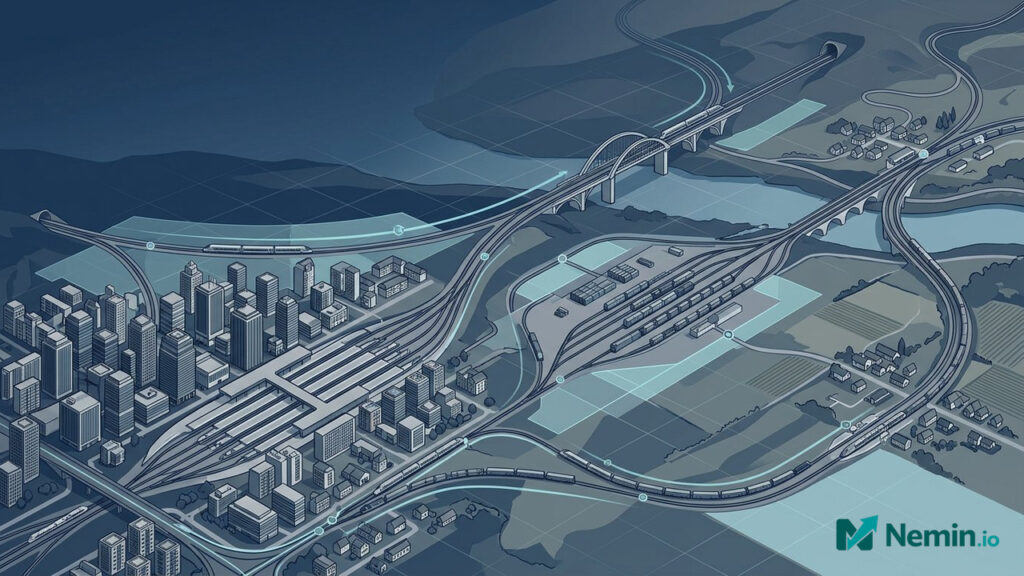
Rail consultants are the ones who see the whole track. They hold the strategic, technical, and systems-level view that keeps every moving part aligned with the project’s ultimate destination. This article examines what genuinely capable rail consulting looks like, why that whole-track perspective matters, and what distinguishes firms and individuals who can deliver it from those who cannot.
Why Railway Projects Demand a Different Kind of Thinking
Railway infrastructure is not a linear problem. It presents itself as a sequence of discrete tasks but behaves as a deeply interconnected system where decisions made in one domain ripple into every other. A procurement decision made in the early planning phase can constrain engineering options years later. A change to station design can affect timetabling models, which affects fleet requirements, which affects depot capacity, which affects capital expenditure projections. These chains of consequence are not always visible to specialists focused on their particular segment of the project.
This is the core challenge that rail consultants are engaged to address. Their value does not come solely from technical depth in a single discipline, though technical credibility is essential. It comes from the ability to maintain a coherent picture of the whole system while navigating the complexity of each component, identifying second and third-order consequences before they become costly problems, and keeping all parts of the project team oriented toward the same strategic outcomes.
Railway projects also operate over extended timeframes during which political, economic, and technological conditions change. A rail consultant who can only see the immediate horizon will consistently be surprised by what lies beyond it. The ones who deliver genuine value are those who plan for the track ahead even when it curves out of sight.
7 Strategic Capabilities That Define Effective Rail Consultants
1. Whole-System Strategic Planning
The most foundational capability of any credible rail consulting engagement is the ability to plan at the system level. This means understanding how every element of a railway project connects to every other element and how decisions made today will constrain or enable options in the future.
Whole-system planning encompasses corridor selection, capacity modeling, interoperability assessment, integration with existing networks, future demand forecasting, and long-term asset lifecycle considerations. Rail consultants who operate at this level can identify misalignments between project components before they become embedded in contracts, designs, or budgets.
2. Technical Authority Across Multiple Engineering Disciplines
Effective rail consultants must possess or command credible technical knowledge across a range of disciplines including civil and structural engineering, track geometry, signaling and control systems, electrification, rolling stock specification, and station design. They do not need to be the deepest specialist in every one of these areas, but they must understand each well enough to evaluate technical proposals, identify risks, and facilitate productive dialogue between specialist teams.
This cross-disciplinary technical authority is what allows rail consultants to catch integration failures before they occur. A signaling system that meets its own technical specifications but is incompatible with the proposed rolling stock is a failure that only becomes visible when someone is looking across both domains simultaneously.
3. Procurement Strategy and Commercial Structuring
Railway projects involve complex commercial arrangements between public clients, private contractors, equipment manufacturers, and operators. The structure of these arrangements, including contract form, risk allocation, payment mechanisms, and performance incentives, has a profound effect on project outcomes.
Experienced rail consultants bring procurement strategy expertise that helps clients structure contracts in ways that align incentives, manage risk appropriately, and protect the public interest without deterring capable contractors from competing. Poor commercial structuring is one of the most common root causes of railway project cost overruns and delivery failures, and it is one of the areas where strategic consultancy adds the most measurable value.
4. Regulatory Navigation and Stakeholder Alignment
Railway projects exist within dense regulatory frameworks governing safety, environment, land use, accessibility, and interoperability. Navigating these frameworks requires not only knowledge of the rules but relationships with the regulators who interpret and apply them. Rail consultants with established credibility in regulatory environments can accelerate approvals, anticipate objections, and structure project proposals in ways that are likely to succeed.
Beyond regulators, railway projects affect communities, businesses, utility providers, local authorities, and other transport operators. Managing these stakeholder relationships requires a level of political and interpersonal intelligence that complements technical expertise. Rail consultants who can build consensus among diverse and sometimes conflicting interests prevent the stakeholder conflicts that derail projects long before any physical construction begins.
5. Programme and Risk Management at System Scale
Managing risk on a railway project is not simply a matter of maintaining a risk register. It requires understanding how risks in one part of the programme cascade into others, quantifying those interdependencies in ways that inform decision-making, and developing mitigation strategies that address root causes rather than symptoms.
Rail consultants with genuine programme management capability can construct realistic delivery schedules, identify critical path dependencies, and model the consequences of delay scenarios in terms of cost, contract, and operational impact. This level of programme intelligence is what allows project sponsors to make informed decisions rather than reacting to events as they unfold.
6. Operations and Performance Integration
A railway project does not end at revenue opening. The operational performance of the finished railway, including capacity, reliability, punctuality, and passenger experience, is the ultimate measure of whether the project delivered its intended value. Rail consultants who understand operations bring this end-state perspective into every earlier phase of the project.
This means that design decisions are evaluated not only against construction cost but against operational maintainability, that timetabling constraints are considered during infrastructure design, and that asset management strategies are built into the project from the outset rather than retrofitted after opening. Operations-aware rail consulting closes the gap between infrastructure delivery and service performance.
7. Independent Assurance and Advisory to Project Clients
Some of the most valuable work that rail consultants do is serving as independent advisers to project clients, particularly public sector bodies that lack in-house railway expertise. In this capacity, rail consultants review the work of delivery contractors, challenge assumptions in cost estimates and schedules, assess the reasonableness of claims and change requests, and provide clients with an independent view of whether their project is on track.
This advisory and assurance function requires both technical credibility and professional independence. Rail consultants operating in this role must be willing to deliver difficult assessments and to stand behind their professional judgement in the face of pressure from project participants with competing interests.
What Separates Leading Rail Consultants From the Rest
The difference between rail consultants who see the whole track and those who see only the next stop comes down to three qualities that cannot be manufactured quickly: experience across the full project lifecycle, intellectual curiosity about the systems they work within, and the professional courage to raise concerns early even when doing so is uncomfortable.
Leading rail consultants have typically worked across multiple project types, including new line construction, network upgrades, electrification programmes, and operational transformation. This breadth of experience gives them pattern recognition that specialists developing deep expertise in a single area simply do not have. They have seen how similar decisions played out in different contexts and can apply those lessons to the project in front of them.
Conclusion
Rail consultants who bring whole-track vision to railway projects are among the most valuable assets a project sponsor can engage. The complexity of modern railway infrastructure demands professionals who can hold the strategic picture while managing technical detail, who can see around corners in procurement and regulation, and who can keep the entire project team oriented toward outcomes that will only be measured years after the consultancy engagement ends. In a field where the consequences of short-sighted decisions can persist for decades in concrete, steel, and public expenditure, the ability to see the whole track is not a premium capability. It is the minimum standard that serious railway projects should demand from the consultants they engage.
Frequently Asked Questions
Q1. What do rail consultants do on a railway infrastructure project?
Rail consultants provide strategic, technical, and commercial advisory services across the full railway project lifecycle, from initial planning and procurement through delivery and operational readiness.
Q2. When should a project sponsor engage rail consultants?
Rail consultants should ideally be engaged at the earliest stages of project development when strategic decisions about scope, procurement, and programme structure will have the greatest long-term impact.
Q3. What disciplines do rail consultants need to cover?
Effective rail consultants must span civil engineering, systems integration, signaling, rolling stock, procurement, regulation, stakeholder management, and programme delivery, either individually or as a coordinated team.
Q4. How do rail consultants add value differently from project managers?
Rail consultants bring domain-specific railway expertise and systems-level thinking that generalist project managers typically lack, enabling them to anticipate railway-specific risks and integration failures before they occur.
Q5. Can rail consultants work for both public and private sector clients?
Yes. Rail consultants serve public transport authorities, government agencies, private operators, infrastructure investors, and construction contractors depending on the nature of the engagement and the project type.
Q6. What is independent assurance in the context of rail consulting?
Independent assurance involves rail consultants reviewing the work of delivery contractors on behalf of the client, providing objective assessments of cost, schedule, and technical proposals to protect the client’s interests.