
For SaaS companies, organic search can be a valuable source of website traffic, leads, and new customers. But creating useful content and optimizing website pages...
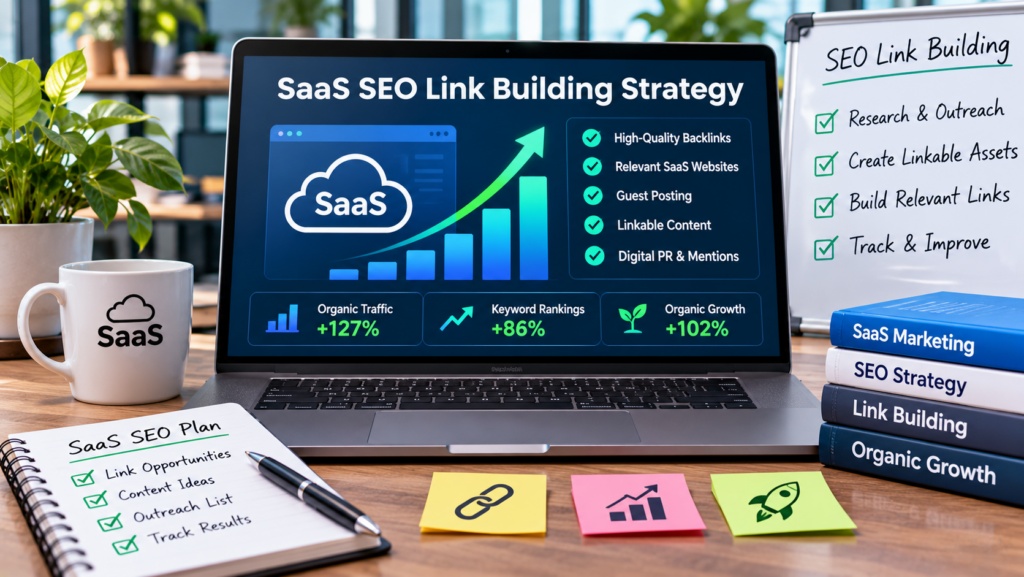
For SaaS companies, organic search can be a valuable source of website traffic, leads, and new customers. But creating useful content and optimizing website pages may not be enough to compete in a crowded market. Your website also needs credibility, relevance, and authority.
This is where SaaS SEO link building becomes important.
Link building involves earning links from other websites to your own. When those links come from relevant, trustworthy sources, they can help search engines discover your content and understand its value. They can also bring referral traffic and introduce your brand to potential customers.
However, successful link building is not about collecting as many backlinks as possible. It is about building relationships, creating useful resources, and earning links that support your business goals.
Here is how to build a practical link-building strategy for sustainable SaaS growth.
1. Set Clear SEO Goals Before Building Links
Before starting outreach, decide what you want your link-building campaign to achieve. Your goals might include improving the visibility of product pages, increasing organic traffic to important blog posts, or attracting more qualified visitors to your website.
Start by identifying the pages that matter most to your business. These could include product pages, integration pages, comparison pages, or in-depth guides that help potential customers solve specific problems.
Review their current organic performance, backlink profiles, and keyword rankings. Tools such as Ahrefs, Semrush, and Google Search Console can help you understand where improvements may be needed.
Clear goals make it easier to prioritize opportunities and measure progress. Instead of focusing only on the number of backlinks acquired, track improvements in relevant traffic, rankings, conversions, and qualified leads.
2. Find Relevant Websites for Link Building
Not every backlink has the same value. A link from a website related to your industry may be more useful than one from an unrelated site with impressive SEO metrics.
Start by researching websites that cover your niche, target audience, or related business topics. For example, a project management SaaS company might look for software review sites, productivity blogs, technology publications, and websites covering remote work.
You can use competitor backlink analysis to discover websites that already link to similar businesses. These websites may be open to featuring your brand if you can offer something useful.
When evaluating potential websites, consider topical relevance, organic traffic, content quality, editorial standards, and the context in which the link would appear. Domain Rating (DR) can be a helpful comparison metric, but it should not be your only selection criterion.
3. Create Content That Deserves Backlinks
One of the most effective ways to earn links is to publish resources that other websites genuinely want to reference.
For SaaS companies, this could include original research, industry surveys, detailed case studies, free tools, templates, and practical guides.
For example, an email marketing platform could publish research on email engagement trends. Other marketing websites might reference the findings when writing their own articles.
You can also create comparison guides, integration tutorials, or industry reports that answer questions your audience regularly asks.
The key is to offer something more useful than another general blog post. Original insights, clear data, and practical examples give editors and writers a stronger reason to link to your content.
4. Use Personalized Outreach Instead of Generic Emails
Once you identify relevant websites, contact editors, writers, and website owners with a clear reason for reaching out.
Avoid sending the same message to hundreds of prospects. Working from a verified contact list built with an email finder keeps each message pointed at editors who actually cover your topic. Generic emails often fail because they do not explain why the recipient should care.
Instead, reference a specific article they published and explain how your resource could add value for their readers. Keep the message brief, professional, and relevant.
For example, if a website has published a guide to SaaS customer onboarding, you could introduce a research report or practical resource that supports a point in that guide.
Follow up politely if you do not receive a response, but avoid excessive messaging. The goal is to build genuine professional relationships rather than push for links at any cost.
5. Explore Guest Contributions and Digital PR
Guest contributions and digital PR can help SaaS brands reach relevant audiences while creating opportunities to earn editorial backlinks.
With guest contributions, you provide useful, original content to an industry publication. The content should match the publication’s audience and editorial standards rather than exist mainly to secure a backlink.
Digital PR focuses on earning attention through research, expert commentary, newsworthy insights, and useful data. A well-executed campaign may attract coverage from journalists, industry publications, and relevant blogs.
Both approaches require quality and relevance. Avoid websites that publish low-quality articles primarily to sell links, and do not rely on paid links that pass ranking credit without appropriate qualification.
6. Connect Link Building With AI Search Visibility
SEO is evolving as people increasingly use tools such as ChatGPT and Gemini to research products, compare solutions, and find answers.
This has led many marketers to ask how to rank in LLMs and improve their brand’s visibility in AI-generated responses.
There is no guaranteed formula for appearing in these answers. However, earning relevant editorial mentions, publishing accurate and helpful content, and building a credible online presence can support discoverability.
Focus on creating content that clearly explains your product, expertise, use cases, and advantages. Make important information easy to understand and support factual claims with reliable sources.
Relevant backlinks and brand mentions may help people and systems discover your business, but they do not guarantee that an LLM will cite or recommend your brand. Treat AI search visibility as a related objective, not a guaranteed outcome of link building.
7. Measure Results and Improve Your Strategy
A successful SaaS link-building campaign needs regular evaluation. Track the number of relevant links earned, referring domains, referral traffic, and changes in the organic performance of target pages.
Also monitor business outcomes. Are visitors from these pages exploring your product, signing up for trials, requesting demos, or becoming qualified leads?
Give SEO campaigns enough time to show meaningful trends, and consider other factors that may affect performance, such as content updates, technical changes, and search demand.
Review your results regularly and invest more effort in tactics that attract relevant websites and audiences. If a campaign earns links but brings little relevant traffic or business value, reconsider your approach.
Final Thoughts
Building a sustainable SaaS SEO link-building strategy takes time, research, and consistent effort. Start with clear goals, identify relevant websites, create resources worth referencing, and use personalized outreach to build relationships.
Measure success through more than backlink counts. Look at organic visibility, referral traffic, qualified leads, and the contribution your efforts make to business growth.
As AI-powered search continues to develop, combine strong traditional SEO practices with useful content and a credible online presence. This gives your SaaS brand a solid foundation for organic growth without relying on shortcuts or promises of guaranteed rankings.