
A shower door replacement can refresh a bathroom, address a door that leaks or sticks, and improve how the enclosure works. The right solution depends...
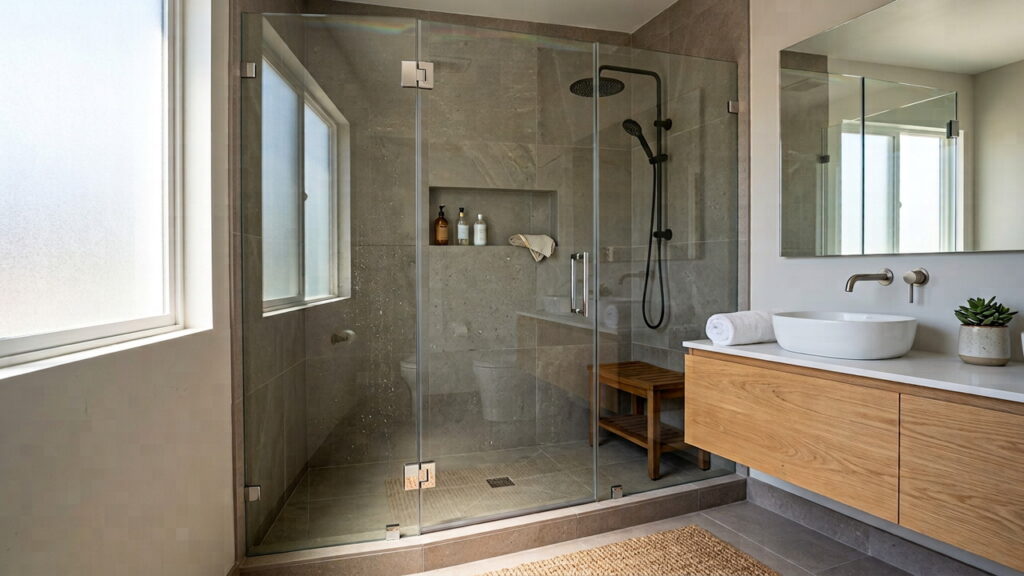
A shower door replacement can refresh a bathroom, address a door that leaks or sticks, and improve how the enclosure works. The right solution depends on the opening, wall condition, shower layout, glass, hardware, and whether the existing enclosure can be reused.
This guide to shower door replacement explains common door styles, careful measuring, project costs, installation choices, safety points, and maintenance. Confirm product dimensions and local requirements before ordering, because a door that looks right online may not fit the finished opening.
Shower door replacement at a glance
In practical terms, shower door replacement means removing an existing door and fitting a new one that suits the enclosure. Depending on the condition and design, you may be able to replace only the door, or you may need a new frame, track, fixed panel, or complete enclosure.
The best shower door replacement starts with the finished opening, not the dimensions of the old door.
Check the manufacturer’s installation requirements, confirm the door’s swing or sliding path, and make sure the walls and threshold can support the selected system.
Before ordering, identify the enclosure type, measure the opening, inspect visible hardware and tile, and decide whether professional installation is appropriate. A replacement door should manage water as intended by its design, but no shower door should be assumed to make an enclosure completely watertight.
When replacement makes sense
A shower door replacement may be preferable to a minor repair when the glass is damaged, the door no longer aligns, or compatible replacement hardware is unavailable. First identify what is causing the problem. A worn seal or loose handle can sometimes be addressed without replacing a full door.
Broken, chipped, or cracked glass
Cracked or chipped shower glass should be treated as a safety concern. Stop using the door, keep people away from it, and contact a qualified glass or bathroom professional for advice. Do not try to remove a heavy or damaged panel yourself.
A shower door replacement may be needed if the glass is damaged or the manufacturer does not offer an appropriate replacement panel. The frame, hinges, and adjacent panels also need inspection before a new door is ordered.
Persistent hardware problems
Loose hinges, worn rollers, a damaged handle, or a door that repeatedly comes off its track can make the enclosure difficult to use. Some parts can be replaced individually, but hardware is not always interchangeable between brands or models.
Ask whether the original manufacturer has compatible parts. If the frame is bent, corroded, unstable, or discontinued, shower door replacement may be more practical than repeatedly repairing separate components.
Leaks or poor alignment
Water escaping onto the bathroom floor can result from a misaligned door, worn seals, incorrect installation, or a problem with the shower base or waterproofing. A new door will not fix a leak caused by a damaged enclosure or a poorly draining threshold.
Before arranging shower door replacement, note where the water escapes and when it happens. A professional can help determine whether the cause is the door, the surrounding enclosure, or another part of the bathroom.
Changing needs or bathroom design
A door that once worked well may become difficult to open as household needs change. A different configuration, handle, or opening direction may make the shower easier to access, but the available space and the user’s mobility should guide the choice.
If a change is being made for accessibility, consider the whole entry rather than the door alone. The shower threshold, clear opening, controls, grab bars, and floor surface may all affect safe use. Confirm that the proposed shower door replacement works with the broader plan.
Choose the right door style
Door style affects entry space, cleaning access, water management, and the look of the enclosure. A shower door replacement should match the opening and the way people use the bathroom, not just the finish of the faucet.
Sliding or bypass doors
Sliding doors usually have one or more panels that move along tracks. They can work well where there is limited clearance for a swinging panel, such as a bathroom with a vanity or toilet close to the shower.
For this shower door replacement, check that the opening is wide enough for a comfortable entry. Tracks and overlaps can affect how much of the opening is accessible, and the track may need regular cleaning to remove soap residue and debris. Follow the maker’s instructions for removing panels or cleaning rollers.
Hinged or pivot doors
Hinged doors swing open from a wall or fixed panel. Pivot doors use pivots positioned according to the product design. Both styles need sufficient clearance, so check the full swing path against nearby fixtures, towels, and traffic routes.
A hinged shower door replacement can provide a broad entry, but the hinges must be attached to a suitable support. Confirm the door’s opening direction and any requirements for the wall, fixed panel, or threshold before choosing a model.
Framed and semi-frameless doors
Framed doors use a visible frame around the glass, while semi-frameless designs combine framed sections with areas of exposed glass. The frame can provide defined mounting points, but tracks and corners may need extra attention during cleaning.
A framed shower door replacement can be a suitable option when its dimensions and mounting requirements match the enclosure. Compare the profile, finish, seals, and available parts, rather than assuming every framed system will fit an existing opening.
Frameless doors
Frameless doors use heavier glass and hardware designed to support it, usually with fewer visible frame pieces. The clean appearance can suit many bathrooms, but installation depends on accurate measurements, suitable wall support, and correct hardware placement.
A frameless shower door replacement is not automatically a direct swap for a framed door. The glass, hinges, support points, wall condition, and enclosure layout must all be checked. Because the panels can be heavy and require precise installation, professional fitting is often the safer choice.
Tub and walk-in enclosures
A tub-and-shower door must suit the tub’s rim, the wall surfaces, and the entry area. Sliding panels are common, but hinged designs may be possible when there is enough clearance. Check the product instructions for how the door seals against the tub.
Walk-in showers may use a hinged door, a fixed panel, or a combination. A fixed panel has no moving hardware, but the opening and spray pattern still affect how well it contains water. A shower door replacement for a walk-in enclosure should be planned around access, drainage, and the location of the shower head.
Check compatibility with the existing enclosure
Reusing a frame or fixed panel can reduce the amount of work, but only when the manufacturer and installer confirm compatibility. Glass thickness, hinge location, track shape, panel dimensions, and hardware capacity may differ between systems.
Do not order by the brand name or the old panel’s apparent size alone. For a shower door replacement, confirm the exact product model and installation details, especially when the original parts are no longer available.
Choose glass, seals, and hardware
Shower enclosure glass is commonly tempered safety glass, but the applicable requirements depend on the product and local rules. Confirm that the selected glass is intended for shower use and meets relevant safety requirements. Never cut or drill tempered glass after it has been made.
Clear glass keeps the room visually open, while patterned or frosted glass offers more privacy. Glass appearance, thickness, and available dimensions vary by product.
Ask how a shower door replacement panel will work with the specified hinges, tracks, and support system.
Hardware includes hinges, rollers, handles, brackets, and tracks. Choose components designed for the selected door, and check whether replacement parts will remain available. Finishes such as chrome, brushed metal, or black can be compared with other bathroom fittings, but finish options depend on the manufacturer.
Seals and sweeps help manage water at the door edges. They wear over time and may need replacement, but they cannot compensate for a door that is poorly aligned or an enclosure that drains incorrectly. Confirm which seals are included with the shower door replacement and how they should be fitted.
Consider the complete enclosure
Think about how the door works with the shower base, wall tile, and fixtures. A handle may strike a towel bar, a swinging panel may hit a vanity, or a track may interfere with a raised threshold. Check these details before ordering, not during installation.
Measure carefully before ordering
Accurate measurements are essential because shower openings are not always square, plumb, or identical from top to bottom. A shower door replacement should be selected using the manufacturer’s measurement method and the finished surfaces where the door will be installed.
Measure after tile, wall panels, and the shower base are complete. If the bathroom is still being renovated, wait until the finished opening can be measured or ask the installer when measurements should be taken. Changes to tile or trim can affect the fit.
Use a tape measure and record dimensions in the units required by the supplier. For a custom shower door replacement, the glass company or installer may need to verify the opening on site before production.
- Measure the width at the top, middle, and bottom of the opening. Record each result rather than assuming the walls are parallel.
- Measure the height at both sides, from the specified surface of the threshold or tub to the planned top of the door.
- Use a level to check whether the walls are plumb and the threshold is level. Note any visible slope or unevenness.
- Check the depth and shape of the curb or tub rim, including any raised edge that could affect a track or seal.
- Mark the locations of faucets, shower controls, shelves, towel bars, and nearby bathroom fixtures that could interfere with the door.
- Record the direction a hinged panel should open and the space available for its full swing.
Do not rely only on the old door’s measurements. It may have been custom made, installed before the current tile, or fitted to a frame that will not be reused. A shower door replacement should be measured for the current opening and the specific product.
Have unusual openings checked
Walls that are out of plumb, uneven tile, angled enclosures, and nonstandard openings can require custom glass or special hardware. Take clear measurements and photos, but let the manufacturer or installer confirm the final specifications when the opening is unusual. An incorrect order can lead to delays, extra work, or a door that cannot be installed as intended.
Shower door replacement cost factors
There is no single price for every project. Shower door replacement costs depend on the door style, glass, dimensions, hardware, whether the enclosure is custom, and the work needed to remove the old system and prepare the opening.
An itemized quote should state whether it includes the new door, frame or track, seals, delivery, removal, disposal, installation, and any repair work. Ask whether taxes, custom measurements, and follow-up adjustments are included or billed separately.
The cost can change if the installer finds damaged tile, a weak mounting surface, an uneven threshold, or signs of water damage. A replacement door alone will not address a separate waterproofing or plumbing problem. Confirm how any additional work will be priced before authorizing it.
Compare quotes for the same type of shower door replacement and equivalent materials. Check the glass specification, hardware, warranty terms, installation scope, and what happens if the finished opening differs from the measurements. The lowest initial quote may not include the same work as a more complete proposal.
DIY or professional installation
Some framed shower door kits are designed for capable homeowners to install by following the product instructions. DIY shower door replacement still requires careful measuring, safe handling, suitable tools, and the ability to mount components securely without damaging plumbing, wiring, tile, or waterproofing.
Read the full manual before buying a kit. Confirm that the opening falls within the product’s permitted size range, that the required wall support is present, and that you can safely lift and position each panel.
Have another person assist with heavy glass, and stop if the instructions or conditions are unclear.
Hire a qualified installer for large or heavy panels, frameless systems, custom glass, angled openings, damaged tile, or uncertain wall support. Professional help is also appropriate if the door is near plumbing or if the existing enclosure has signs of water damage. Ask how the installer will protect the glass, secure the hardware, and manage sealant and drainage.
A professional shower door replacement should include a clear explanation of the proposed product, mounting method, and work included. Check local requirements where applicable, and ask for the manufacturer’s care instructions and warranty information after installation.
What happens during installation
The precise process varies by door system, but shower door replacement generally involves removing the old parts, checking the opening, fitting the new components, and confirming that the door operates as intended. The manufacturer’s instructions take priority over a general sequence.
- Confirm the measurements, model, opening direction, hardware, and required clearances before starting. Protect the tub or shower base and nearby surfaces.
- Remove the old door and hardware carefully. Glass can be heavy and fragile, so damaged panels should be handled by people equipped to manage them safely.
- Inspect the exposed mounting areas, tile, threshold, and surrounding enclosure. Resolve damage or unsuitable support before attaching the new system.
- Mark and install tracks, brackets, hinges, or other supports according to the product instructions. Check the location of plumbing and wiring before drilling.
- Position the glass panels and fit the rollers, hinges, handles, and seals. Keep the panels supported while fastening the hardware, and avoid forcing glass into a frame or opening.
- Adjust the door so it moves smoothly and sits correctly against its seals. Verify that it does not strike nearby fixtures and that the opening is comfortable to use.
- Apply sealant only where and when the manufacturer directs. Some systems require gaps for drainage, so sealing every visible joint may cause water to collect where it should not.
- Follow the stated curing time before using the shower. Test the door as directed, check for leaks, and contact the installer if water escapes or the door does not operate properly.
A shower door replacement is not complete simply because the glass is in place. The panel needs to be secure, aligned, and used according to the product instructions. Keep the installation documents for future adjustments and care.
Mistakes to avoid
Ordering based on a standard size without measuring the finished opening is a common source of fit problems. Shower door replacement products can have different adjustment ranges, so confirm the exact dimensions and tolerances before purchase.
Do not assume that a leak always comes from the door. Water can escape because of the shower base, poor drainage, damaged seals, or a problem behind the wall. Identify the likely source before choosing a replacement.
Avoid drilling into tile or changing the mounting position without checking what is behind the wall and what the manufacturer permits. Incorrect holes can damage plumbing or compromise waterproofing. Leave unfamiliar structural or waterproofing work to an appropriately qualified professional.
Do not mix parts from different door systems unless the manufacturer confirms they are compatible. A handle or seal that appears similar may not fit securely or work with the chosen shower door replacement.
Care after installation
Follow the care instructions for the glass, finish, seals, and hardware. Many products can be cleaned with a soft cloth and a suitable nonabrasive cleaner, but coatings and finishes may have specific restrictions. Avoid harsh chemicals or tools unless the manufacturer approves them.
After use, wiping down the glass can help limit water spots and soap residue. Keep tracks and drainage areas clear, and check periodically for loose hardware, worn seals, corrosion, or changes in how the door moves. Do not overtighten fittings or adjust hinges unless the product instructions allow it.
If a shower door replacement begins to leak, stick, or shift, stop and identify the cause instead of forcing the door. A minor adjustment or worn seal may be all that is needed, but movement in the glass or mounting hardware should be checked by a professional.
FAQ’s
How much does shower door replacement cost?
The price depends on the door style, glass, measurements, hardware, removal, and installation work. Request an itemized quote for the exact product and scope.
Can I replace only the shower door and keep the frame?
Sometimes, if the frame is sound and the new door is confirmed compatible with it. Ask the manufacturer or installer to verify the model, dimensions, and hardware.
What type of shower door is best for a small bathroom?
A sliding door can avoid the swing clearance needed by a hinged door, but the best choice depends on the opening and access you need. Measure around nearby fixtures before deciding.
How do I measure for a replacement shower door?
Measure the finished opening at multiple widths and heights, and check the walls and threshold for level and plumb. Follow the selected manufacturer’s instructions or arrange a professional measurement.
Can I install a shower door myself?
Some kits are intended for DIY installation, but heavy glass, custom openings, and frameless systems can be difficult to fit safely. Follow the manual and hire a qualified installer if support or measurements are uncertain.
How long should I wait before using the shower?
Wait for the sealant and any other materials to cure for the period specified by their manufacturer. The instructions for your specific installation determine the safe waiting time.
Conclusion
Shower door replacement can improve the fit, appearance, and everyday function of a bathroom when the selected door suits the finished opening. Measure carefully, compare compatible styles and hardware, and investigate leaks or wall damage before ordering.
Follow the manufacturer’s installation and care instructions, and bring in a qualified professional when the glass, support, or measurements require expertise. A well-planned shower door replacement is safer and more likely to work as intended when the door, enclosure, and installation are considered together.