
A skid steer loader is one of the most useful machines on a job site. But the loader itself is only half the story. What...
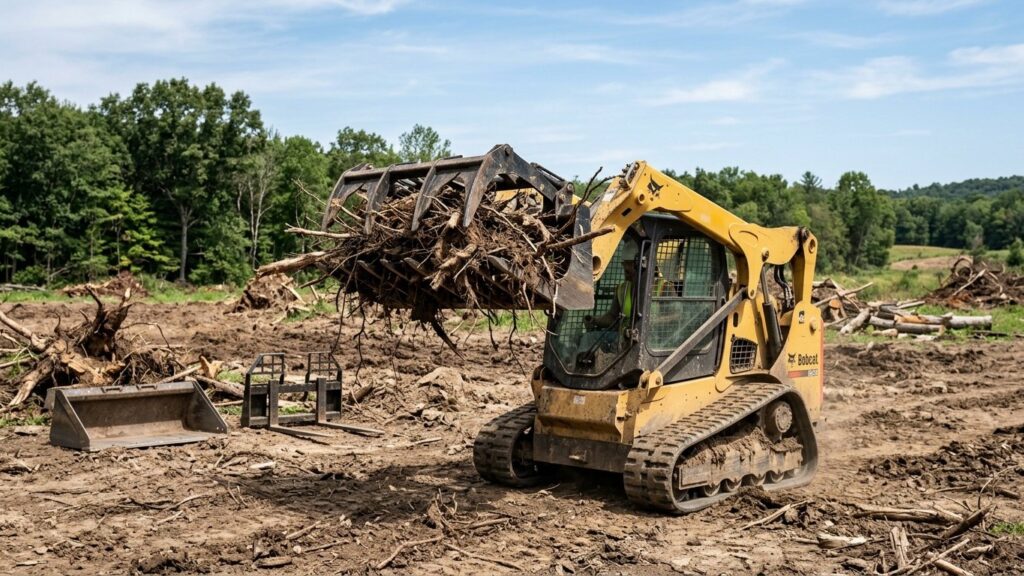
A skid steer loader is one of the most useful machines on a job site. But the loader itself is only half the story. What makes it truly versatile is the attachment you put on the front. A skid steer attachment turns one machine into a bucket, a grapple, a fork, an auger, and much more. This guide explains the most common attachments, what each one does, and how to choose the right one for your loader and your job.
Why Attachments Matter
A skid steer is built around a quick-attach system. This lets you swap attachments quickly, so one machine can do many jobs. In a day, you might move dirt with a bucket, clear brush with a grapple, and lift pallets with forks. This is what makes a skid steer so valuable, especially on smaller sites where you do not want to bring a whole fleet.
Choosing the right attachment saves time and money. The right tool does the job faster and cleaner, and it protects your loader from unnecessary wear. A well-matched attachment makes any task easier and more efficient.
Common Skid Steer Attachments
There is a wide range of skid steer attachments, each suited to a different job. Here are the most common:
- Bucket. The workhorse attachment for scooping, moving, and grading loose material like soil, gravel, and sand.
- Skeleton grapple. An open-bottom attachment with spaced steel tines and a clamping lid. It grips rock, roots, and brush while letting soil and small material fall through. This is ideal for land clearing and keeping topsoil on site.
- Brush grapple. Similar to a skeleton grapple, used for picking up brush, deadfall, and debris.
- Pallet forks. Used to lift and move pallets, crates, and other heavy loads.
- Auger. A drill attachment for digging post holes and footings.
- Snow blade or bucket. For clearing snow from driveways and lots.
Choosing the right attachment depends on the job you are doing and the material you are handling.
How a Skeleton Grapple Works
A skeleton grapple is a valuable attachment for land clearing. It is an open-bottom unit made of spaced tines, topped by a hydraulic clamping lid. The gaps between the tines let soil, gravel, and small material fall through, while the lid presses down to hold rock, roots, and branches.
This is the key benefit. A bucket scoops everything, so you haul away topsoil along with the debris. A grapple keeps the dirt on site and carries only the unwanted material. This cuts the number of trips and protects the valuable topsoil you want to keep.
Choosing the Right Attachment
Choosing the right attachment comes down to matching it to your loader and your work. First, check the width and weight. The attachment must fit within your loader’s lift capacity, so it can lift the load safely. A too-heavy attachment strains the machine.
Second, consider the material you handle. Tine spacing matters on a grapple. Wider spacing lets fine soil fall through, while narrower spacing holds smaller material. Match the spacing to what you normally pick up.
Third, think about hydraulic needs. Some attachments, like grapples, need auxiliary hydraulics to power the clamping lid. Make sure your loader has the flow you need. Finally, confirm the quick-attach system is compatible. A secure fit is essential for safe operation.
Build Quality and Durability
Durability is important, especially on rough ground. Tine thickness, hydraulic cylinder strength, and frame welds all affect how long an attachment lasts. Tines must resist bending when prying a buried rock, and the clamping lid needs enough force to hold stubborn material.
A reinforced frame spreads the load into the loader arms. Abrasion plates along tine tips slow the wear caused by stony ground. Investing in a well-built attachment saves you money over time, since it lasts longer and performs better.
Safe Operating Practices
Safety should always come first when using attachments. Keep heavy loads low and centred while travelling. Avoid prying with the machine at full reach. Before starting, confirm the attachment is locked to the quick-attach plate.
Inspect tines, welds, and hoses for cracks or damage before use. Release hydraulic pressure before changing attachments. Following these steps keeps you safe and protects your equipment.
Frequently Asked Questions
What is a skid steer attachment?
A skid steer attachment is a tool that mounts on the front of a skid steer loader using a quick-attach system. Common types include buckets, grapples, pallet forks, and augers, which let one machine perform many different jobs.
What is the most useful skid steer attachment?
The bucket is the most common and versatile, handling soil, gravel, and grading. For land clearing, a grapple is very useful because it separates debris from valuable topsoil. The best attachment depends on your main tasks.
What is a skeleton grapple used for?
A skeleton grapple is used for land clearing and cleanup. It grips rock, roots, and brush while letting soil fall through the open tines, so you carry away only the unwanted material and keep the topsoil on site.
How do I choose the right attachment for my skid steer?
Match the width and weight to your loader’s lift capacity. Consider the material you handle and tine spacing. Check that your loader has the hydraulic flow for powered attachments, and confirm the quick-attach system is compatible.
Do I need auxiliary hydraulics for a grapple?
Yes, most grapples use hydraulic cylinders to open and close the lid, so they need a loader equipped with auxiliary hydraulics. Check the flow and connections before choosing an attachment.
How long does a skid steer attachment last?
With proper use and maintenance, a quality attachment lasts many years. Tine thickness, frame welds, and steel quality affect durability. Inspect for cracks and wear regularly to extend its life.
Conclusion
A skid steer attachment is what makes a loader truly versatile. From buckets and grapples to forks and augers, the right attachment lets one machine handle a wide range of jobs. By choosing a tool that matches your loader’s capacity, your material, and your hydraulic setup, you get the best performance and longest life. A well-built attachment from a trusted maker, used safely and maintained well, will serve you for years. Whether you are grading a driveway, clearing brush, or digging post holes, the right skid steer attachment makes every job faster, cleaner, and easier.