
A sofa collects everyday dust, food crumbs, body oils, and marks from regular use. Sofa cleaning in Singapore also calls for attention to the local...
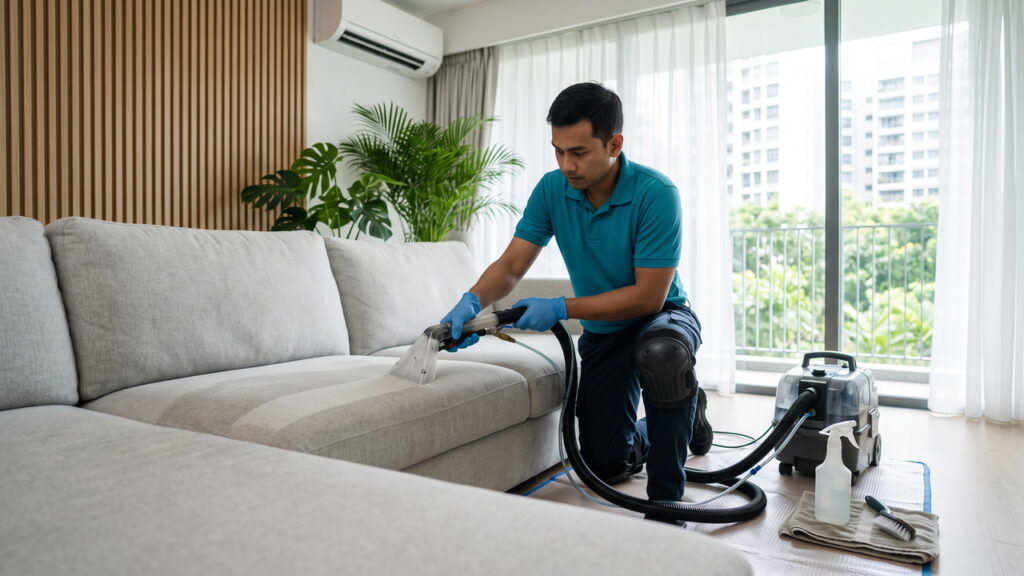
A sofa collects everyday dust, food crumbs, body oils, and marks from regular use. Sofa cleaning in Singapore also calls for attention to the local climate, fabric type, and drying conditions, since damp upholstery left without suitable airflow can develop unpleasant odours.
Whether you are maintaining a family couch or comparing professional services of sofa cleaning in Singapore, start by checking the manufacturer’s care instructions. This guide explains safe home care, common cleaning methods, stain response, service costs, and how to choose a suitable upholstery cleaner.
What Does Sofa Cleaning Actually Include?
Sofa cleaning is the removal of loose debris, surface soil, and selected stains from upholstery and, when appropriate, the cushions or other accessible components. The right method depends on the sofa’s materials and construction. Fabric, leather, faux leather, decorative trim, and cushion filling may all require different care.
A basic maintenance routine may involve vacuuming and promptly addressing small spills. A deeper clean may use water-based extraction, low-moisture techniques, or a method recommended for the specific material. Professional sofa cleaning in Singapore should begin with an inspection rather than applying the same product and process to every couch.
Cleaning does not guarantee that every stain, odour, or sign of wear will disappear. Some marks may have permanently changed the dye or damaged the fibres. A responsible cleaner should explain likely limitations before treating delicate, faded, or previously cleaned upholstery.
Cleaning, Sanitising, and Disinfecting Are Different
Cleaning removes soil and many germs from surfaces, but it is not the same as sanitising or disinfecting. Those terms describe different processes, and a product’s label explains the uses it has been tested and approved for.
Routine sofa cleaning usually focuses on removing dirt and residue rather than applying disinfectants to all upholstery. Do not use household disinfectant on a sofa unless its label specifically allows that surface and method. If a particular contamination concern exists, ask a qualified service provider about appropriate options.
Why Sofa Cleaning in Singapore Needs a Climate-Aware Plan
Singapore’s warm, humid conditions can affect how quickly upholstery dries, particularly in rooms with limited airflow. Rainy periods, closed windows, and air-conditioning use may also change the conditions around a sofa. These factors do not mean that every couch needs frequent professional cleaning, but they make drying and ventilation important parts of the plan.
During sofa cleaning in Singapore, avoid leaving the fabric or cushion interiors damp for longer than necessary. Moisture trapped inside thick padding can be harder to detect than wetness on the surface. A cleaner should explain the expected drying process and recommend practical airflow suited to the home.
Homes also differ in how much dust and soil their sofas collect. Open windows, pets, children, cooking, renovation work, and the location of the sofa can all influence cleaning needs. A sofa near an entryway or frequently used dining area may need more regular vacuuming than one in a lightly used room.
Identify Your Sofa Material Before Cleaning
Before choosing a cleaning method, check the sofa’s care label, product manual, or manufacturer’s website. Labels may be attached beneath cushions or on the underside of the furniture, but not every sofa has one. If the instructions are missing, ask the retailer or manufacturer rather than guessing.
Some upholstery labels use codes such as W, S, WS, or X, but labels and instructions can vary by manufacturer and market. Treat a code as a starting point, not as permission to use any product carrying a matching description. Sofa cleaning in Singapore should follow the specific manufacturer’s directions where available.
Synthetic Fabrics
Polyester, nylon, acrylic, and blended fabrics are common upholstery materials, but their cleaning requirements are not identical. A fabric’s weave, dye, backing, and finish affect how it responds to moisture and cleaning products.
Do not assume that synthetic fabric is automatically stain-proof or colourfast. Test a suitable cleaner on a small, hidden area and check for colour transfer, texture changes, or rings once it dries. For valuable or delicate furniture, leave treatment to an experienced upholstery cleaner.
Cotton, Linen, and Natural Fibres
Cotton and linen can absorb moisture and may be vulnerable to shrinkage, colour bleeding, or water marks, depending on how the fabric was made and finished. Strong rubbing can also distort the weave or damage the surface.
A cautious approach to sofa cleaning in Singapore is particularly useful with natural fibres. Follow the care instructions, use minimal moisture if the manufacturer permits it, and avoid home steam cleaning unless the sofa’s guidance explicitly supports that method.
Velvet and Textured Upholstery
Velvet and other pile fabrics can show marks when their fibres are pressed in different directions. Brushing, rubbing, or applying moisture unevenly may change the appearance even when soil has been removed.
Identify the velvet type and follow its care label. If the label is unclear, consult a professional who has experience with that material before attempting a wet treatment.
Leather and Faux Leather
Leather is not cleaned in the same way as most fabric upholstery. Use products made for the specific leather finish and follow the furniture maker’s instructions. General-purpose sprays, abrasive sponges, and excessive water may affect the colour or protective coating.
Faux leather may be made from different materials and finishes, so do not assume a leather cleaner is suitable. Regularly wipe away loose dust with a soft, suitable cloth and seek advice if the surface is peeling, cracked, or sticky.
Common Sofa Cleaning Methods
Different methods use different amounts of moisture, agitation, heat, and cleaning solution. The method should suit the upholstery, the type of soil, and the manufacturer’s guidance. A professional sofa cleaning company in Singapore should be able to explain why it recommends a particular approach.
Vacuuming and Dry Soil Removal
Vacuuming with an appropriate upholstery attachment is a useful routine step. It removes loose dust, crumbs, and some pet hair before they become embedded in the fabric or mixed with moisture during a deeper clean.
Use a gentle setting when available, particularly on delicate fabrics or loose cushions. Avoid aggressive brushing across fragile seams, fringe, buttons, or decorative details. For Singapore sofa care, regular dry soil removal is often a practical first step between deeper treatments.
Water-Based Extraction
Water-based extraction applies a suitable cleaning solution and removes it with an extraction tool. The amount of moisture and the extraction quality matter: too much water or poor recovery can leave upholstery wetter than intended.
Not every sofa is suitable for this method. Ask the cleaner how they will check colourfastness, manage the cushion filling, and help the sofa dry. Professional sofa cleaning in Singapore should include a clear explanation of whether cushions can be treated separately and how their interiors will be protected.
Low-Moisture Cleaning
Low-moisture methods use less water than some extraction approaches. Depending on the system and fabric, a cleaner may apply a product, work it through the upholstery, and remove soil with appropriate equipment or cloths.
“Low moisture” does not mean that every fabric is automatically safe or that drying is instant. Ask what product and process the company uses, how it checks the material, and whether the method is suitable for the sofa’s label.
Steam Cleaning
Steam equipment uses heat and moisture, but the phrase “steam cleaning” is sometimes used loosely in advertising. High heat or excess moisture may affect some upholstery, adhesives, dyes, finishes, and cushion components.
Check the sofa manufacturer’s instructions before using a steam cleaner. If the instructions do not clearly allow steam, ask an upholstery professional to identify a safer method. A cleaner should not claim that steam is suitable for every sofa.
Dry or Solvent-Based Methods
Some upholstery materials may require a solvent-based process rather than water-based cleaning. The product, ventilation, residue removal, and fabric compatibility need careful attention.
Do not use household solvents on a sofa without clear manufacturer guidance. They can create fire, health, finish, or colour risks when used incorrectly. For solvent-sensitive materials, seek a professional who can explain the product’s label and safety precautions.
A Simple Sofa Maintenance Routine at Home
Regular light maintenance can help reduce the amount of soil that builds up between deeper cleans. Start by checking the care instructions and using a vacuum attachment suitable for the fabric. Pay attention to cushion seams and areas where crumbs tend to collect.
Rotate or rearrange removable cushions only if the manufacturer’s instructions allow it. Some cushions are designed to be reversible, while others have a fixed front or directional fabric. Follow any care guidance about sunlight, heat, and positioning.
If you vacuum regularly and respond promptly to spills, you may be able to delay a deeper clean. The right frequency depends on use, household needs, fabric, and the condition of the sofa—not a universal schedule for every home.
How to Respond to Sofa Stains
Act promptly, but avoid rushing to apply several products. First, remove any solid material carefully with a spoon or blunt edge, then blot liquid with a clean, absorbent cloth. Work from the outside of a mark towards its centre to reduce the risk of spreading it.
Before applying a cleaner, check the care label and test the product in a hidden area. Use only a product suitable for the upholstery and follow its label. For sofa cleaning in Singapore, a small-area test can help identify colour transfer or texture changes before treating a visible section.
Food and Drink Spills
Blot fresh spills rather than rubbing them into the fibres. Once you have absorbed what you can, follow the fabric instructions and use an appropriate upholstery product sparingly if permitted.
Sugar, colour, and other ingredients can leave residue even after the surface looks clean. Avoid pouring water directly onto the sofa because excess moisture may spread the mark or reach the cushion interior.
Oil and Grease
Scrubbing oil can push it further into the fabric. Blot carefully with a clean cloth and check whether the manufacturer allows a suitable stain treatment.
Avoid adding baking soda, detergent, or solvent without checking material compatibility. If a greasy mark persists, professional sofa cleaning in Singapore may be a safer option than repeated experiments that can leave residue or change the finish.
Ink and Dye Transfer
Ink and dye marks can be difficult to remove and may require a material-specific treatment. Household alcohol, nail-polish remover, and other solvents can affect upholstery dye or synthetic finishes.
Do not scrub or spread the mark with a damp cloth. Photograph the area, note what caused it if known, and ask a professional cleaner about realistic treatment options.
Pet Accidents and Odours
Blot liquid promptly and use a pet-appropriate product only if its label and the sofa’s care instructions allow it. Some odours can remain in the cushion or other layers even when the visible surface appears clean.
Avoid mixing cleaning chemicals or applying heavy fragrance to mask the smell. Tell a sofa cleaning service in Singapore about the accident and any products already used so the cleaner can assess residue and choose a suitable process.
Mould or Persistent Musty Smells
A musty smell or visible mould on upholstery may indicate a moisture problem that needs attention beyond surface cleaning. Do not dry-brush visible mould, since that may spread particles into the room. Keep the area undisturbed and seek suitable professional advice, especially if the affected area is extensive or household members have relevant health concerns.
Professional upholstery cleaning may not resolve the underlying source of moisture. Check for leaks, condensation, or damp conditions, and address the cause. For health-related questions, consult an appropriate healthcare or indoor-environment professional rather than relying on a cleaning product’s marketing claims.
What to Expect From Professional Sofa Cleaning in Singapore
A reliable service should begin by asking about the sofa material, the main concerns, previous treatments, and any damage. The cleaner should inspect the upholstery, seams, cushions, and care label before recommending a process. If information is missing or the fabric looks delicate, ask what precautions they will take.
The cleaner may vacuum the sofa, identify stains, test a product in an inconspicuous area, and prepare the upholstery for the selected method. They should describe how they will handle cushions, trim, leather panels, and any areas that cannot be treated in the same way.
After cleaning, ask what drying conditions are recommended and when the sofa can be used again. Drying time varies with the fabric, method, room conditions, ventilation, and cushion construction. A responsible cleaner should not promise one exact drying time for every sofa.
Before booking professional sofa cleaning in Singapore, confirm whether the quote includes all cushions, back panels, armrests, and accessible sides. Some companies define a “seat” or “sofa” differently, so clarify the exact areas included.
How to Choose a Sofa Cleaning Service in Singapore
Start by checking that the provider regularly handles the sofa materials and issues you have. An experienced team should be able to explain its inspection process, product selection, stain limitations, and drying advice without guaranteeing perfect results.
Ask what equipment and products may be used and whether the company can follow the furniture manufacturer’s care instructions. You do not need a sales presentation full of technical terms; you do need a clear answer about why the proposed method suits your upholstery.
Before hiring sofa cleaners in Singapore, request a written quotation that states the sofa size or configuration, included areas, treatment method if known, and any extra charges. Ask whether travel, stain treatment, deodorising, or additional cushions are charged separately.
Check recent reviews for patterns in communication, punctuality, care of the home, and how the company handles concerns. Reviews are only one source of information and do not guarantee a future result. Confirm that the service has a way to respond if the sofa’s colour, texture, or drying condition changes after treatment.
Questions to Ask Before Booking
Use a short conversation to check whether the provider is a good fit. Ask which method they expect to use, how they assess upholstery, and what they do if a hidden test causes colour transfer.
Also ask whether the quote includes movable cushions, the back of the sofa, and stain treatment. A clear answer from a sofa cleaning company in Singapore makes it easier to compare offers fairly and avoid surprises on the service day.
Sofa Cleaning Costs in Singapore
Prices vary by company and job. Providers may price by sofa size, number of seats, fabric type, condition, access, or the type of treatment required. A simple online estimate may not account for unusual shapes, delicate materials, heavy soiling, or previous cleaning products.
Ask for a quotation based on the actual sofa configuration rather than relying on a generic advertised price. Check whether the quoted service includes inspection, vacuuming, stain treatment, cushions, and any follow-up advice. Clarify how the company handles additional work if the condition differs from what you described.
The lowest quote is not automatically the best value. Compare the cleaning method, included areas, staff experience, communication, and arrangements if a problem occurs. If a sofa cleaner in Singapore promises to remove every stain at a low fixed price without inspecting the fabric, ask how that promise is supported.
Drying and Aftercare in Singapore Homes
After cleaning, allow the sofa to dry fully before covering it, placing cushions tightly together, or using it heavily. Follow the cleaner’s instructions and keep the room ventilated where practical. A fan may help air movement, but avoid directing excessive heat at delicate upholstery.
Air-conditioning or a dehumidifier may help manage indoor conditions, but use them according to the equipment instructions and the cleaner’s advice. Drying depends on more than the room’s surface temperature; thick foam and layered cushions may retain moisture after the visible fabric feels dry.
If you are arranging sofa cleaning in Singapore during a wet period, discuss access to ventilation and drying conditions in advance. Ask what to do if the sofa remains damp longer than expected or develops an unusual smell. Do not use a damp couch simply because the outer surface feels dry.
How Often Should You Clean a Sofa?
There is no single professional-cleaning interval that suits every sofa. Consider how often the couch is used, who uses it, whether pets or children are present, the upholstery material, and the manufacturer’s instructions.
Vacuum when visible debris accumulates or as part of a regular home-cleaning routine. Address spills promptly and arrange a deeper clean when the sofa’s condition, care guidance, or household needs justify it. Professional sofa cleaning in Singapore can be discussed with a cleaner who has inspected the actual upholstery.
A sofa used daily in a busy household may need attention sooner than furniture in a rarely used room. That does not mean every frequently used sofa requires repeated wet cleaning. Excessive or unsuitable treatment can damage upholstery, so balance cleanliness with the fabric’s care limits.
Common Sofa Cleaning Mistakes to Avoid
Rubbing a stain aggressively is a common mistake because it can spread the mark, distort fibres, or drive soil deeper. Blotting gently and following the care label is usually a more cautious first response.
Using too much water is another risk. Moisture can move into cushion filling or backing, while residue left behind may attract more soil. For sofa cleaning in Singapore, ask how the method controls moisture and supports drying rather than assuming that a visibly wet treatment is more effective.
Avoid combining cleaning products, especially when the labels do not explicitly say they can be used together. Never mix bleach with ammonia or other cleaners, as dangerous gases may result. Keep products in their original containers and follow label directions.
Do not apply carpet cleaner, household disinfectant, laundry detergent, or solvent to upholstery unless the product and sofa instructions allow it. Different surfaces respond differently, and an apparently clean patch can still have colour or texture damage.
Health, Pets, Children, and Cleaning Products
Read product labels before use and follow directions for ventilation, protective equipment, contact time, and rinsing where specified. Keep children and pets away from wet upholstery and cleaning supplies until the cleaner’s instructions say the area is ready for use.
If someone in the home has asthma, allergies, skin sensitivities, or another health concern, tell the provider before treatment. Ask which products may be used and whether fragrance-free options are available, but do not assume that a product described as “natural” or “green” is automatically suitable for everyone.
Do not rely on deodorising sprays to solve a source of odour. Fragrance may mask a smell temporarily without removing its cause. If a sofa has a persistent odour, explain its history to the cleaner and ask whether the source may be in the cushion, backing, or room environment.
Practical Planning for Apartments and Condominiums
Before an appointment, ask the cleaning company what access and preparation it needs. In an apartment or condominium, this may include lift bookings, loading arrangements, parking, visitor registration, or compliance with building procedures. Requirements vary by building, so check with your management office where necessary.
Move small objects, toys, and breakables away from the sofa and provide clear access around it. Ask whether the cleaner needs a nearby power point or water access, and confirm whether the work can be done in the room without moving large furniture.
For sofa cleaning in Singapore homes with limited airflow, discuss drying conditions before choosing a moisture-based method. If windows cannot be opened or the room is tightly enclosed, the service provider should take that context into account when explaining the method and aftercare.
A Simple Maintenance Plan for a Fresher Sofa
A practical plan combines routine care with sensible stain response. Vacuum accessible surfaces, check seams and cushion gaps, and follow the manufacturer’s advice for rotating cushions or cleaning removable covers.
Place food and drinks thoughtfully, and consider washable throws in high-use areas if they suit the sofa and household. A throw can protect part of the upholstery, but it should also be washed as directed so trapped dust and spills do not accumulate underneath.
Keep records of professional treatments and products used on the sofa. If you book sofa cleaning in Singapore again, sharing this history can help the cleaner avoid repeating a process that caused colour transfer, residue, or prolonged drying.
FAQ’s
1. How often should I arrange sofa cleaning in Singapore?
There is no fixed schedule for every sofa. Consider fabric instructions, household use, visible soil, pets, spills, and the sofa’s condition.
2. Can every sofa be steam cleaned?
No. Heat and moisture may damage some fabrics, finishes, or cushion components. Check the manufacturer’s instructions or ask a qualified upholstery cleaner.
3. How long does a professionally cleaned sofa take to dry?
Drying varies with the fabric, cleaning method, cushion construction, room conditions, and airflow. Follow the cleaner’s instructions rather than relying on a universal estimate.
4. Can professional sofa cleaning remove every stain?
No. Some stains may have permanently altered the dye or fibres, and previous treatments can affect results. Ask the cleaner to assess likely limitations.
5. What should I ask a sofa cleaning company in Singapore?
Ask about fabric inspection, cleaning method, included areas, stain treatment, drying advice, written pricing, and how the company handles concerns after the service.
6. Can I use household cleaning products on my sofa?
Only if the product label and sofa-care instructions confirm that it is suitable. Test cautiously and never mix cleaning chemicals.
Conclusion
Good sofa care starts with identifying the upholstery and following its care instructions. In Singapore’s humid conditions, careful product selection and thorough drying matter as much as removing visible soil. Vacuum regularly, blot spills promptly, and avoid experimenting with strong or unapproved cleaners.
When home care is not enough, compare sofa cleaning in Singapore services by their inspection process, methods, written scope, and realistic advice. A suitable cleaner should explain what can be done, what may remain, and how to care for the sofa after treatment.